This website is dedicated to the Hungarian born stamp dealers Béla, Géza, Eugen and Frank Sekula.
Each one of them ran his own stamp business with emphasis on international stamp trade, likely driven by their business acumen rather than a particular preference for philately.
All four assumed Swiss nationality and were based in Lucerne side by side for years.
Especially Béla’s business ideas provoked more than one scandal during his career.
However, the history of philately would arguably be poorer without the Sekula brothers.
Eugen Szekula at about the age of 25We will pay high prices for your stamps! (Nebelspalter 1944)
Eugen Sekula (1888–1950) was born as Jenő Szekula in Szeged on March 9, 1888.
When he was old enough, he joined Géza as an employee at Béla’s Internationale Philatelisten.
In April 1910, Eugen took over as responsible editor of Béla’s Händler-Zeitung (newsletter for stamp dealers), and by 1911 he was also office manager at Internationale Philatelisten.
On August 19, 1912, he married Elisabeth (Erzsébet) Zenner (born September 26, 1893) in Budapest.
Advertisements placed in the Hungarian Stamp Collector that same year show that he also was already trading in stamps on his own account at that time.
Like his brothers he then moved to Lucerne, initially still working for Béla.
In October 1913, Eugen traveled to the United States representing Béla’s company at New York’s first stamp exhibition, the New York Philatelic Exhibition.
First philatelic ads with the address Zürichstr. 62 appeared in Swiss newspapers in 1915, including those offering unused Belgian stamps confiscated by Germany during the occupation.
In September 1916 he moved to Grendelstr. 19, where he opened his own Briefmarken-Import und -Export (= stamp import and export) business Eugen Szekula in January 1917.
On July 5, 1919 he became a naturalized Swiss citizen of Geuensee.
Four weeks later, Eugen had to go through the same bitter experience as his two older brothers before him: On August 3, 1919, his daughter Erika Dorottya died at the age of just seven months.
In September 1919, Eugen closed his business at Grendelstrasse 19 and reopened it as Briefmarken-Import und -Exporthaus (= stamp import and export house) at the new address Hertensteinstrasse 56.
Around July 1922, Eugen moved into the extravagant Villa Heimeli at Steigerweg 15.
Like the rest of the family he changed the spelling of his name to Sekula in March 1923.
In 1924, his daughter Susy Susanna Eva was born, and two years later his second daughter Maya.
Apparently his business went well for many years, but in early 1933, in the wake of the global economic crisis and increasing German hostilities towards all stamp dealers bearing the name Sekula he was facing bankruptcy.
As a result, in August of that year Eugen converted his stamp import and export firm into the corporation Eugen Sekula AG at Dreilindenstr. 47, with himself as director.
In August 1934 the Eugen Sekula AG changed its name to Atlas Briefmarken AG in Luzern (Atlas Stamp Ltd. Lucerne).
In February 1935 the board of the Atlas Briefmarken AG in Luzern decided to leave Lucerne and move to Lugano; the corporation was renamed to Atlas Briefmarken AG in Lugano (Atlas Stamp Ltd. Lugano).
After less than three years, in November 1937 the Atlas Briefmarken AG in Lugano moved again, this time to Zurich, and became Atlas Briefmarken AG in Zurich (Atlas Stamp Ltd. Zurich) – first at Titlisstr. 14, from October 1940 onwards at Bahnhofstrasse. 74.
The company continued to sell stamps for another decade, but in its final years the business apparently no longer made enough profit.
In September 1946, Eugen joined his son-in-law Hans Bollmann and his daughter Susy with a limited partnership share of CHF 10,000 in founding the import and export company Hans Bollmann & Co. – possibly not least in order to have a second source of business outside the stamp trade.
Nevertheless, a few years later he was finally facing financial ruin, not only in his business but also in his personal life – with dire consequences.
On Sunday the 29th of January, 1950, the police was called to Sekula’s home at Rigistr. 18 where they found the lifeless bodies of Eugen Sekula, his wife Elisabeth and their disabled daughter Maya.
Both parents were already dead when the police arrived; Maya was hospizalized but died one day later without regaining consciousness.
All three had taken an overdose of sedative drugs, presumably due to their desperate financial situation.
Already on February 15, bankruptcy proceedings against Atlas Briefmarken AG in Zurich were opened, and three months later, in April 1950, the company was dissolved.
Although he was much less of a traveler, Eugen Sekula’s business acumen probably came close to that of Béla.
A failed attempt to establish his own postage paid labels in the Swiss postal system in 1930 shows that he was similarly creative, but he also employed the same sale tactics as Béla sending out unwanted stamp selections and then aggressively demanding payment – eventually with the same result:
In July 1934 the U.S. Post imposed a short-lived embargo on both of them, marking mail to them as fraudulent and returning it to the sender.
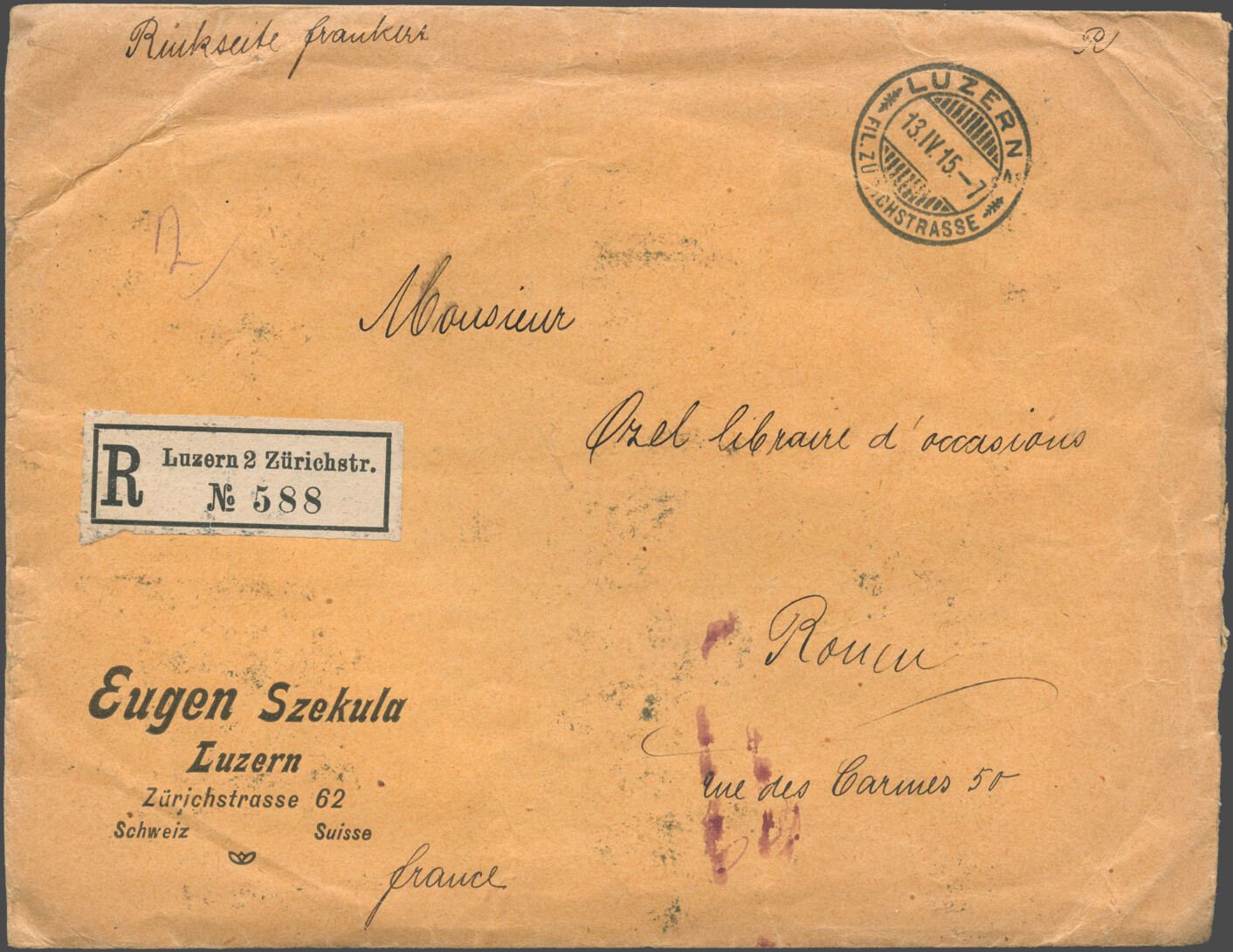
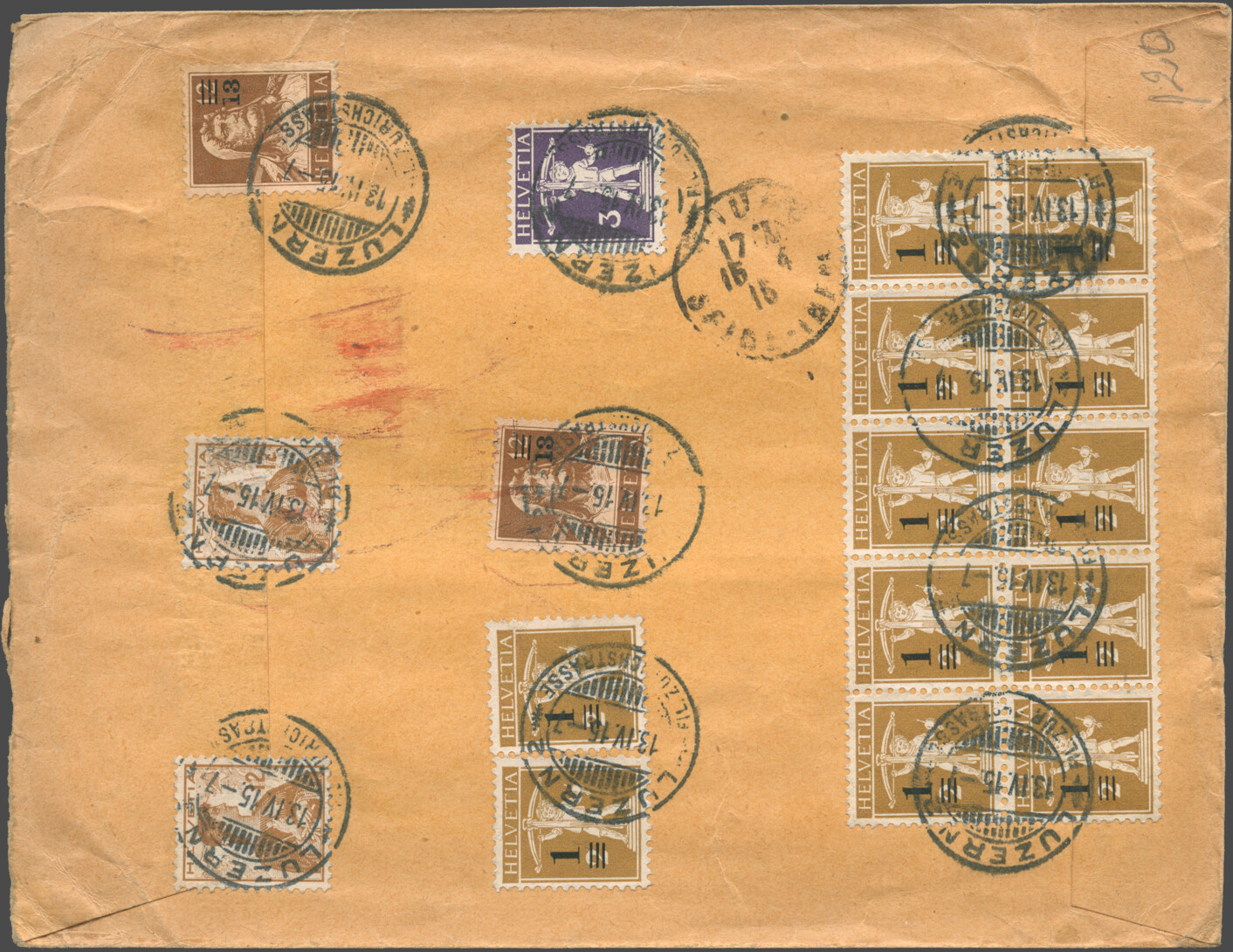
Cover — April 13, 1915
Registered mail sent on April 13, 1915, from Lucerne, Switzerland, to Rouen, France. Arrived on April 16, 1915.
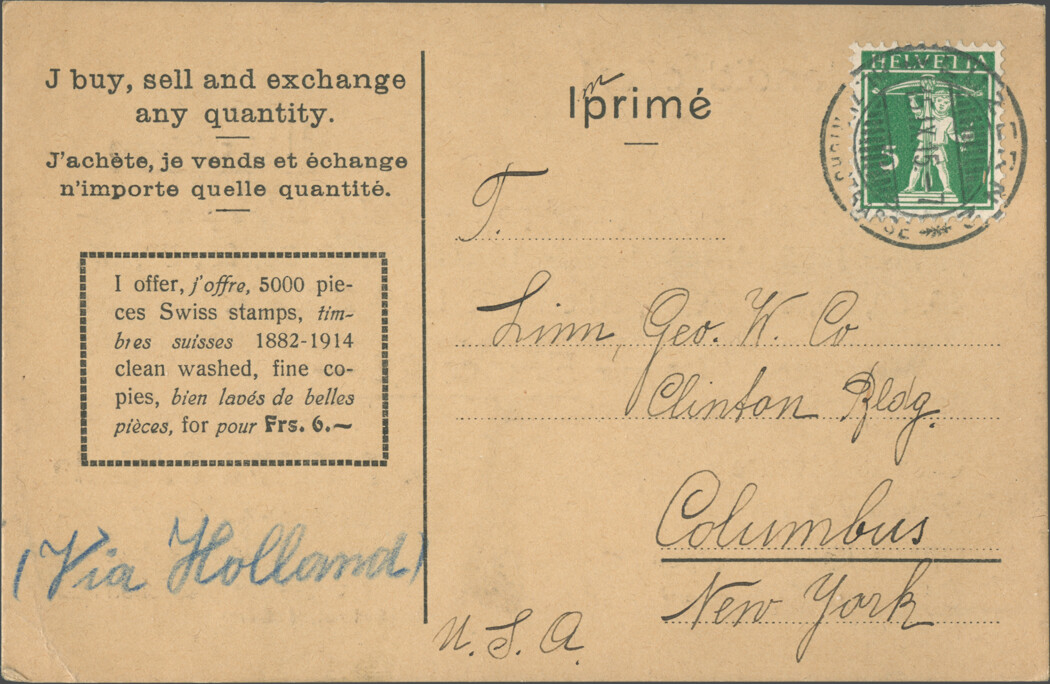
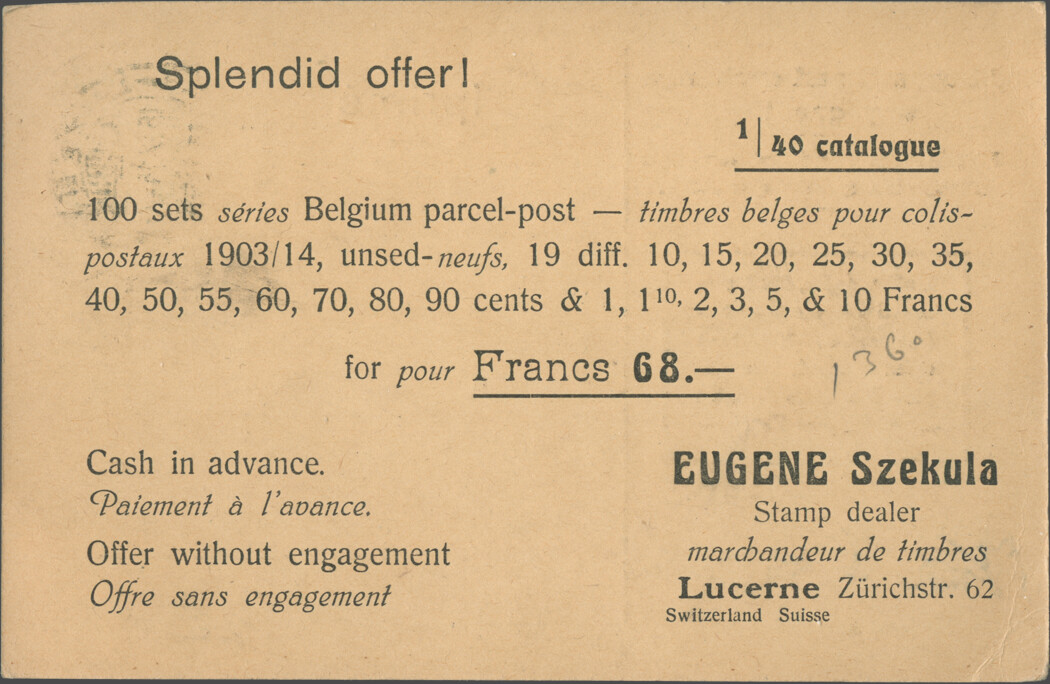
Postcard — September 15, 1915
Sent on September 15, 1915, from Lucerne, Switzerland, to New York City, United States.
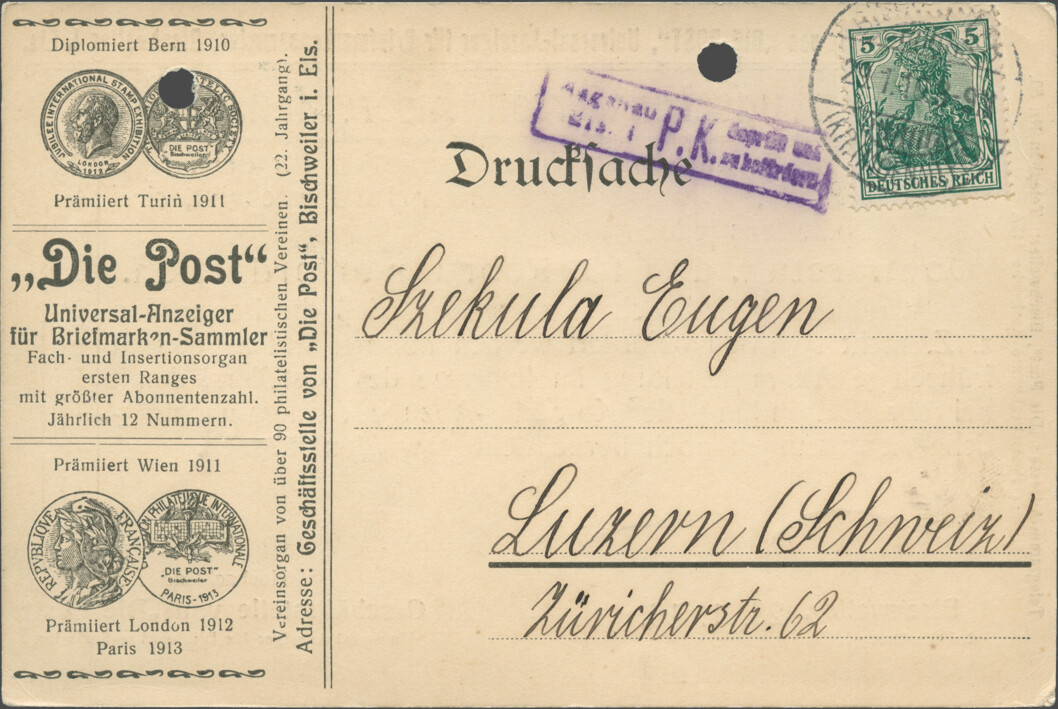
Postcard — January 29, 1916
Printed matter sent on January 29, 1916, from Bischweiler, Alsace (=Bischwiller), Germany (today France), to Lucerne, Switzerland.
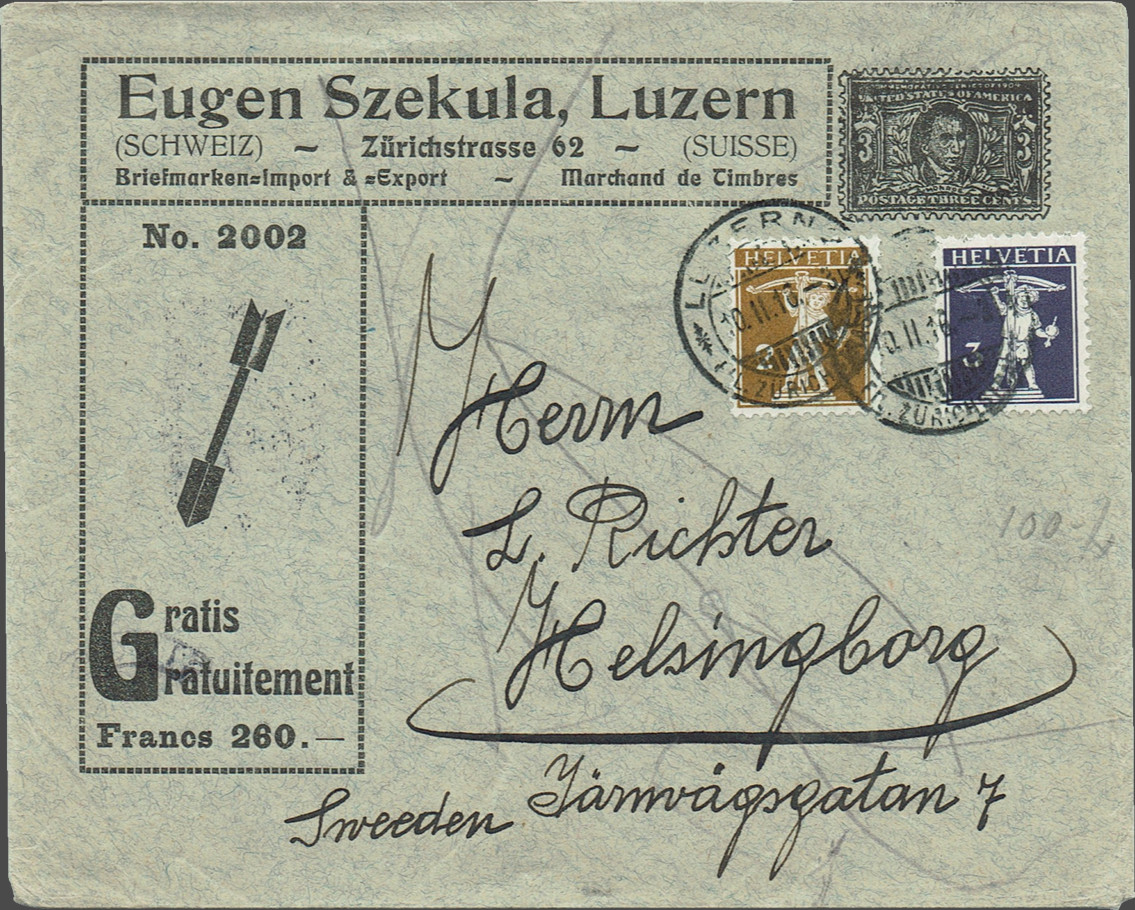
Cover — February 10, 1916
Sent on February 10, 1916, from Lucerne, Switzerland, to Helsingborg, Sweden.
Scan provided by Max Brack.
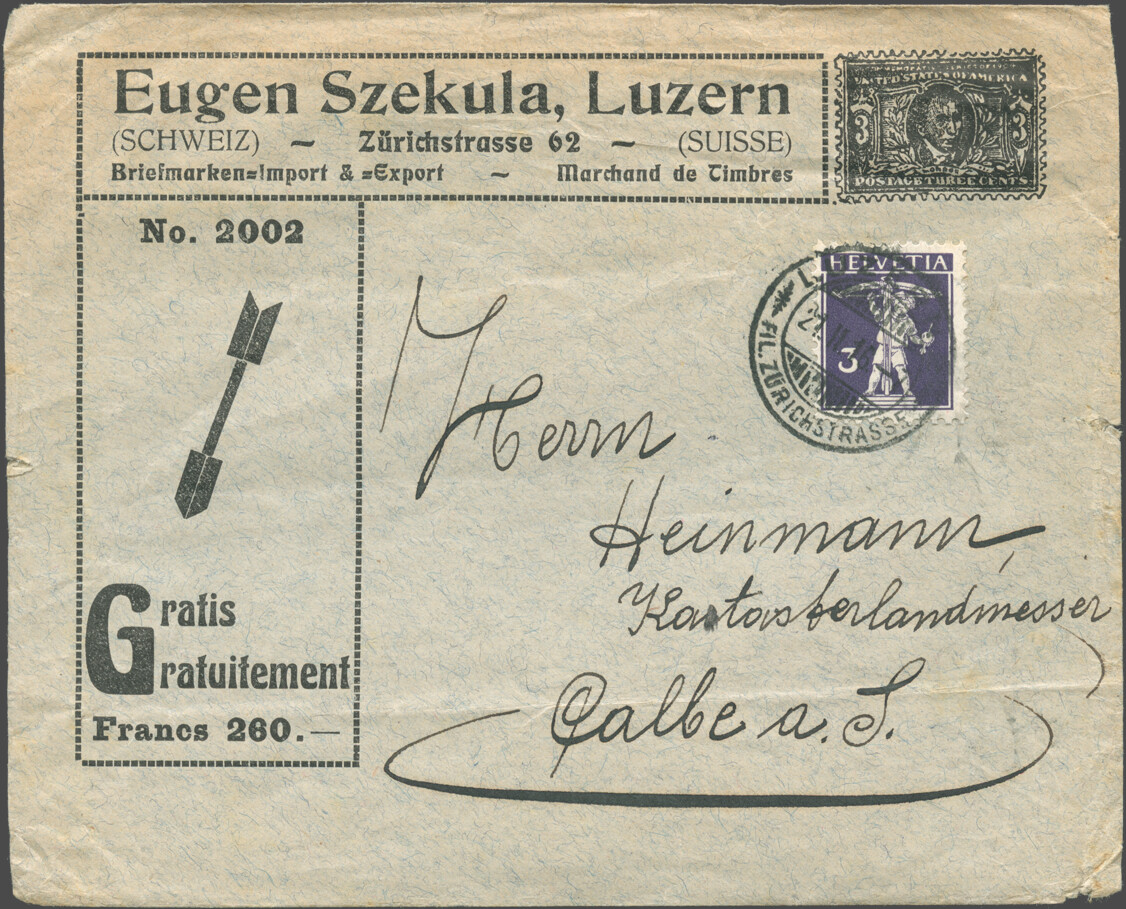
Cover — February 21, 1916
Sent on February 21, 1916, from Lucerne, Switzerland, to Calbe a.d. Saale, Germany.
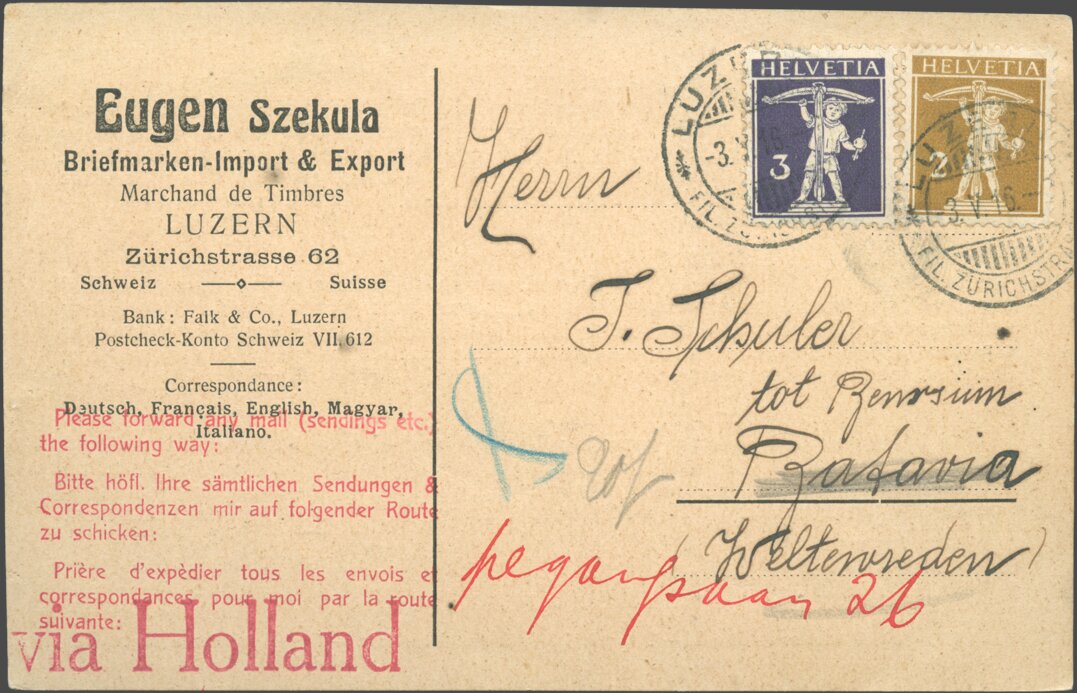
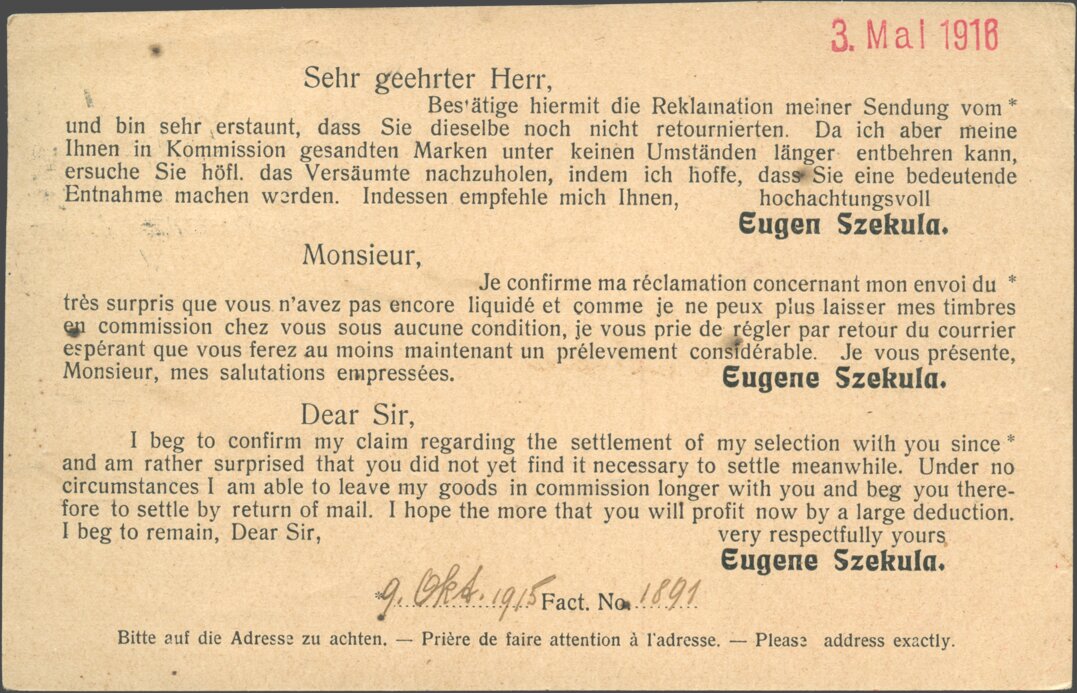
Postcard — May 3, 1916
Sent on May 3, 1916, from Lucerne, Switzerland, to Weltevreden, Batavia (today part of Jakarta), Dutch East Indies (today Indonesia).
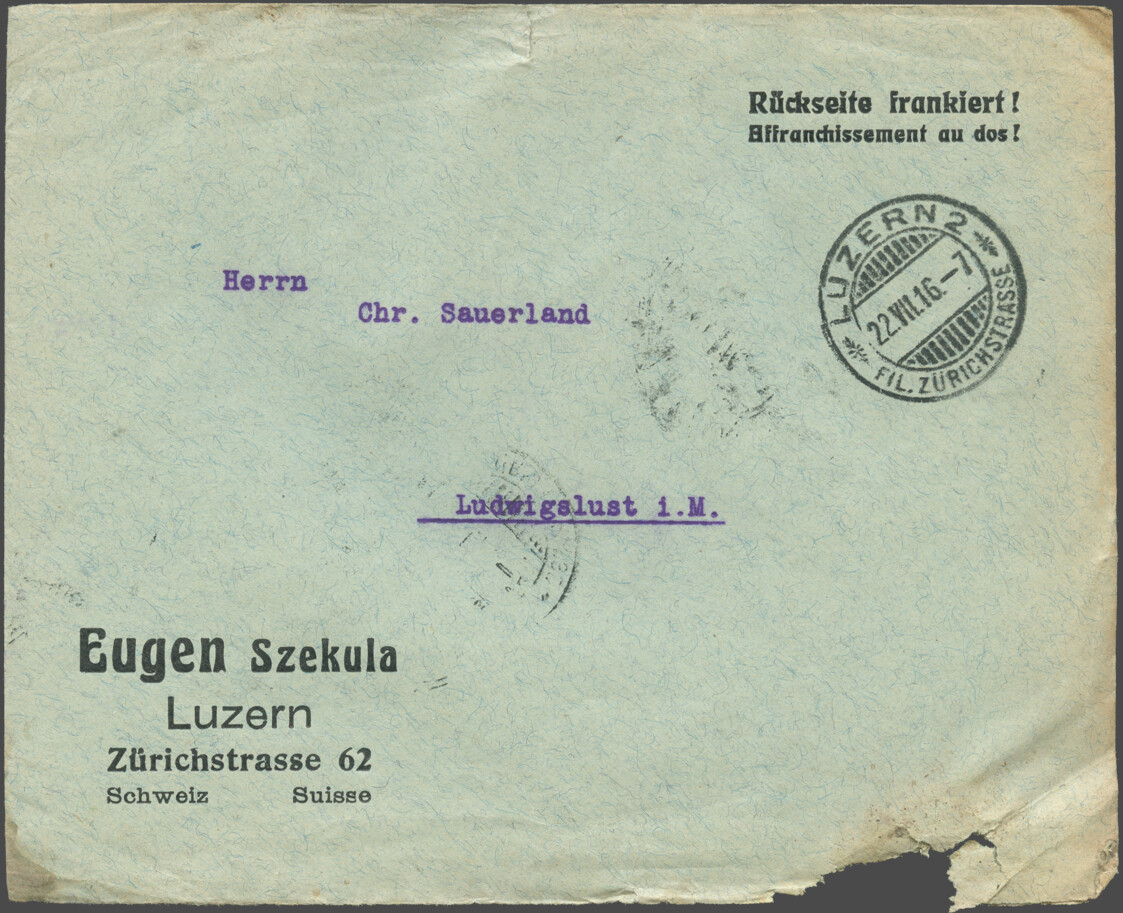
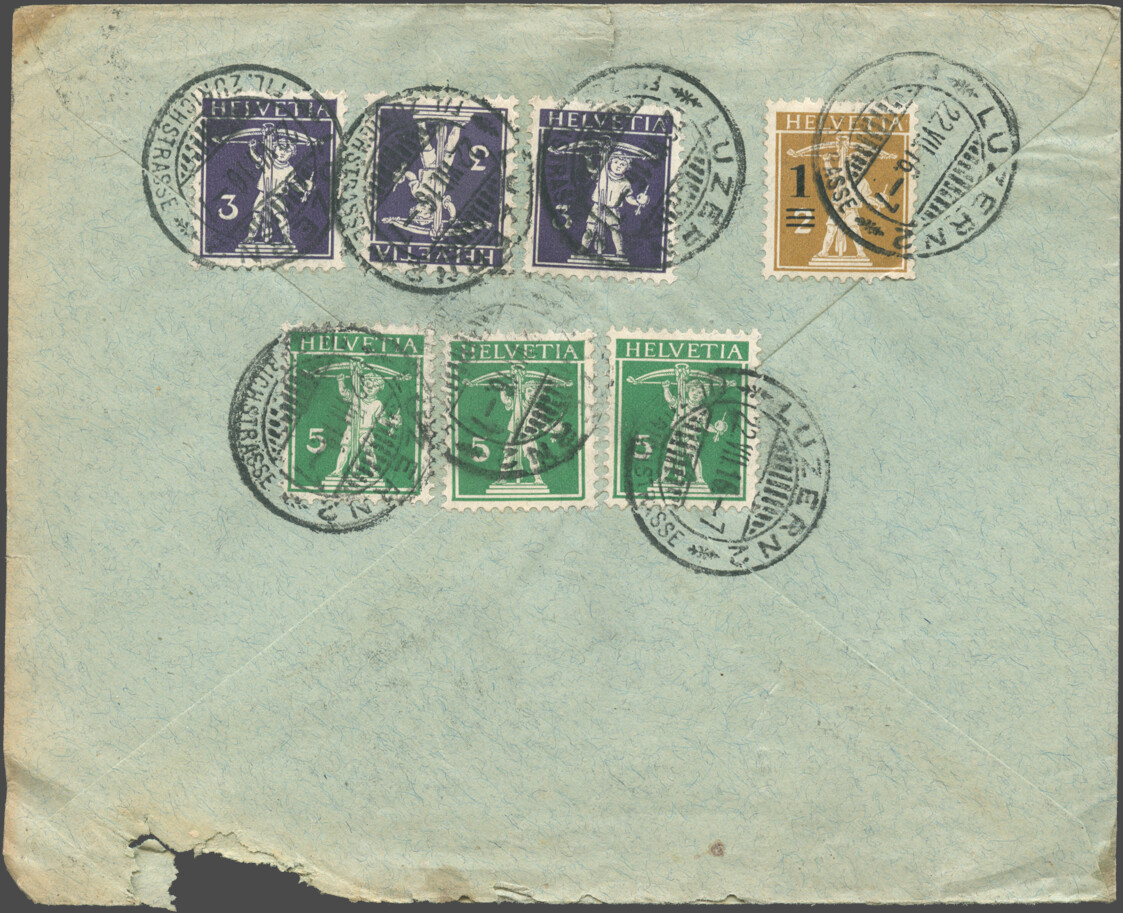
Cover — July 22, 1916
Sent on July 22, 1916, from Lucerne, Switzerland, to Ludwigslust, Germany.
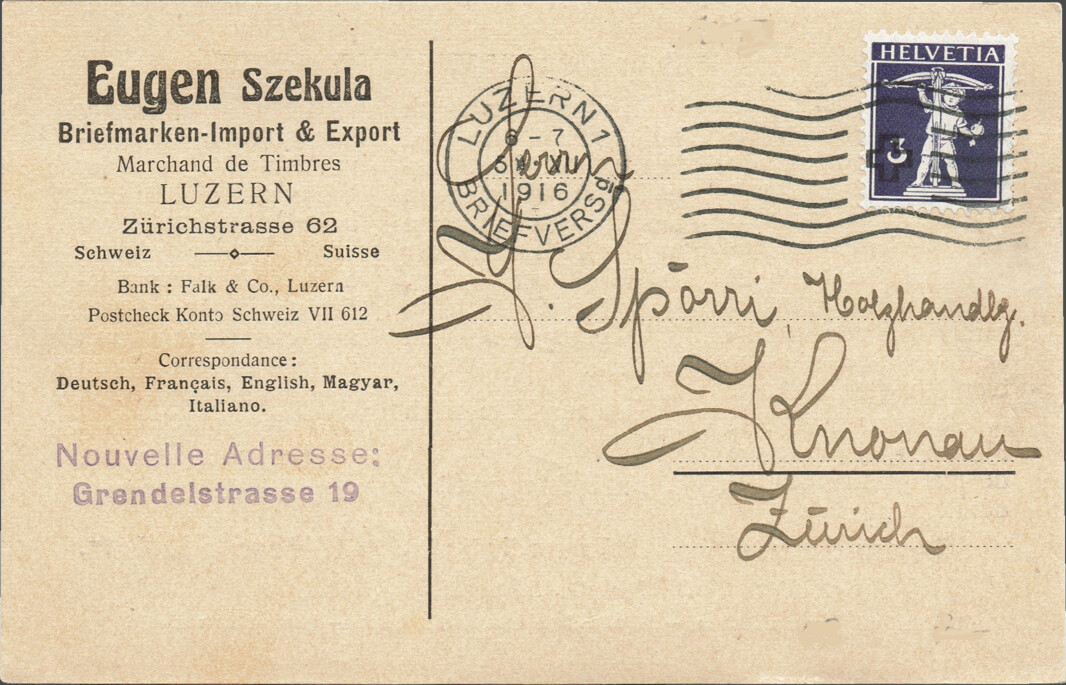
Postcard — December 5, 1916
Sent on December 5, 1916, from Lucerne, Switzerland, to Knonau.
Scans provided by Max Brack.
Cover — December 17, 1917
Sent on December 17, 1917, from Lucerne, Switzerland, to Colditz, Germany.
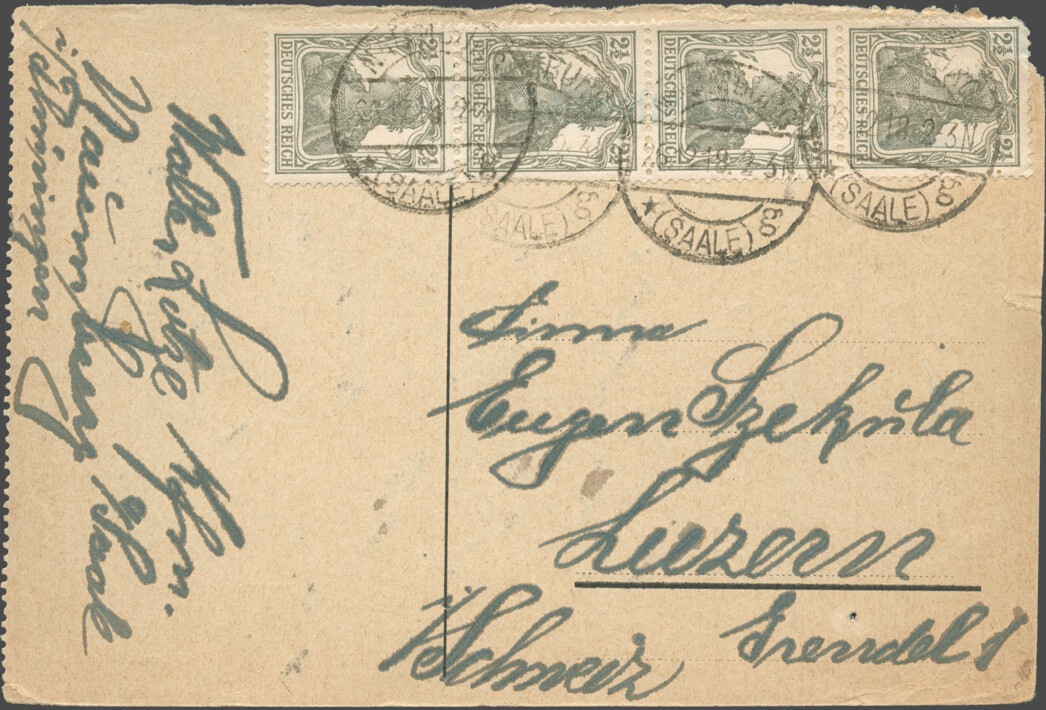
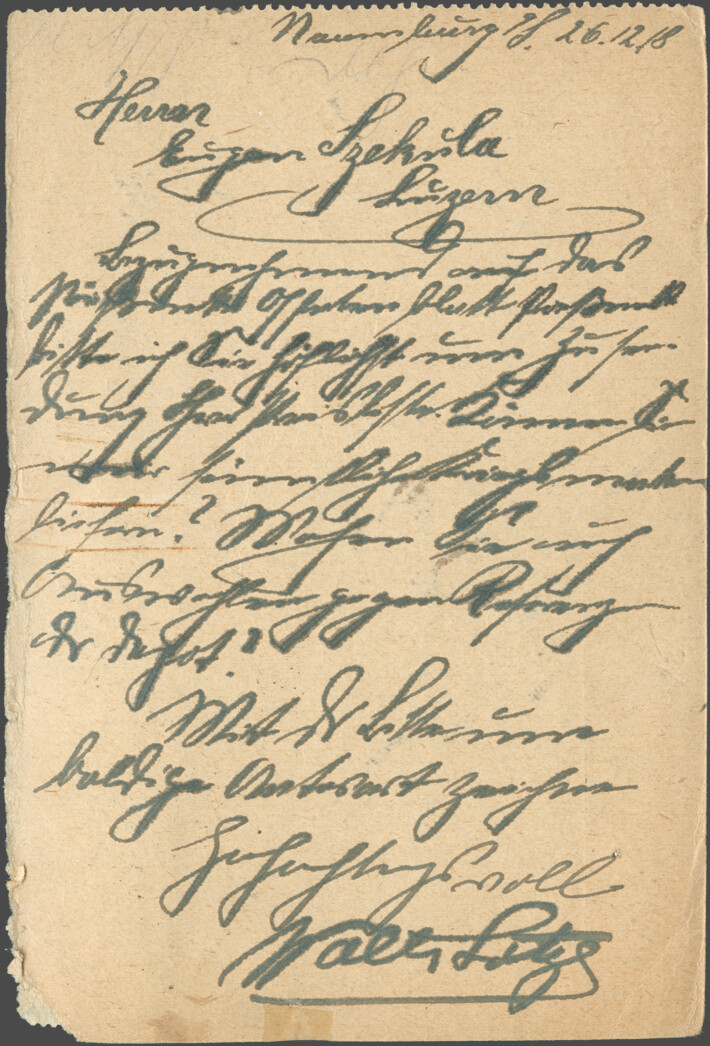
Postcard — December 26, 1918
Sent on December 26, 1918, from Naumburg a.d. Saale, Germany, to Lucerne, Switzerland.
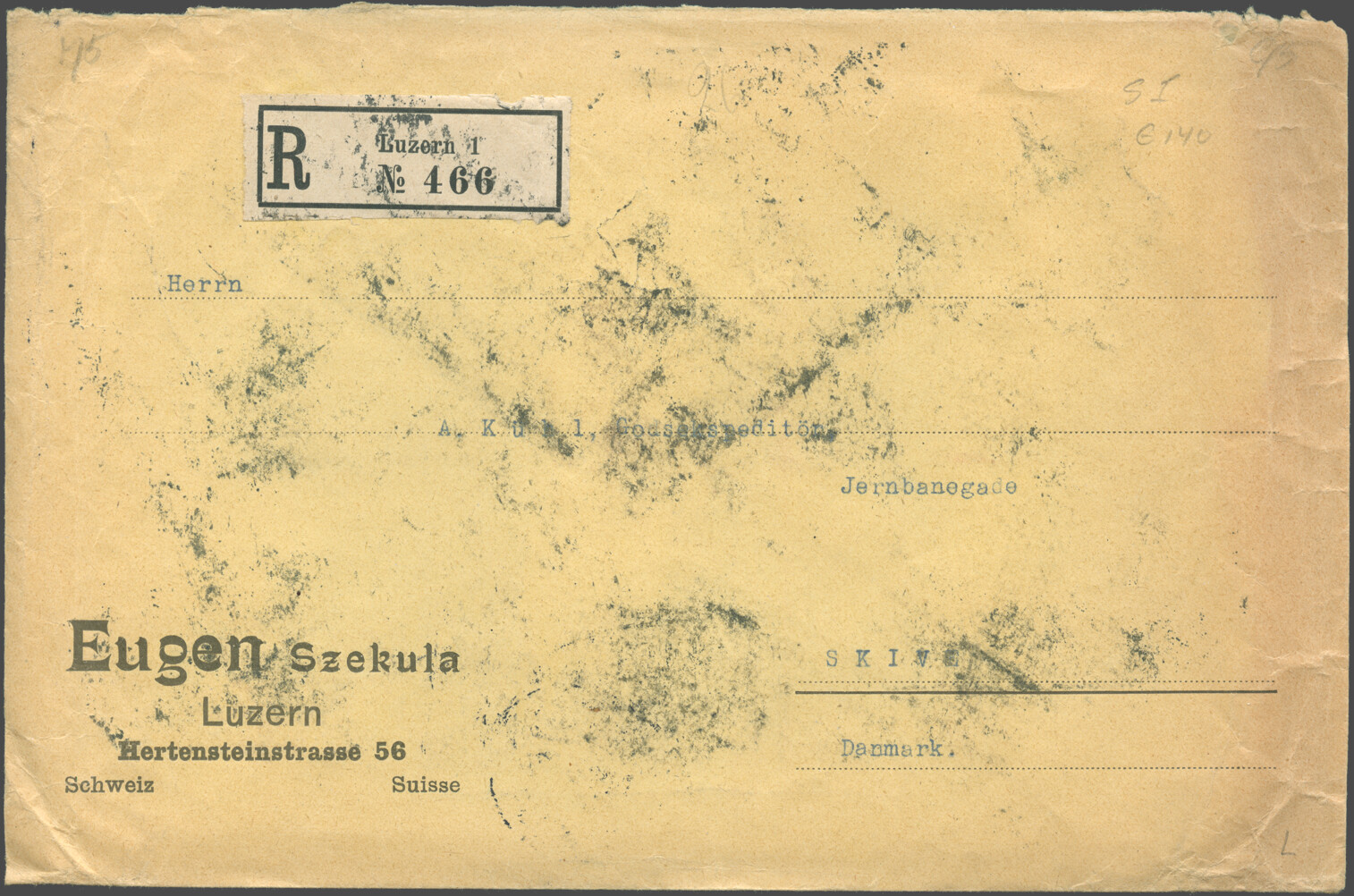
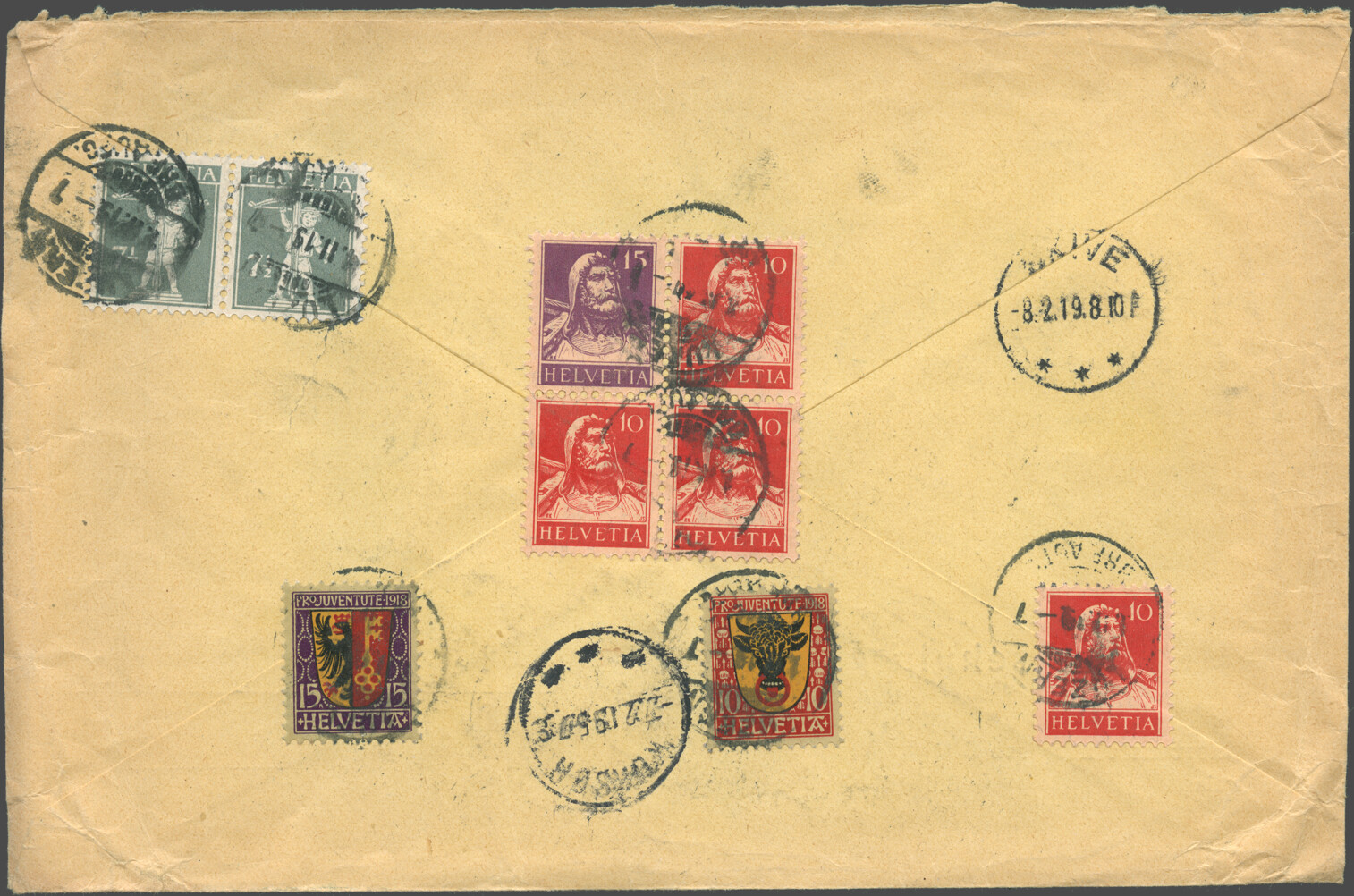
Cover — February 1, 1919
Registered mail sent on February 1, 1919, from Lucerne, Switzerland, to Skive, Denmark. Arrived on February 8, 1919.
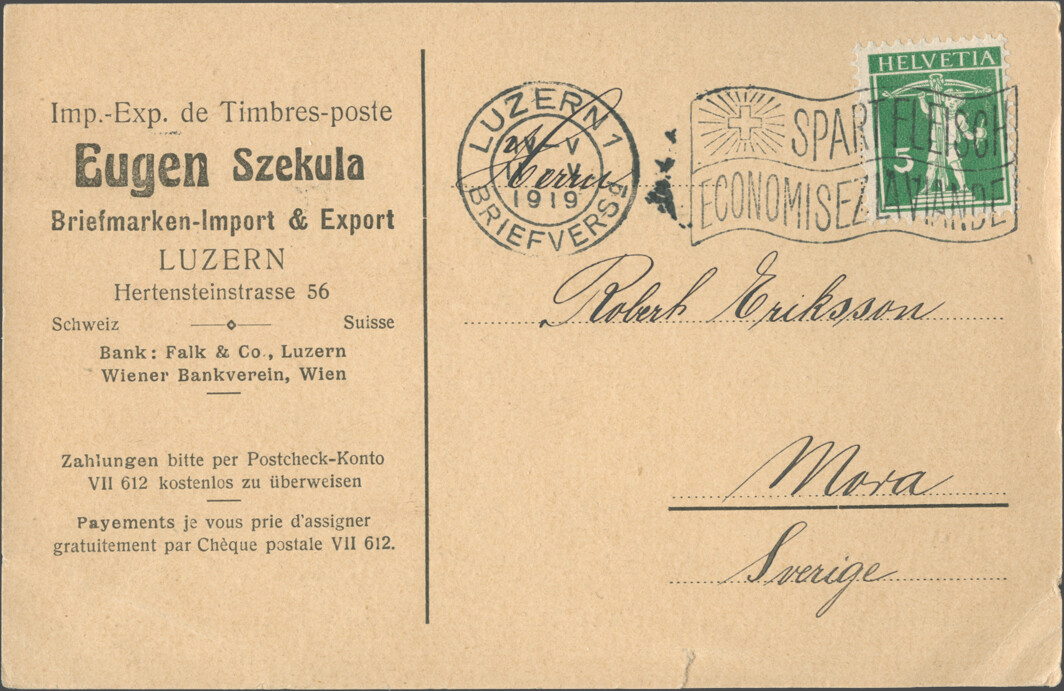
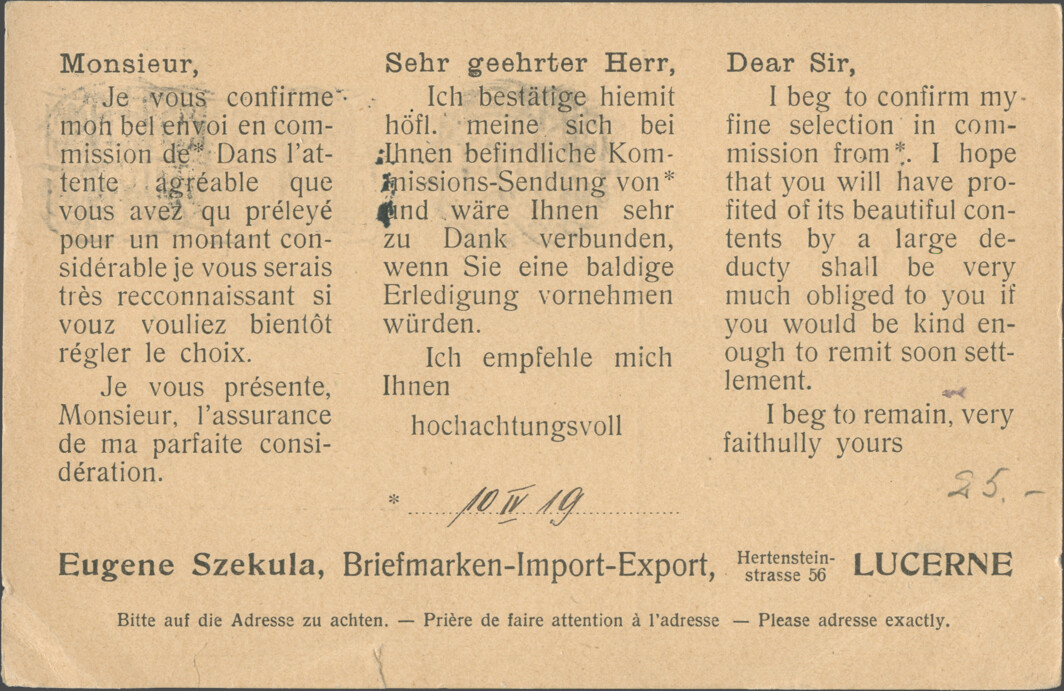
Postcard — April 11, 1919
Sent on April 11, 1919, from Lucerne, Switzerland, to Mora, Sweden.
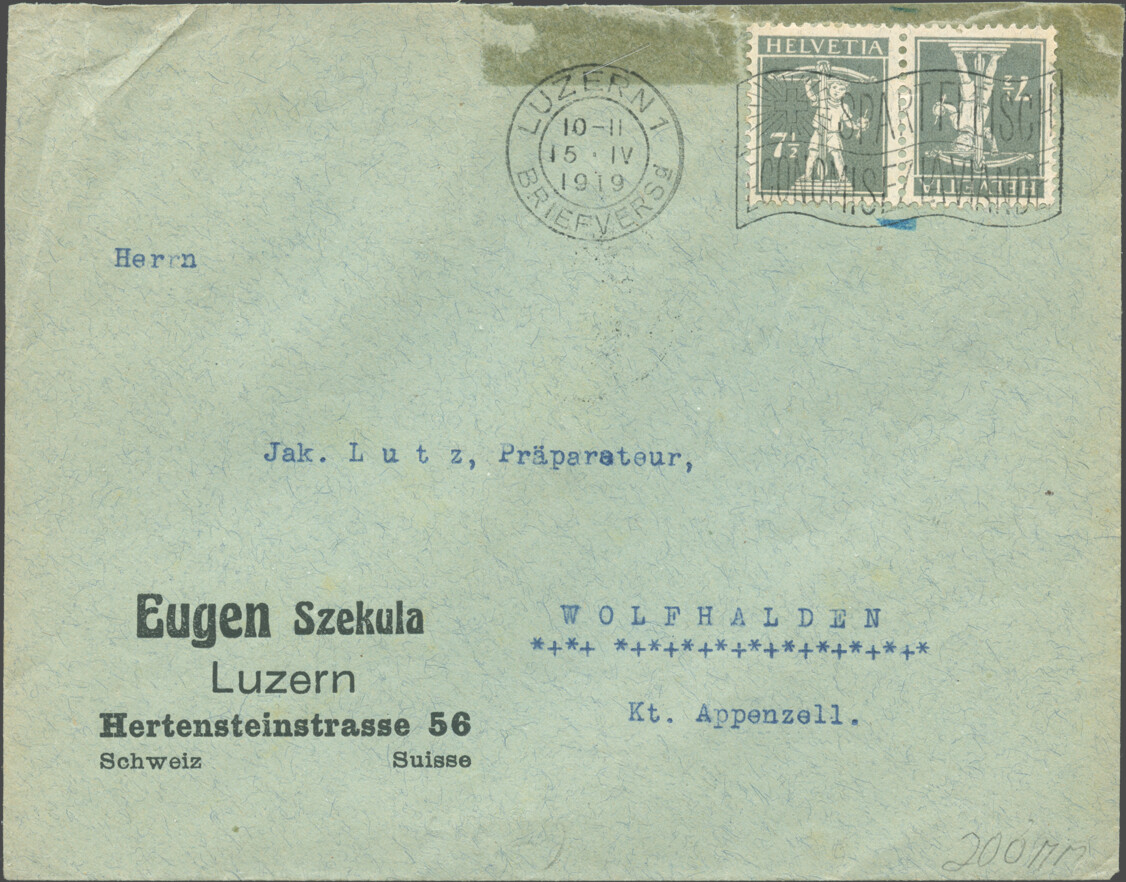
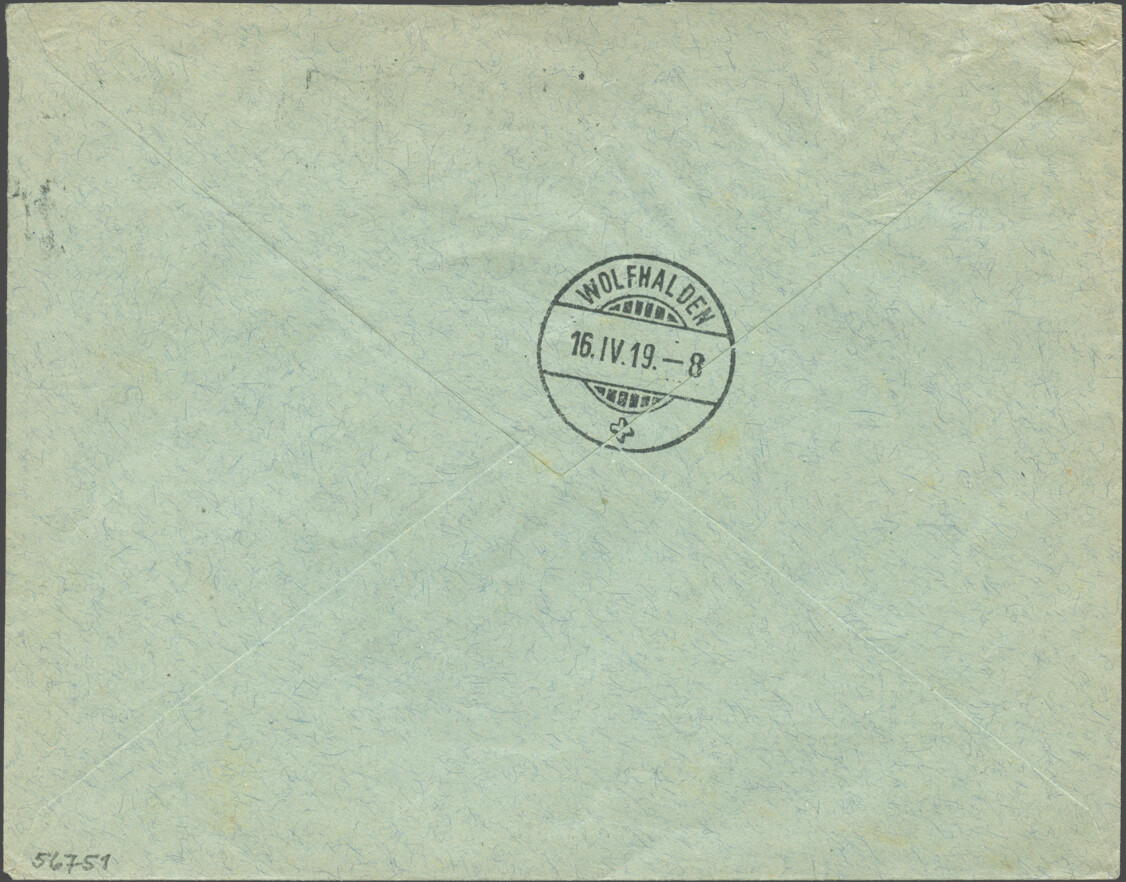
Cover — April 15, 1919
Sent on April 15, 1919, from Lucerne, Switzerland, to Wolfhalden. Arrived on April 16, 1919.
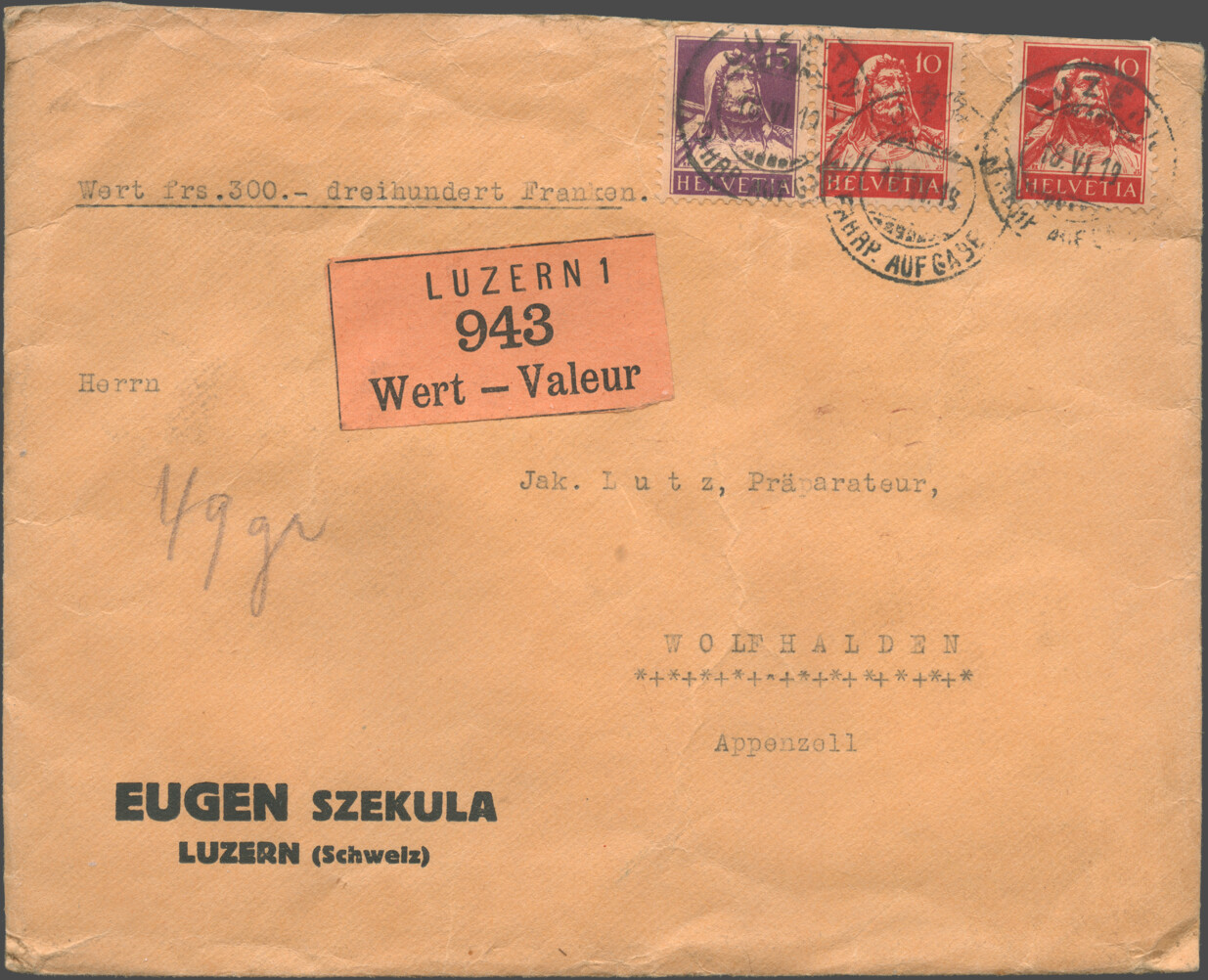
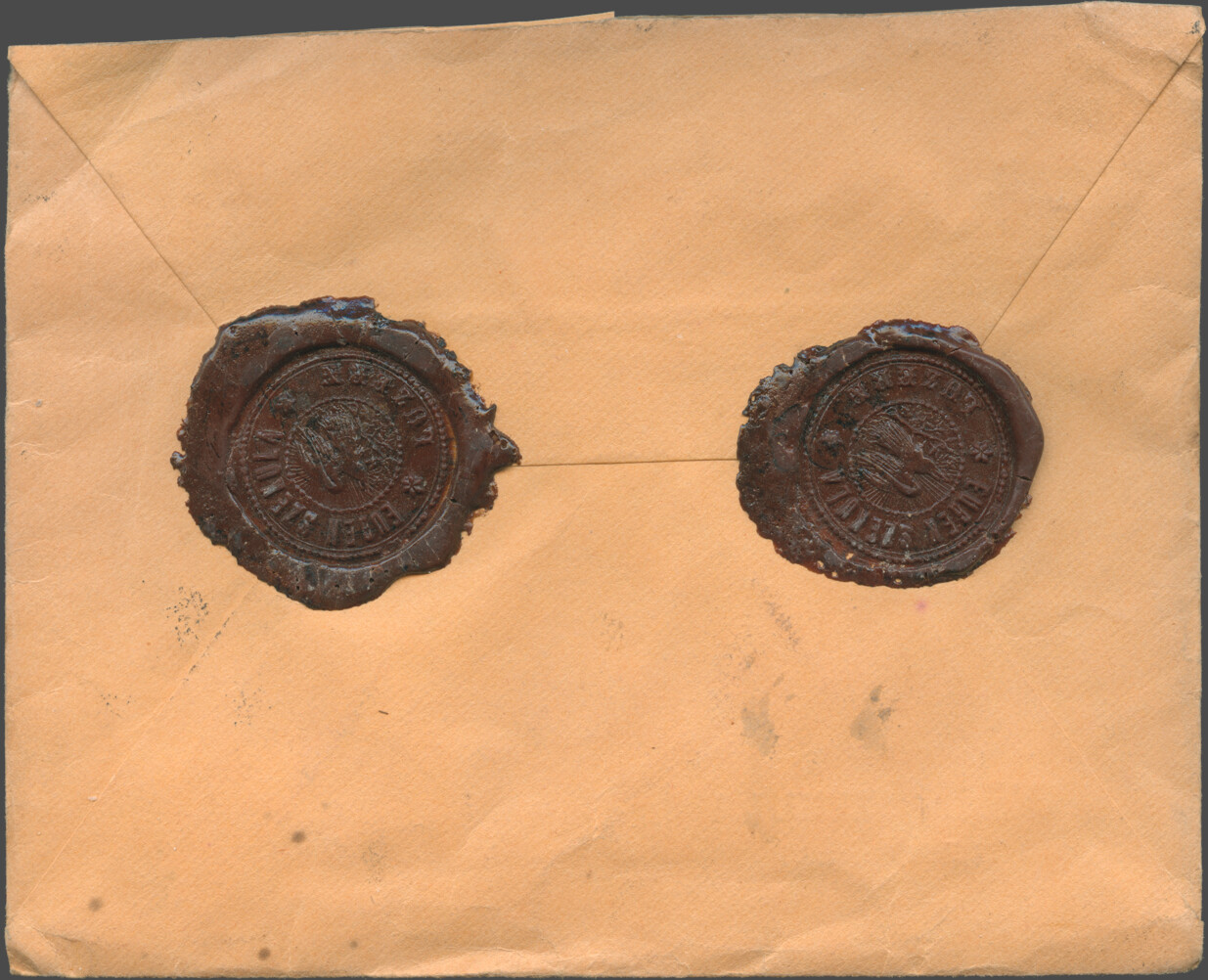
Cover — June 18, 1919
Insured letter sent on June 18, 1919, from Lucerne, Switzerland, to Wolfhalden.
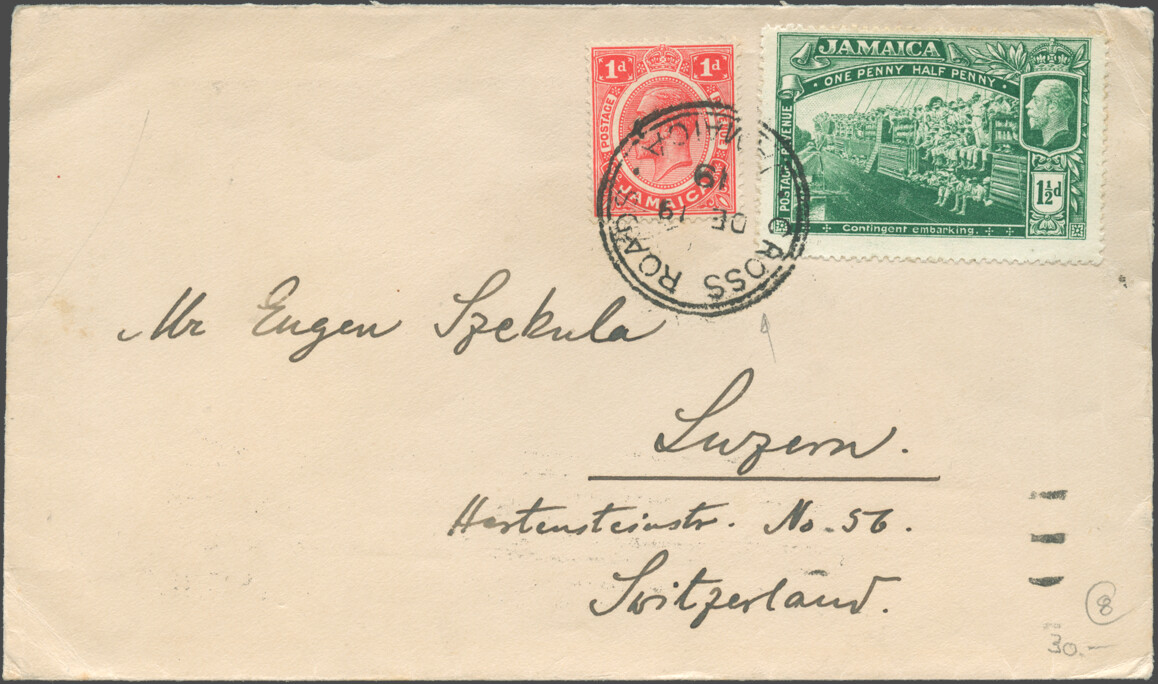
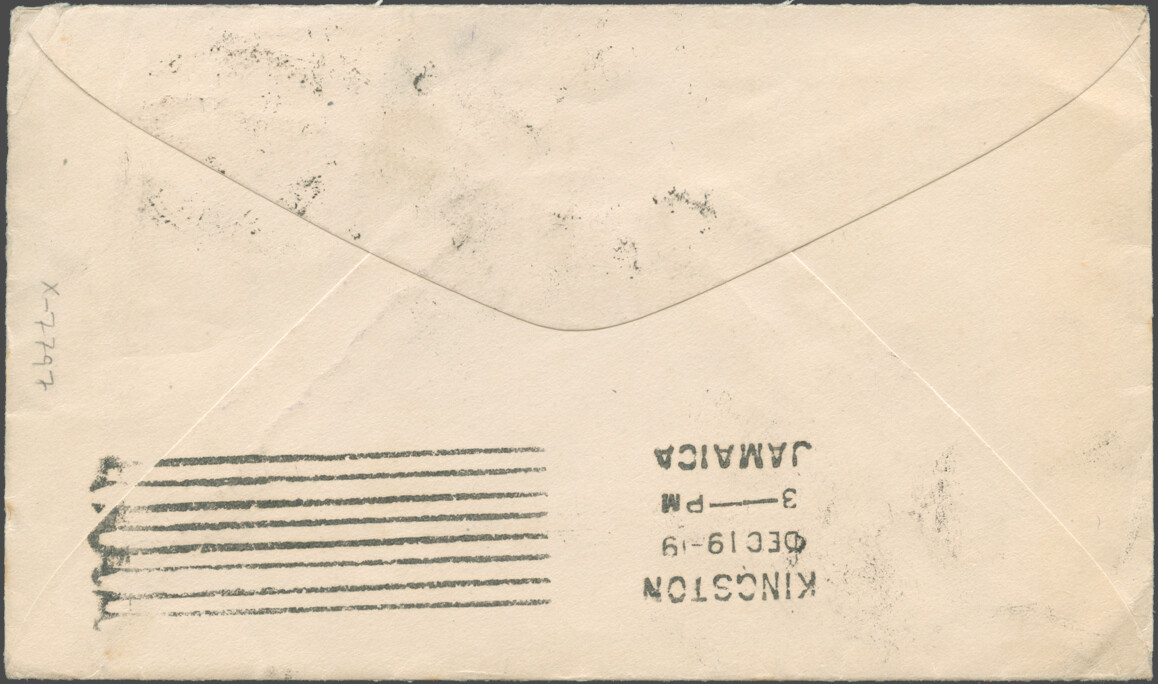
Cover — December 19, 1919
Sent on December 19, 1919, from Kingston, Jamaica, to Lucerne, Switzerland.
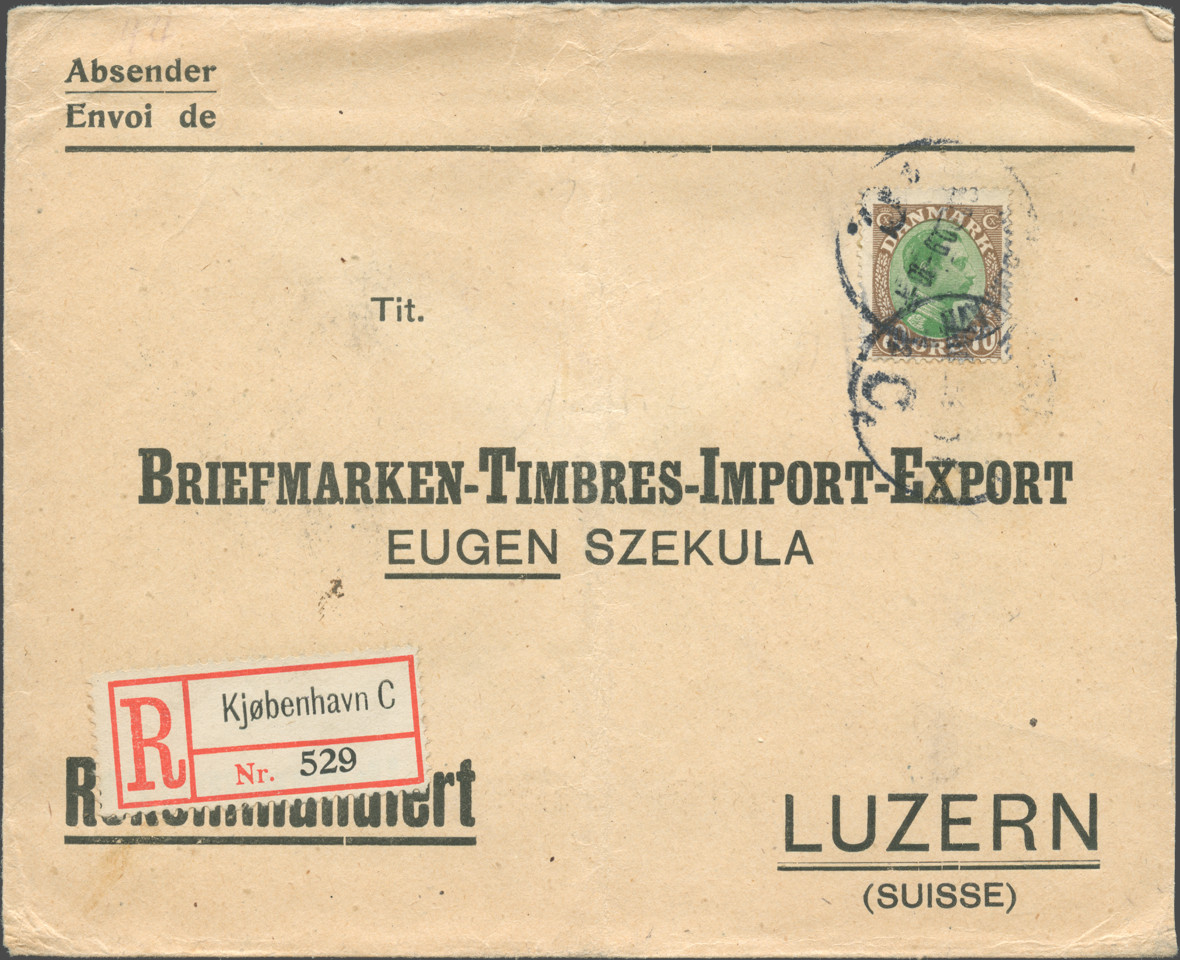
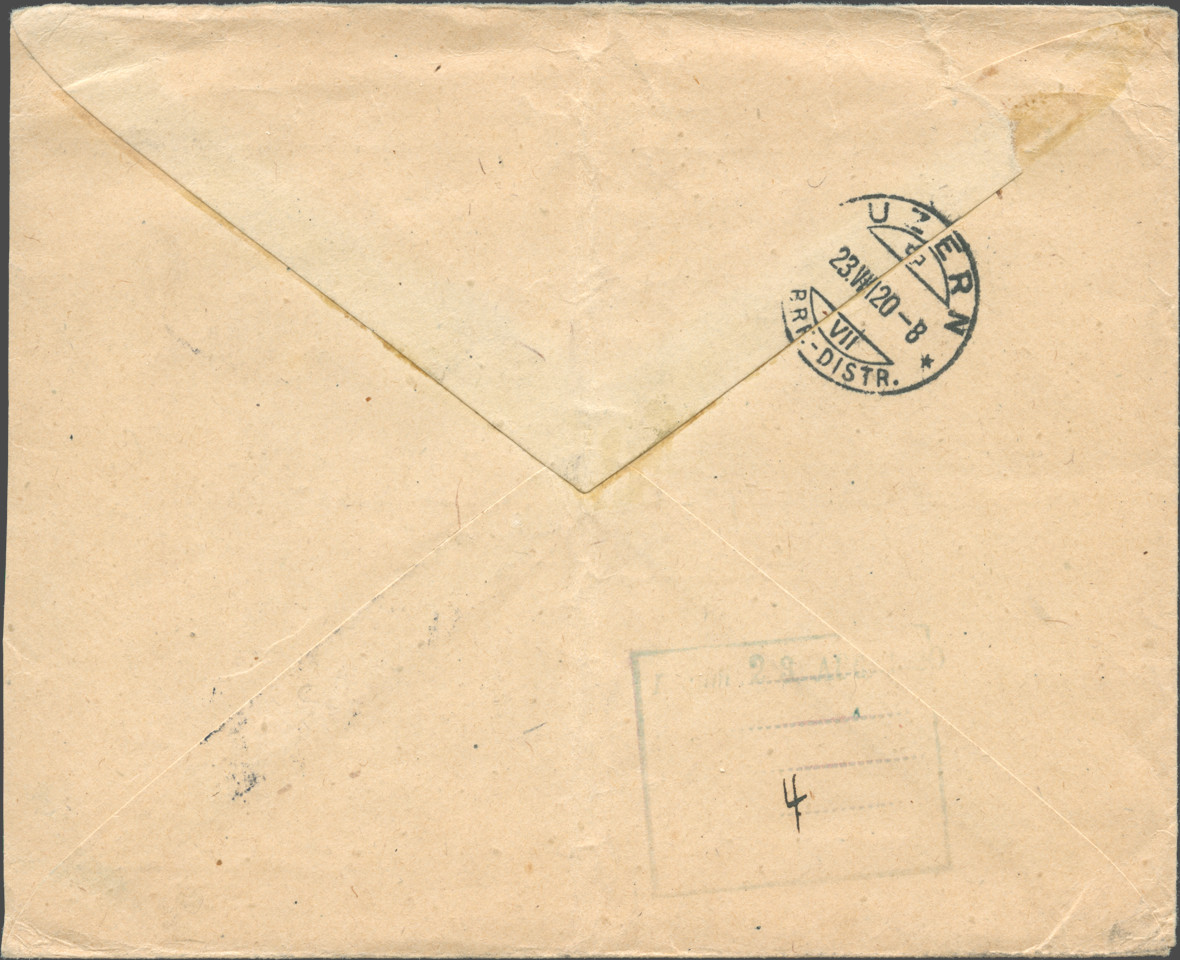
Return Envelope — August 1920
Registered mail sent in August 1920 from Copenhagen, Denmark, to Lucerne, Switzerland. Arrived on August 23, 1920.
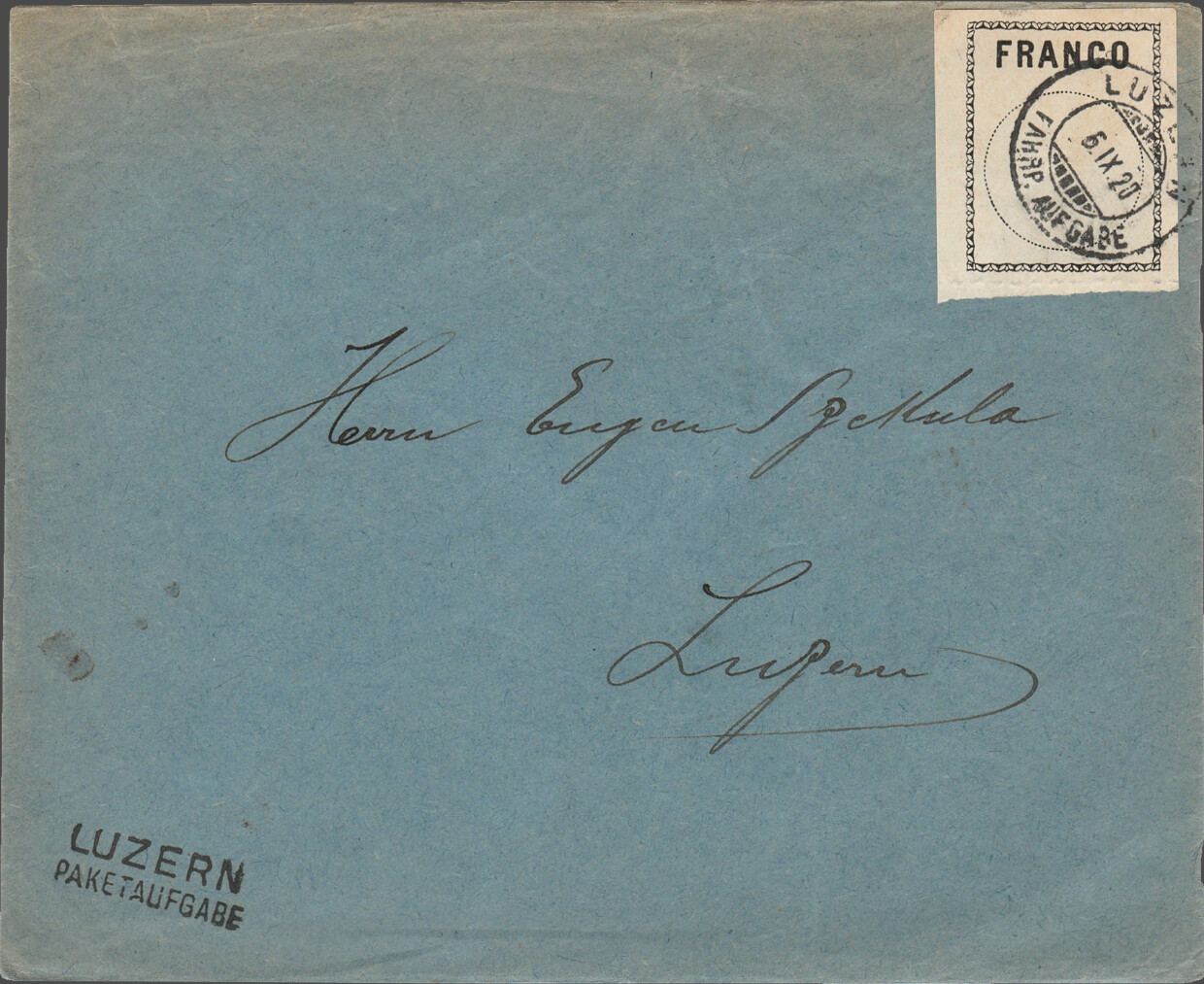
Cover — September 5, 1920
Official mail sent on September 5, 1920, within Lucerne, Switzerland.
Scan provided by Bob Medland.
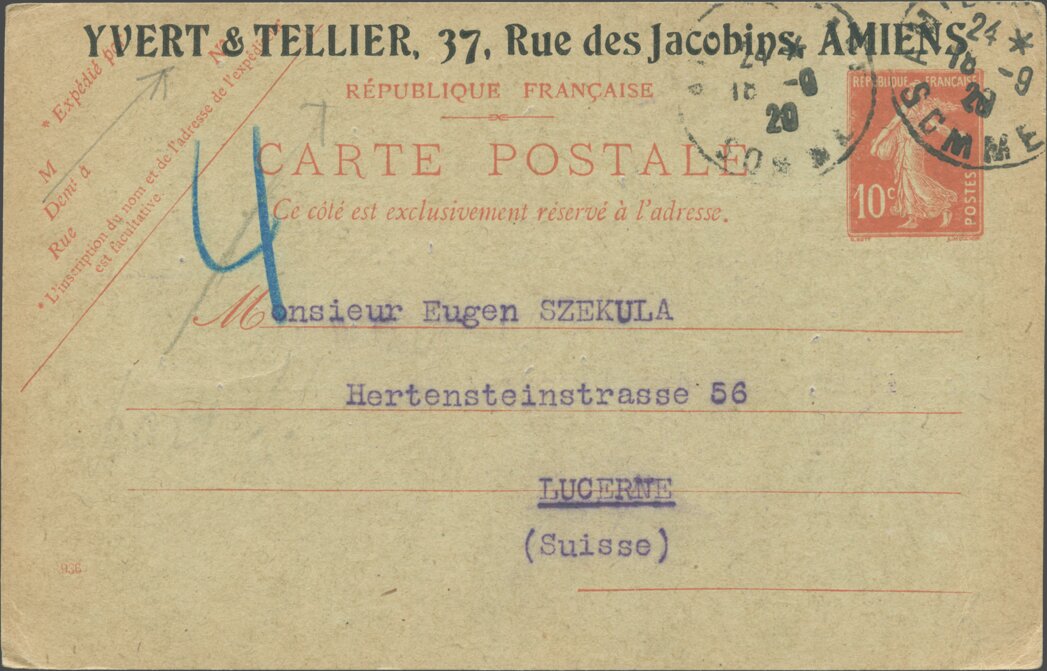
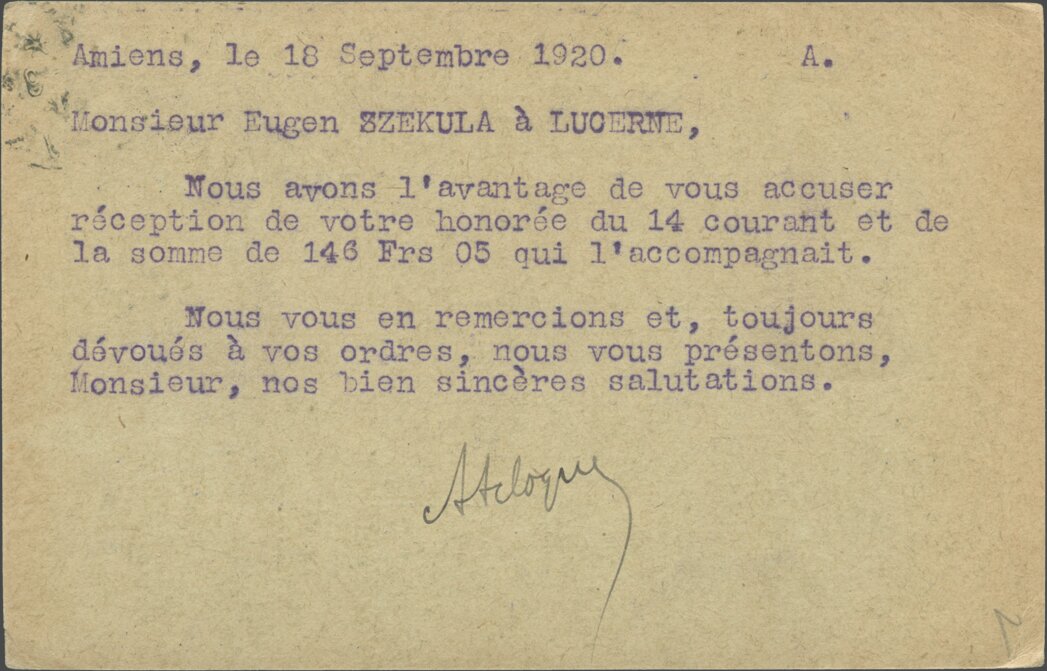
Postal Card — September 18, 1920
Sent on September 18, 1920, from Amiens, France, to Lucerne, Switzerland.
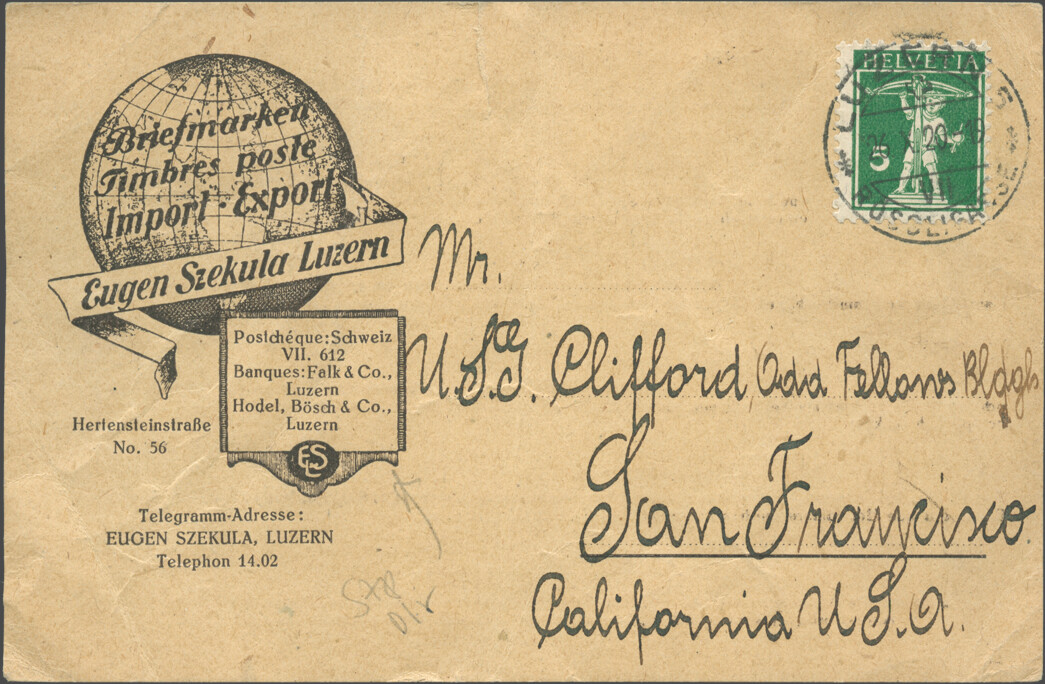
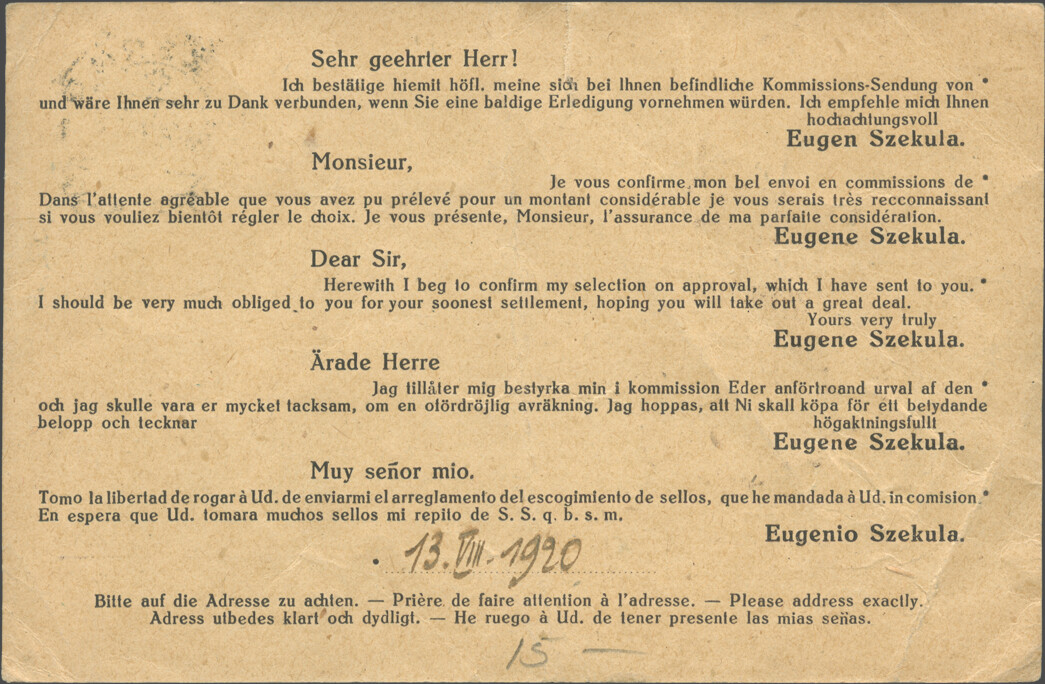
Postcard — October 26, 1920
Sent on October 26, 1920, from Lucerne, Switzerland, to San Francisco, California, United States.
Cover — October 29, 1920
Sent on October 29, 1920, from Helsinki, Finland, to Lucerne, Switzerland.
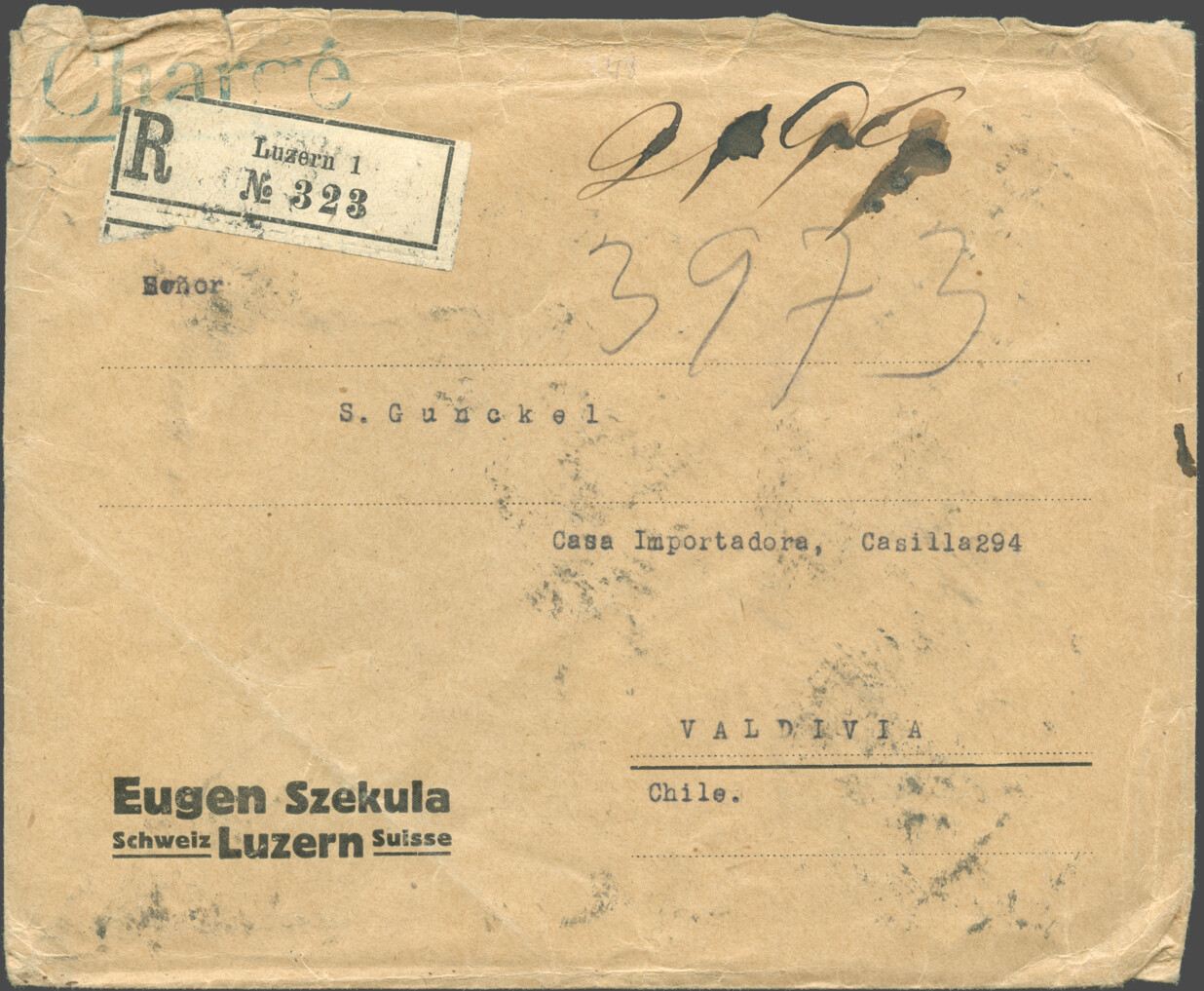
Cover — January 14, 1921
Registered mail sent on January 14, 1921, from Lucerne, Switzerland, to Valdivia, Chile. Arrived in February 1921.
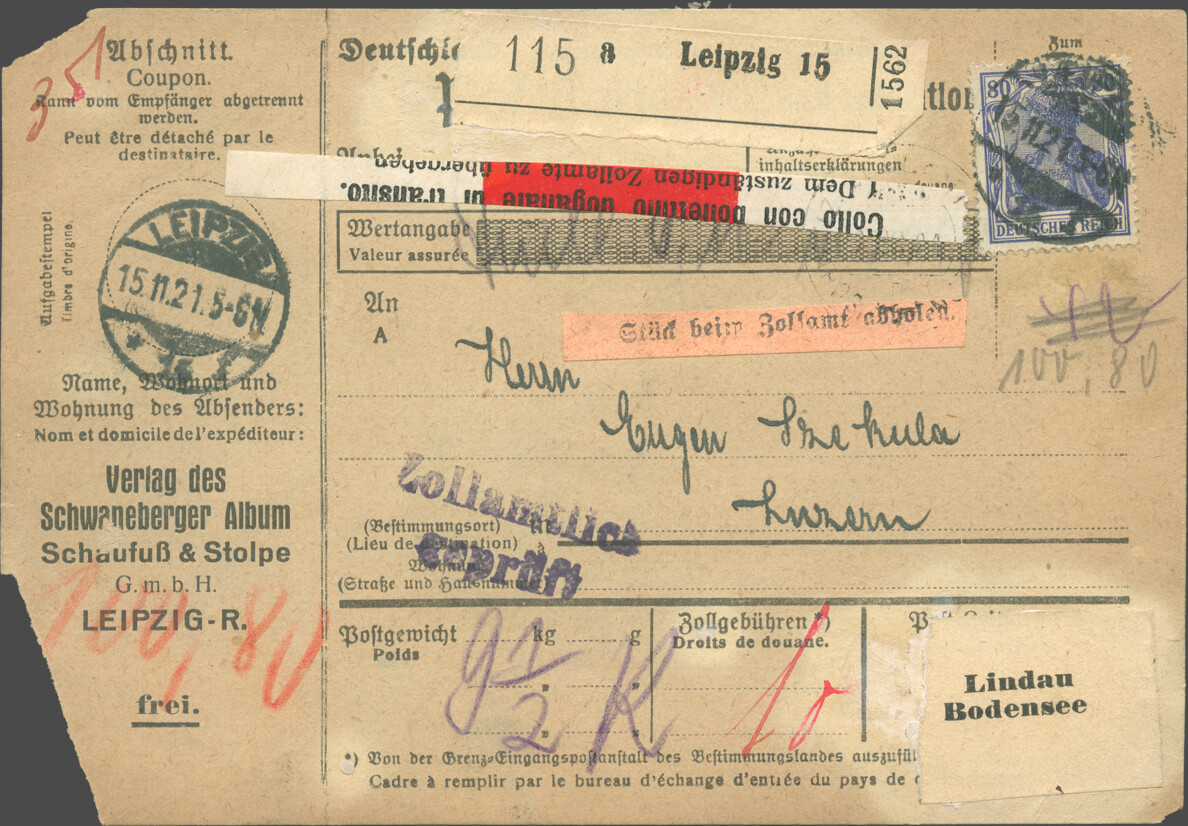
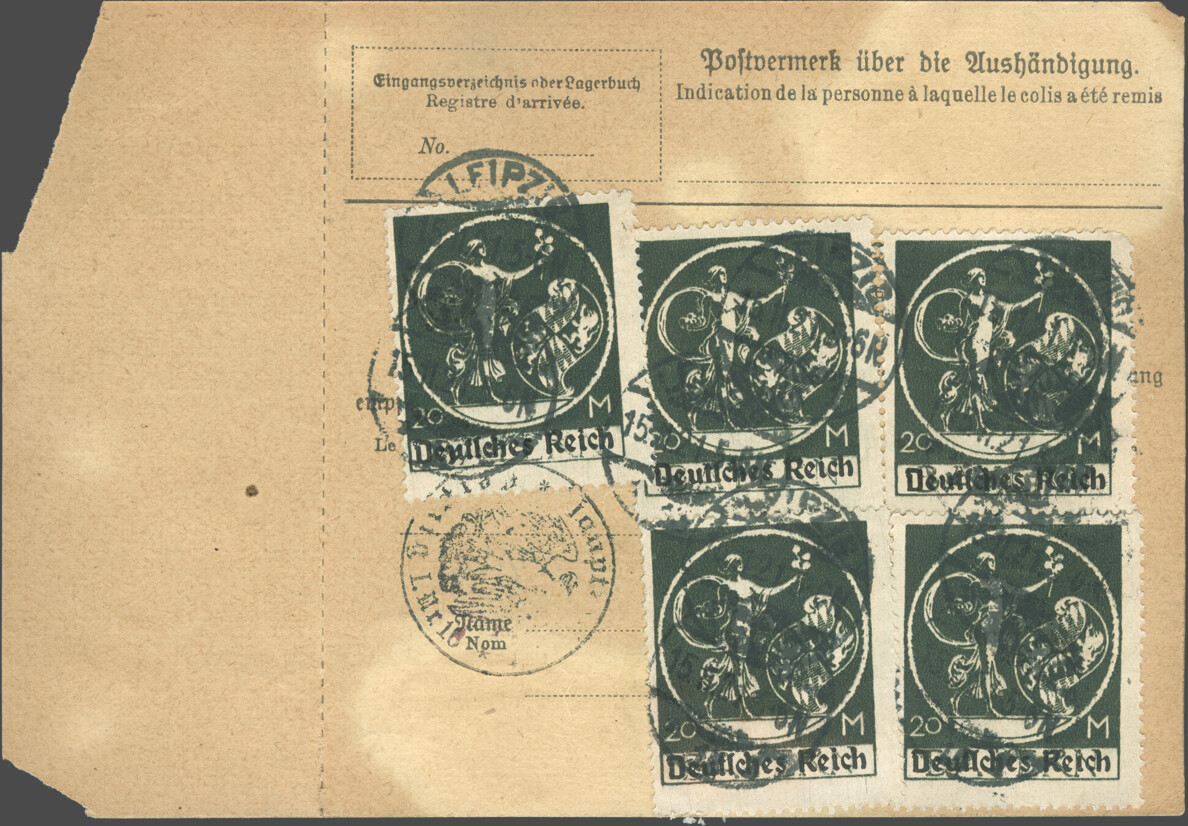
Parcel Registration Card — February 15, 1921
Sent on February 15, 1921 with shipment from Leipzig, Germany, to Eugen Szekula in Lucerne.
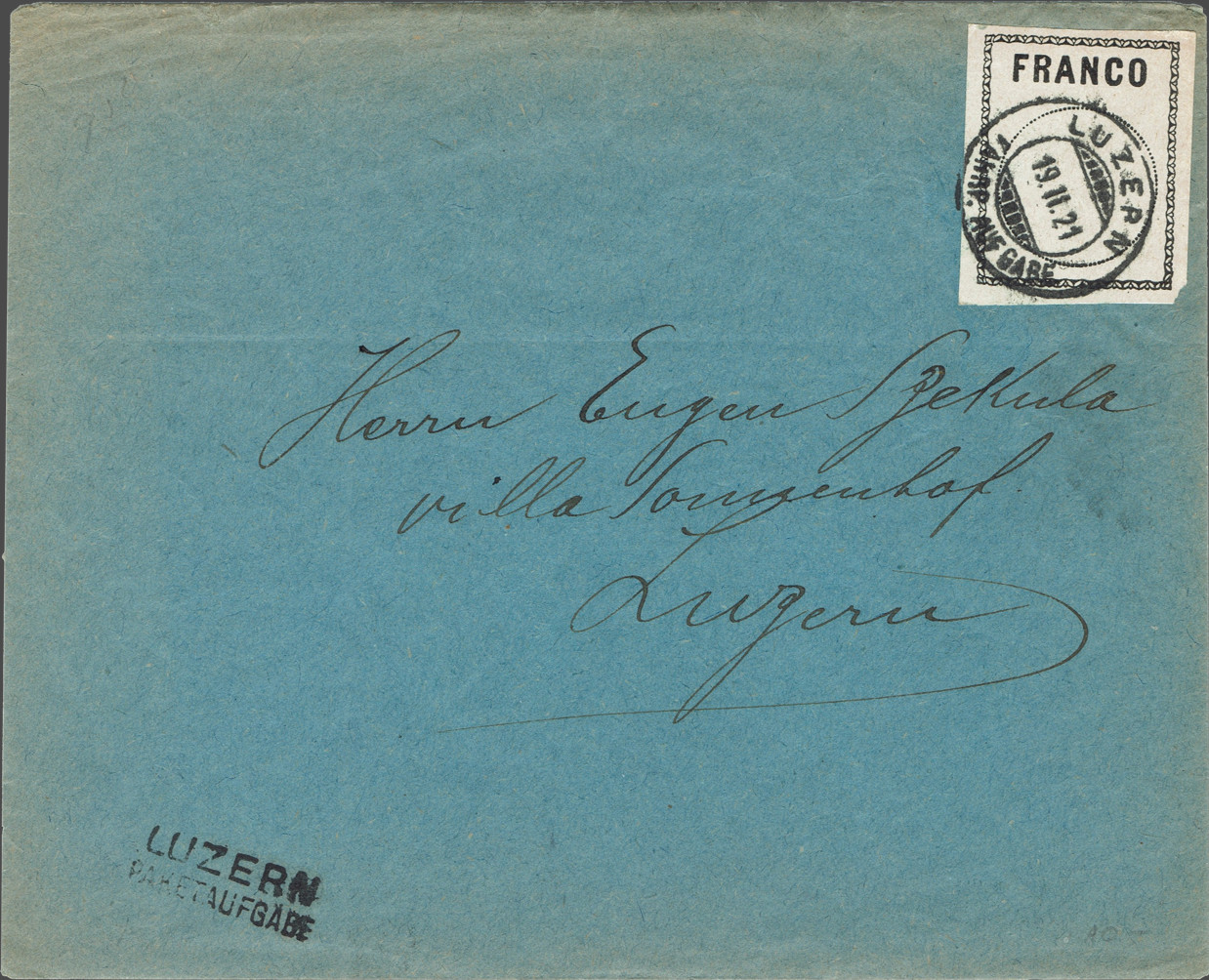
Cover — February 19, 1921
Official mail sent on February 19, 1921, within Lucerne, Switzerland.
Scan provided by Max Brack.
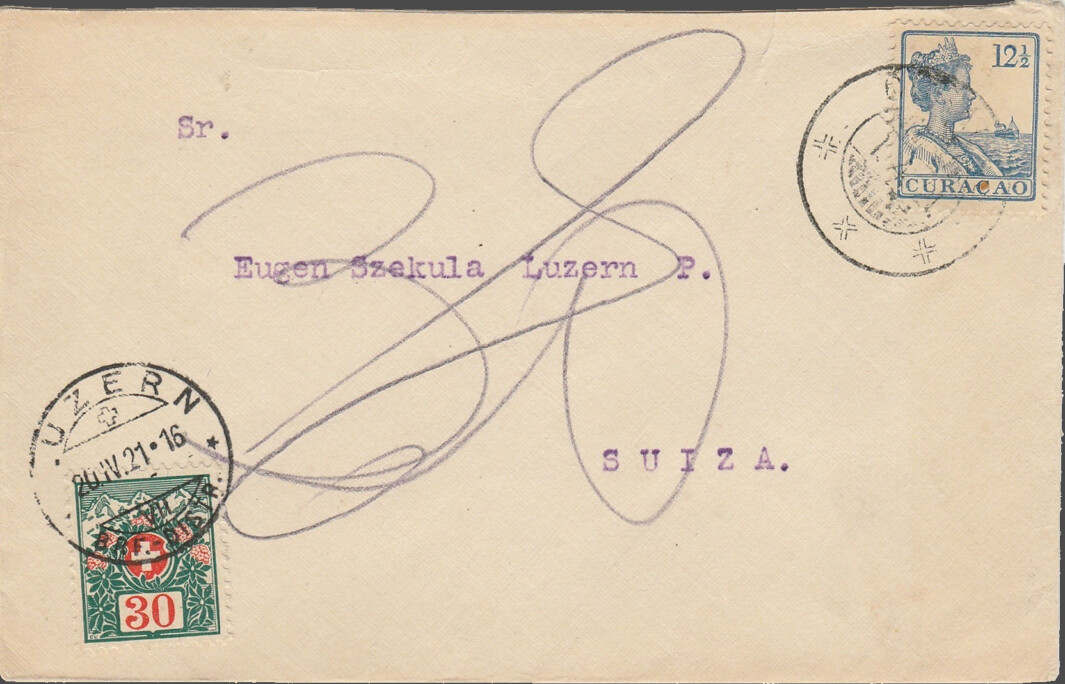
Cover — April 1921
Sent in April 1921 from Curaçao to Lucerne, Switzerland. Arrived on April 20, 1921.
Scan provided by Bob Medland.
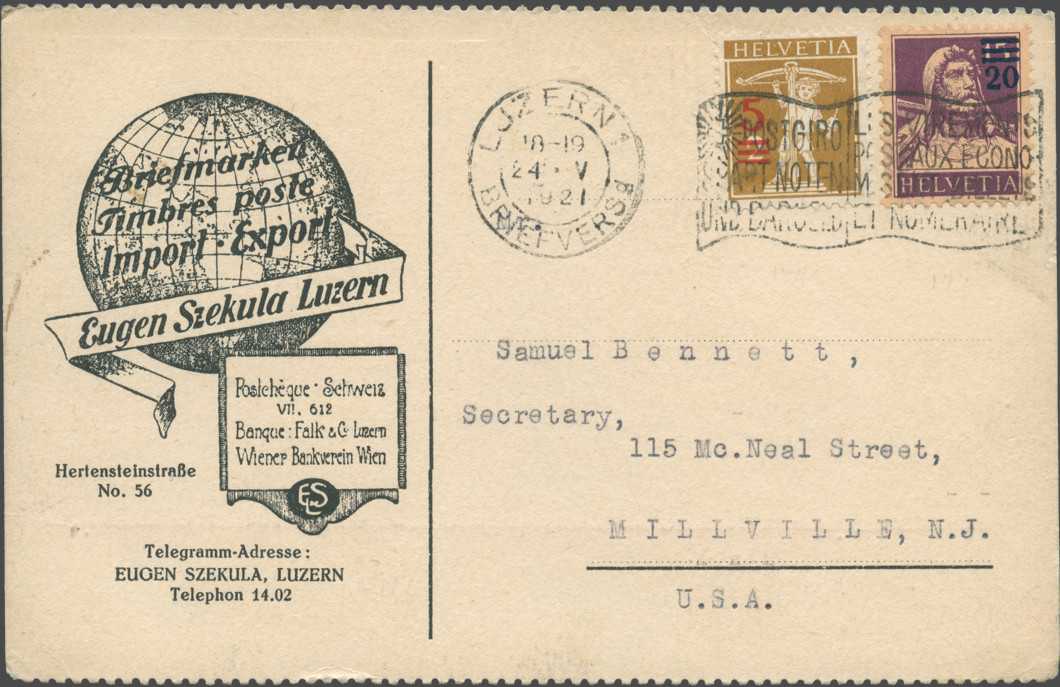
Postcard — May 25, 1921
Sent on May 25, 1921, from Lucerne, Switzerland, to Millville, New Jersey, United States.
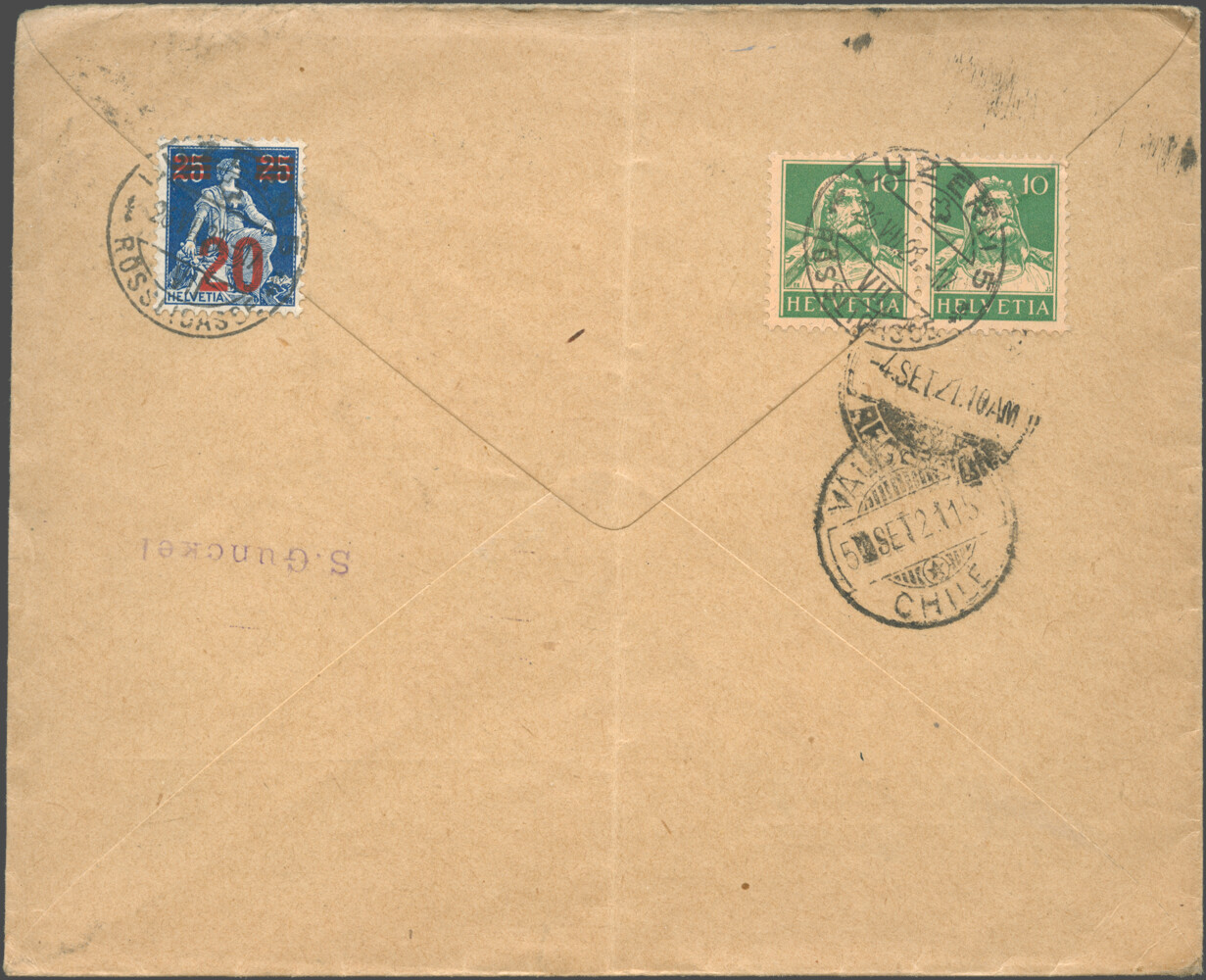
Cover — July 26, 1921
Sent on July 26, 1921, from Lucerne, Switzerland, to Valdivia, Chile. Arrived on September 5, 1921.
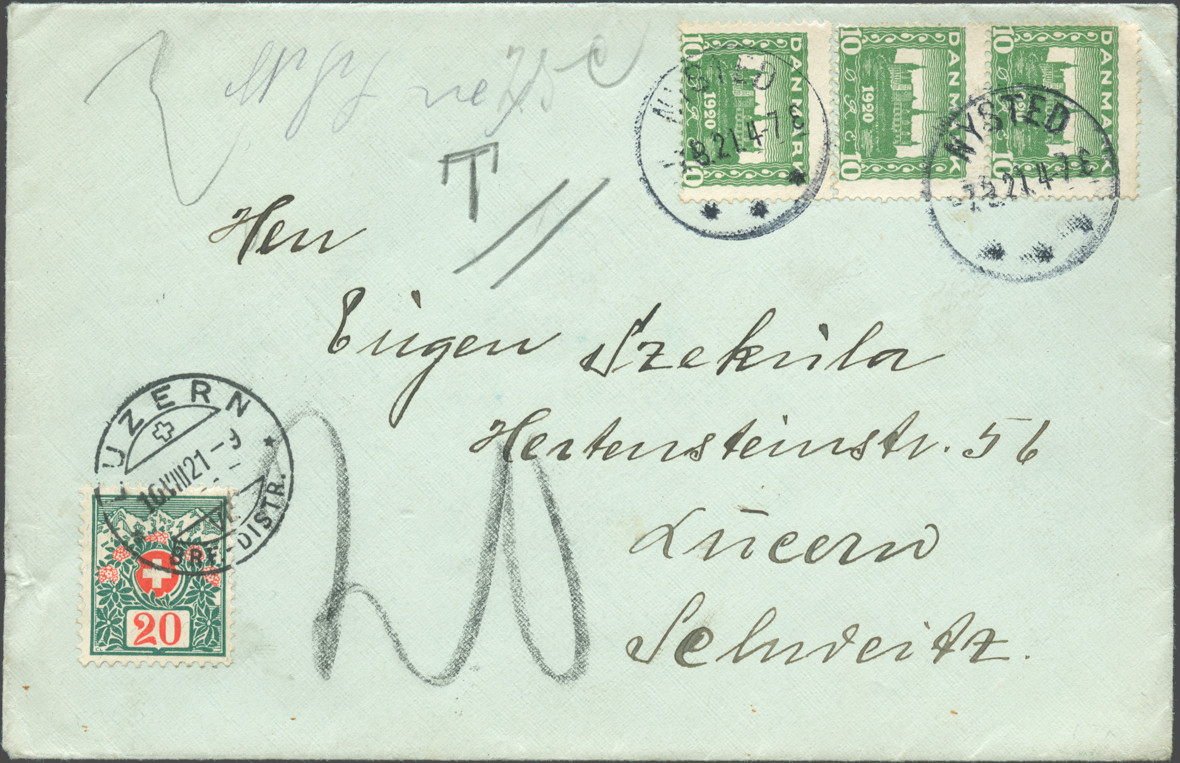
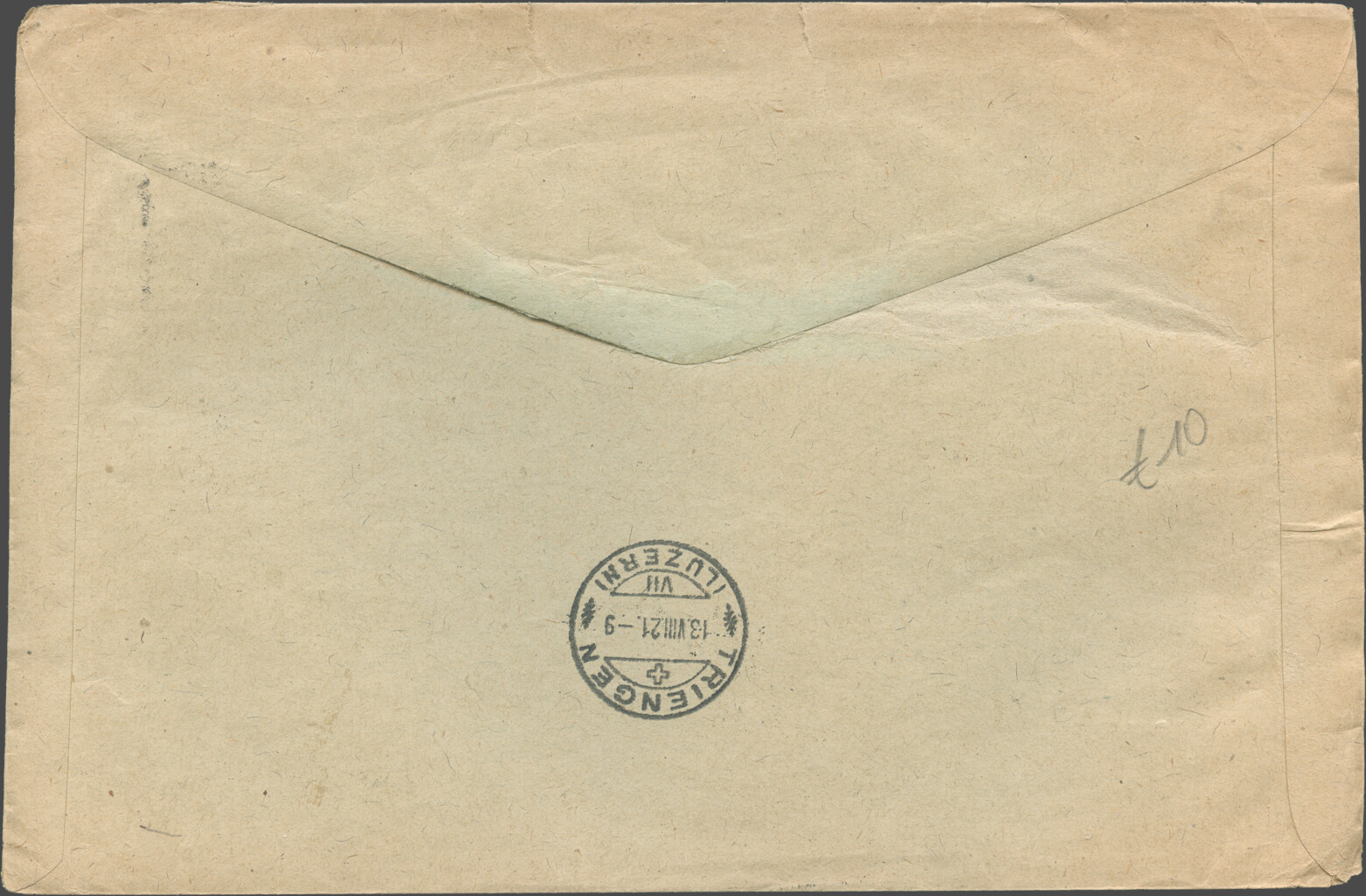
Cover — August 7, 1921
Sent on August 7, 1921, from Nysted, Denmark, to Lucerne, Switzerland.
Cover — September 1, 1921
Official mail sent on September 1, 1921, within Lucerne, Switzerland.
Cover — February 10, 1922
Registered mail sent on February 10, 1922, from Lucerne, Switzerland, to Copenhagen, Denmark. Acceptance refused and returned on February 21.
Scans provided by Ed Pieklo.
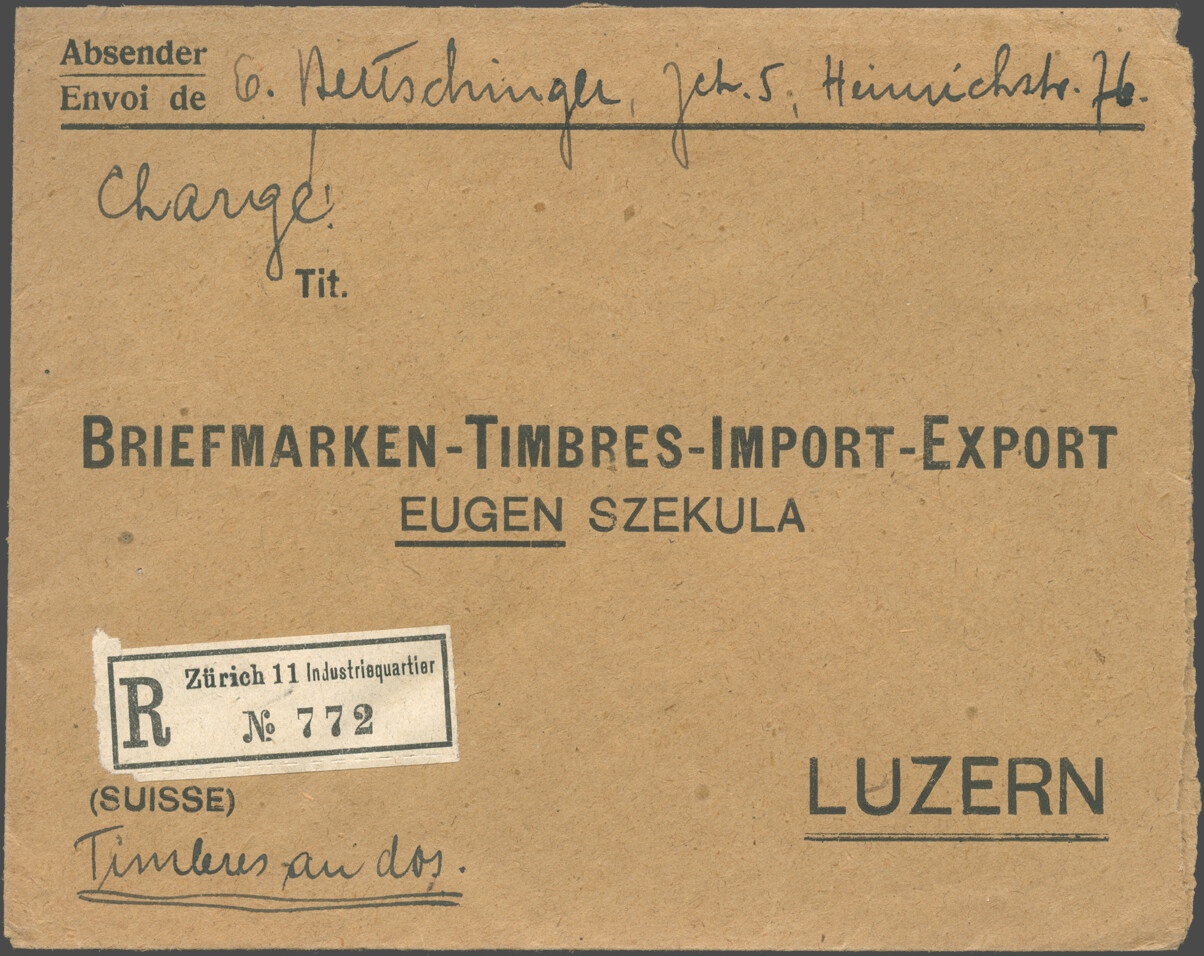
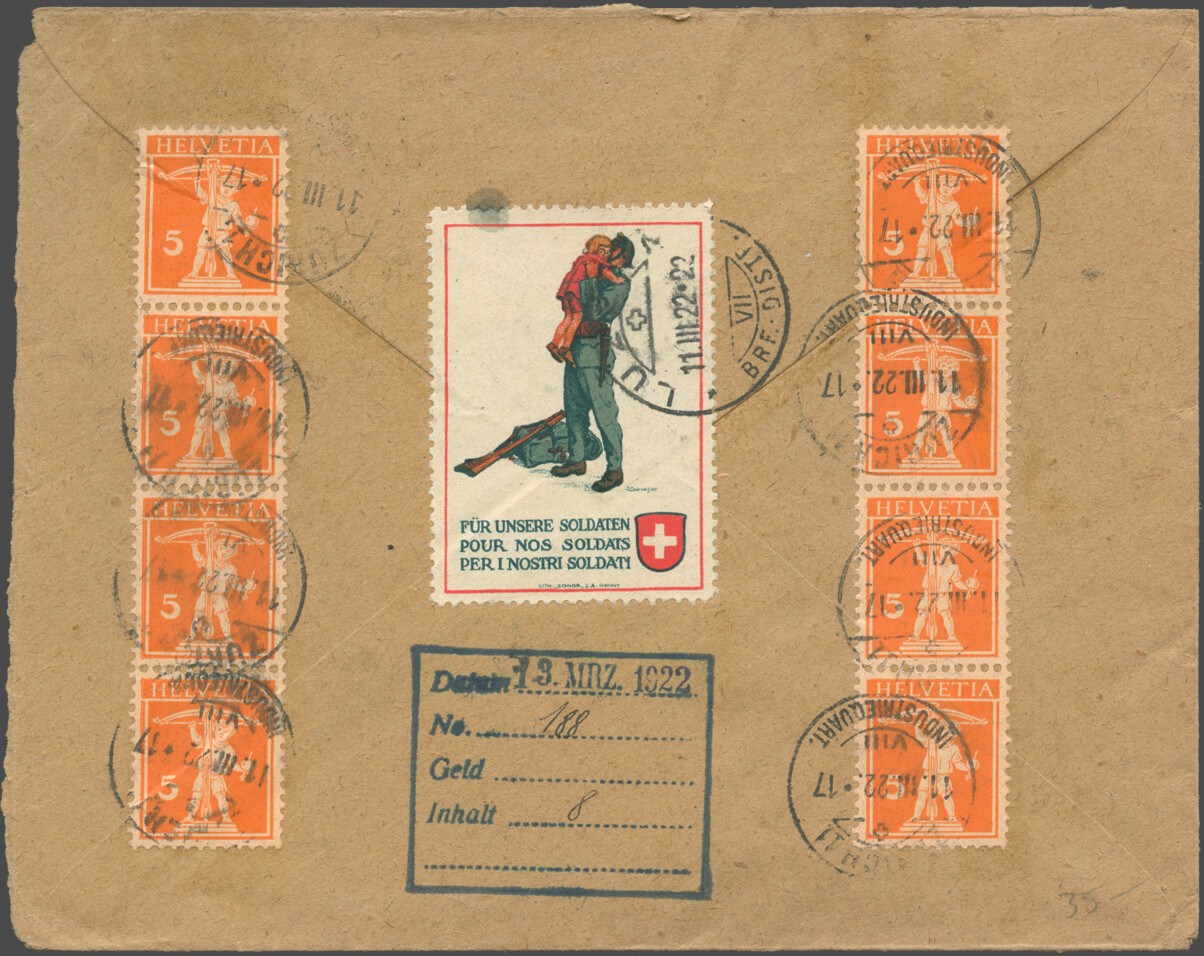
Cover — March 11, 1922
Registered mail sent on March 11, 1922, from Zurich, Switzerland, to Lucerne. Arrived on March 11, 1922.
Cover — April 24, 1922
Registered mail sent on April 24, 1922, from Windisch, Switzerland, to Lucerne. Arrived on April 24, 1922.
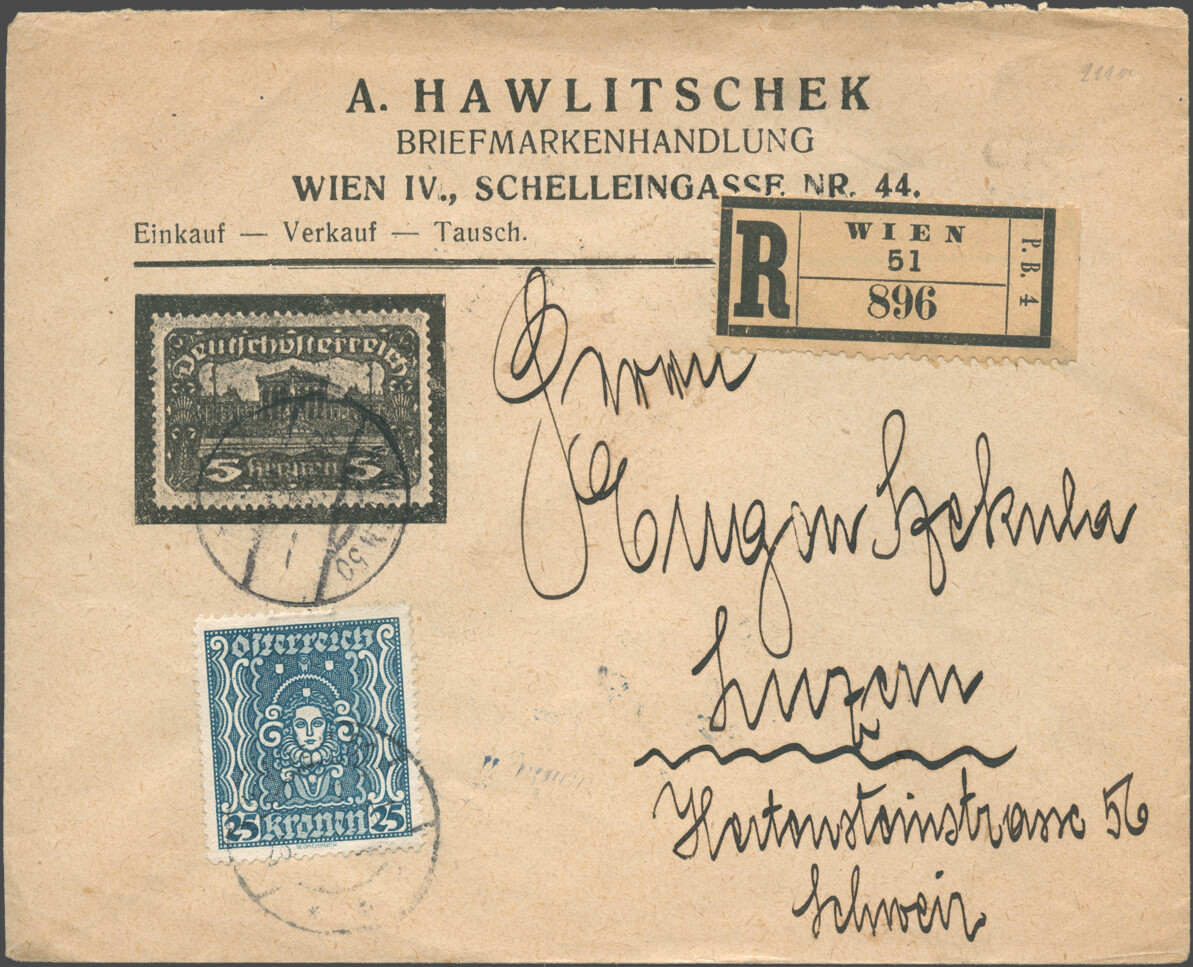
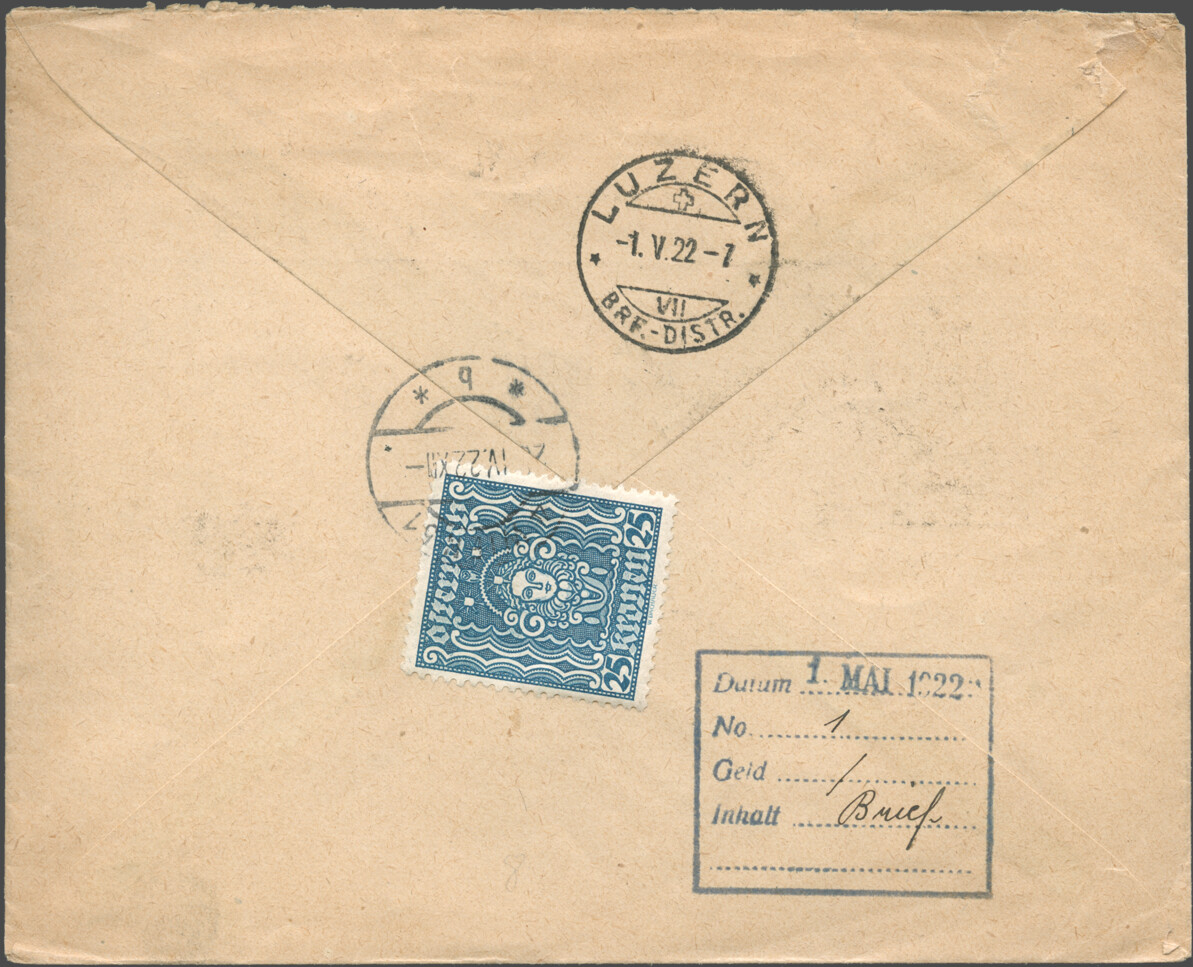
Cover — May 28, 1922
Registered mail sent on May 28, 1922, from Vienna, Austria, to Lucerne, Switzerland. Arrived on June 1, 1922.
Cover — February 9, 1923
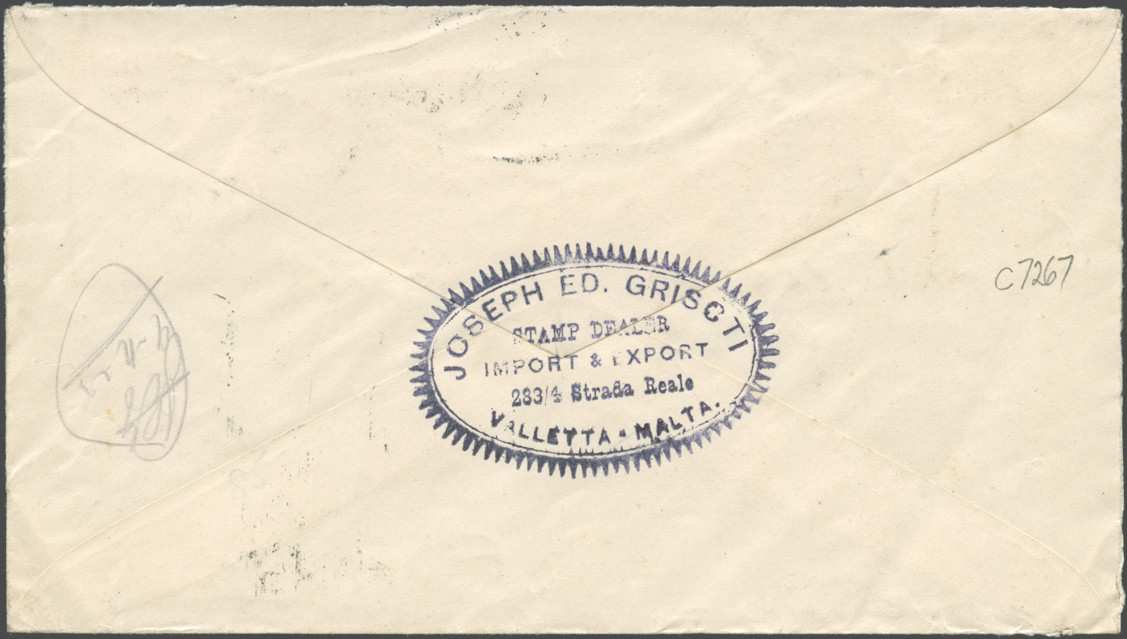
Sent on February 9, 1923, from Valletta, Malta, to Lucerne, Switzerland.
Cover — February 9, 1923
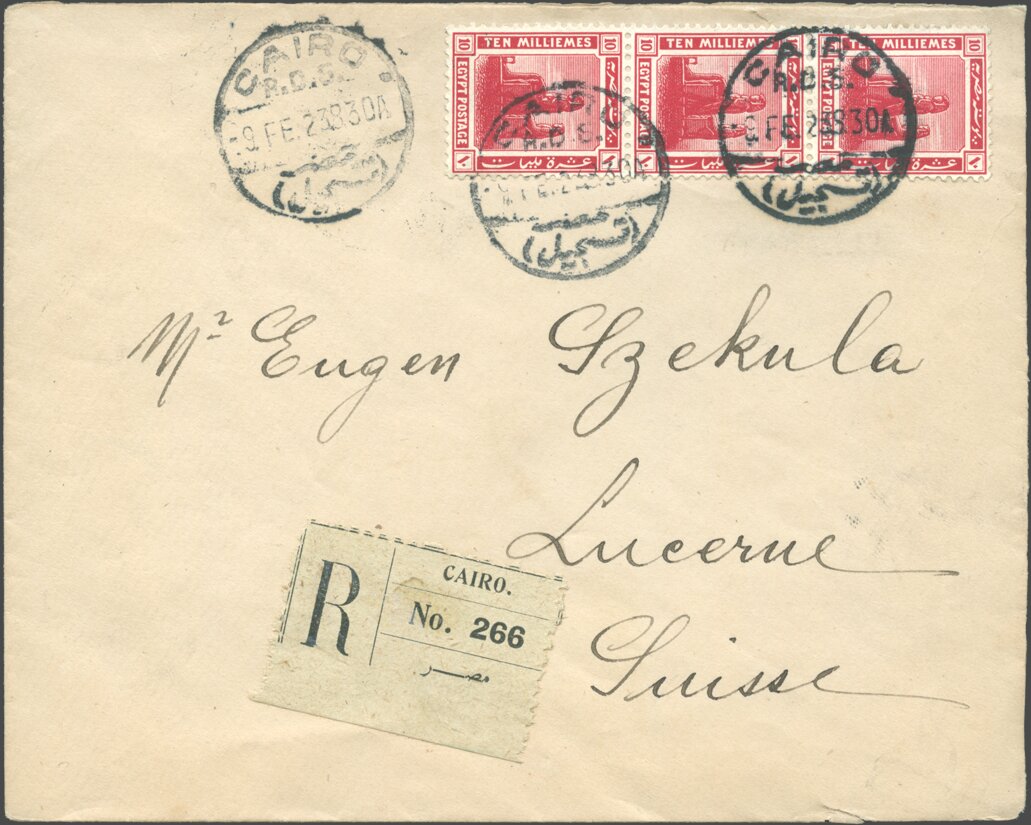
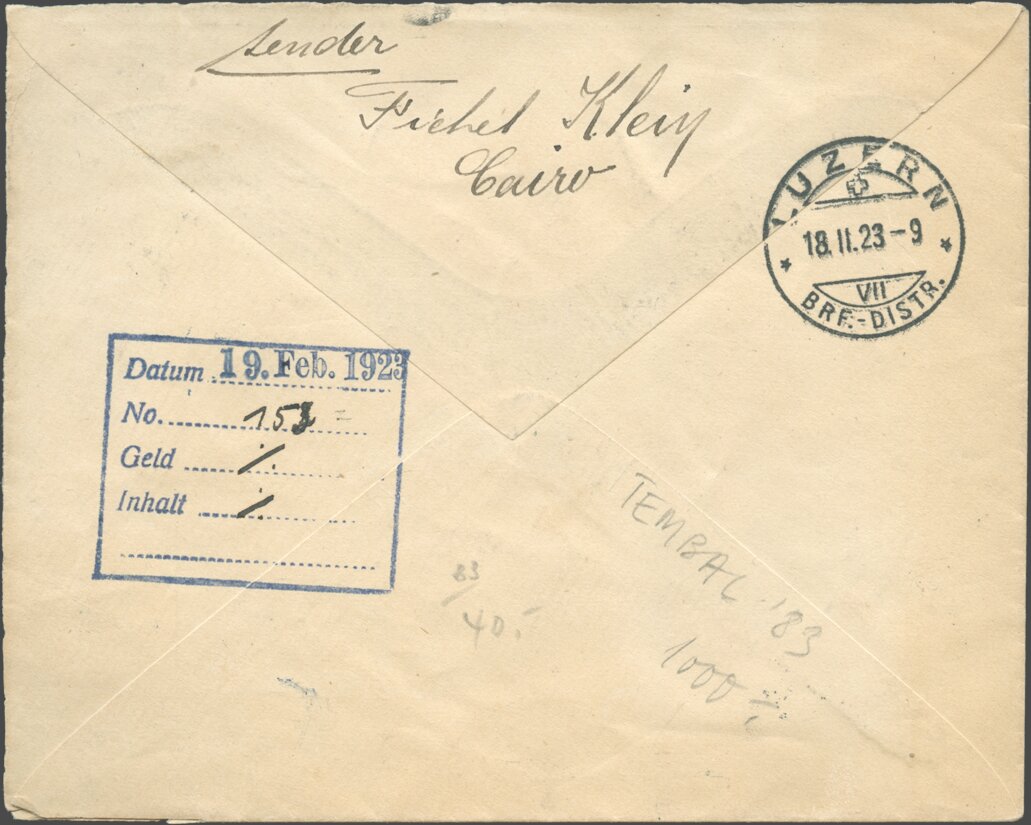
Registered mail sent on February 9, 1923, from Cairo, Egypt, to Lucerne, Switzerland. Arrived on February 18, 1923.
Cover — March 1923
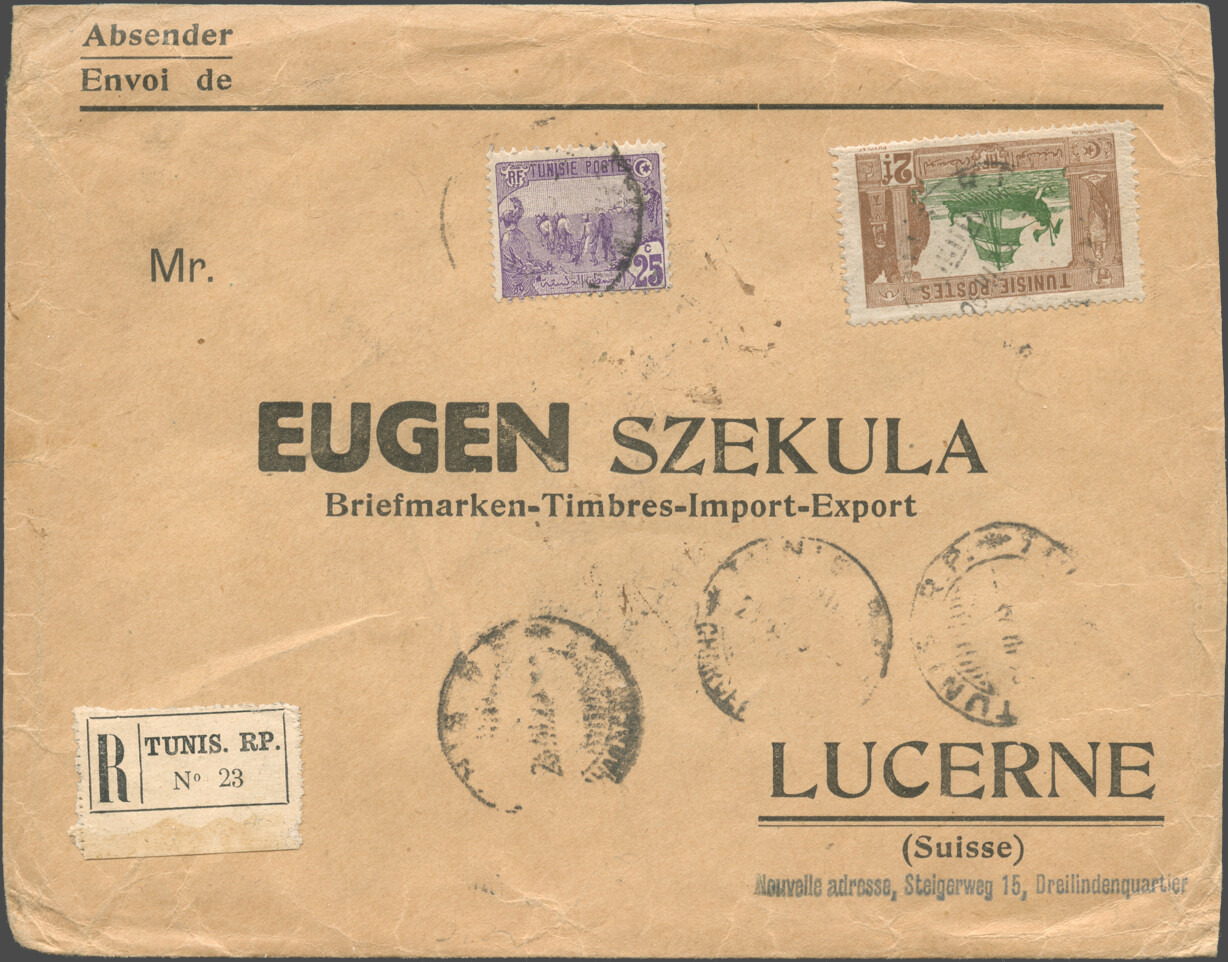
Registered mail sent in March 1923 from Tunis, Tunisia, to Lucerne, Switzerland. Arrived on March 31, 1923.
Cover — April 25, 1923
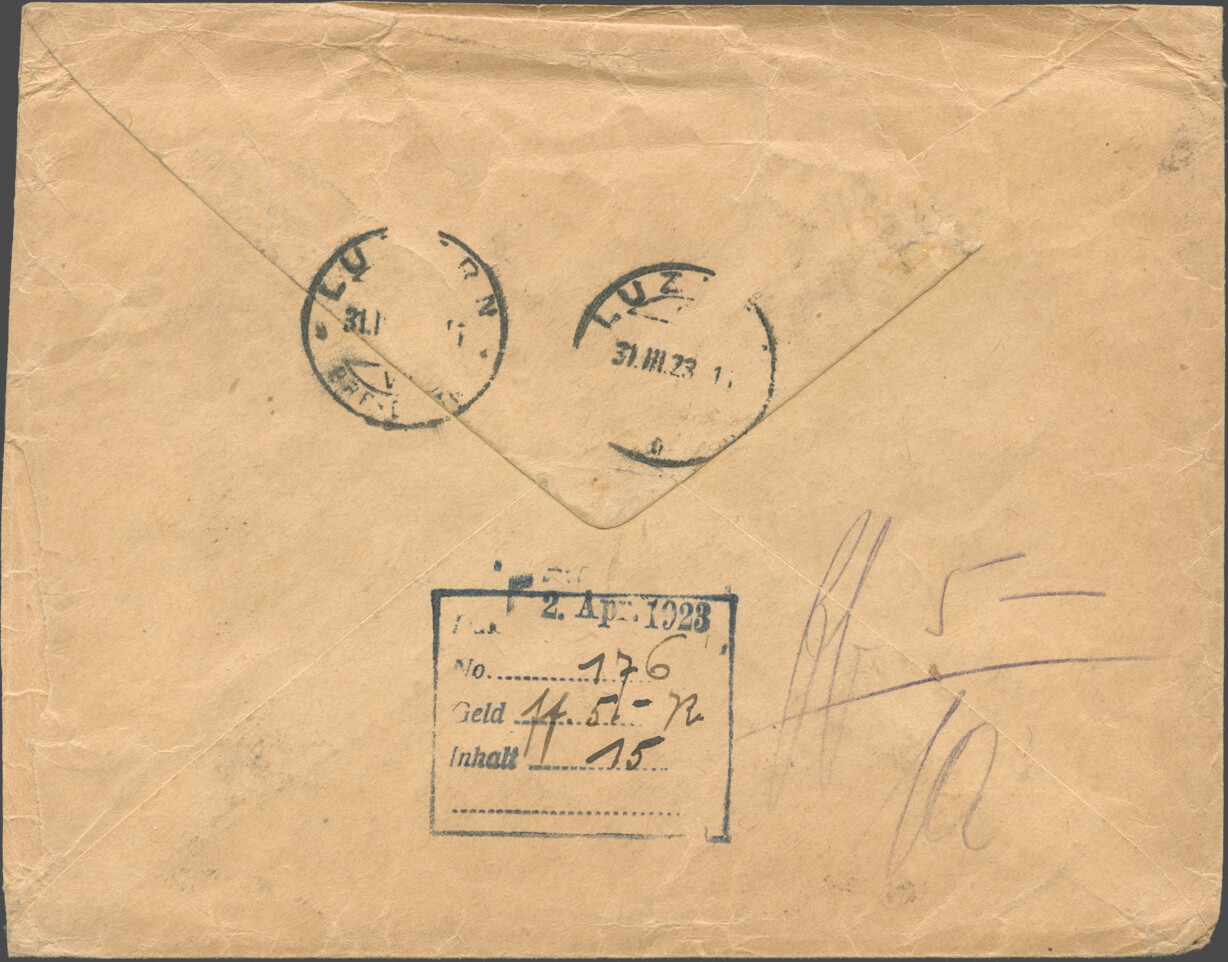
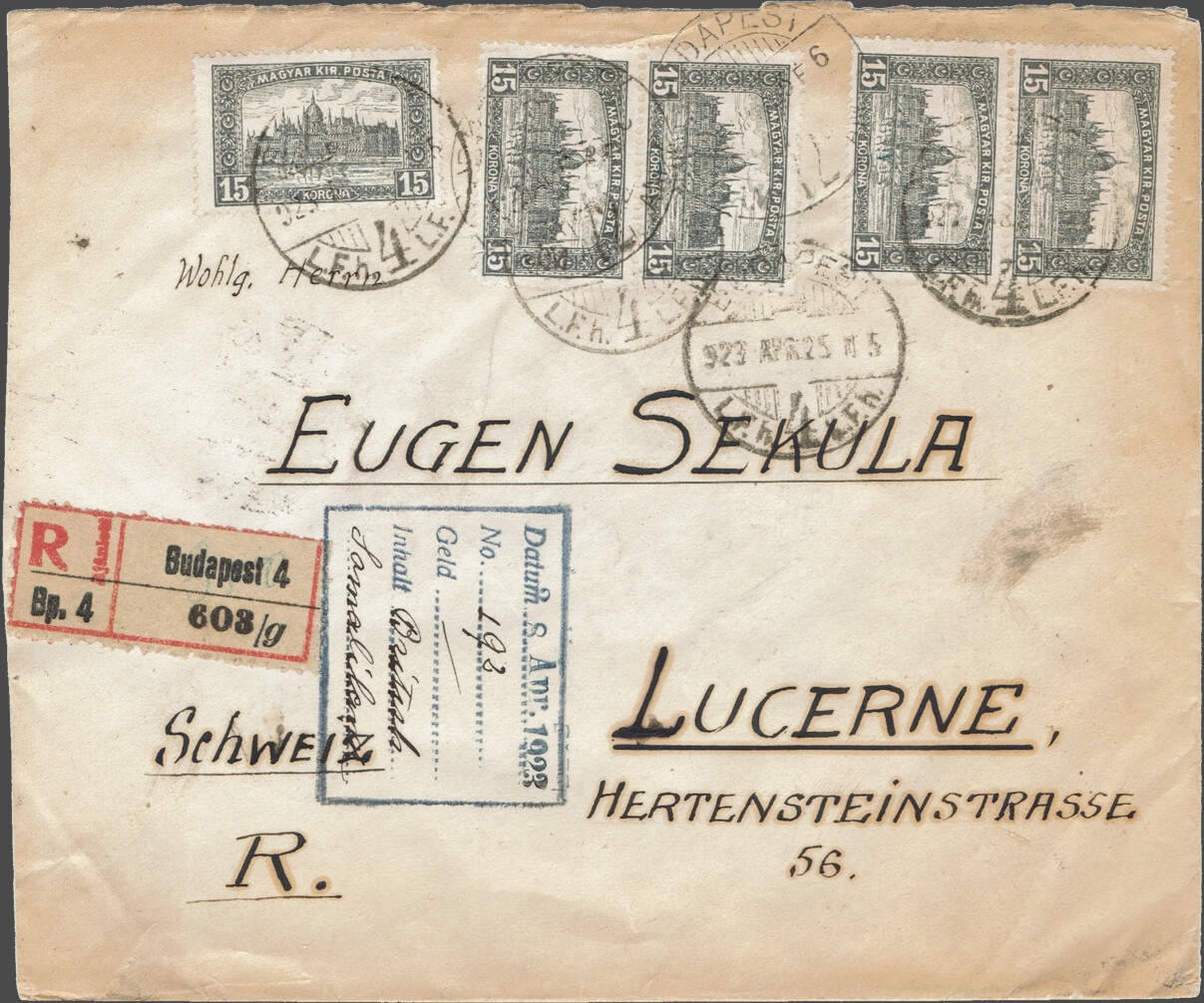
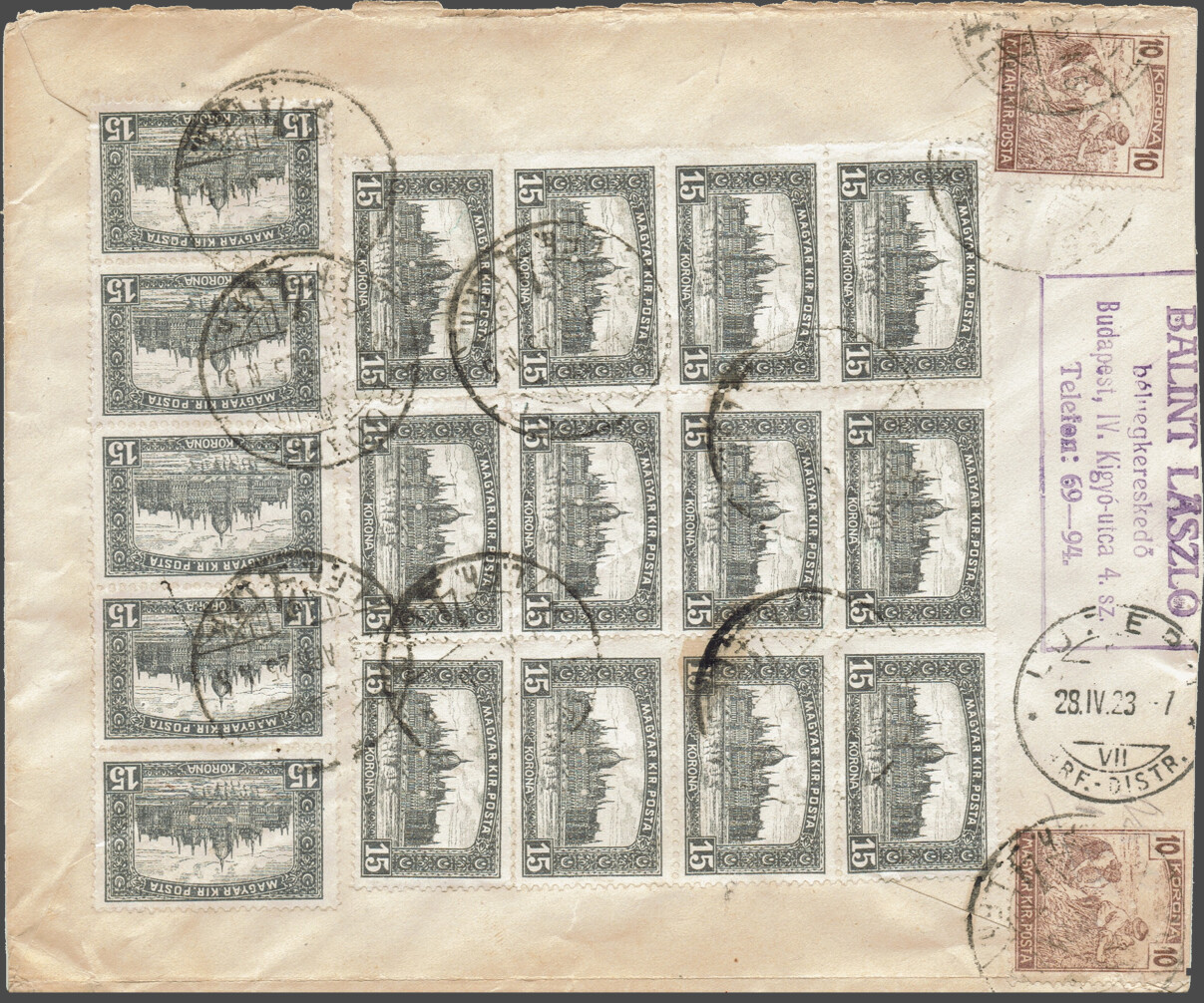
Registered mail sent on April 25, 1923, from Budapest, Hungary, to Lucerne, Switzerland. Arrived on April 28, 1923.
Scans provided by Max Brack.
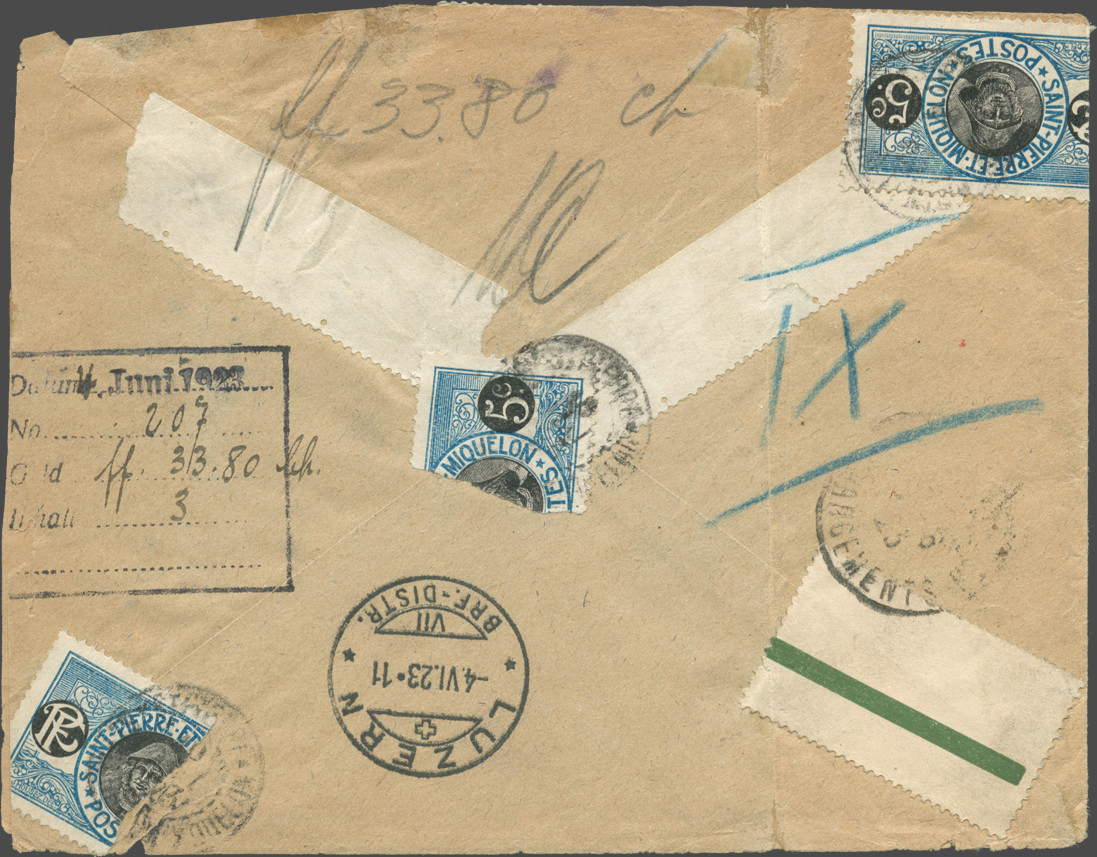
Cover — May 19, 1923
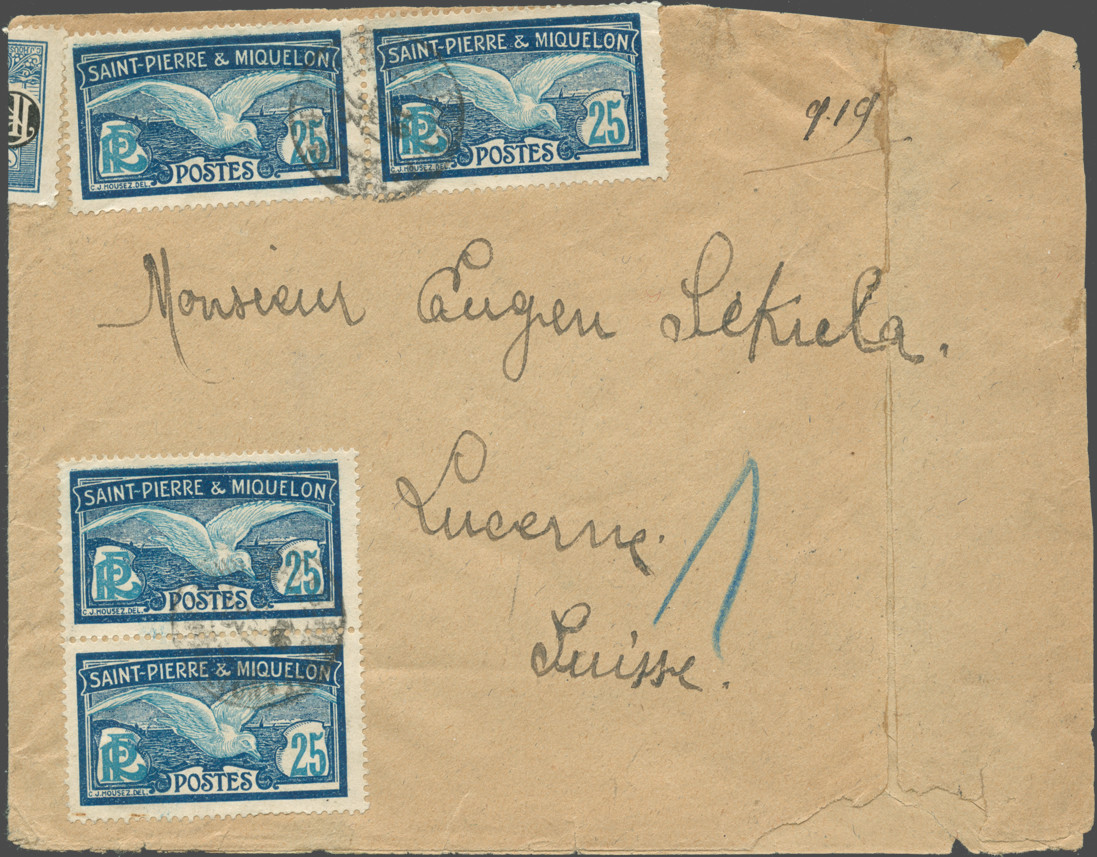
Sent on May 19, 1923, from Saint-Pierre and Miquelon to Lucerne, Switzerland. Arrived on June 4, 1923.
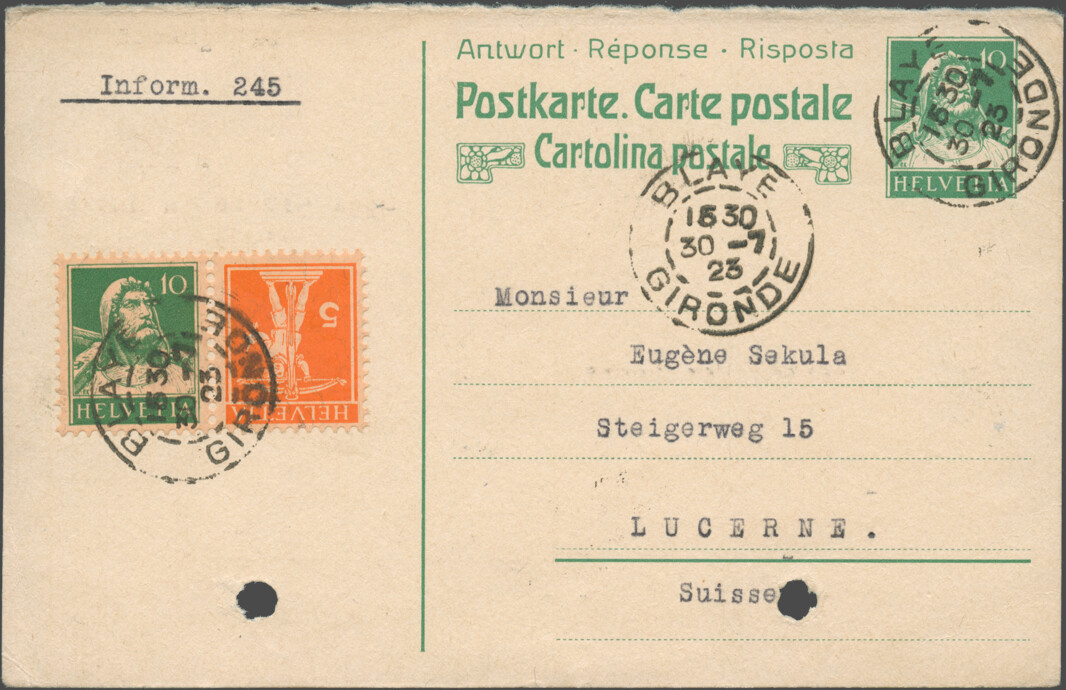
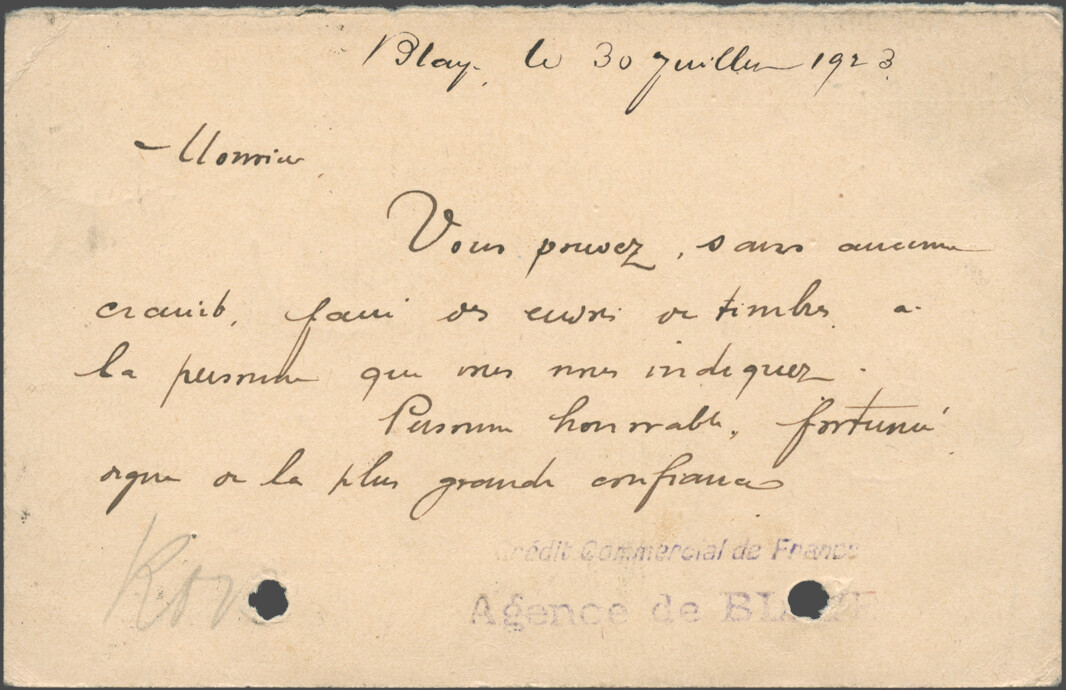
Postal Card — July 30, 1923
Reply card sent on May 19, 1923, from Blaye, France, to Lucerne, Switzerland.
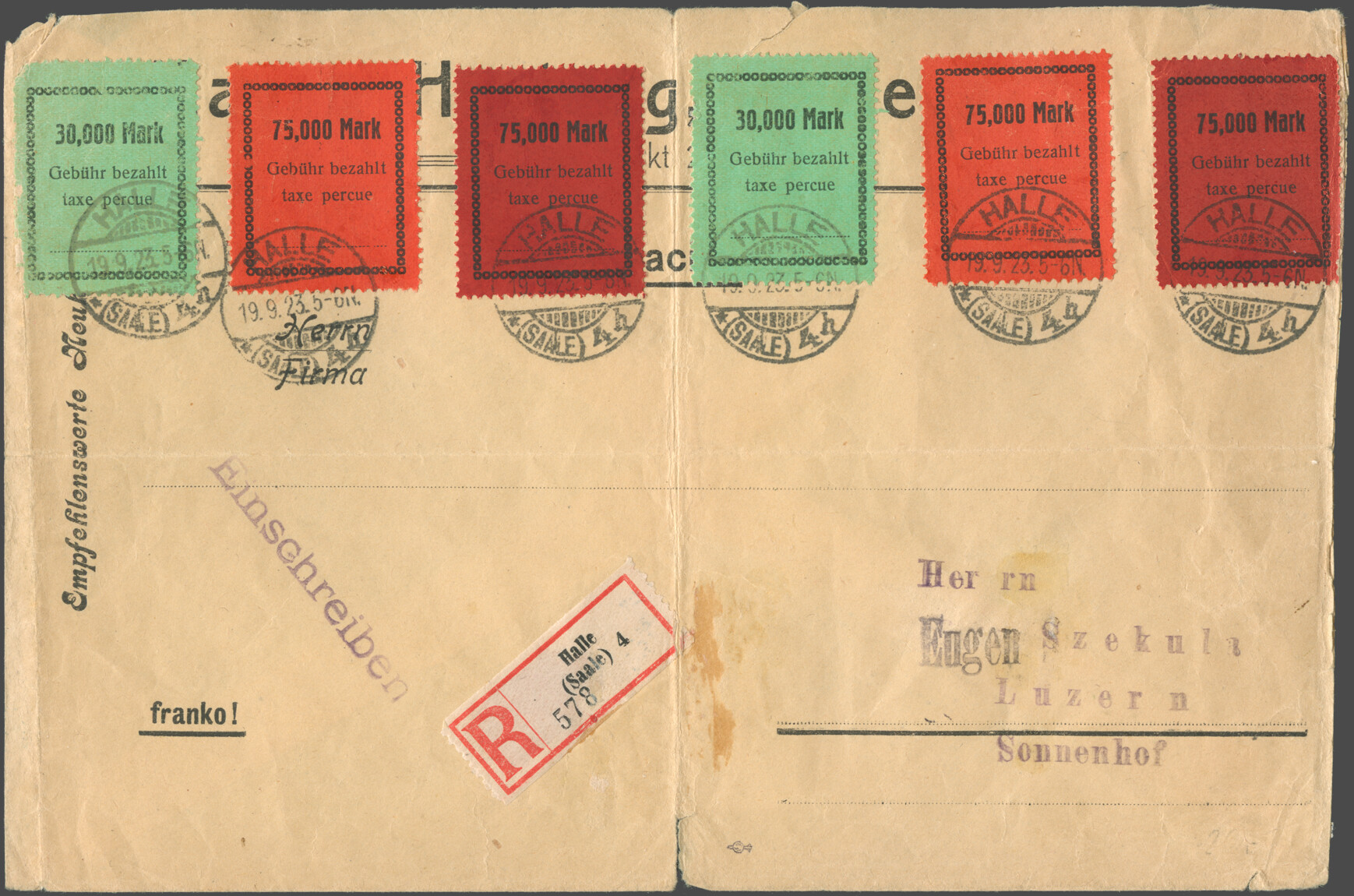
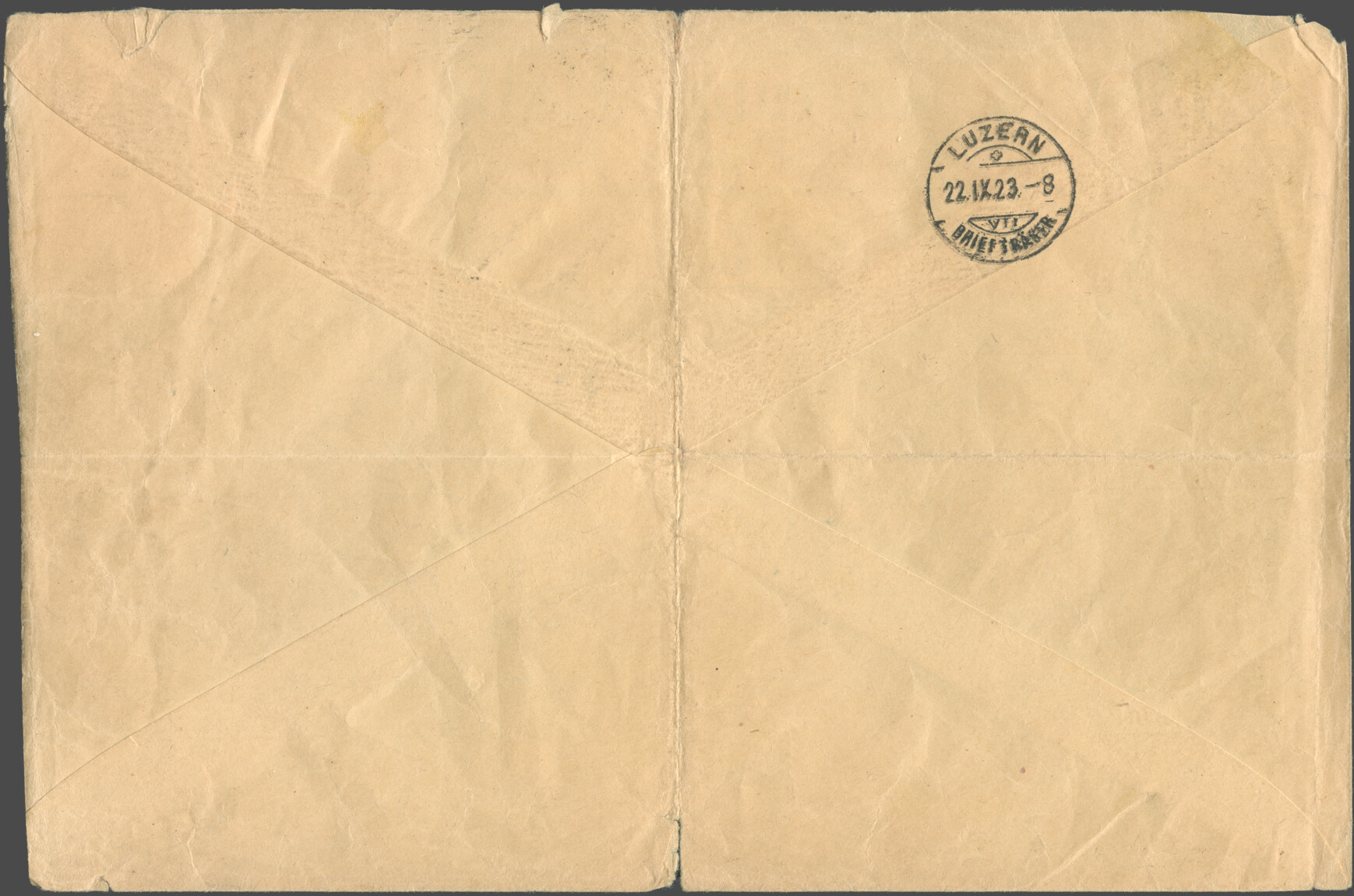
“Fee Paid” Covers — September 1, 1923 – September 19, 1923
During the hyperinflation in the Weimar Republic it became increasingly difficult for the Imperial Printing Office in Berlin to produce new postage stamps to keep up with the frequent rate changes.
Consequently, out of necessity, locally produced fee paid stamps (aka local issues) were officially approved and were therefore valid for postage.
However, some dealers also seized the opportunity and produced their own labels.
Both Béla and Eugen Sekula collaborated with these dealers in creating philatelic collectibles by acting as recipients of the travelled covers.
The fee paid labels used on this cover are products of the print shop owner and philatelist Ulrich Runge in Halle.
Although their use was forbidden immediately, some letters slipped through, even by registered mail and also to foreign countries.
Registered mail sent on September 19, 1923, from Halle, Germany, to Lucerne, Switzerland. Arrived on September 22, 1923.
See also the same and other inflation covers to Béla Sekula.
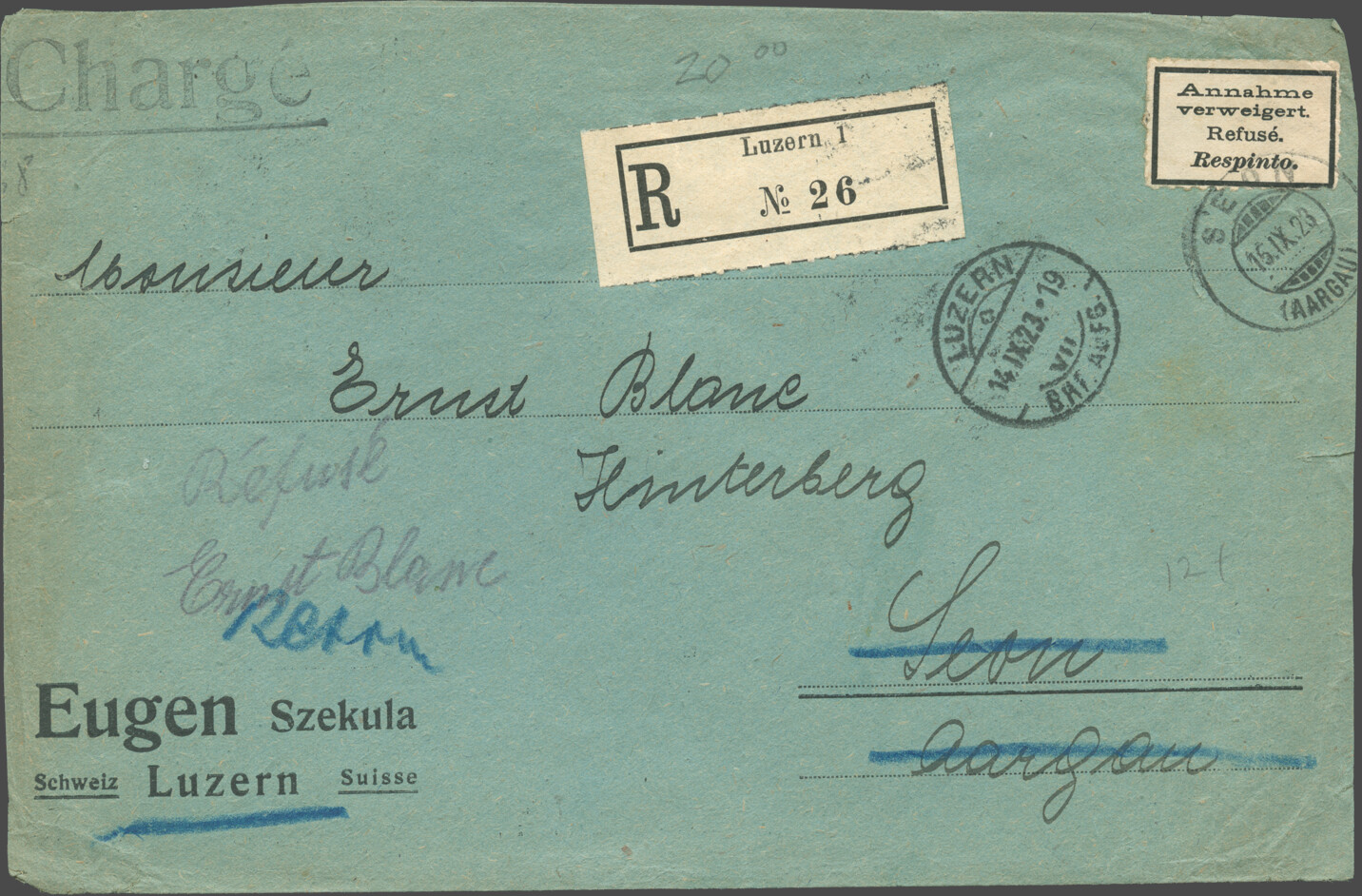
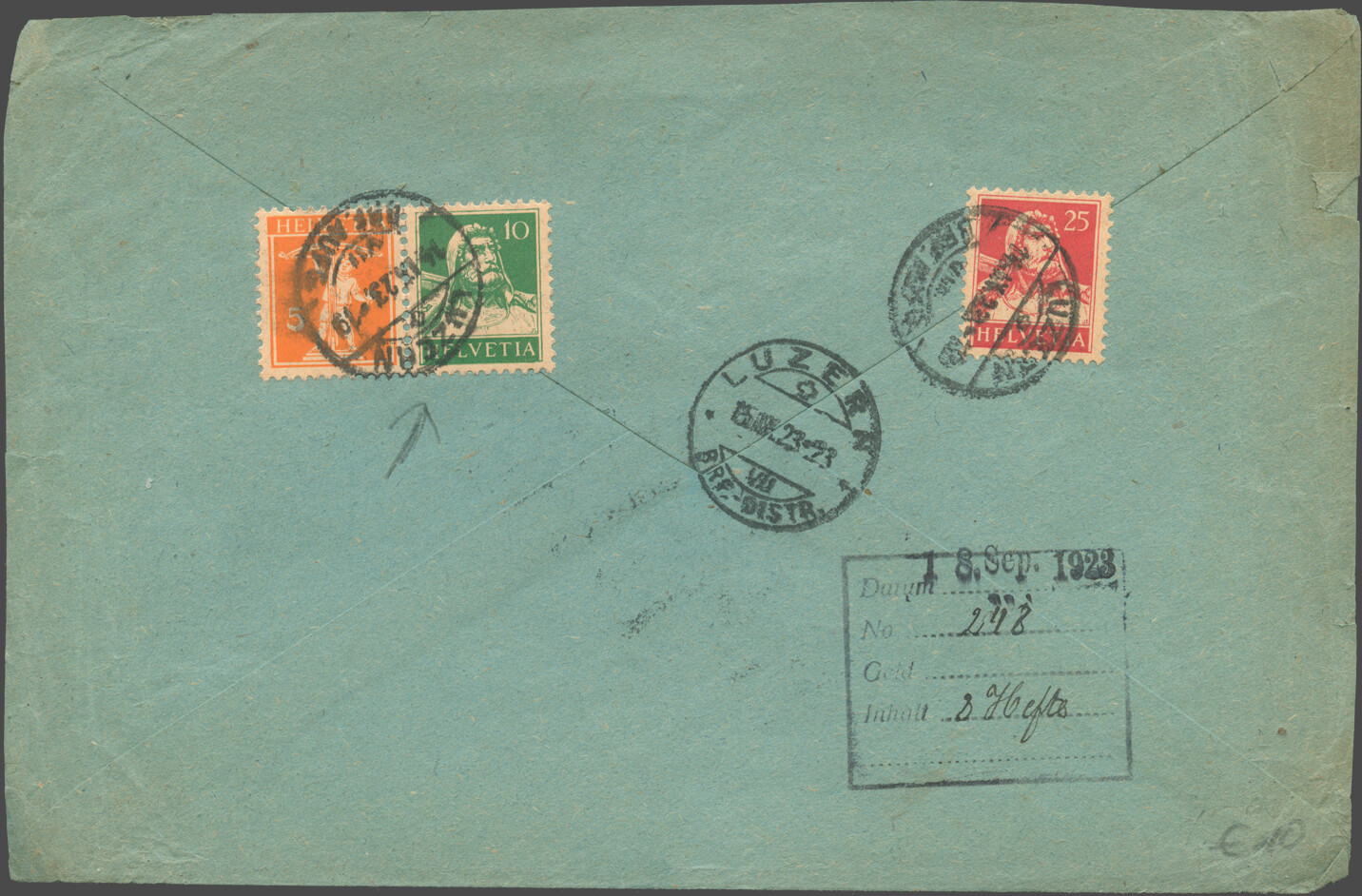
Cover — September 14, 1923
Sent registered on October 14, 1923 from Lucerne to Seon, Aargau. Acceptance refused and returned on October 15.
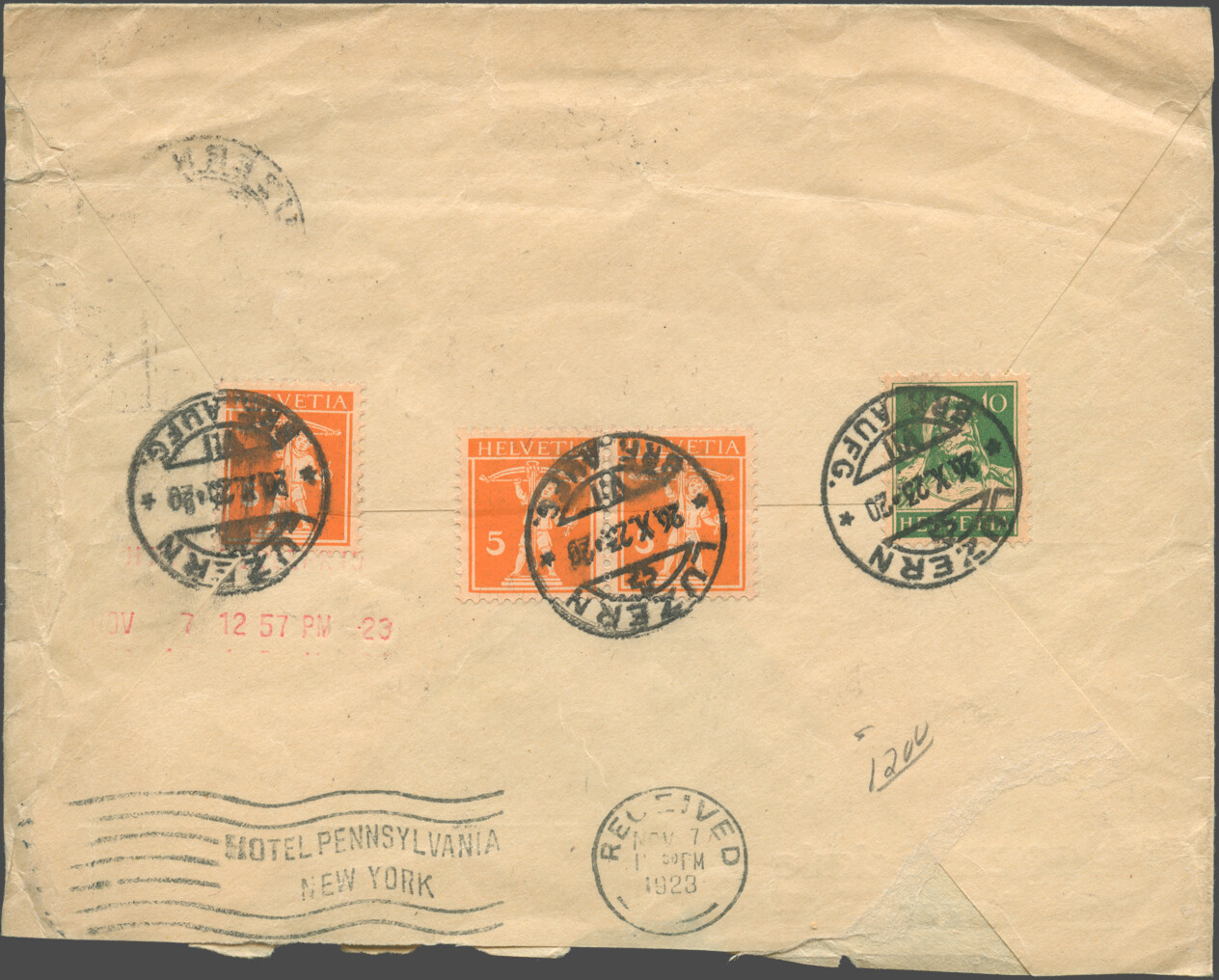
Cover — October 26, 1923
Sent on October 26, 1923 from Eugen Sekula’s office in Lucerne to his hotel address in New York City, USA.
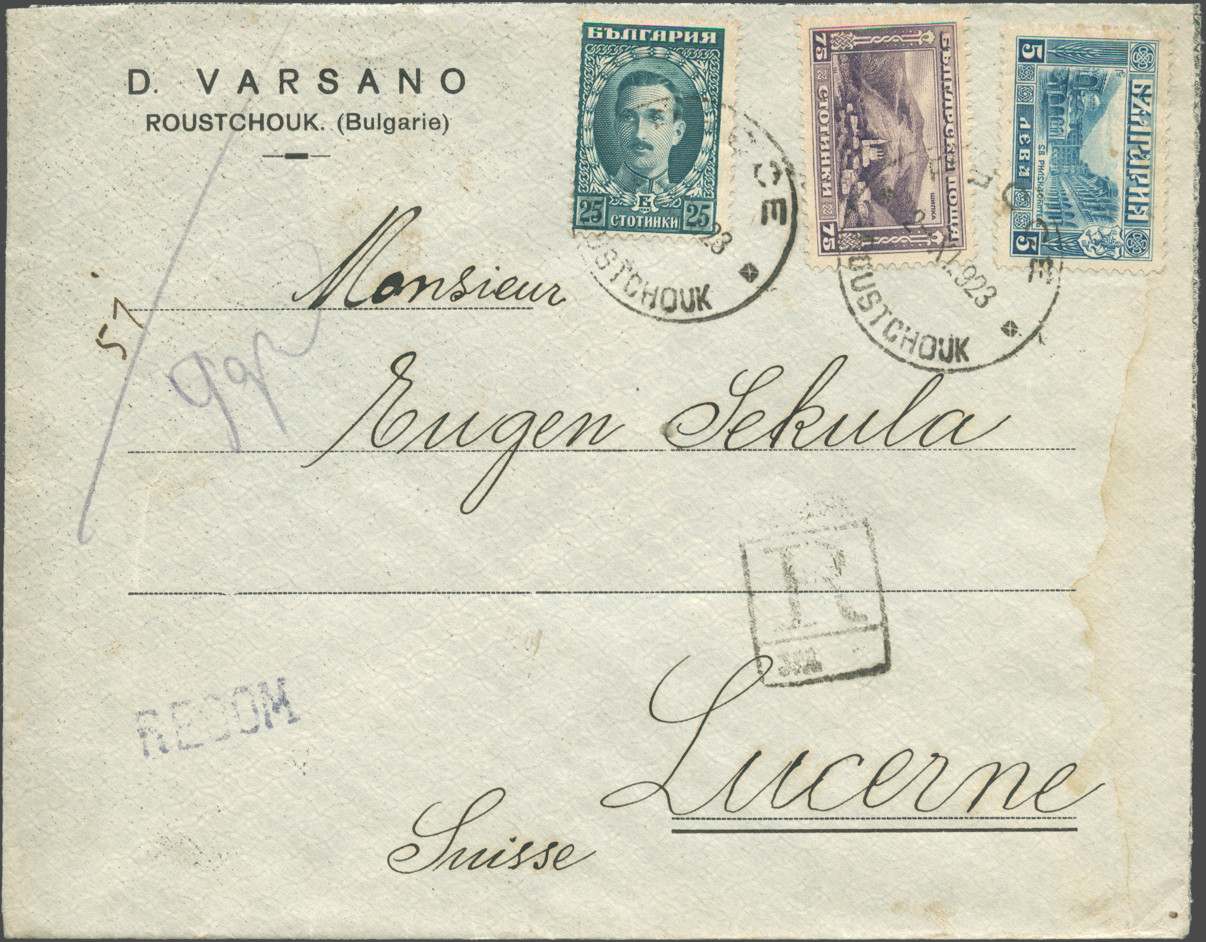
Cover — November 2, 1923
Registered mail sent on November 2, 1923, from Roustschouk (=Ruse), Bulgaria, to Lucerne, Switzerland. Arrived on November 2, 1923.
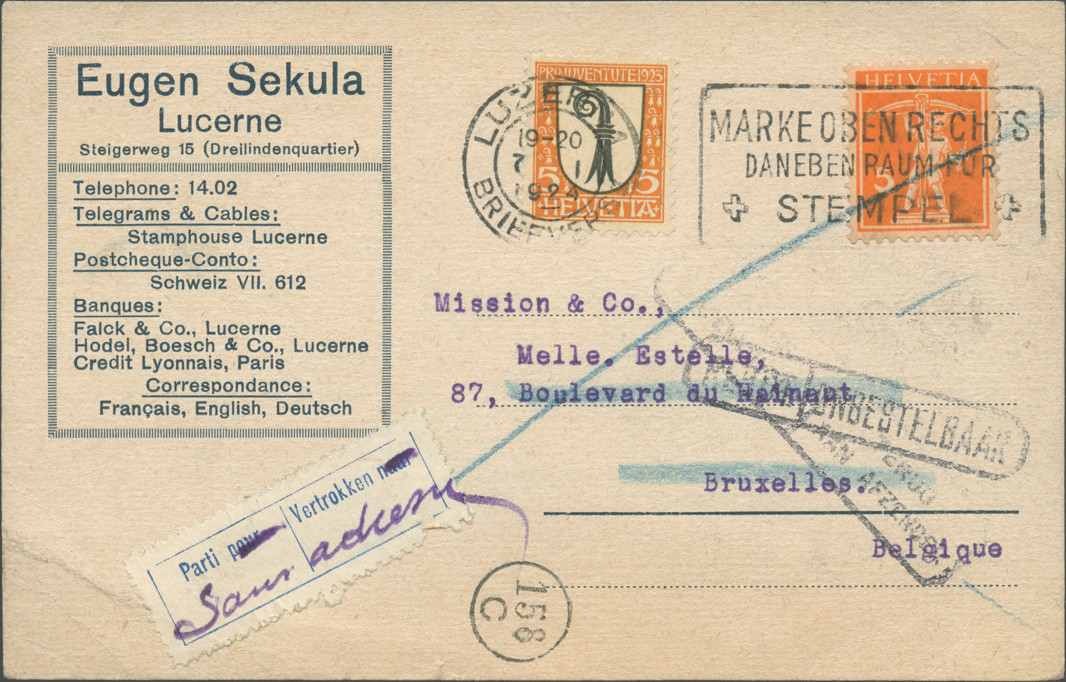
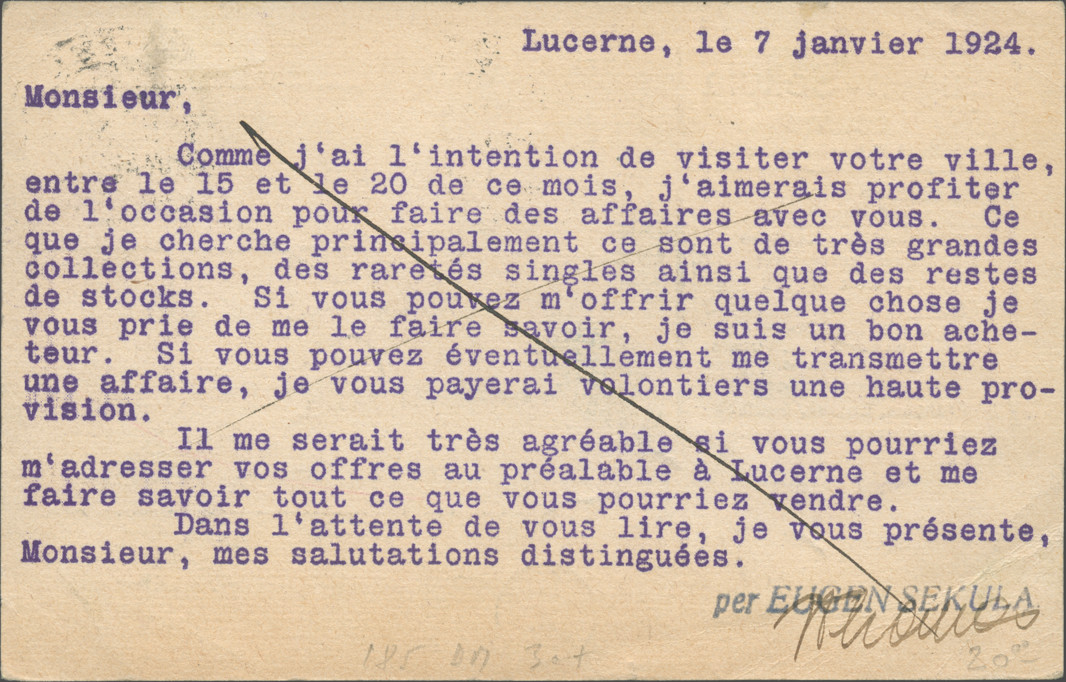
Postcard — January 7, 1924
Sent on January 7, 1924, from Lucerne, Switzerland, to Brussels, Belgium.
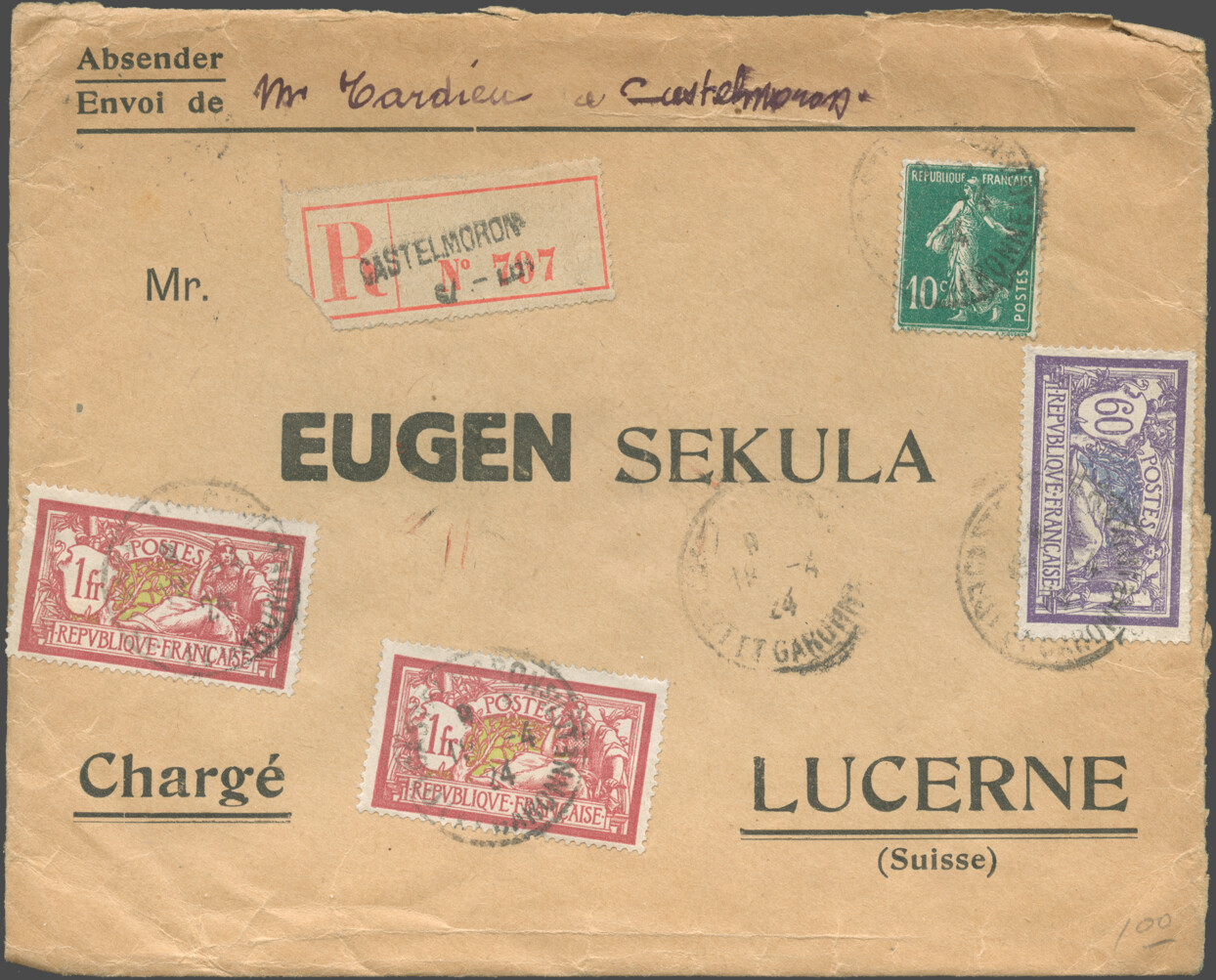
Cover — April 19, 1924
Registered mail sent on April 19, 1924, from Castelmoron-sur-Lot, France, to Lucerne, Switzerland. Arrived on April 21, 1924.
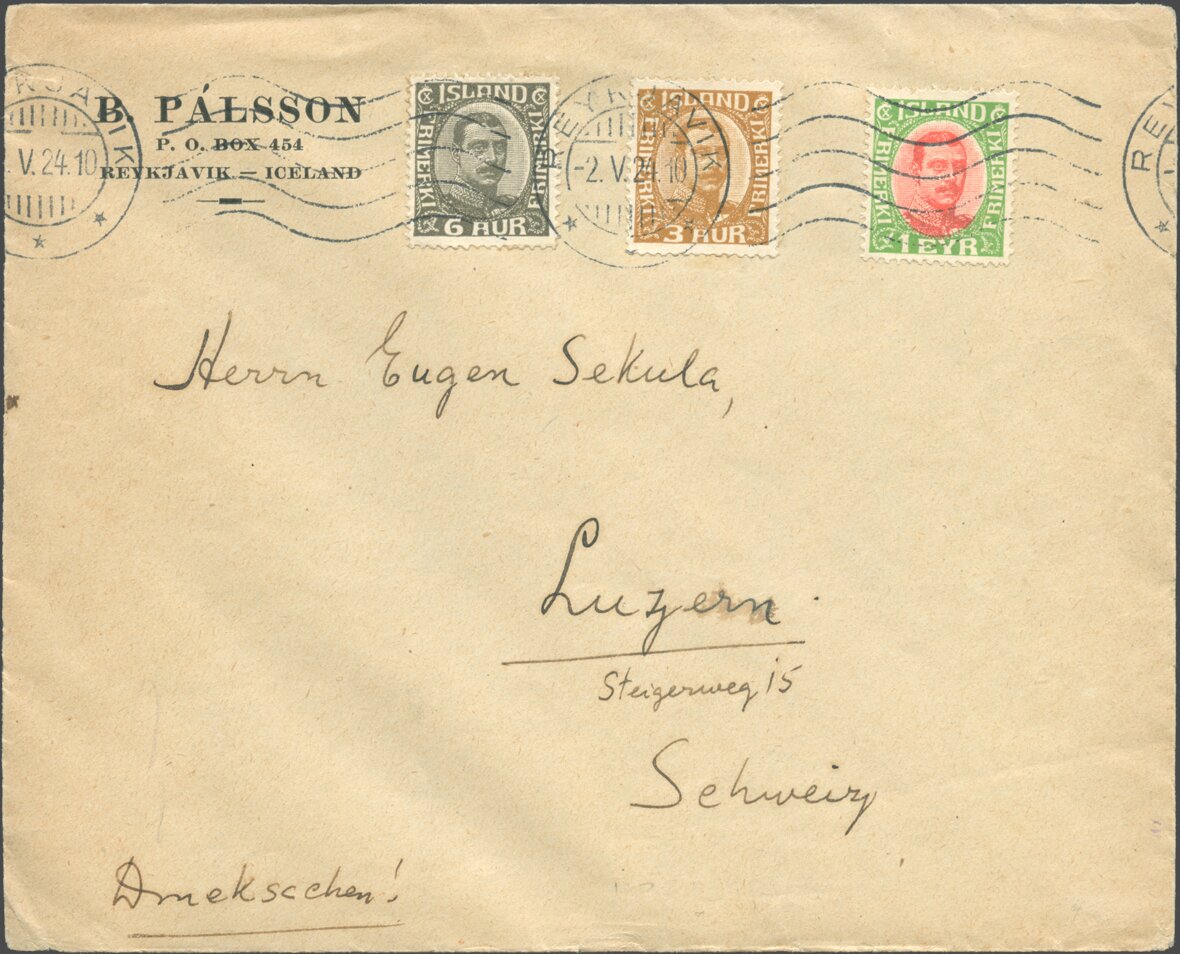
Cover — May 2, 1924
Printed matter sent on May 2, 1924, from Reykjavik, Iceland, to Lucerne, Switzerland.
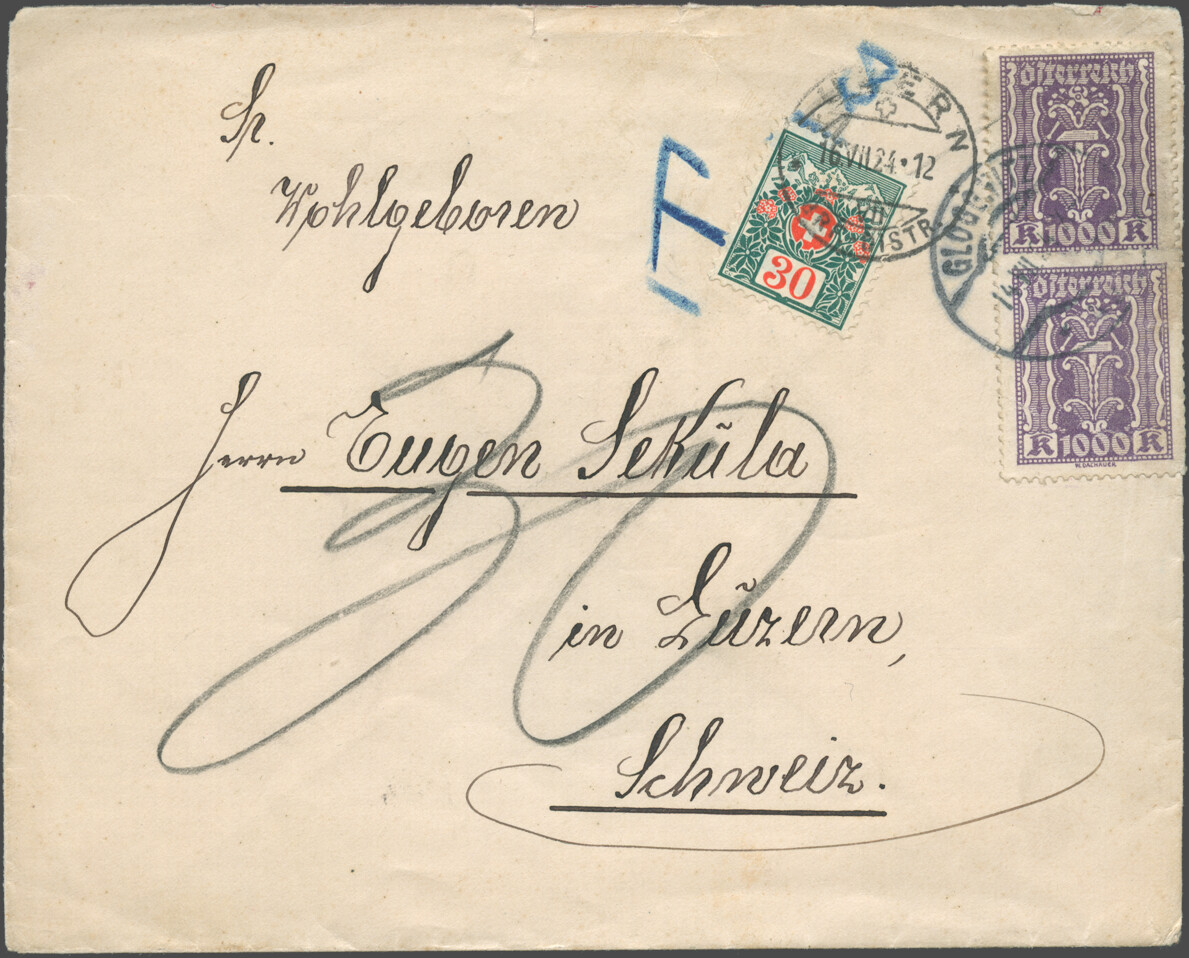
Cover — July 14, 1924
Sent on July 14, 1924, from Gloggnitz, Austria, to Lucerne, Switzerland. Arrived on July 16, 1924.
Postcard — August 30, 1924
Sent on August 30, 1924 by Eugen Sekula to Frank Sekula in New York City, USA. The postcard was carried on the transatlantic delivery flight of the airship ZR-3, built by the Zeppelin company as war reparation, from Friedrichshafen to the US Naval Air Station at Lakehurst, New Jersey.
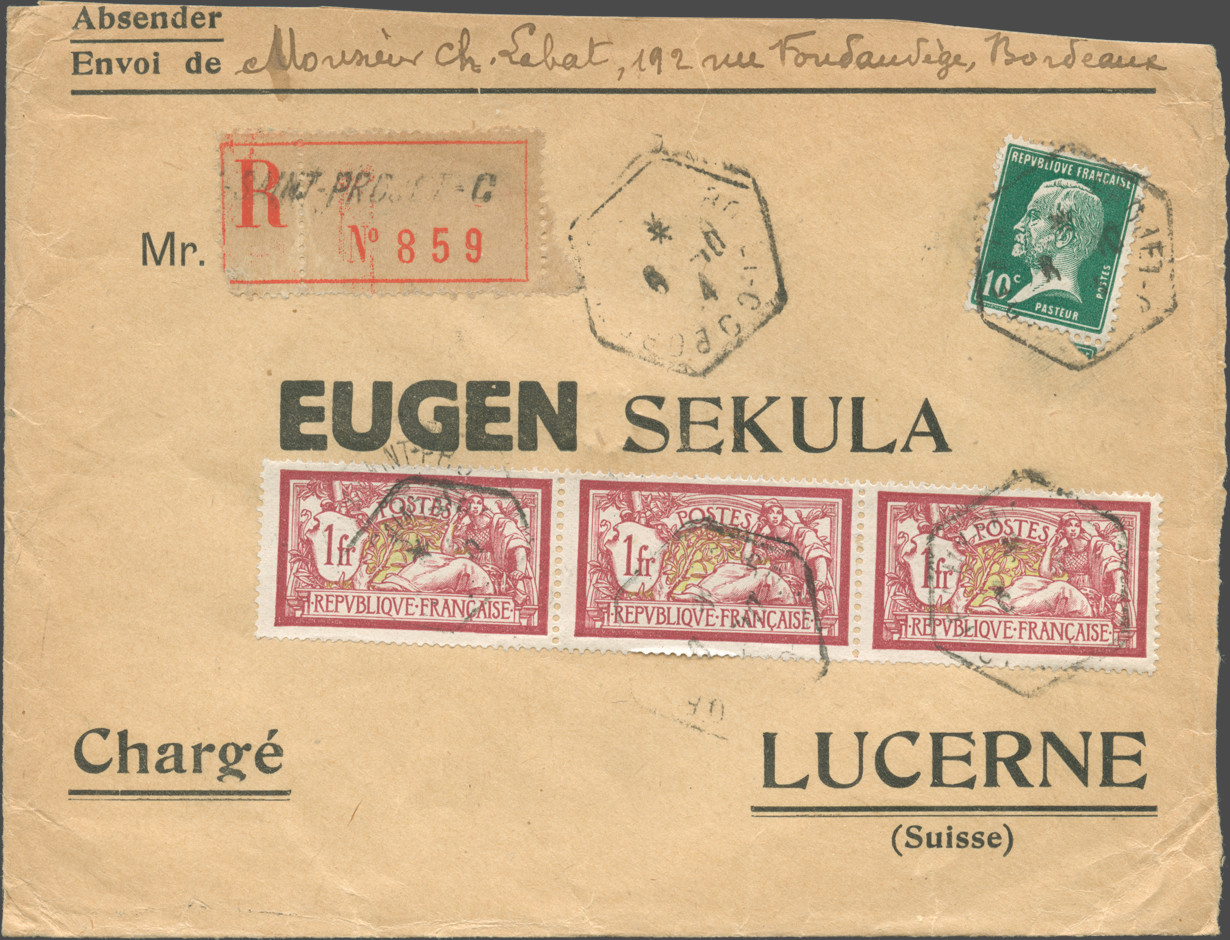
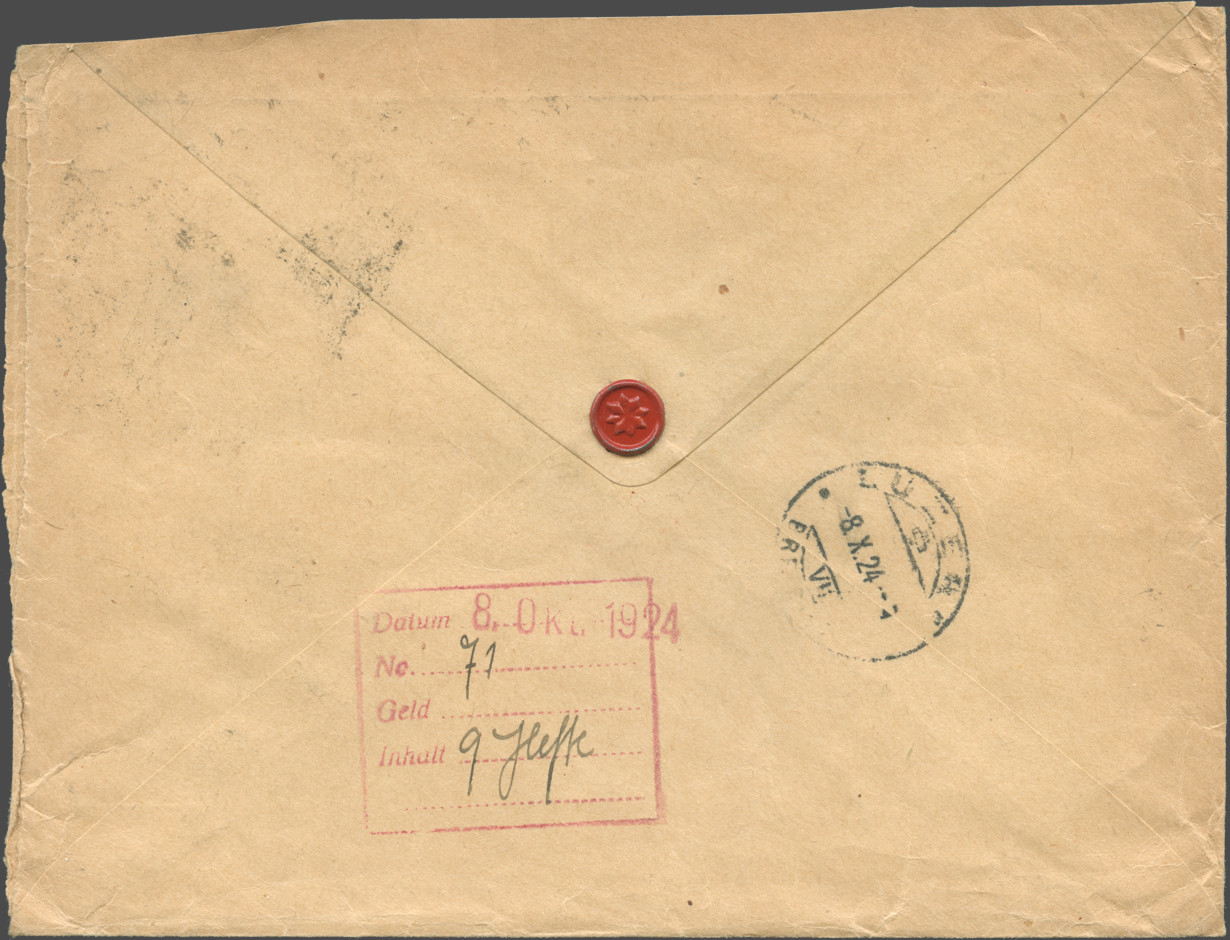
Return Envelope — October 6, 1924
Registered mail sent on October 6, 1924, from Bordeaux, France, to Lucerne, Switzerland. Arrived on October 6, 1924.
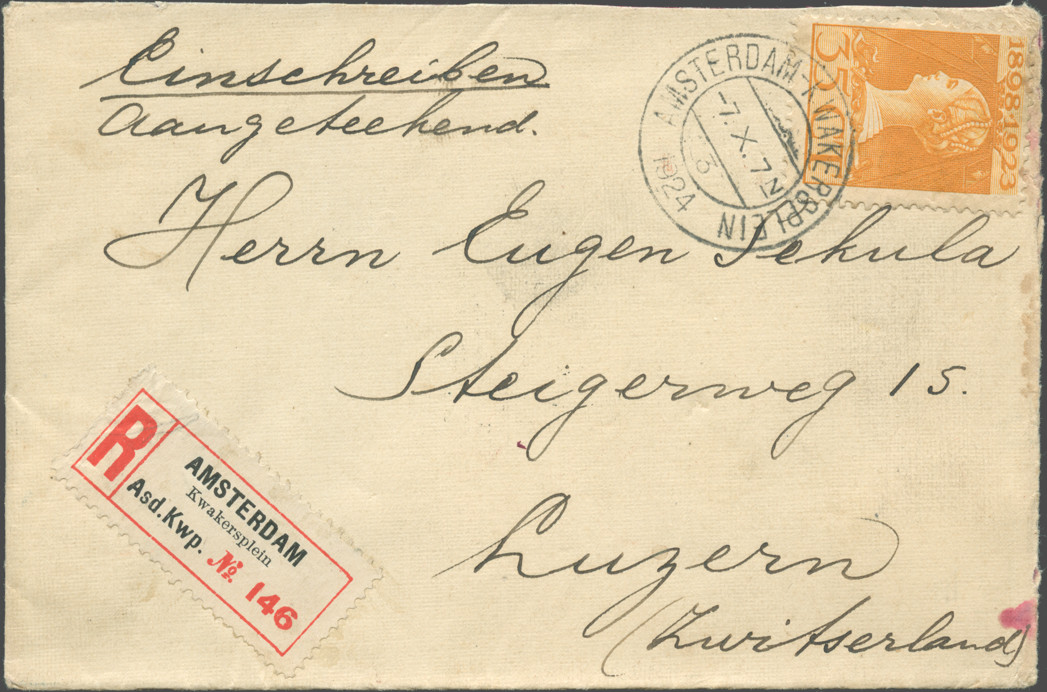
Cover — October 7, 1924
Registered mail sent on October 7, 1924, from Amsterdam, Netherlands, to Lucerne, Switzerland. Arrived on October 9, 1924.
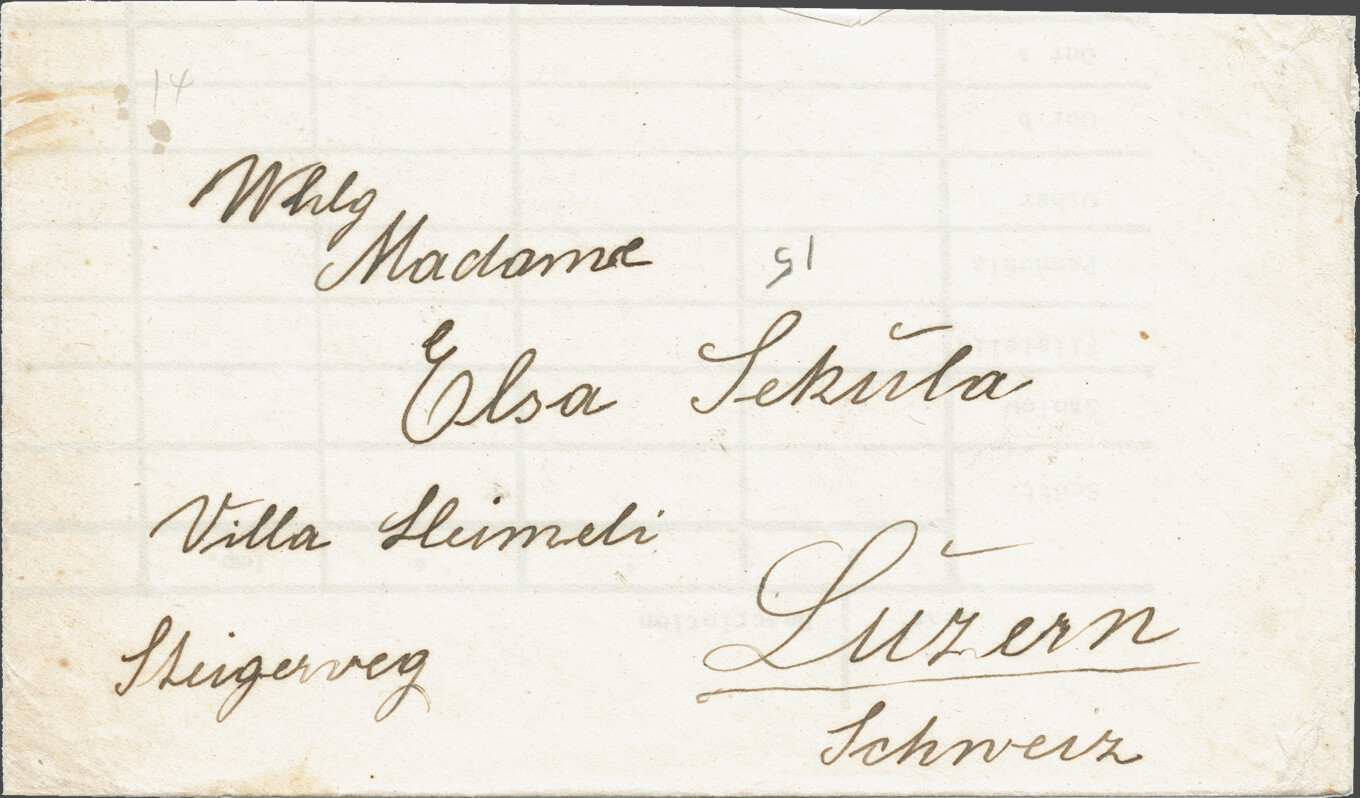
Cover — October 13, 1924
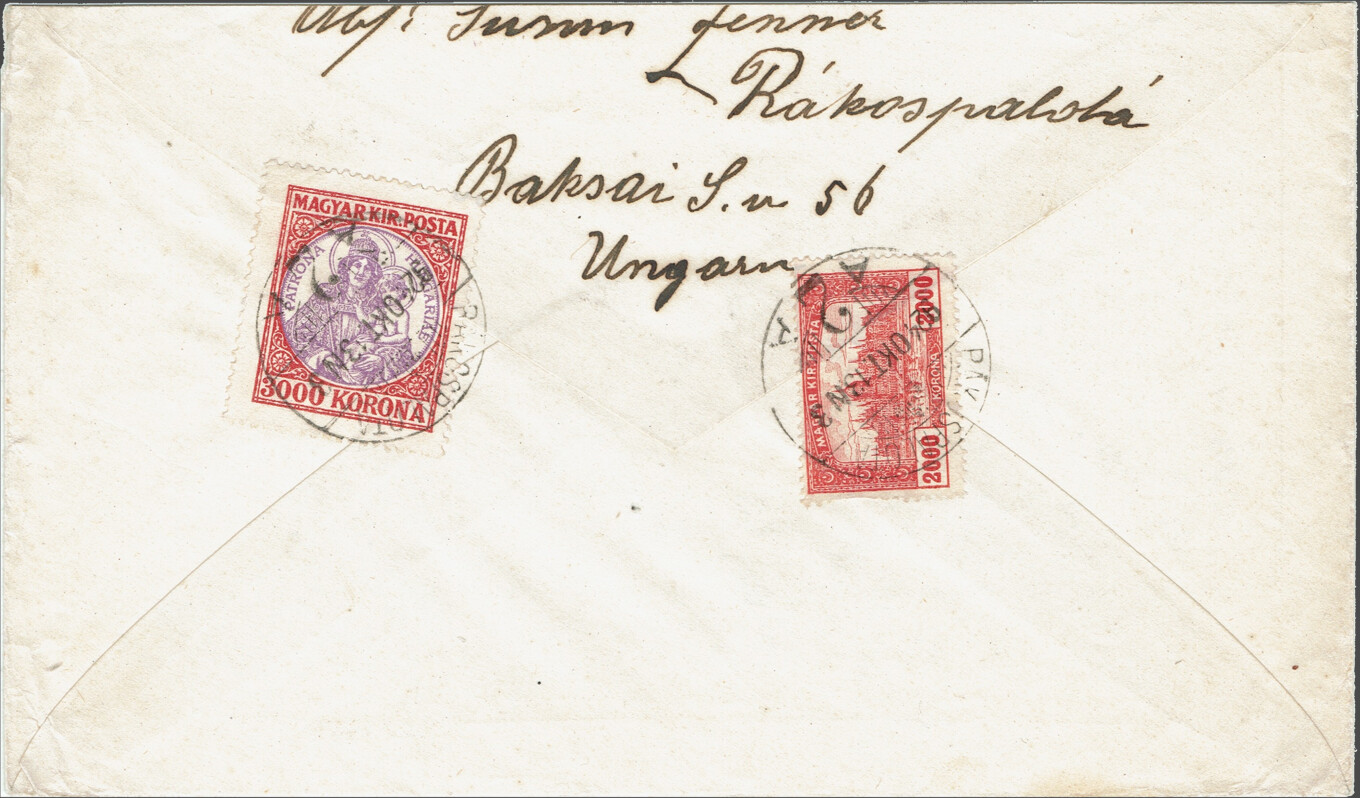
Sent on October 13, 1924, from Rákospalota (today part of Budapest), Hungary, to Eugen’s wife Elisabeth Elsa Sekula, Lucerne, Switzerland.
Scans provided by Max Brack.
Cover — November 4, 1924
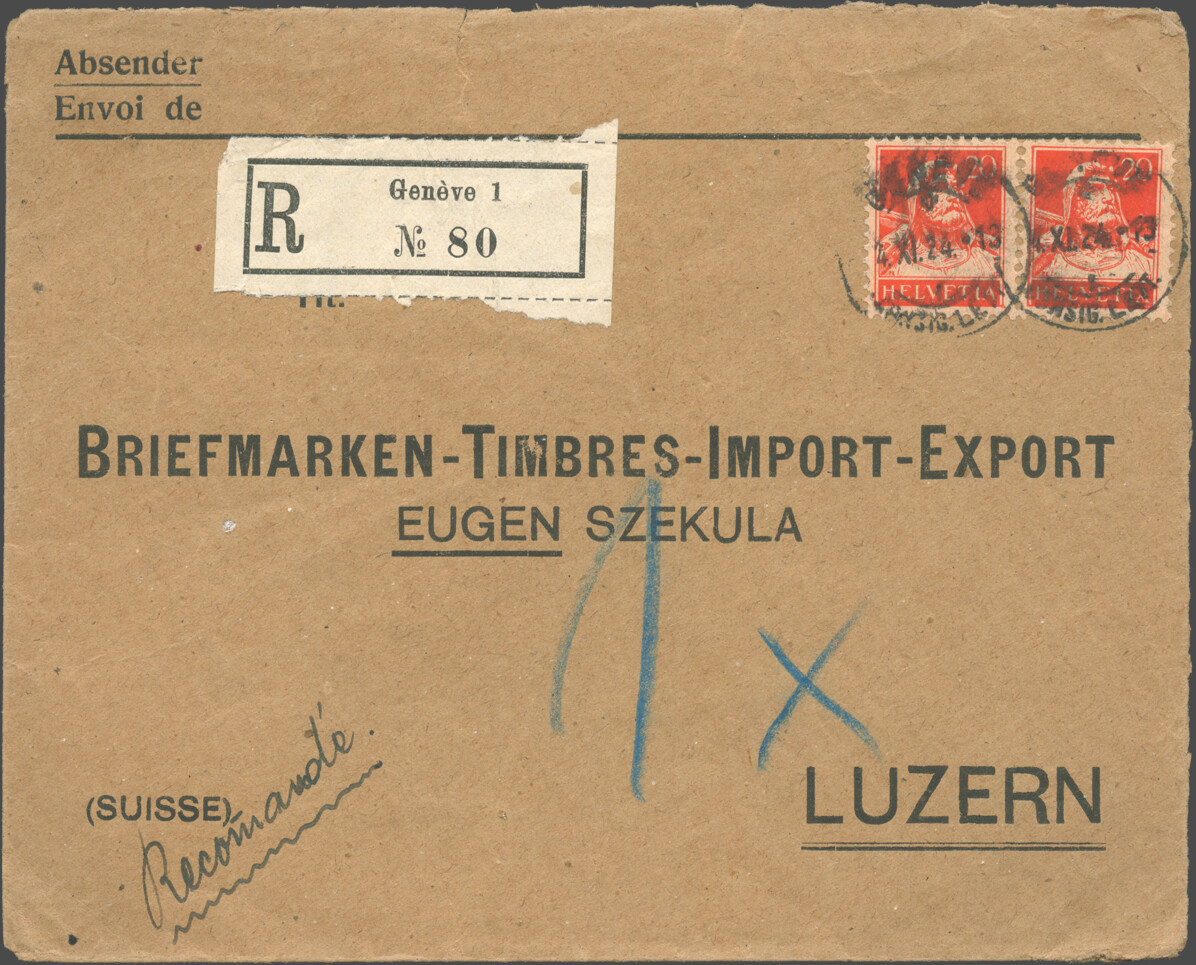
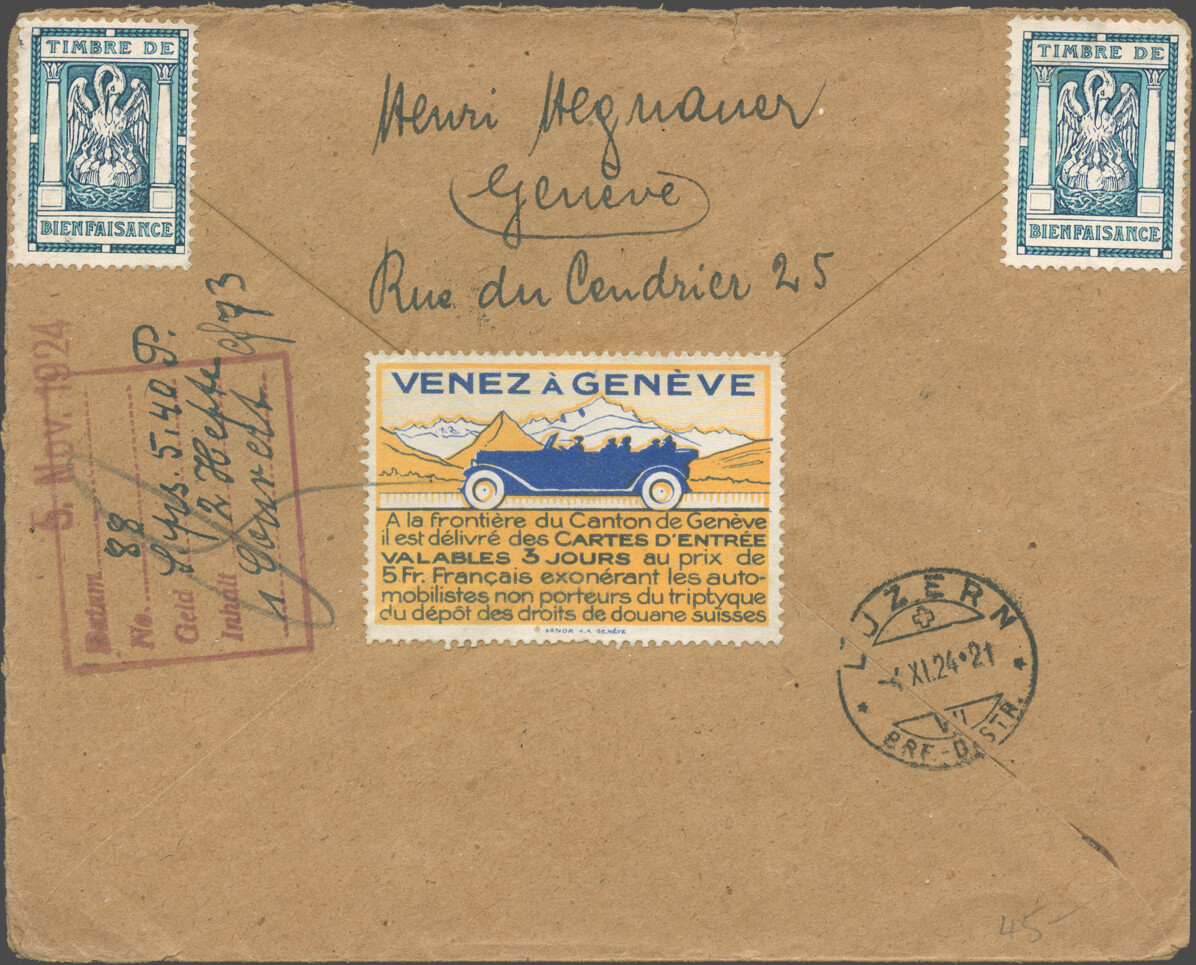
Registered mail sent on November 4, 1924, from Geneva, Switzerland, to Lucerne. Arrived on November 4, 1924.
Cover — November 23, 1924
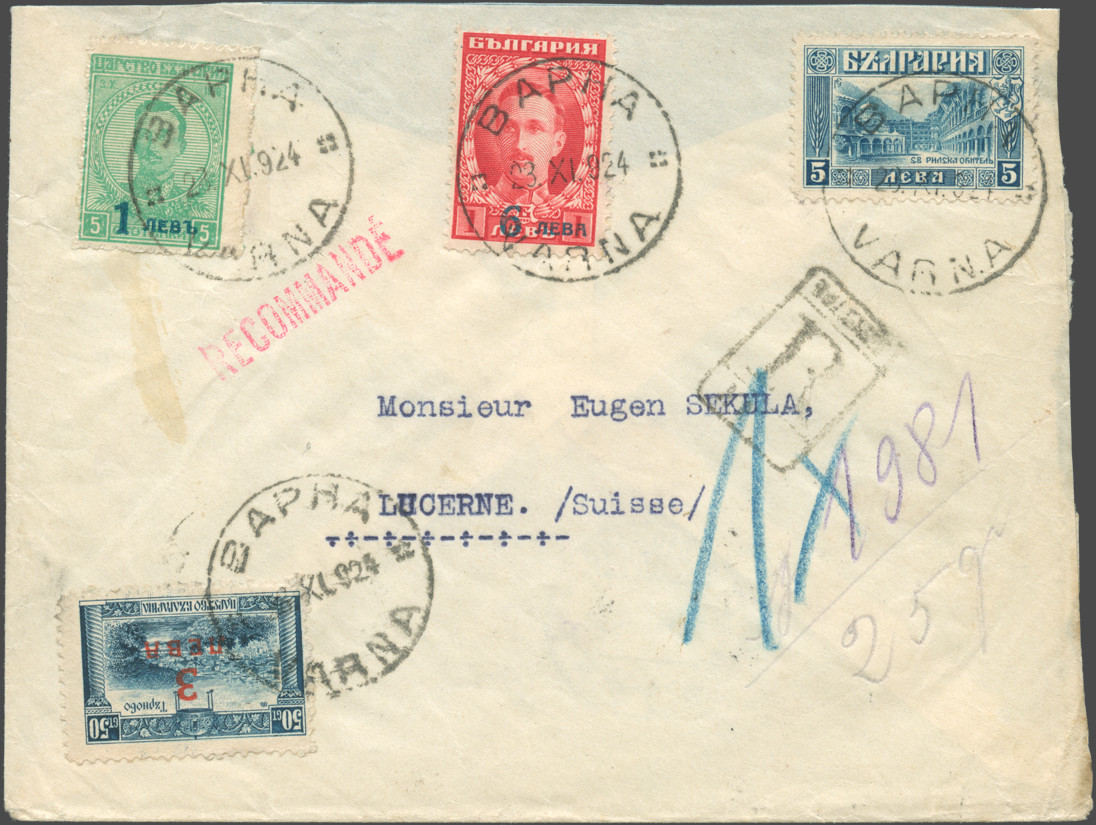
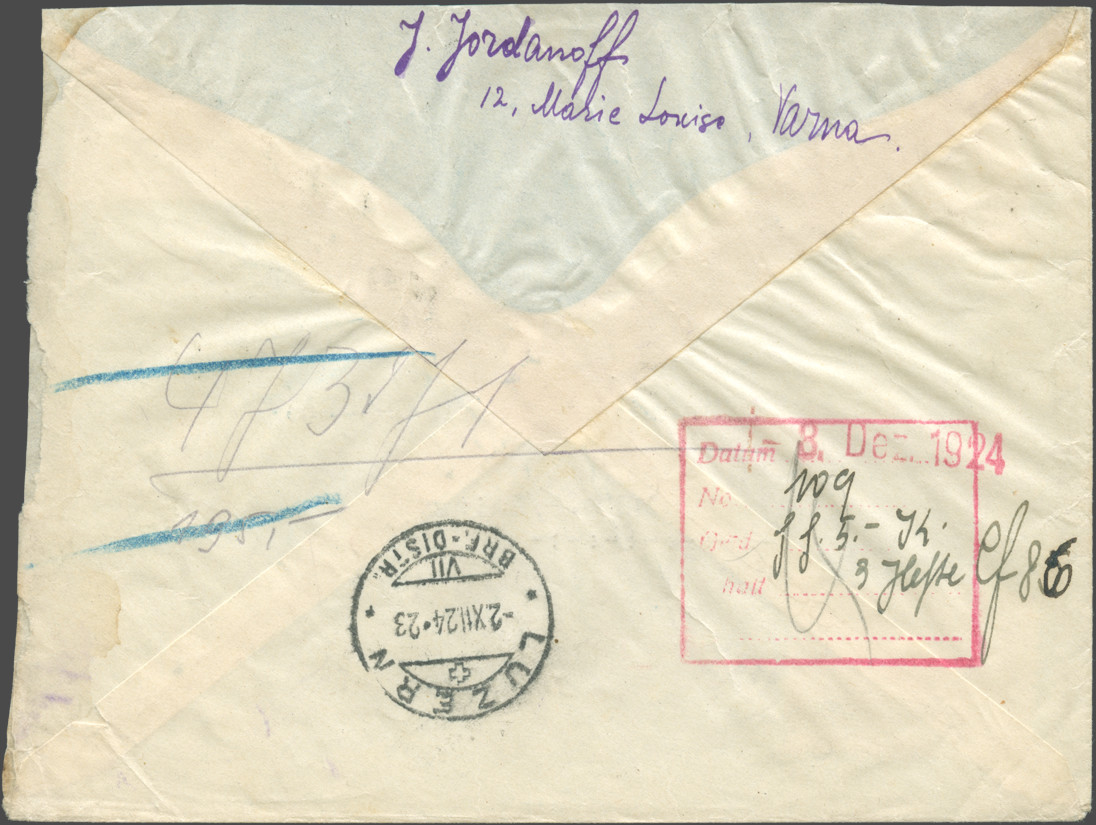
Registered mail sent on November 23, 1924, from Varna, Bulgaria, to Lucerne, Switzerland. Arrived on November 23, 1924.
Cover — November 28, 1924
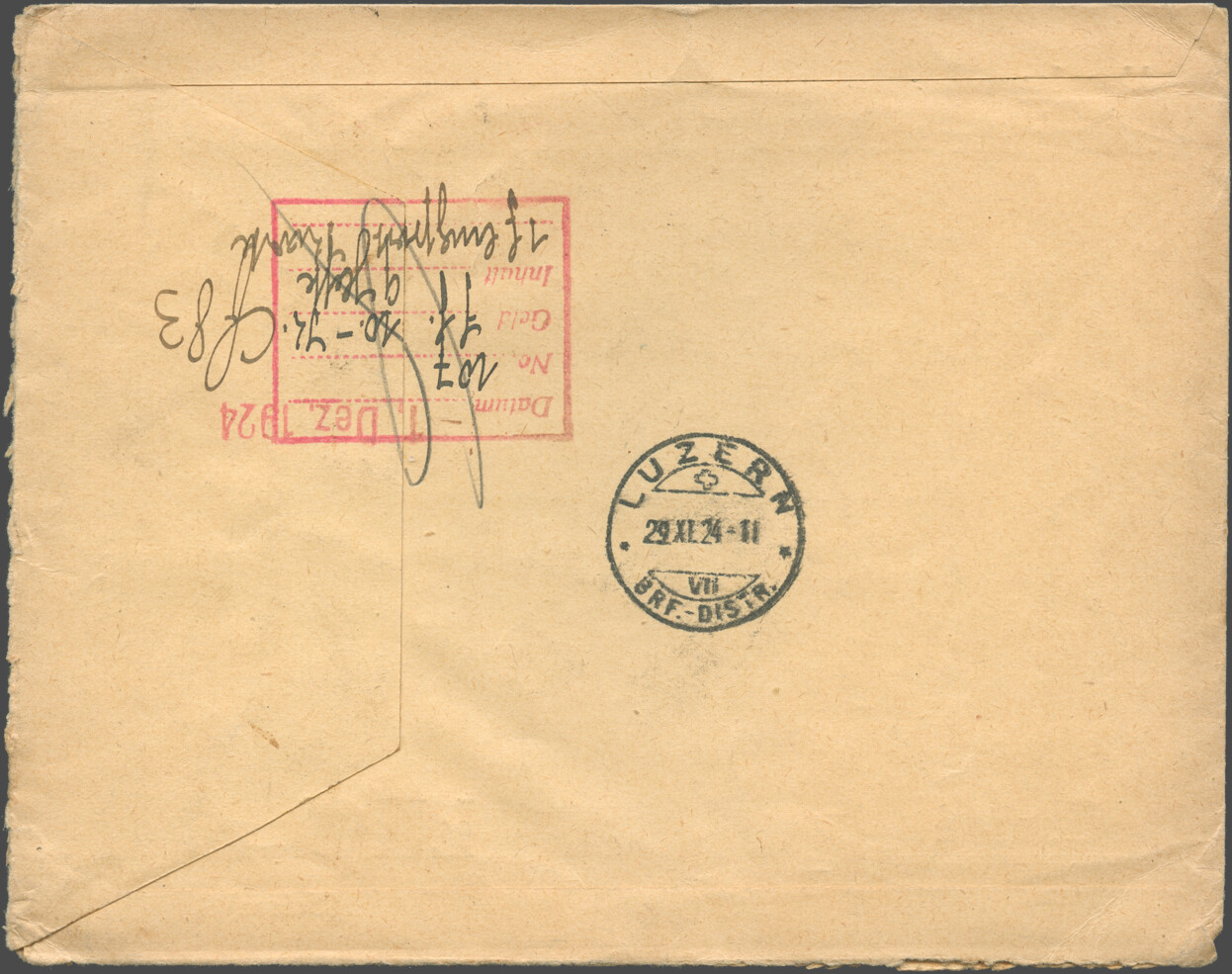
Registered mail sent on November 28, 1924, from Paris, France, to Lucerne, Switzerland. Arrived on November 29, 1924.
Cover — December 23, 1924
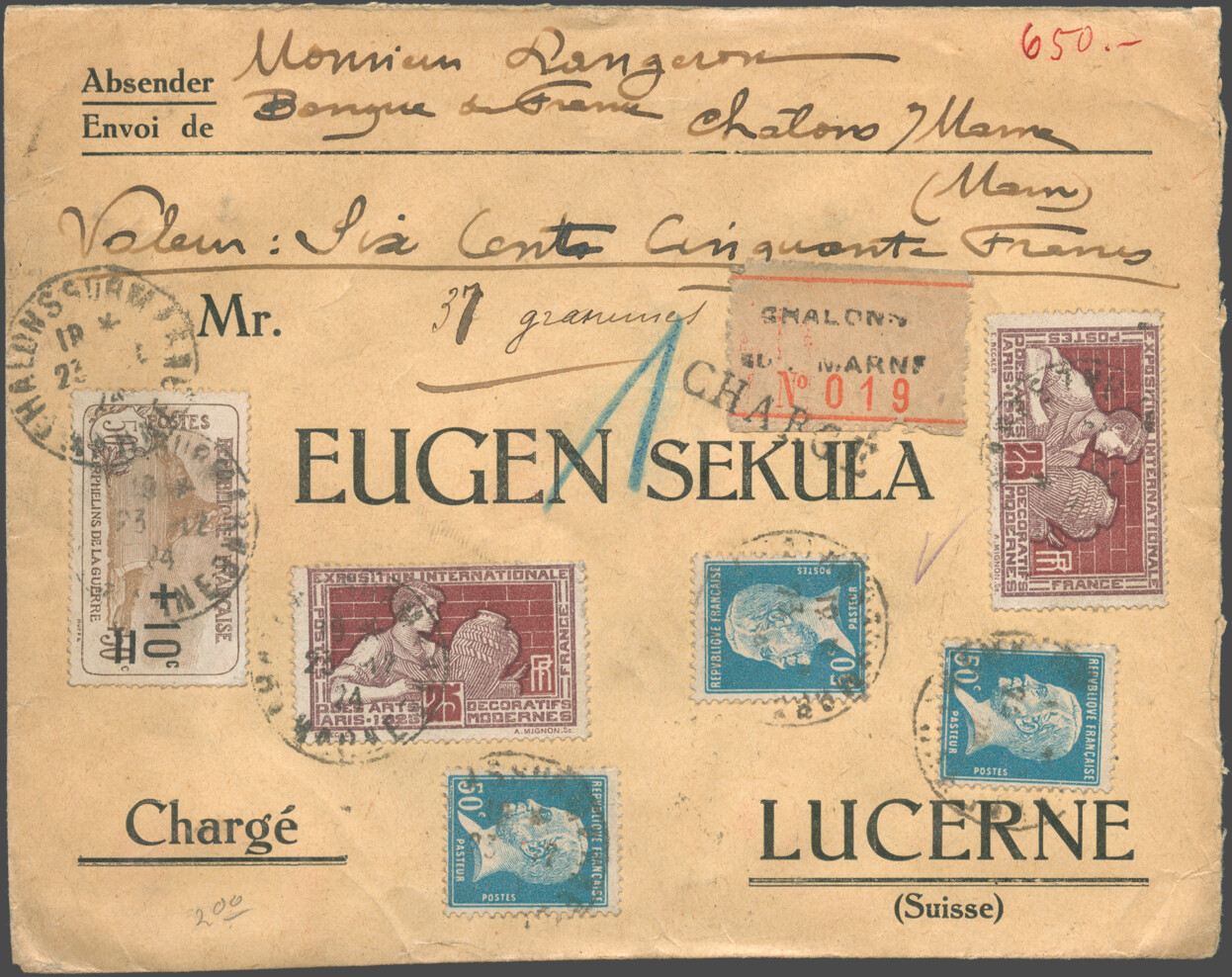
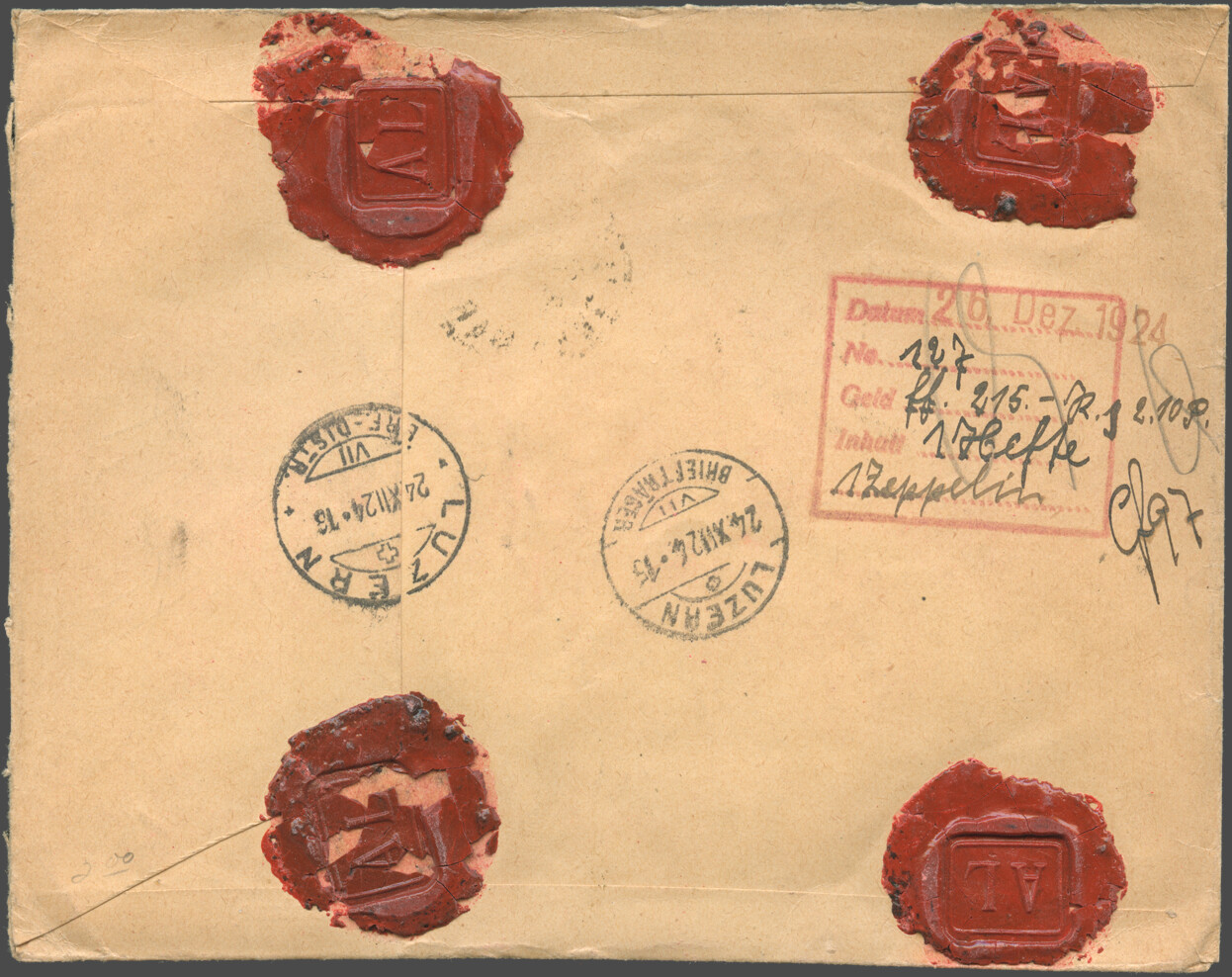
Registered mail sent on December 23, 1924, from Châlons-sur-Marne (=Châlons-en-Champagne), France, to Lucerne, Switzerland. Arrived on December 24, 1924.
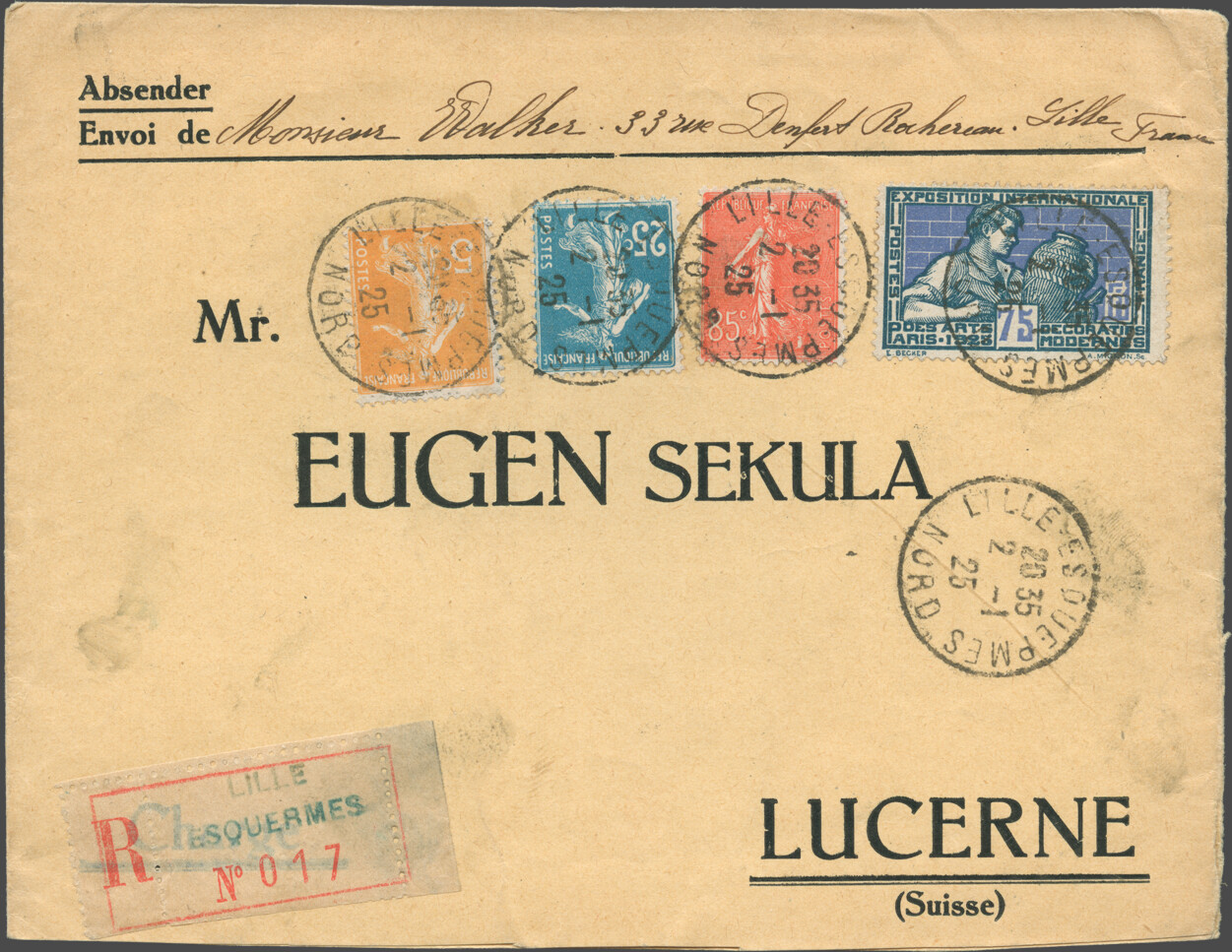
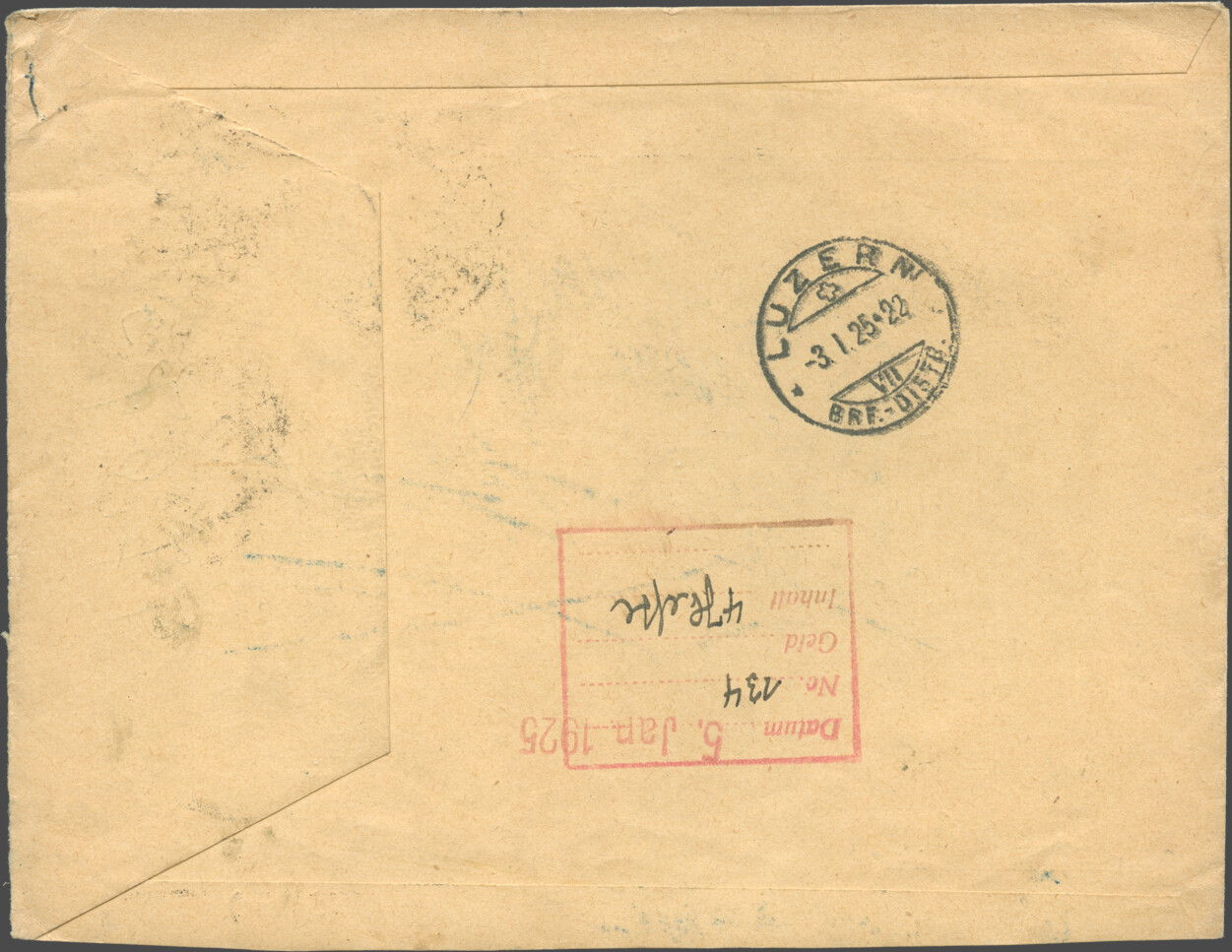
Cover — January 2, 1925
Registered mail sent on January 2, 1925, from Lille, France, to Lucerne, Switzerland. Arrived on January 3, 1925.
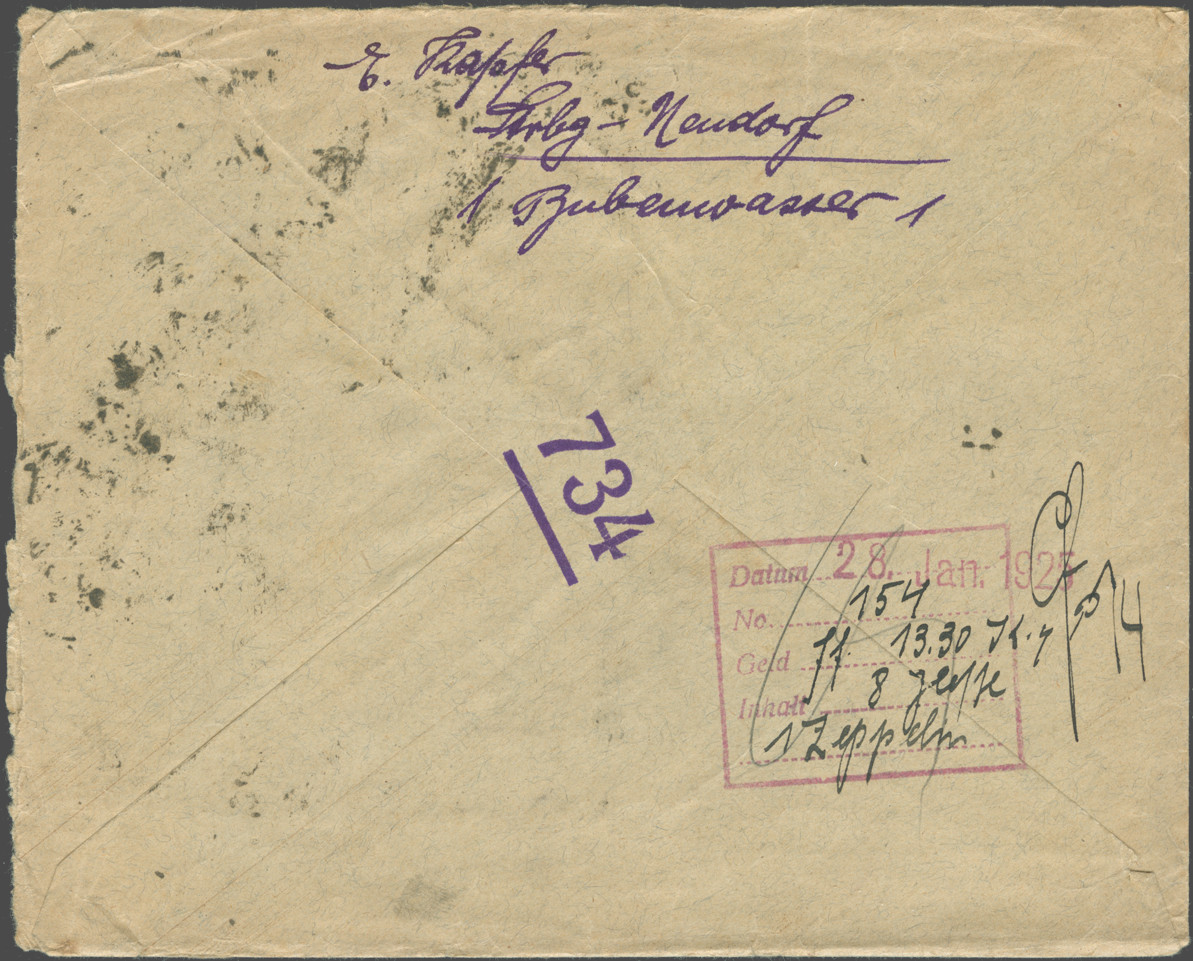
Cover — January 27, 1925
Registered mail sent on January 27, 1925, from Strasbourg, France, to Lucerne, Switzerland.
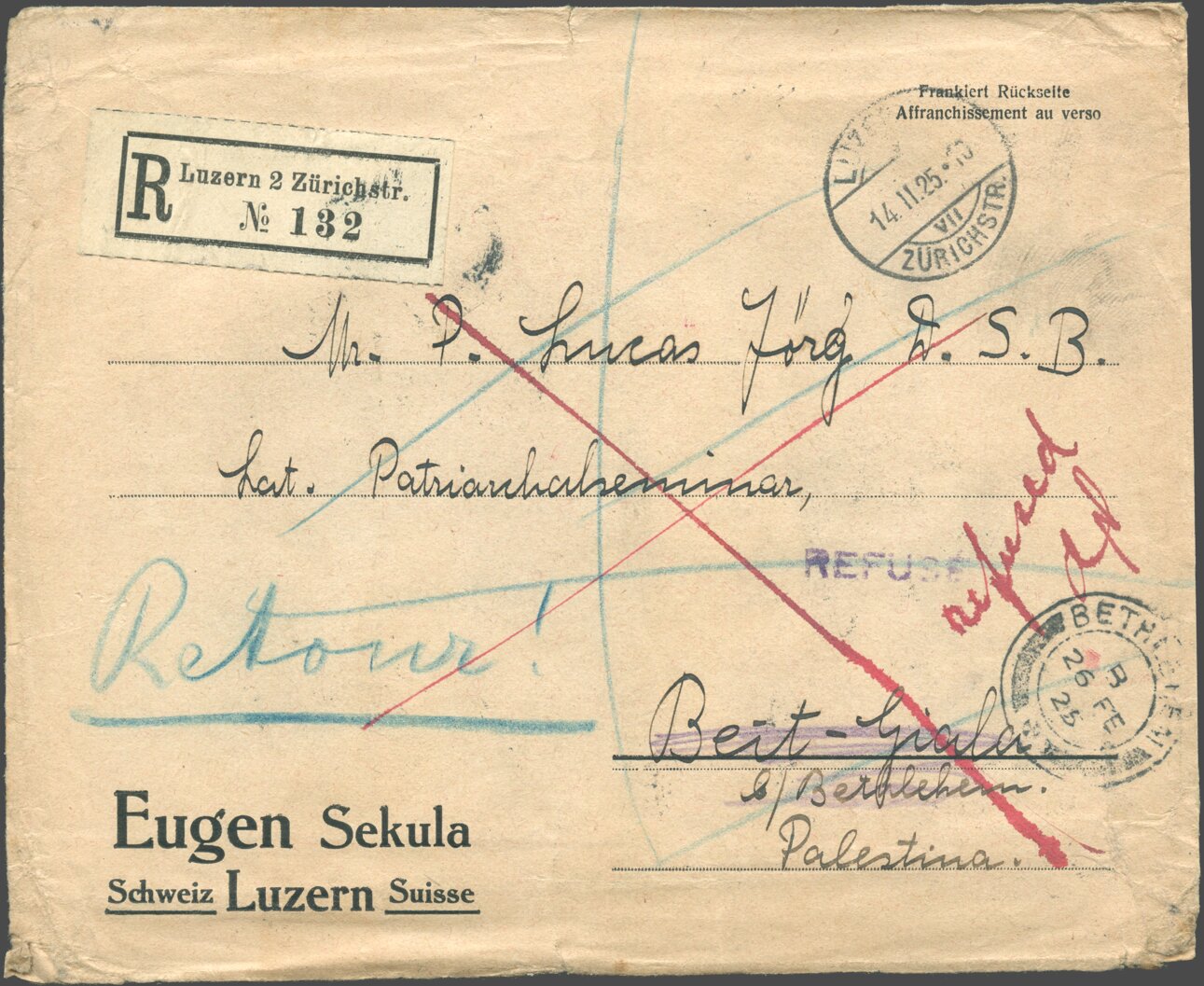
Cover — February 14, 1925
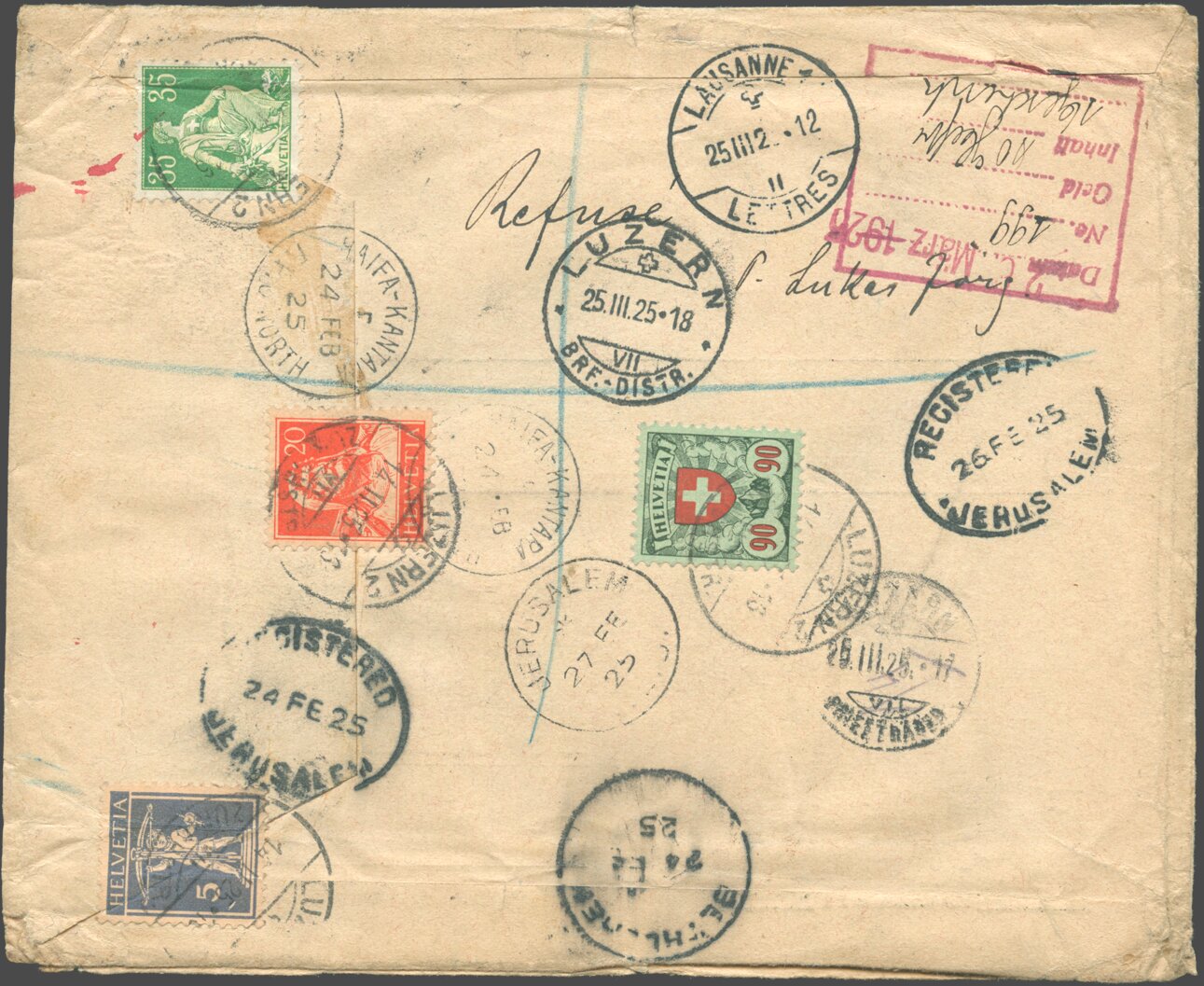
Registered mail sent on February 14, 1925, from Lucerne, Switzerland, to Beit Jala near Bethlehem, Palestine (in today’s Westbank). Arrival postmark of Bethlehem on February 26, 1925. Acceptance refused and returned to sender in Lucerne on March 25, 1925.
Return Envelope — March 30, 1925
Registered mail sent on March 30, 1925, from Diessenhofen, Switzerland, to Lucerne. Arrived on March 30, 1925.
Cover — April 8, 1925
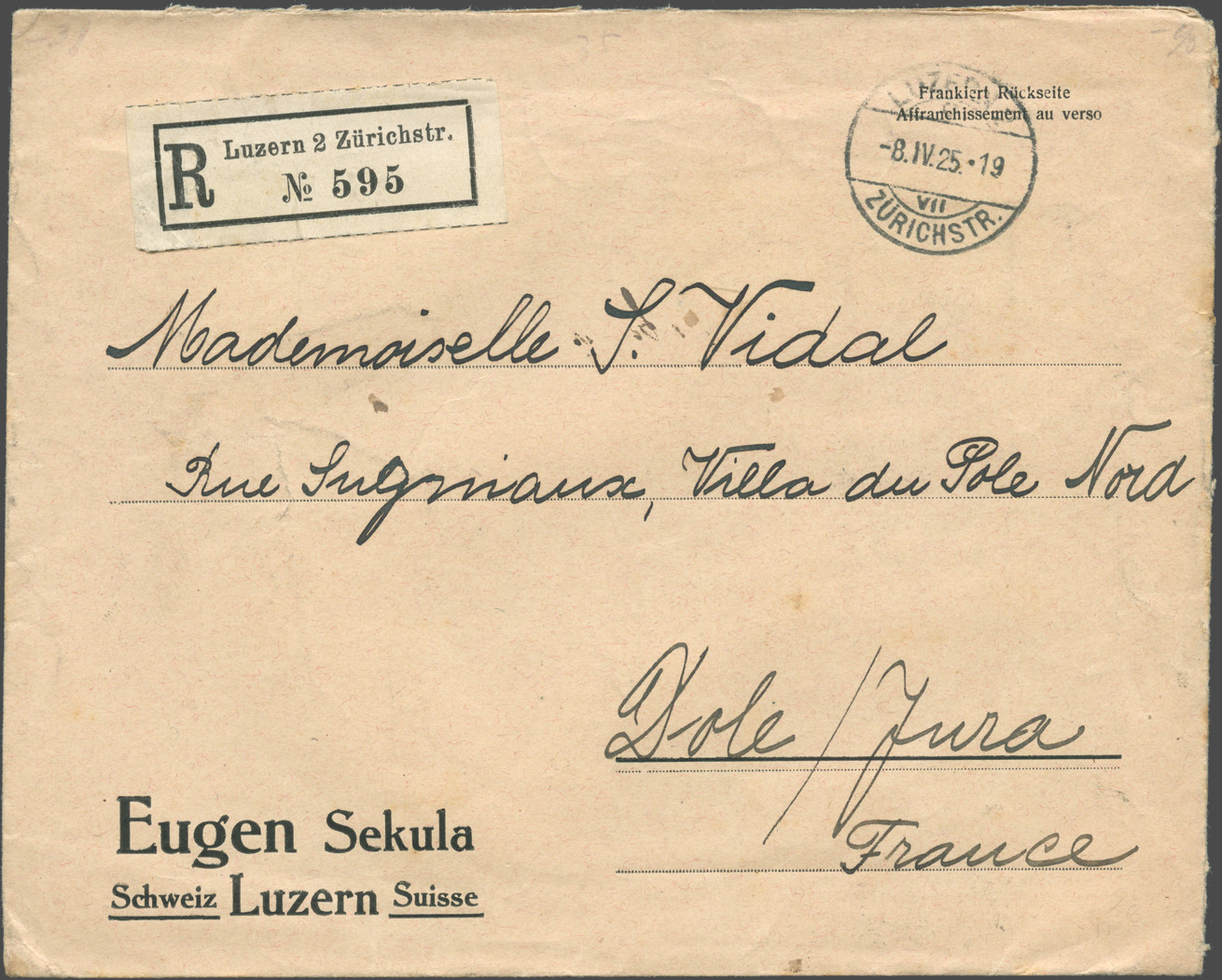
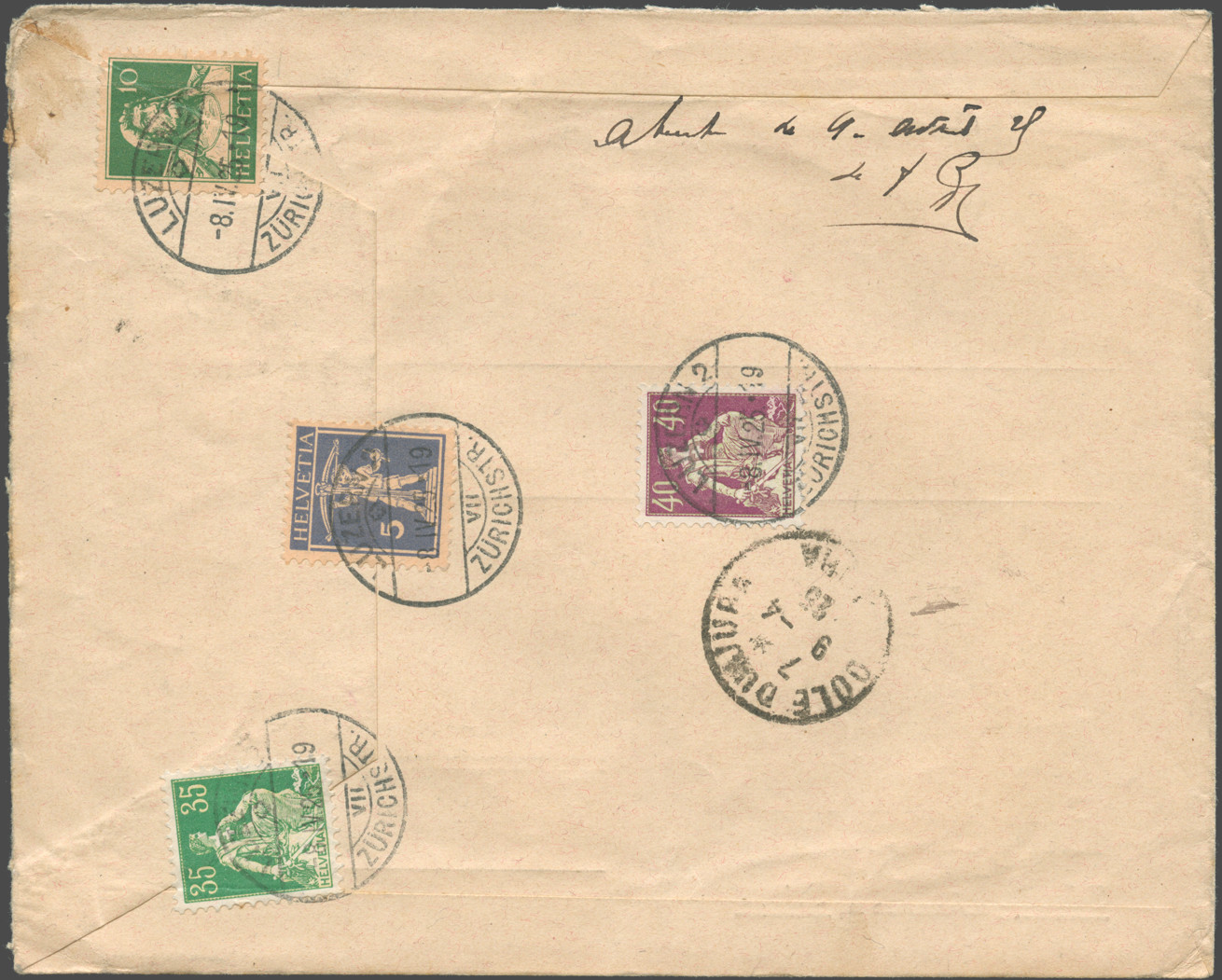
Registered mail sent on April 8, 1925, from Lucerne, Switzerland, to Dole, Jura. Arrived on April 8, 1925.
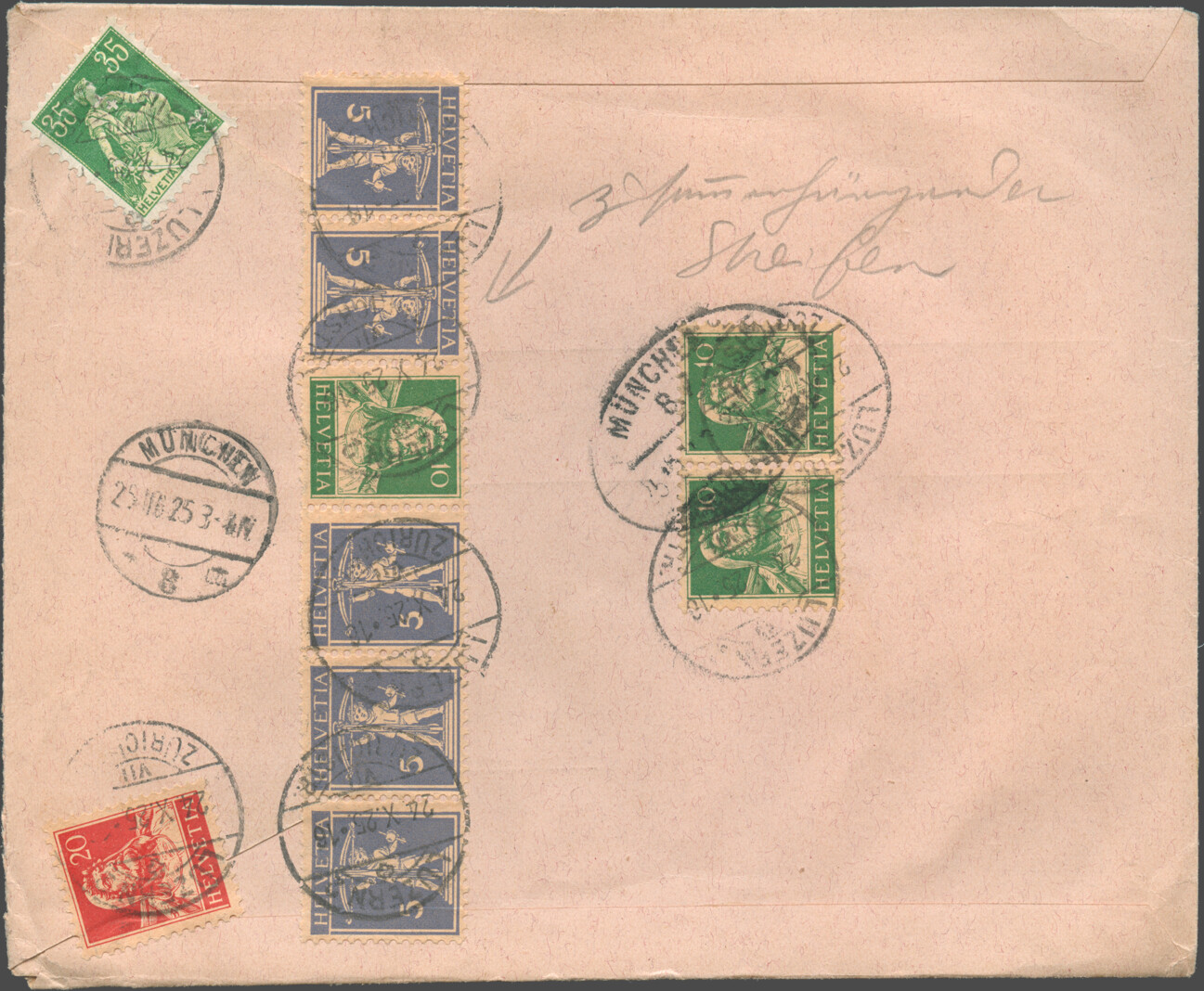
Cover — October 24, 1925
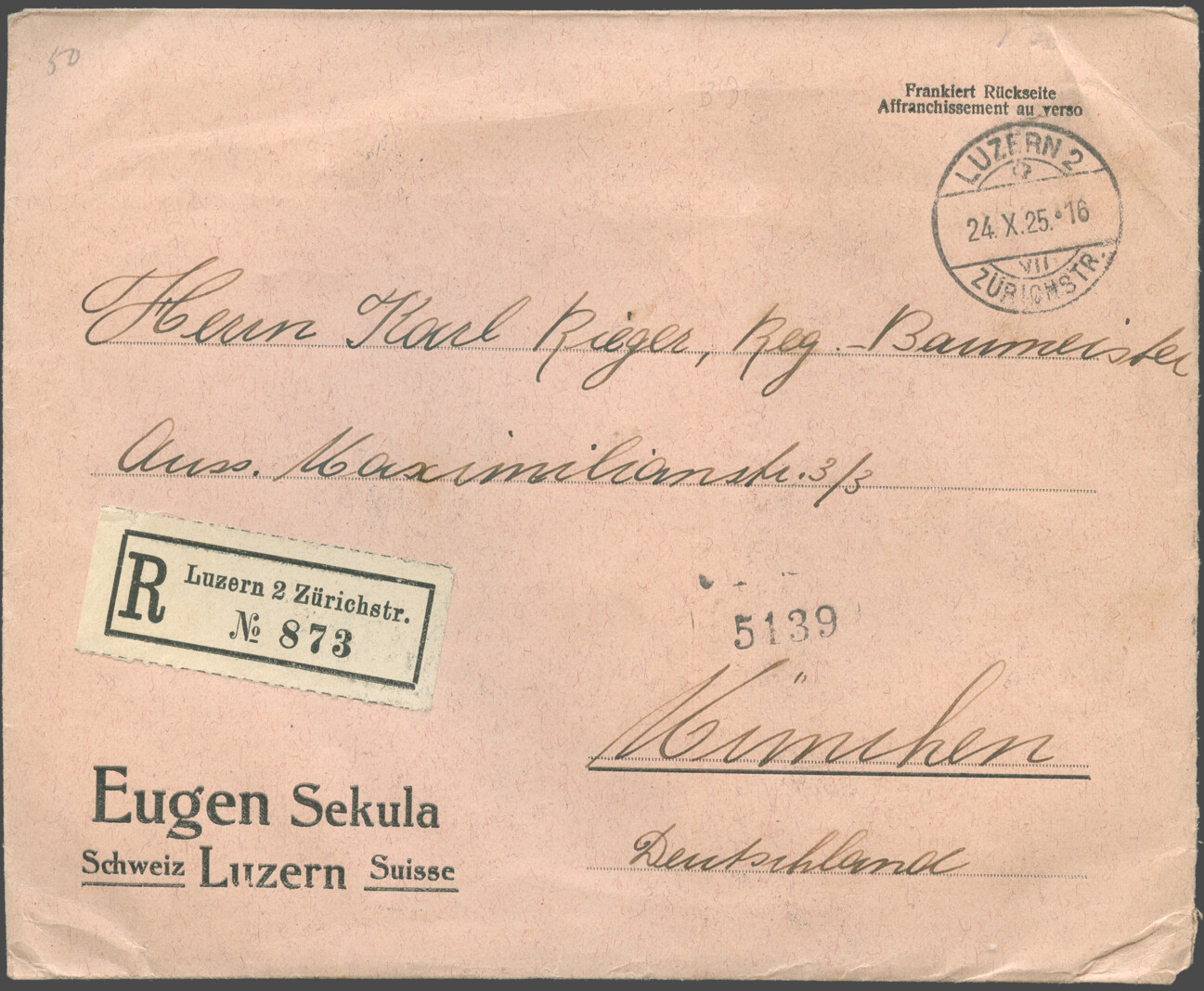
Registered mail sent on October 24, 1925, from Lucerne, Switzerland, to Munich, Germany. Arrived on October 25, 1925.
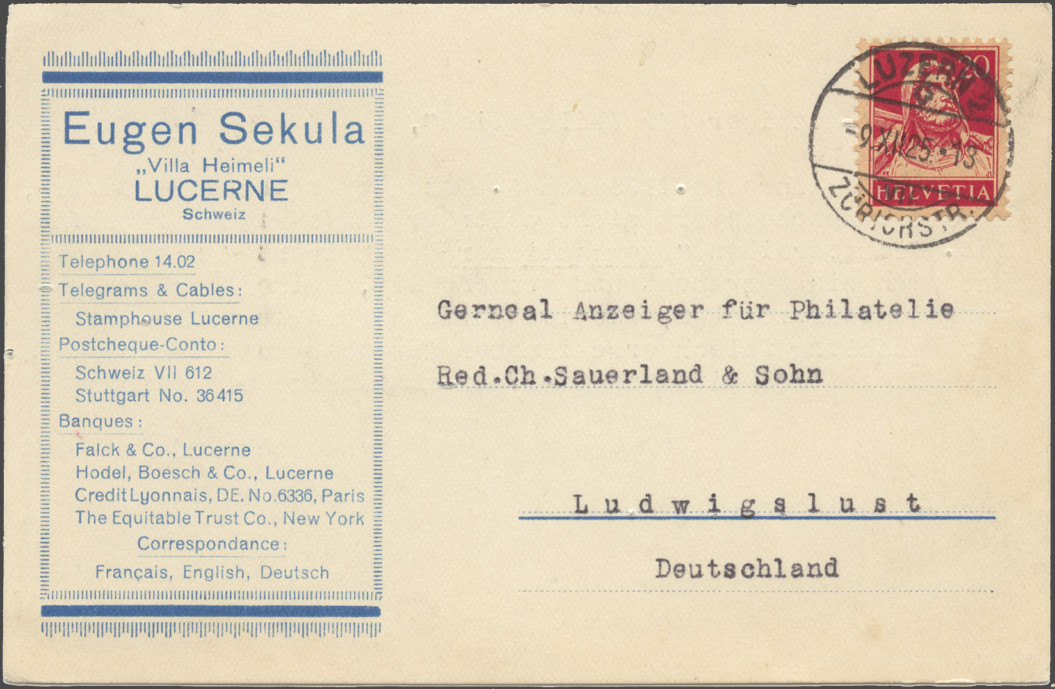
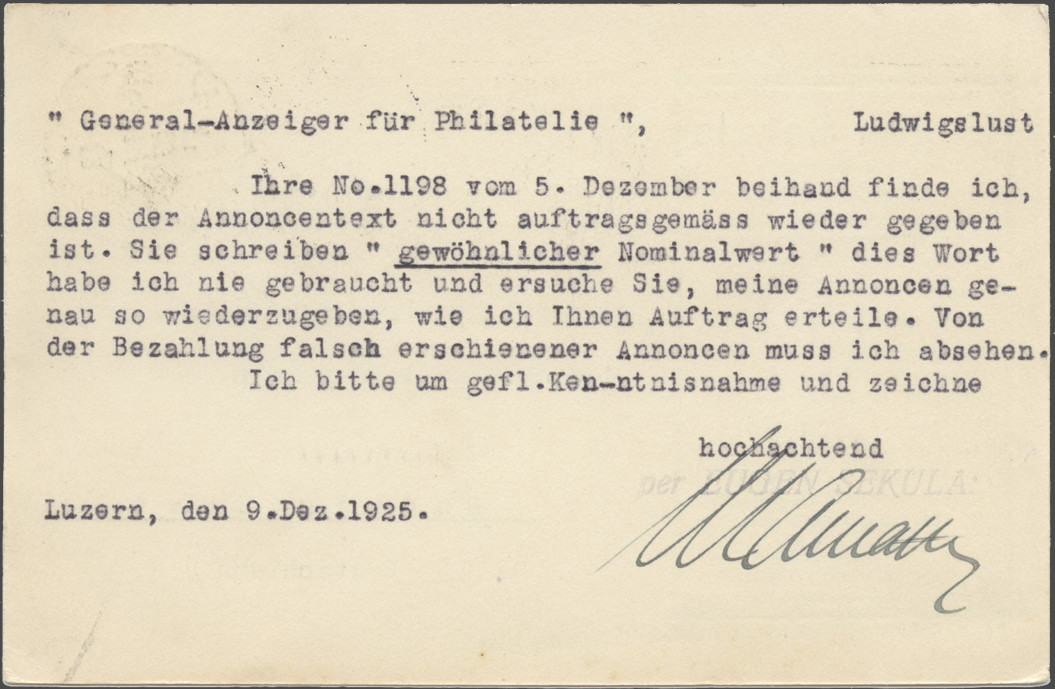
Postcard — December 9, 1925
A postcard from Eugen Sekula to the editor of the General Anzeiger für Philatelie, where he complains that his advertisement was not printed correctly.
The advertisement contained the phrase ordinary nominal value, but he insists on never having used the word ordinary and therefore refuses to pay for it.
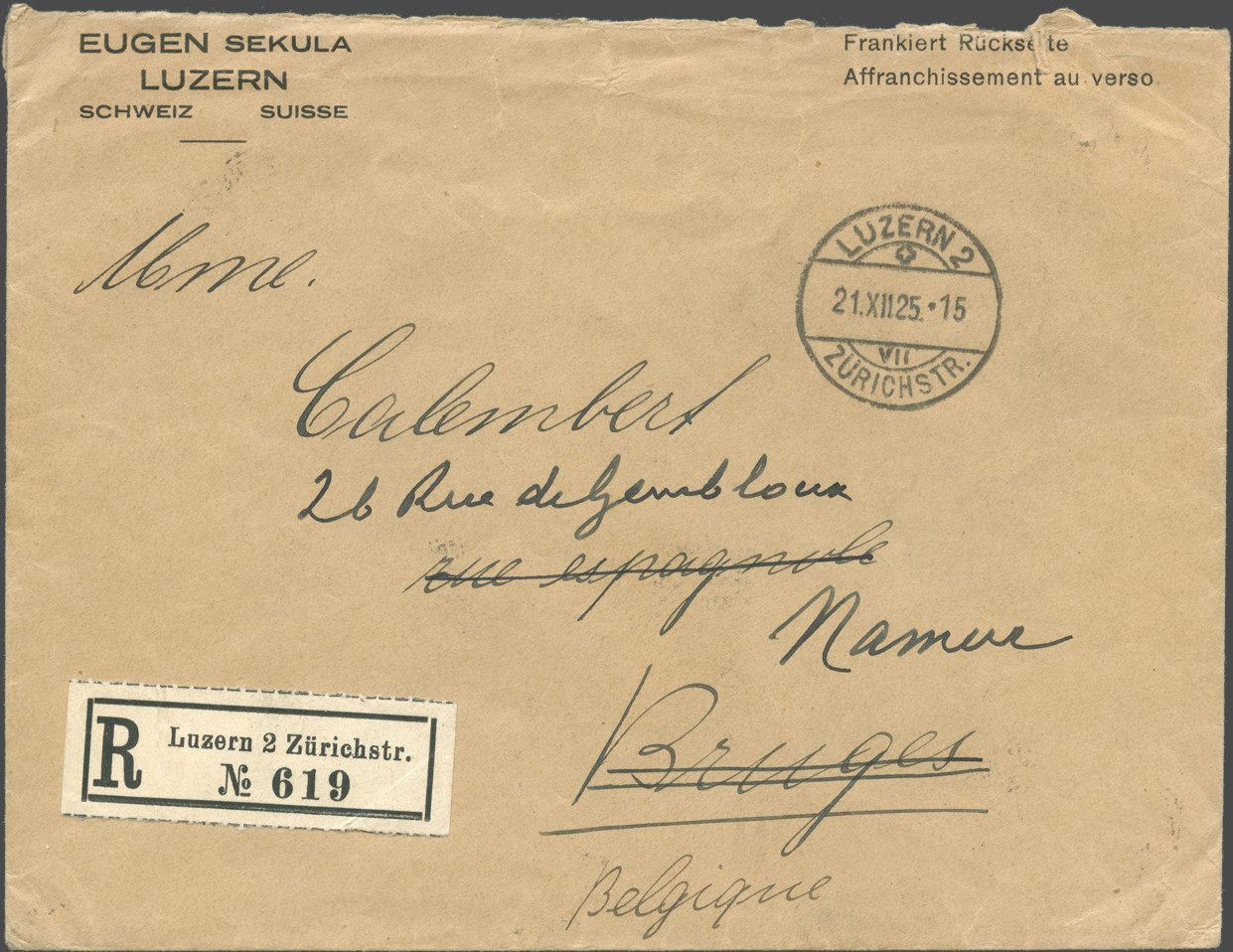
Cover — December 21, 1925
Registered mail sent on December 21, 1925, from Lucerne, Switzerland, to Bruges, Belgium, and forwarded to Namur. Arrived on December 21, 1925.
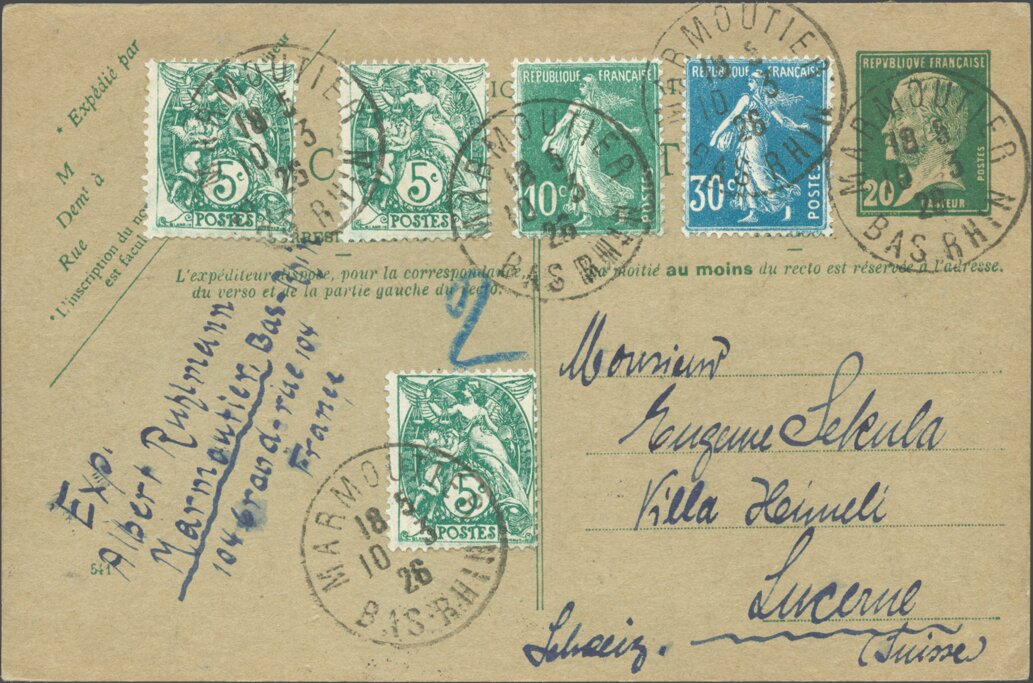
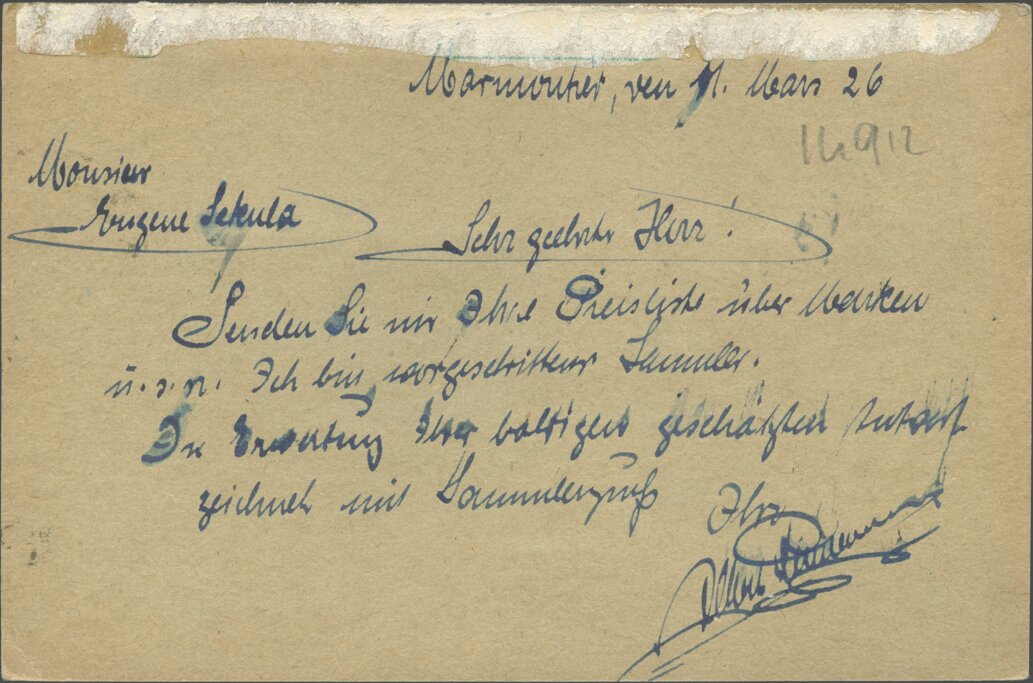
Postal Card — March 10, 1926
Sent on March 10, 1926, from Marmoutier, Alsace, France, to Lucerne, Switzerland.
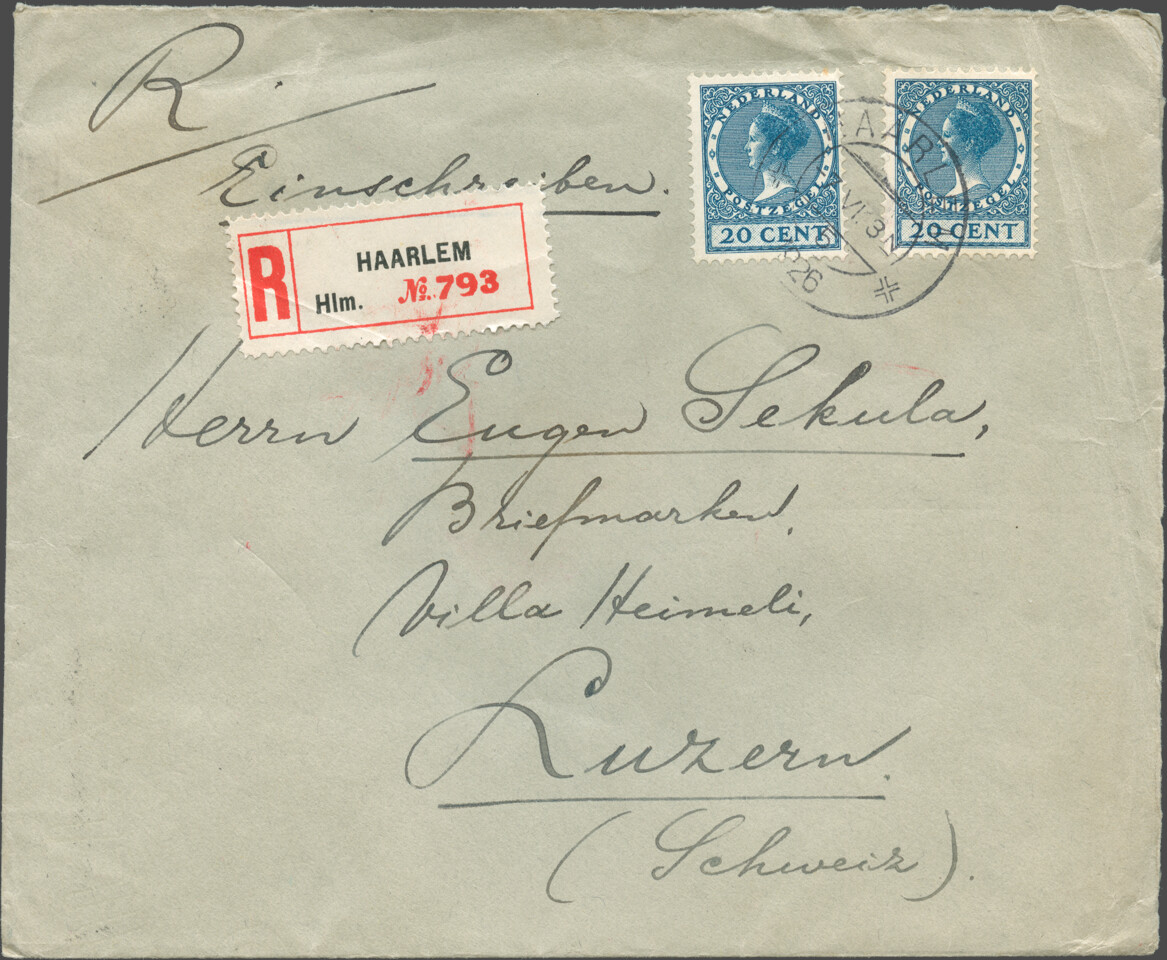
Cover — June 7, 1926
Registered mail sent on June 7, 1926, from Haarlem, Netherlands, to Lucerne, Switzerland. Arrived on June 8, 1926.
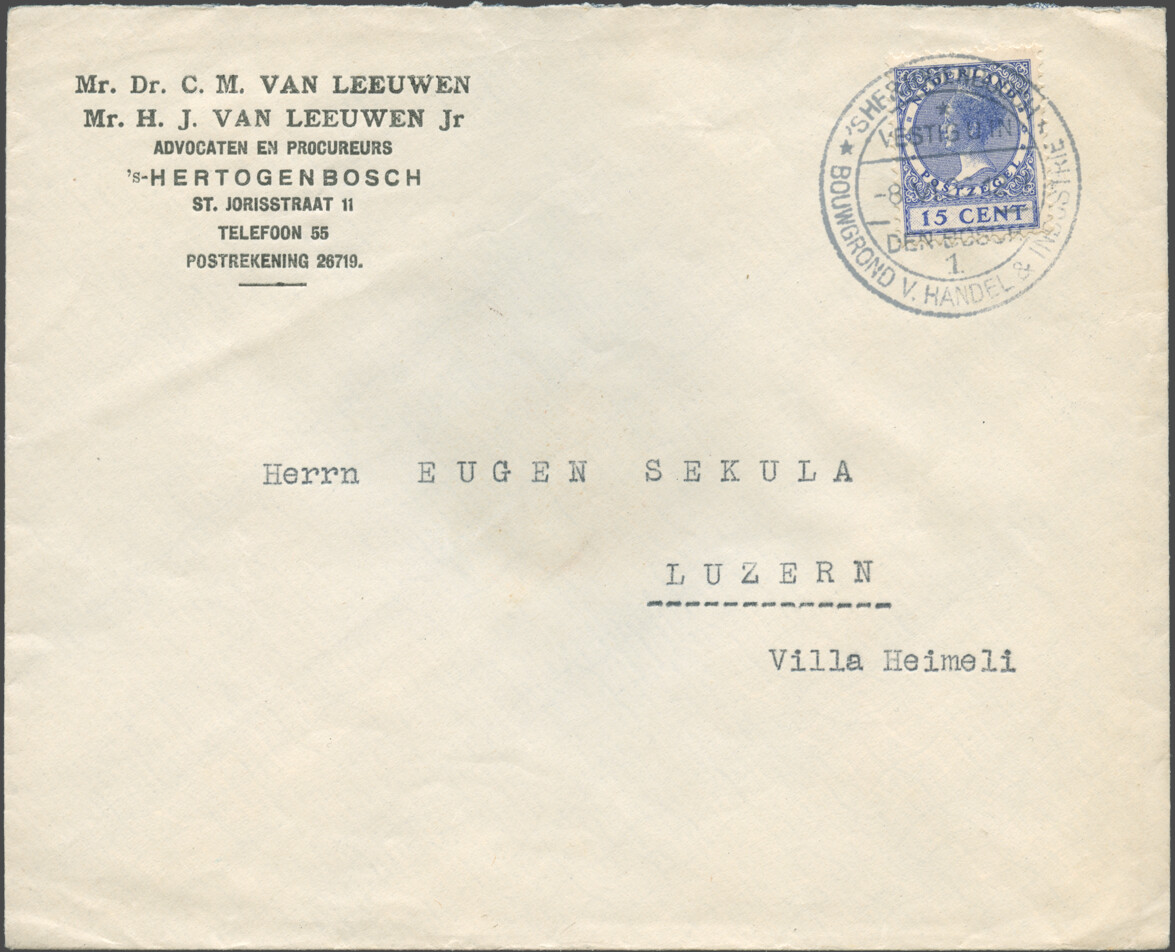
Cover — June 8, 1926
Sent on June 8, 1926, from ’s-Hertogenbosch, Netherlands, to Lucerne, Switzerland.
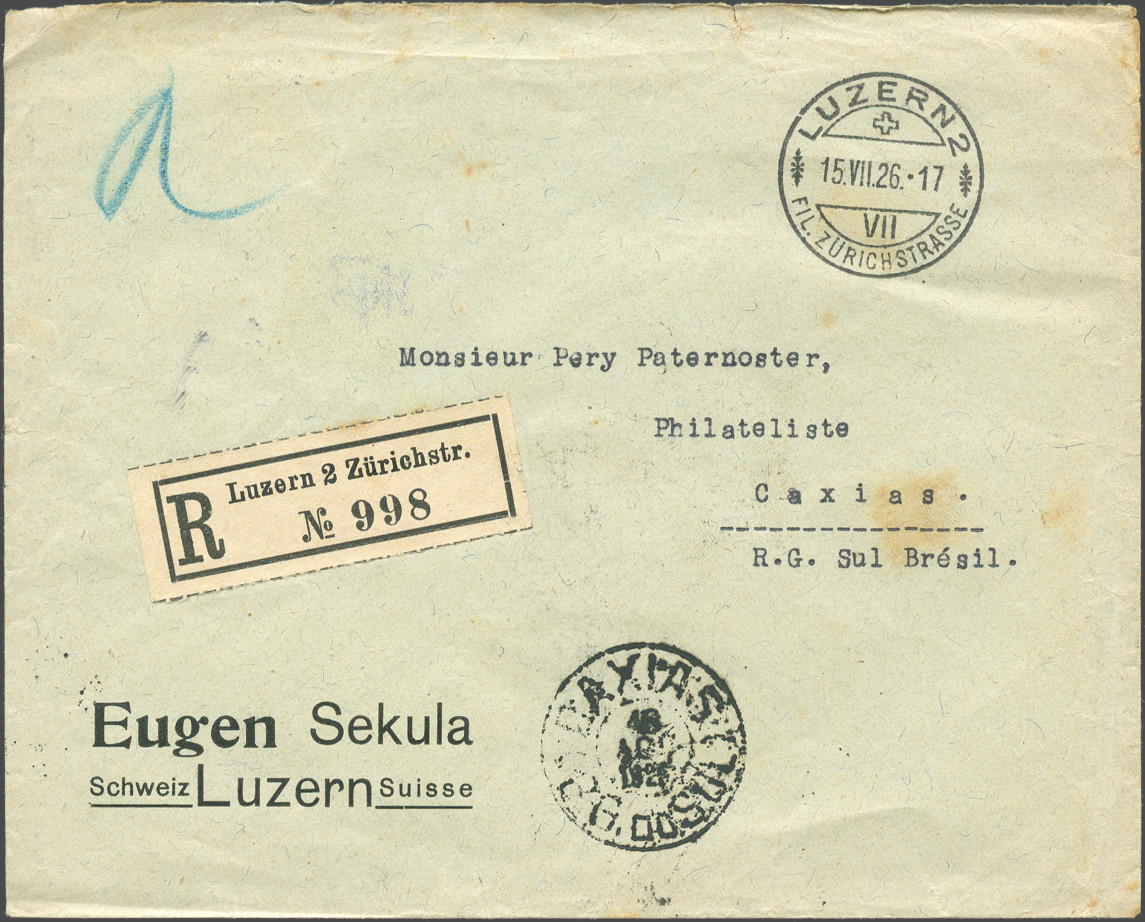
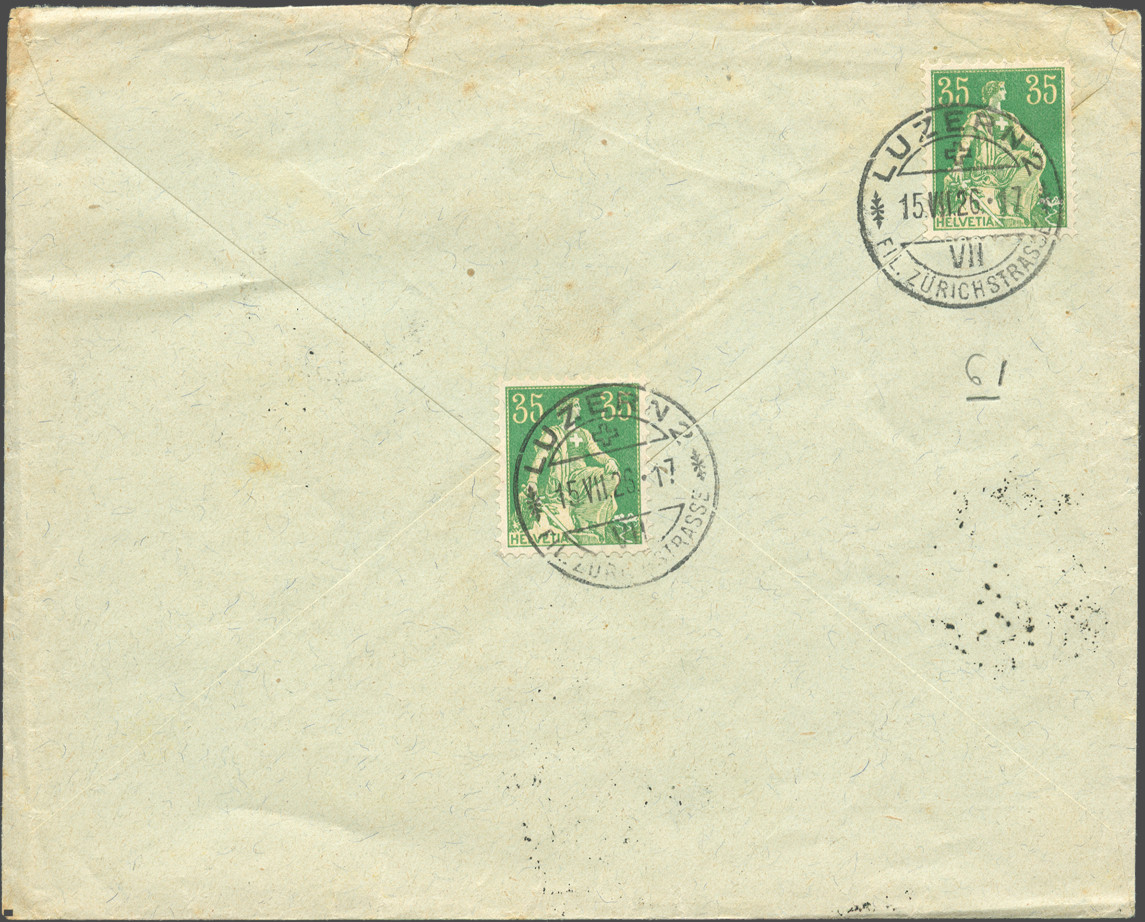
Cover — July 15, 1926
Sent on July 15, 1926, from Lucerne, Switzerland, to Caxias do Sul, Brazil. Arrived on July 15, 1926.
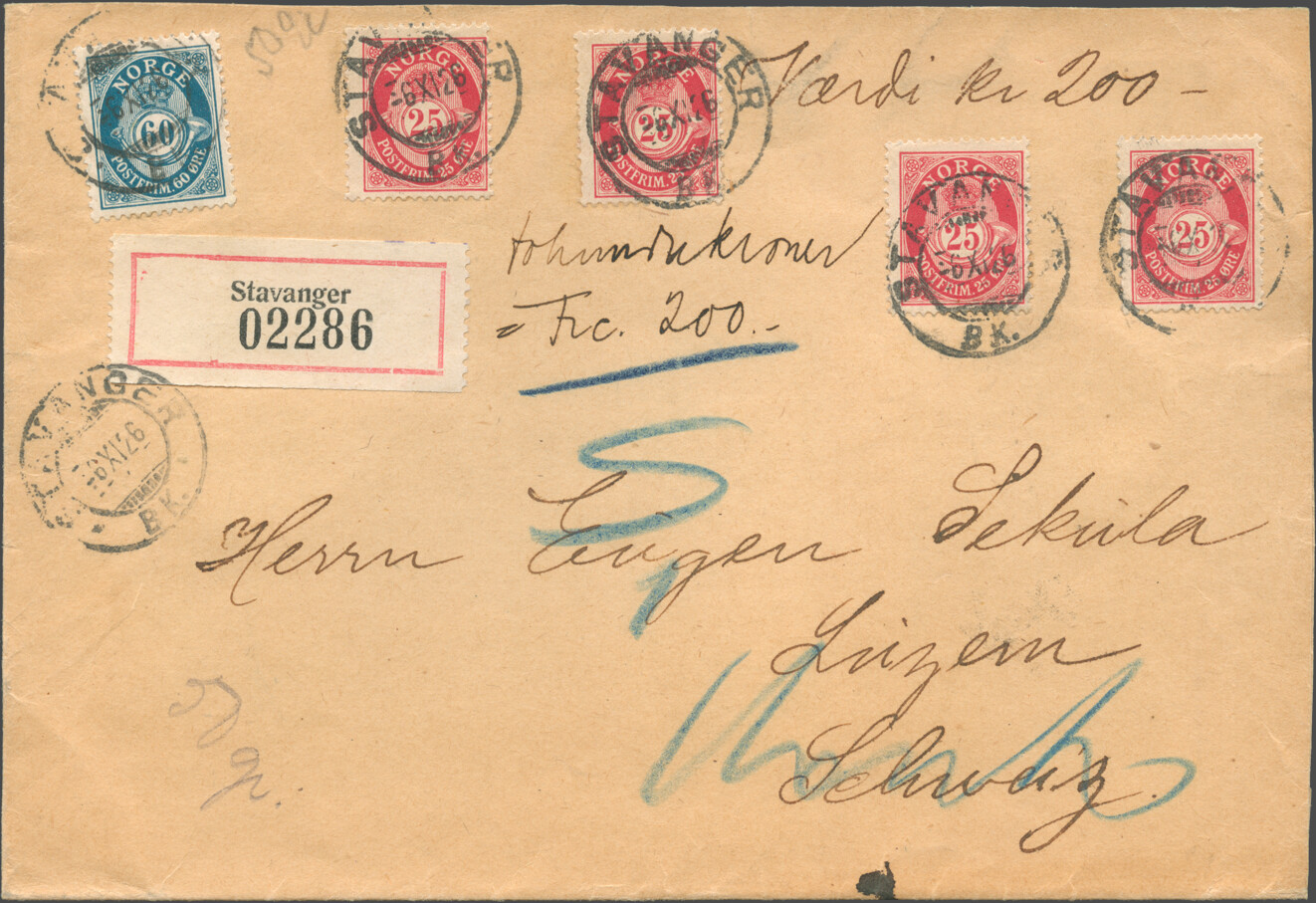
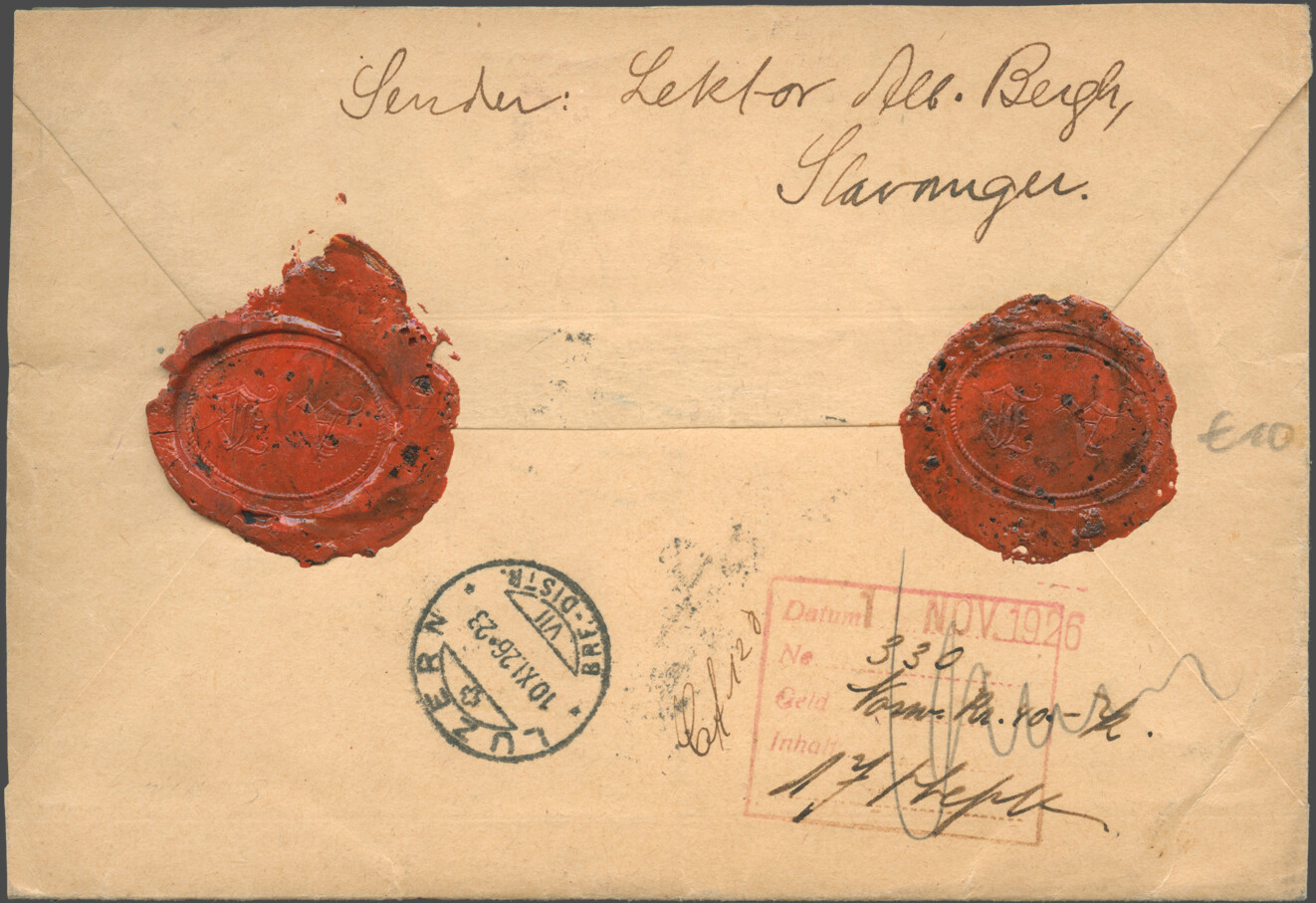
Cover — November 6, 1926
Registered mail sent on November 6, 1926, from Stavanger, Norway, to Lucerne, Switzerland. Arrived on November 10, 1926.



















179_Mi(DE)347X_A.jpg)
179_Mi(DE)347X_M.jpg)