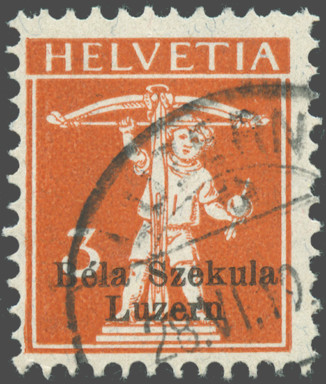
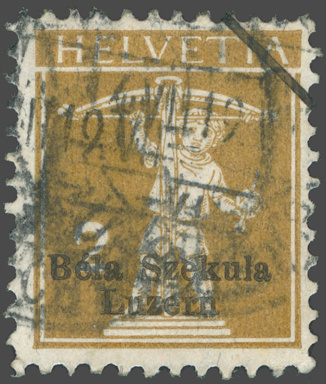
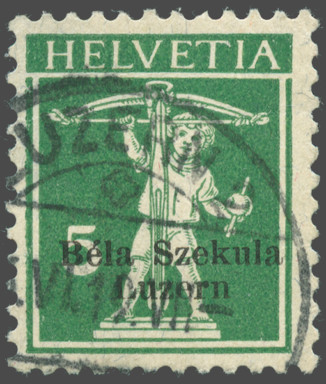
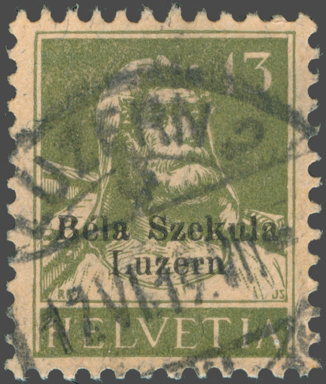
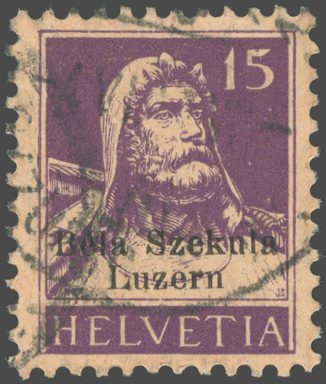
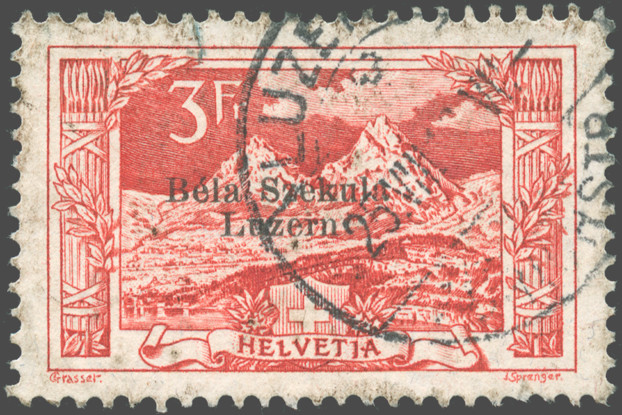
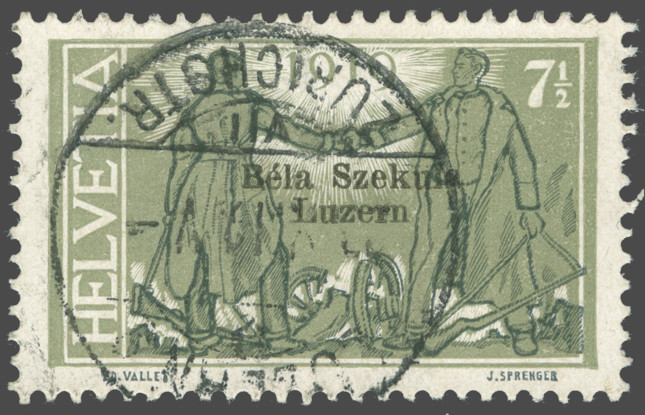
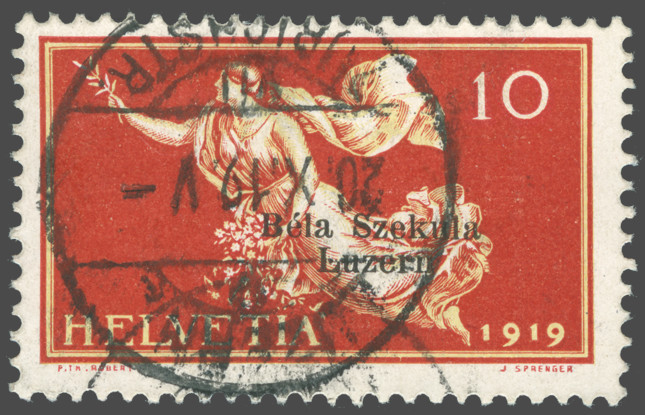
The Beginnings
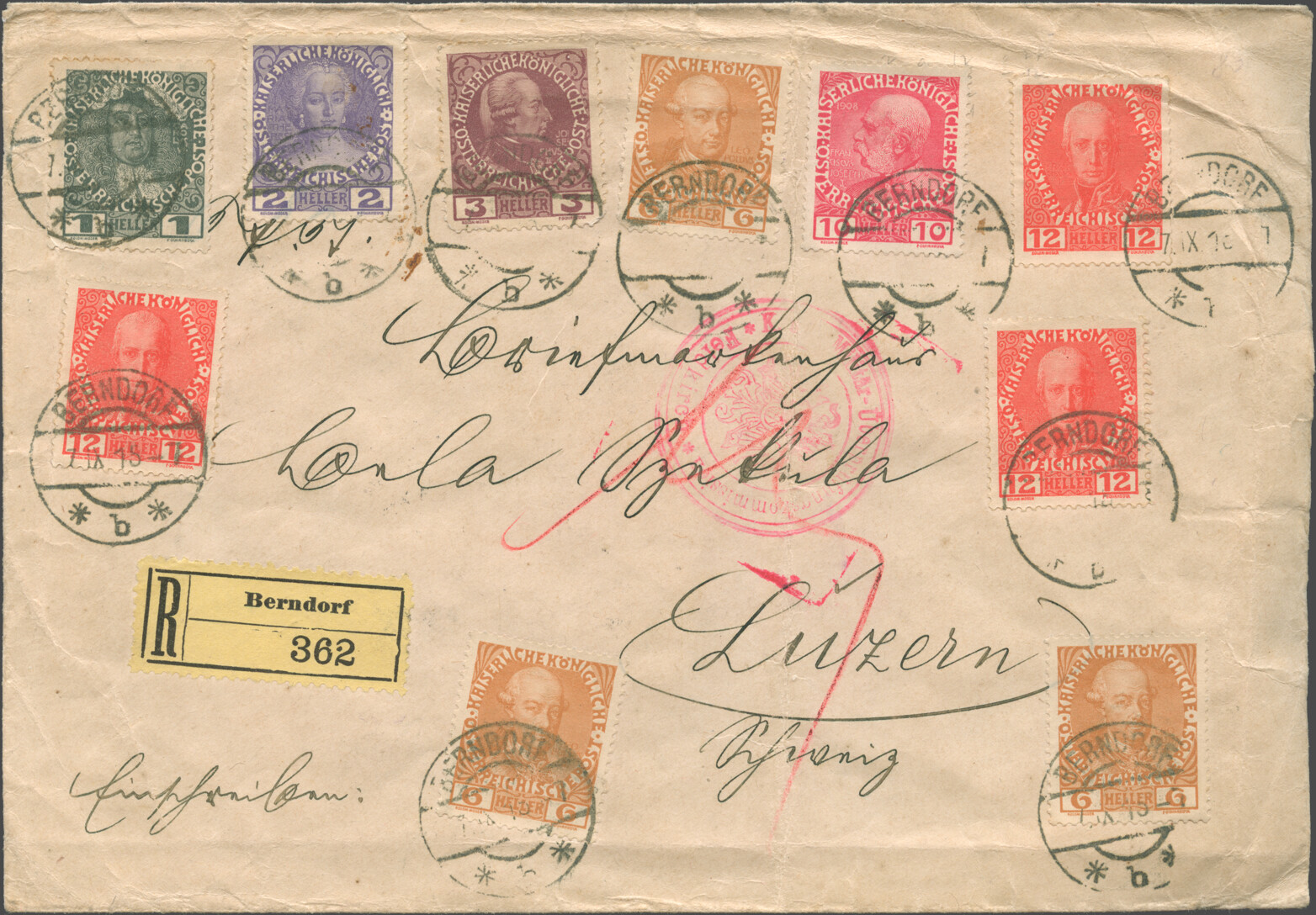
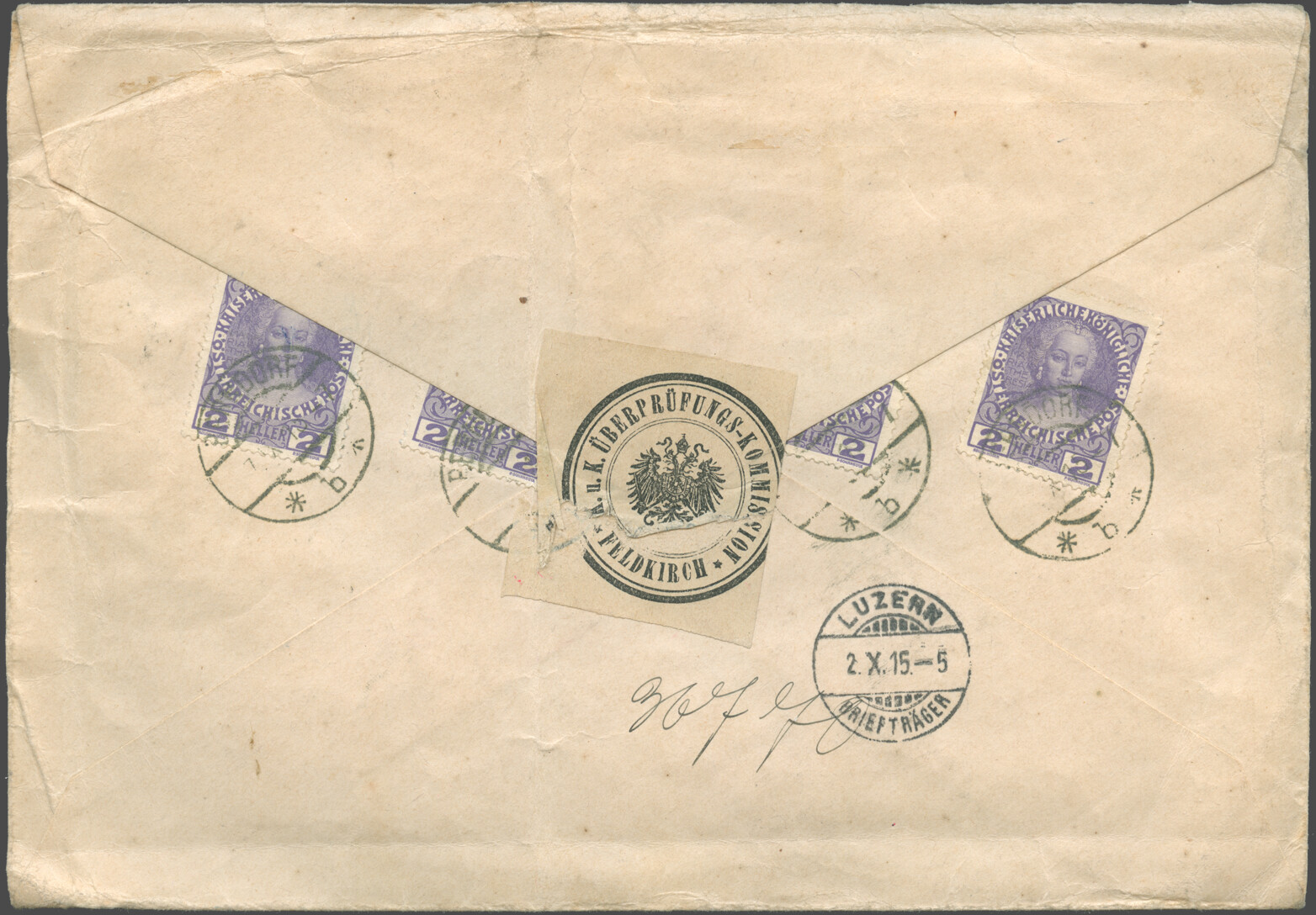
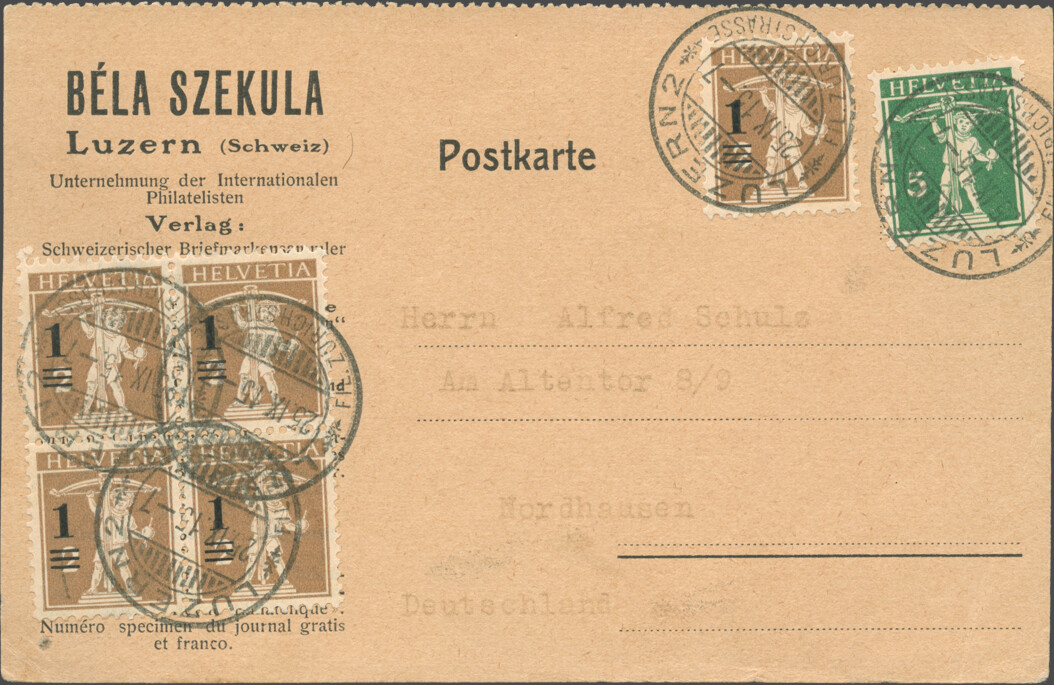
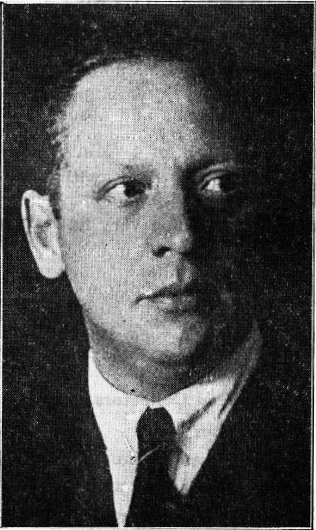
Béla Desző (Desiderius) Szekula (1881–1966) was born in Szeged, Hungary, on Feb. 9, 1881, as the first son of soap and grease merchant Gyula (Julius) Szekula (1850–1932) and Róza Szekula (née Fürst, 1854–1908).
According to his own memories, at the age of sixteen, he smuggled himself onto a ship at the port of Fiume believing it was going to Australia, but he landed in Mombasa, Kenya, instead.
He made his way to Zanzibar and – eventually – Madagascar, where he saw some old French stamps offered for sale.
Following a hunch he bought them for 200 francs and sent them to Paris, where they sold for 20000 francs – the start of his career as a stamp dealer.
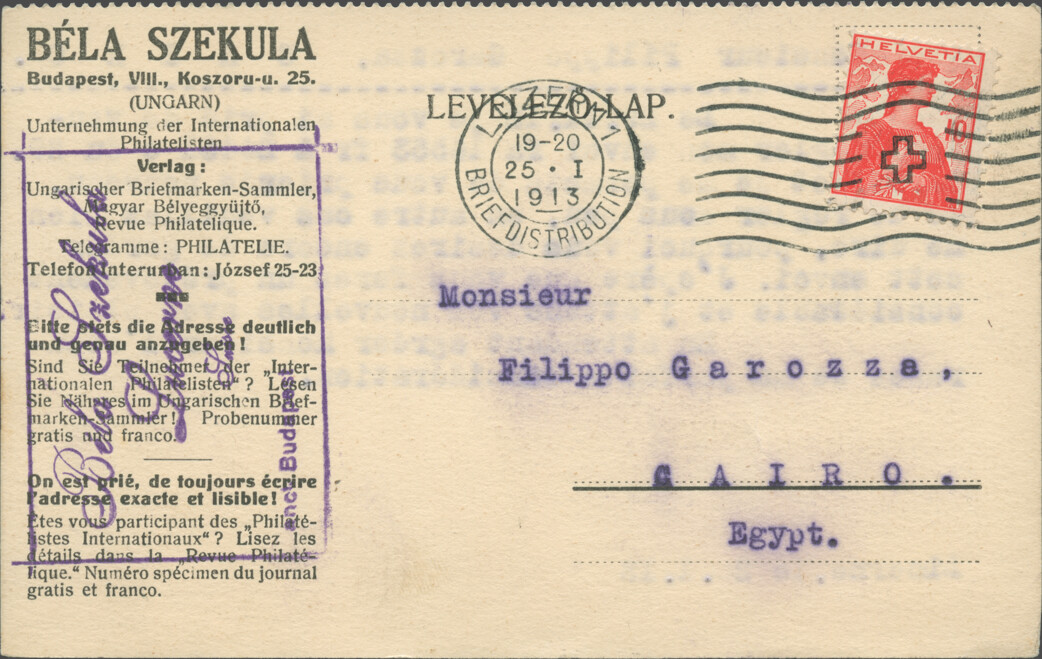
In 1898 – Béla had just turned 17 – he began trading stamps from his parents’ home in Budapest, and on December 1 the same year, he published the first and only issue of his postage stamp collectors’ magazine Levélbélyeggyűjtők Lapja.
Advertisements placed in philatelic magazines in North and South America as early as 1899 show that from the outset he saw the whole world as his sales territory.
During his early years he tried out all sorts of things testing what goes and what doesn’t.
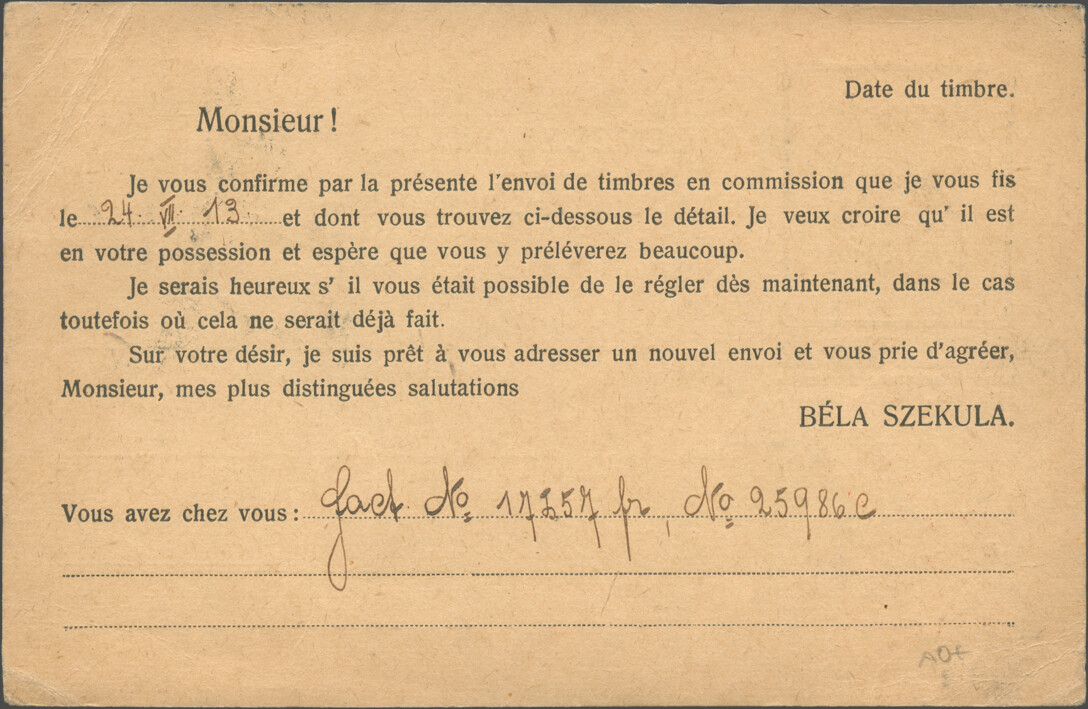
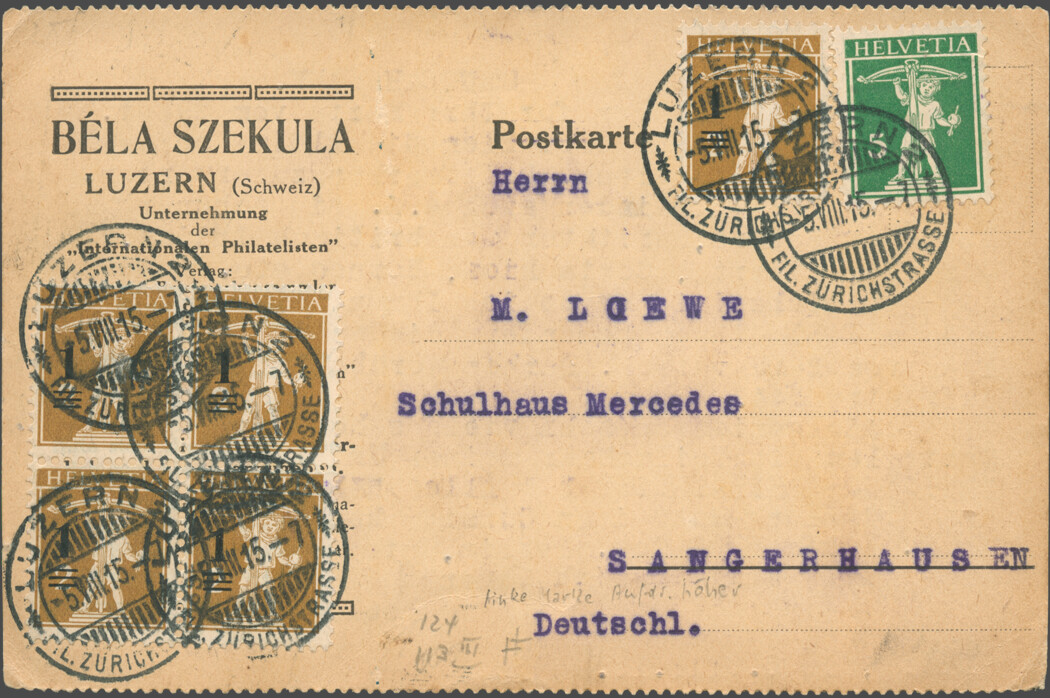
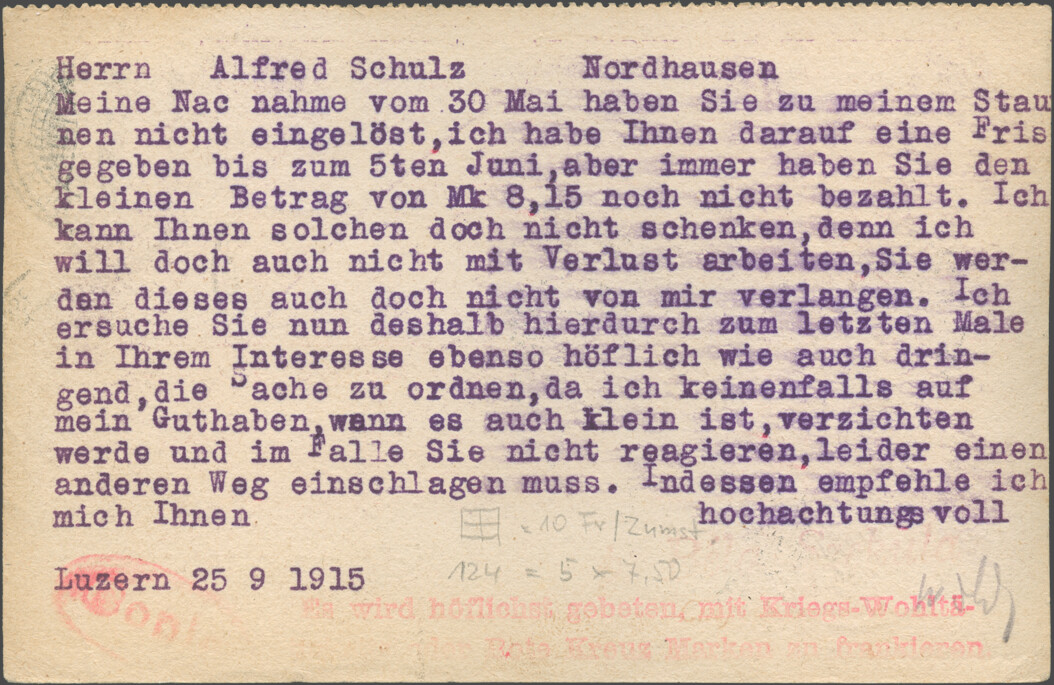
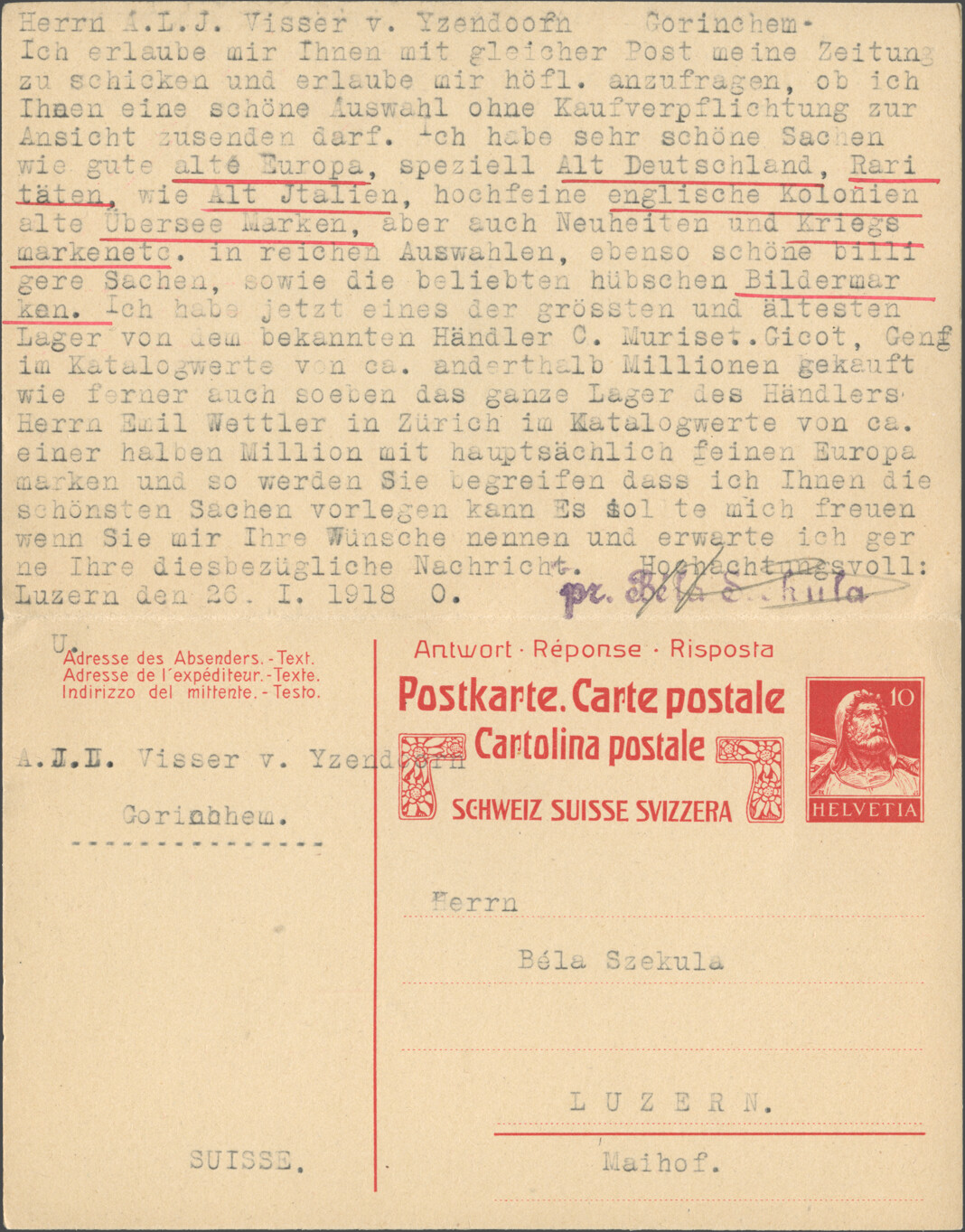
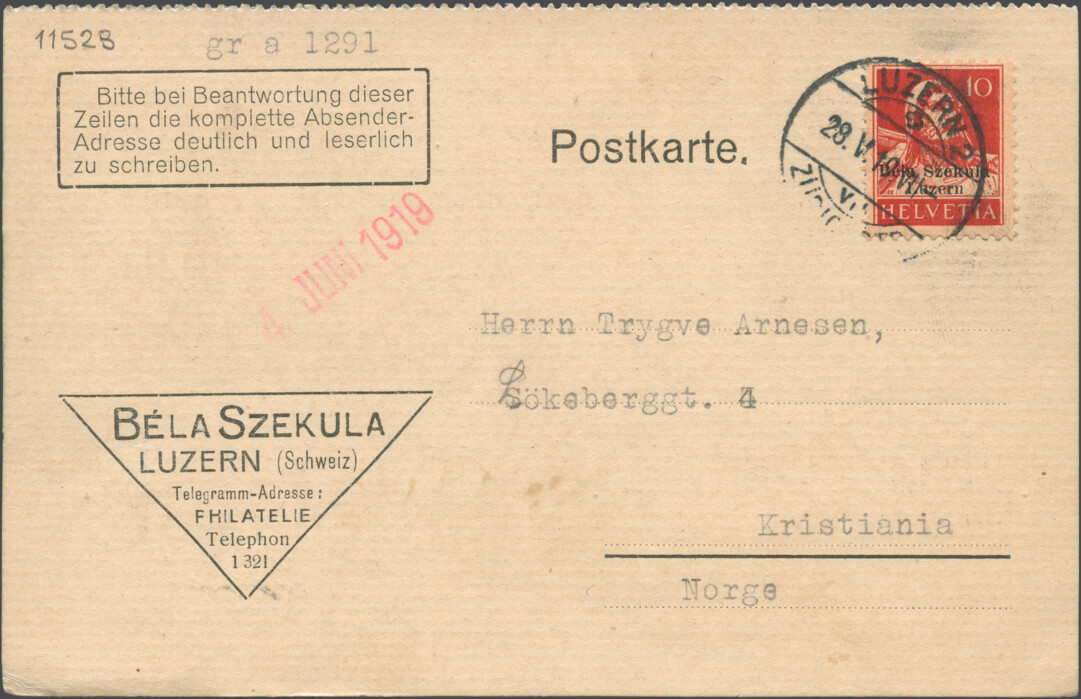
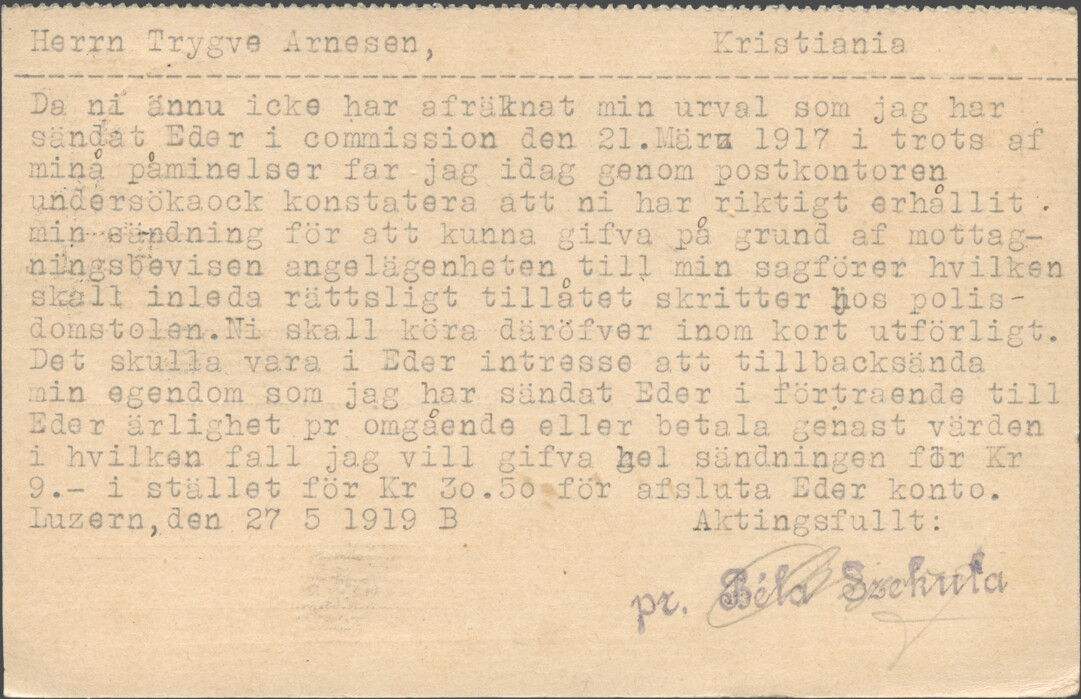
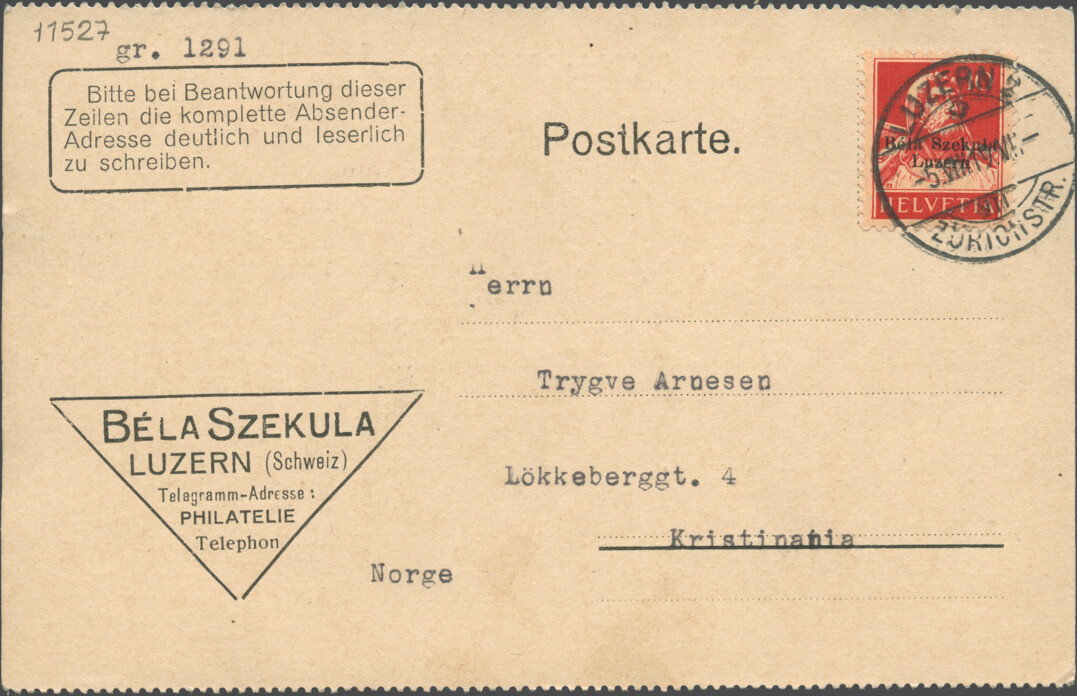
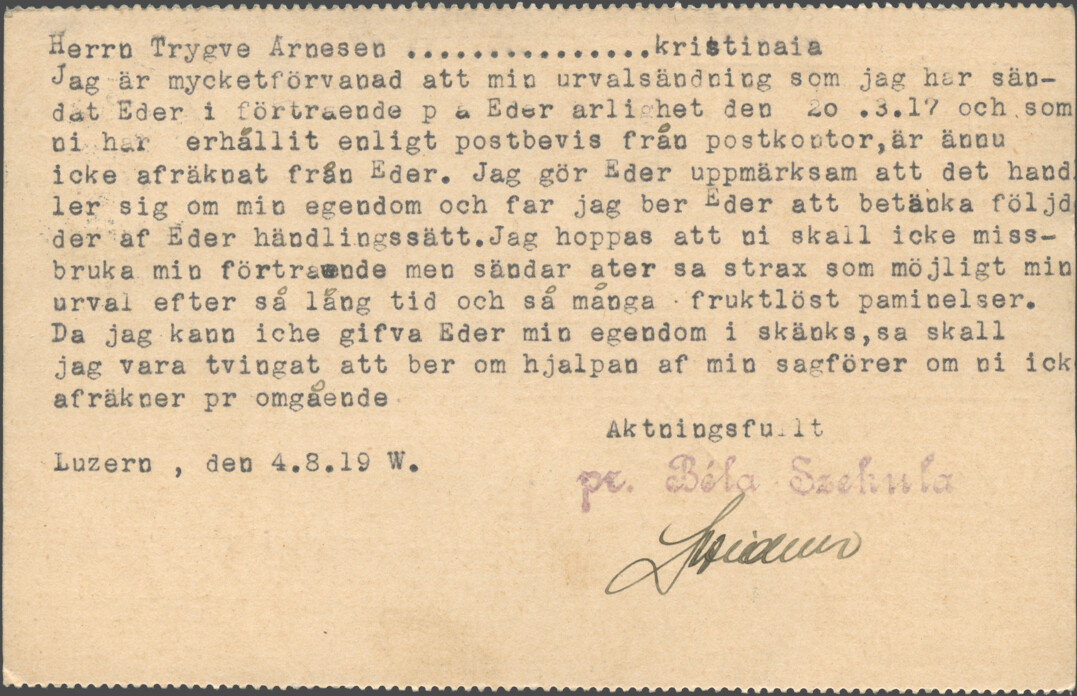
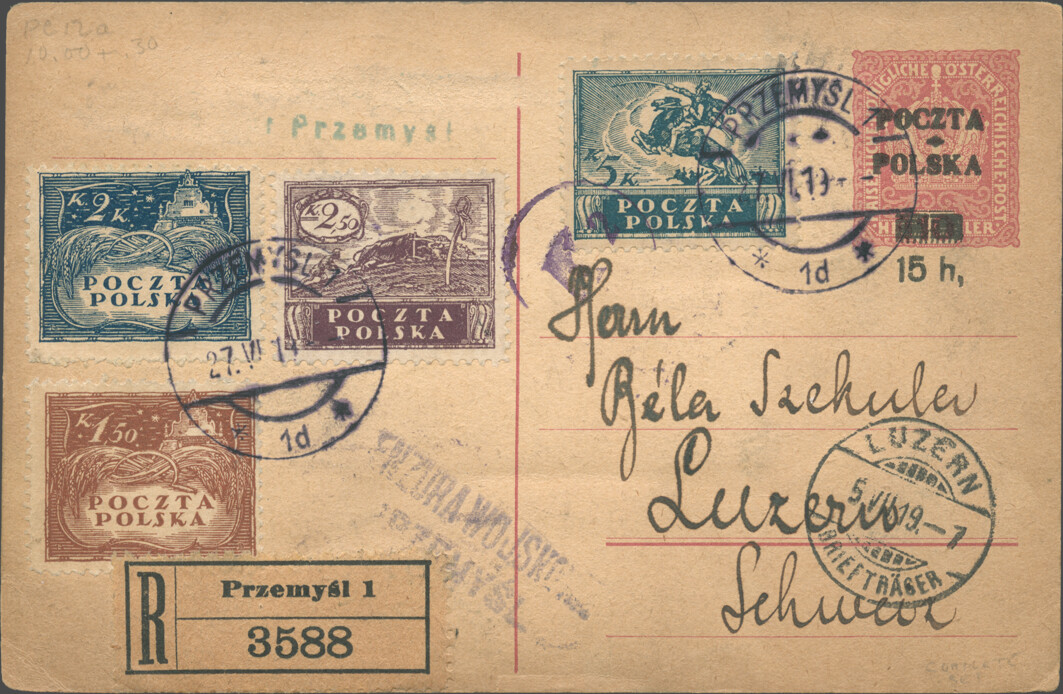
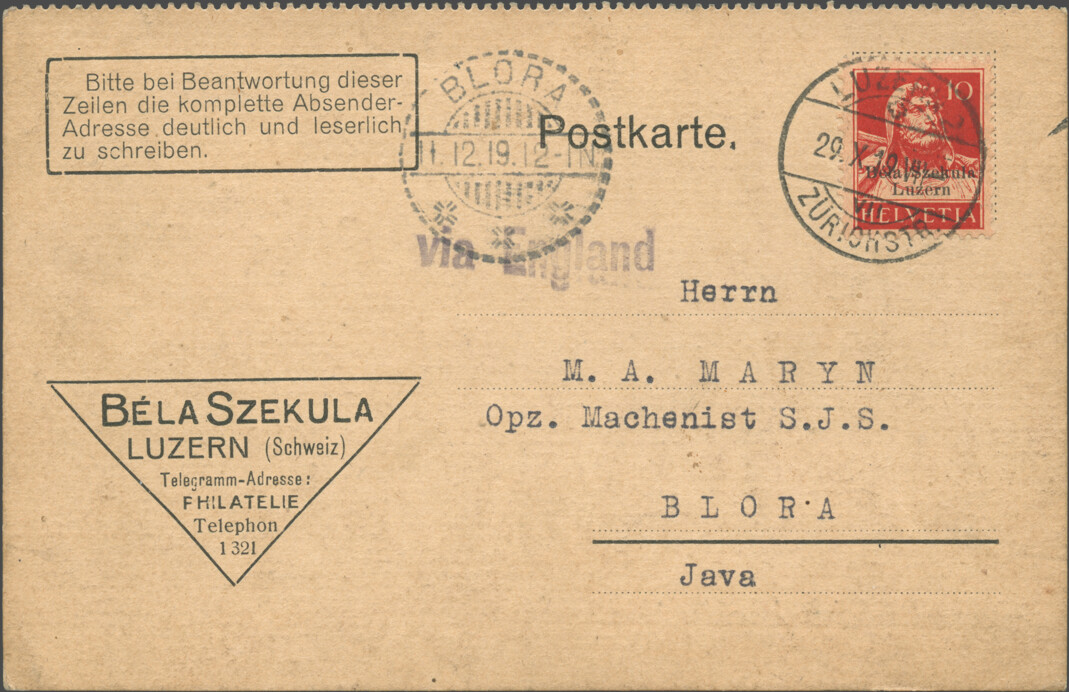
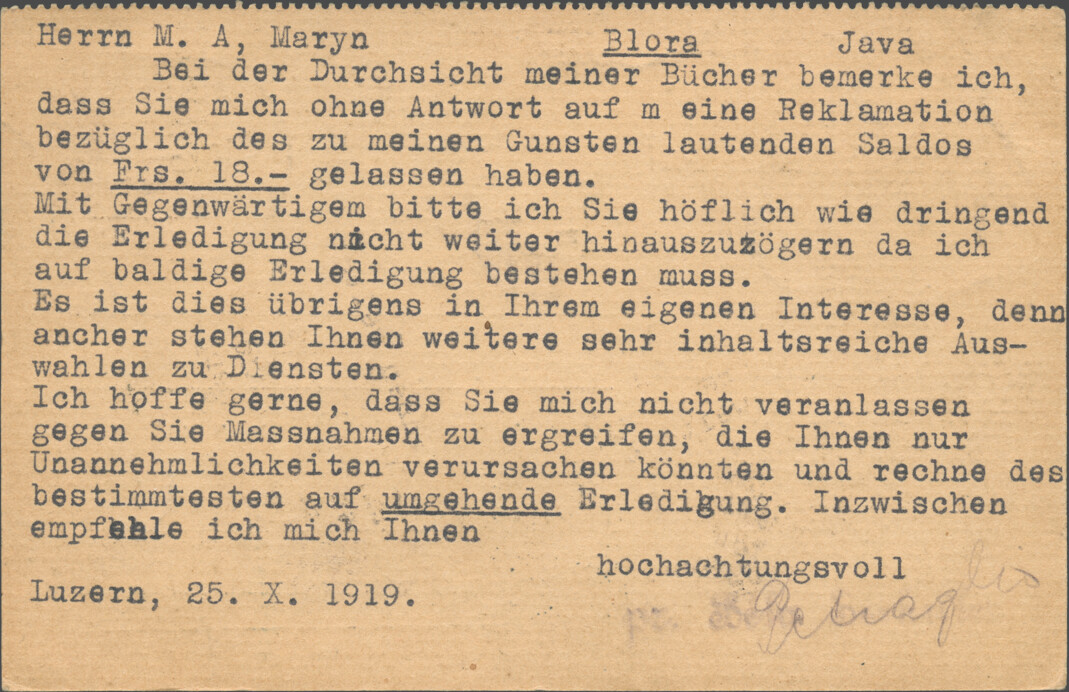
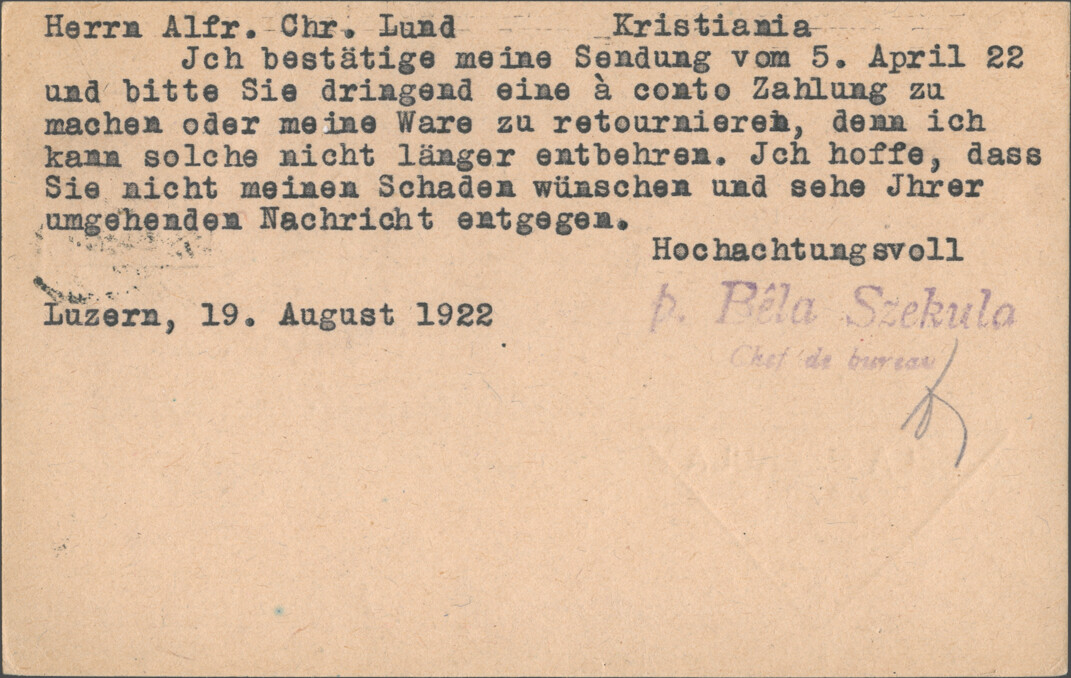
Some of his activities would soon gain him a bad reputation, like sending out unsolicited consignments on approval – followed by threatening letters if ignored.
The number of new customers recruited this way must have outweighed the negative effects, like bad press and the refusal of some philatelic associations to accept him as a member because occasionally he would revisit this business model even in his later years.
Szekula vs. Wurtele
On July 1, 1901, he began publishing his new stamp magazine Szekula Briefmarken-Verkehr (Szekula Stamp Communications).
Around the same time, he had the first major run-in with a publisher of another stamp journal.
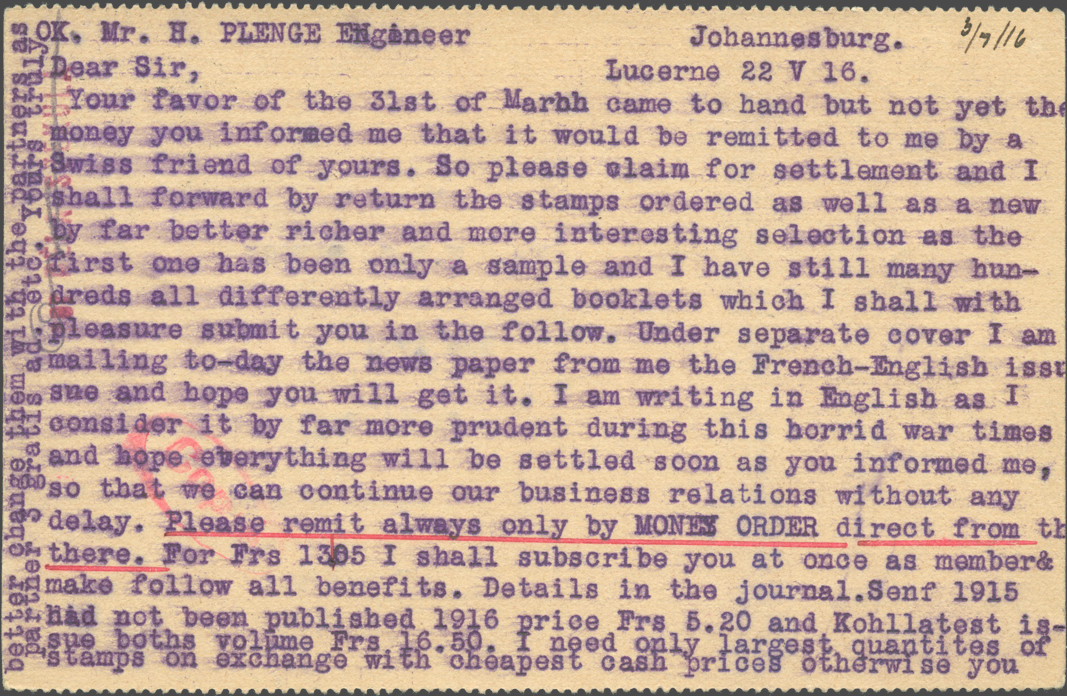
It all started when Béla requested a page of advertising space in W. James Wurtele’s The Montreal Philatelist and enclosed stamps as payment – a quantity of worthless, demonetized Serbian 1 dinar stamps
according to Wurtele, in Béla’s eyes 75 Serbian 1 dinar worth 100 Mark according to Senf.
Wurtele, who was used to be paid by cash or cheque, sent the stamps back the same day.
Apparently, this shipment went missing.
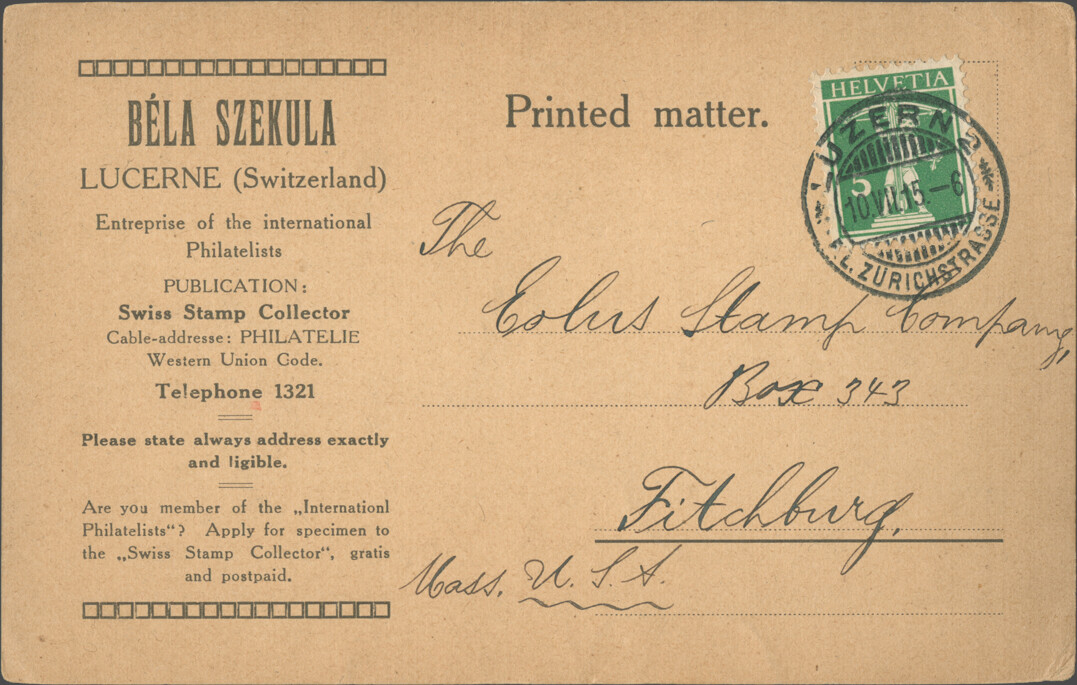
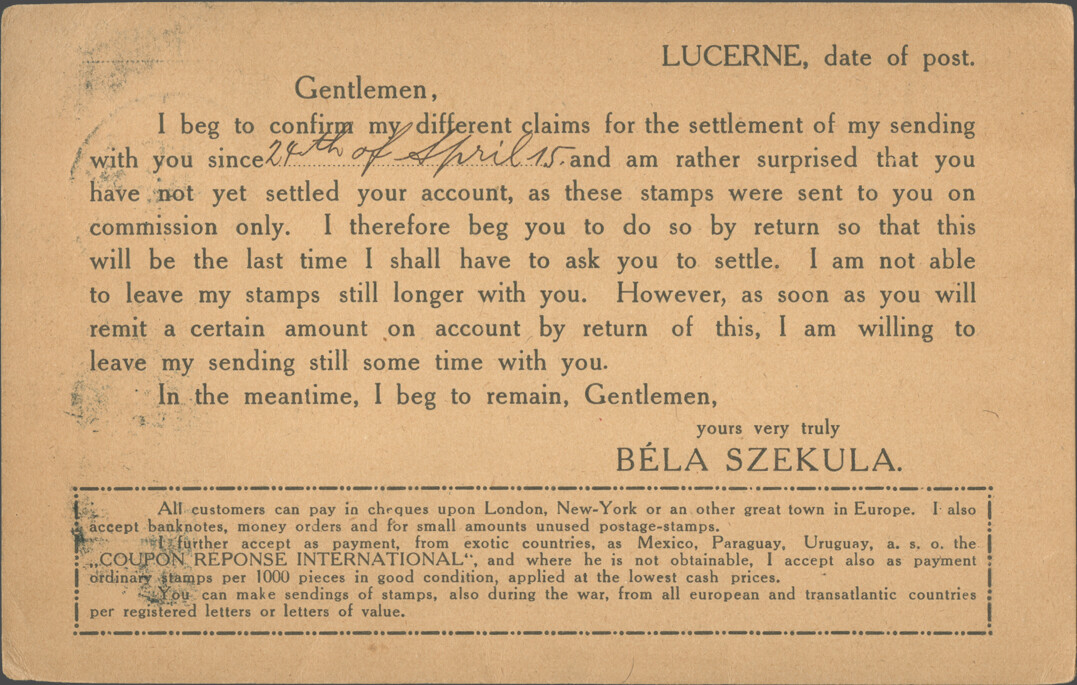
When Béla didn’t hear back from Wurtele, he sent him a postcard threatening to put him on his black list if he didn’t respond.
Unfortunately, this postcard did not go missing.
Wurtele, not taking kindly to Béla’s approach, published a warning against Béla Szekula and his business methods
in the November 1901 issue of The Montreal Philatelist.
Béla retaliated with a vitriolic response and the promised update of his black list in the December issue of the Briefmarken-Verkehr.
Interlude in Geneva
On November 10, 1901, Béla married Lujza Bihari (1883–1964), sister of Dr. Jenő Bihari, a Hungarian doctor who also made a name for himself as a composer and philatelist.
Whether it had been planned in advance or was a spontaneous decision during their honeymoon – which would perfectly fall within Béla’s character – in the same month, the couple moved from Budapest to Eaux-Vives, today part of Geneva, Switzerland, the new base of Béla’s stamp business and house organ for the next two years (issues No. 4 to 37 of his stamp magazine all appeared in Geneva).
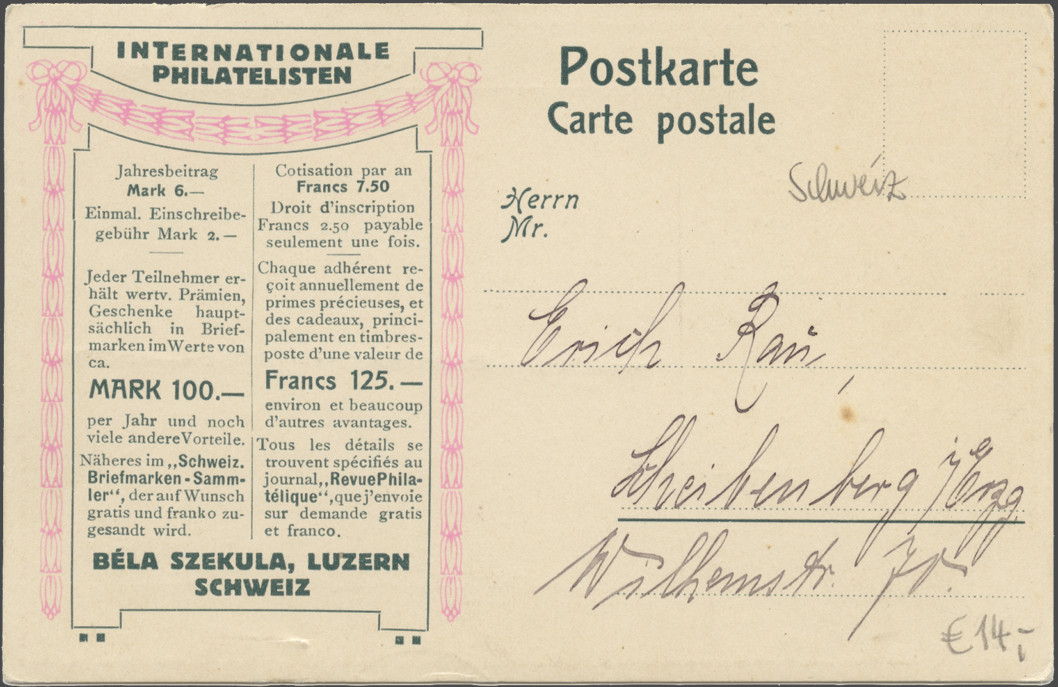
In the January 1902 issue (No 5) of Szekula Briefmarken-Verkehr he called for the foundation of an international society of stamp collectors.
The February issue already contained a list of 25 founding members, who had applied from a dozen different countries: Belgium (1), Bulgaria (1), Denmark (1), Germany (2), France (3), Italy (1), Netherlands (1), Austria (3), Russia (4), Switzerland (5, Béla himself included), Spain (1) and Hungary (2, one of them Béla’s brother-in-law Jenő Bihari).
Stated goals were the exchange of stamps and the fight against forgeries.
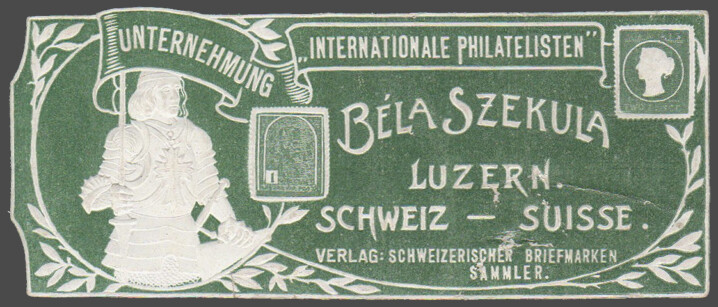
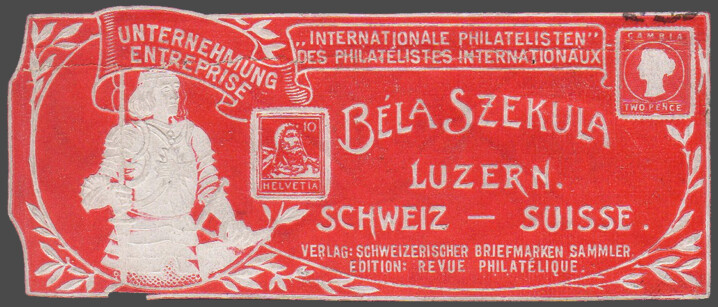
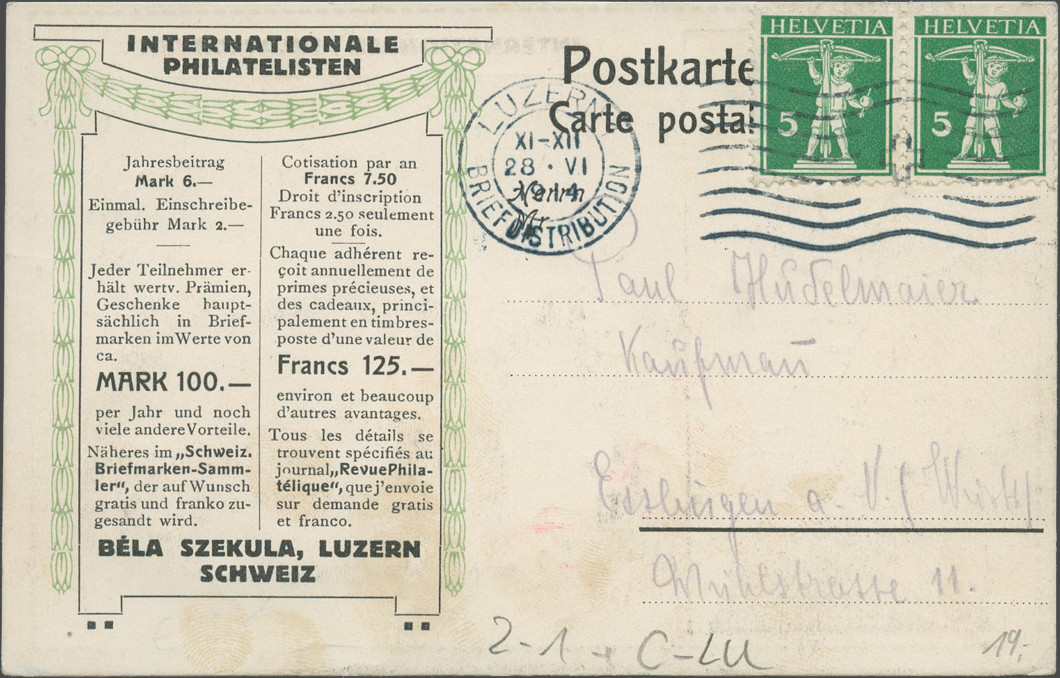
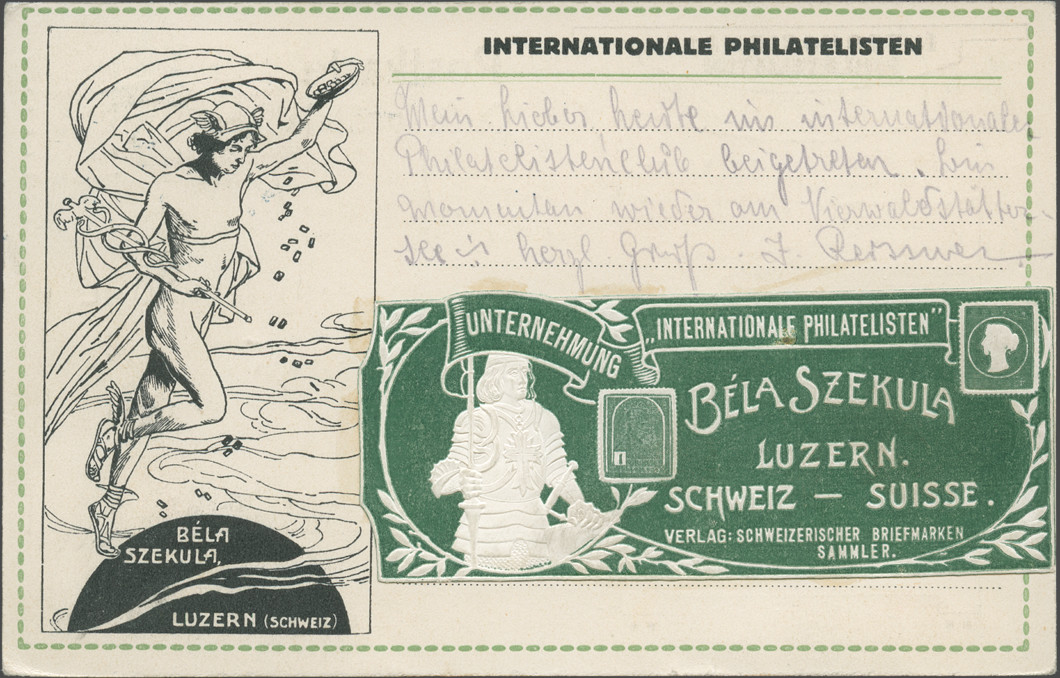
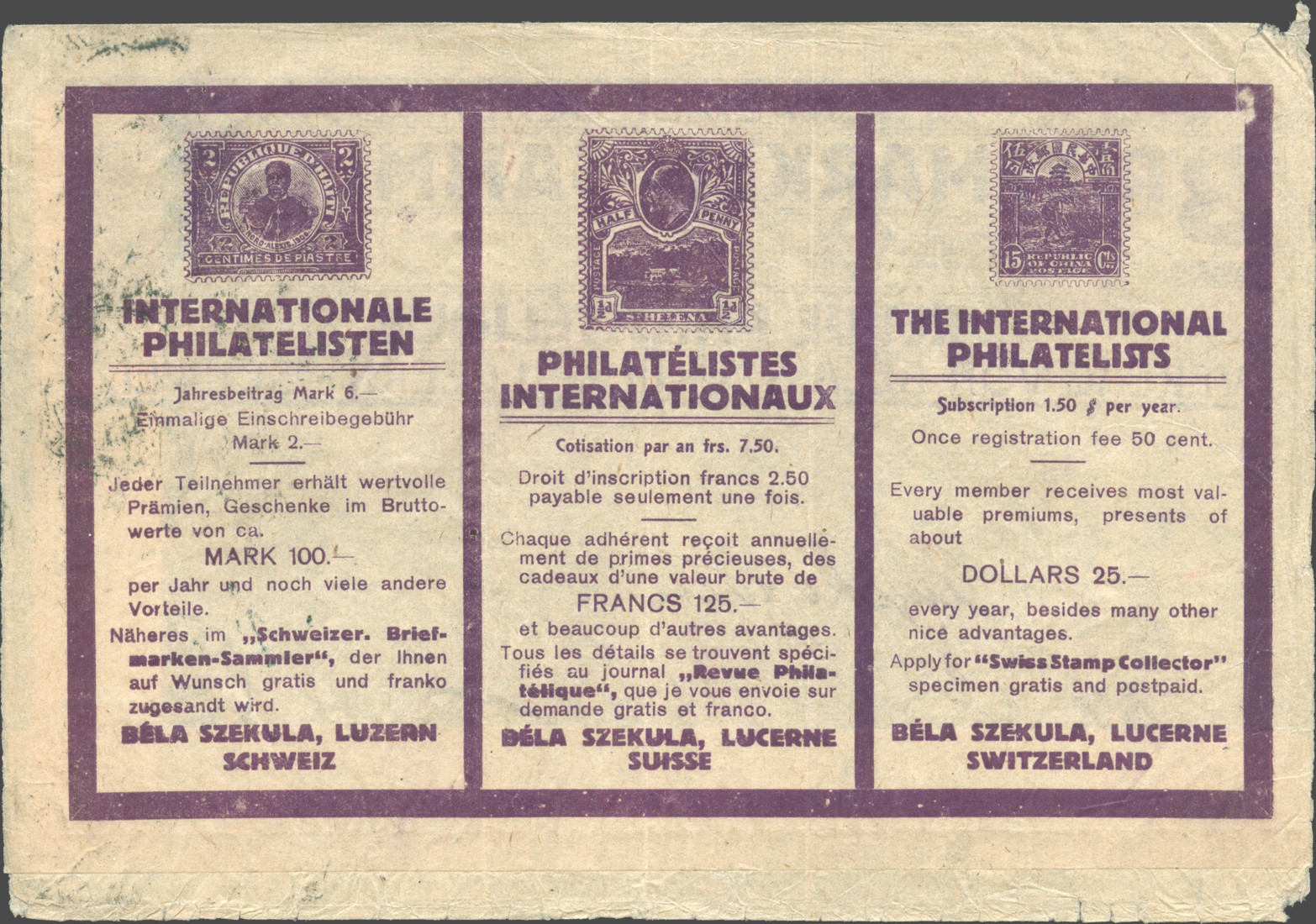
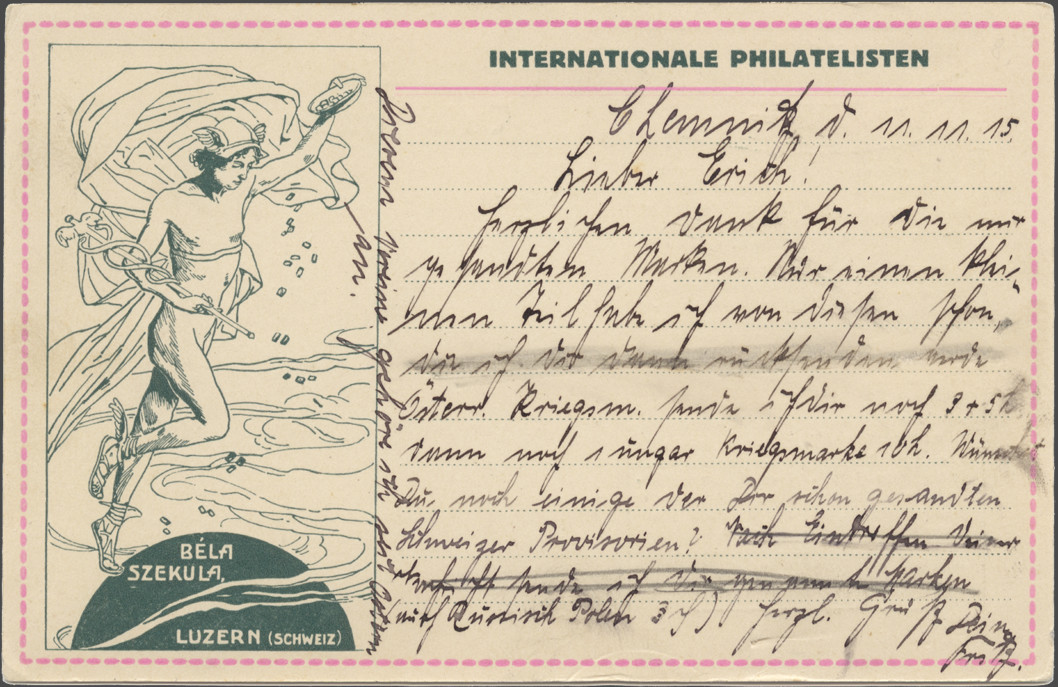
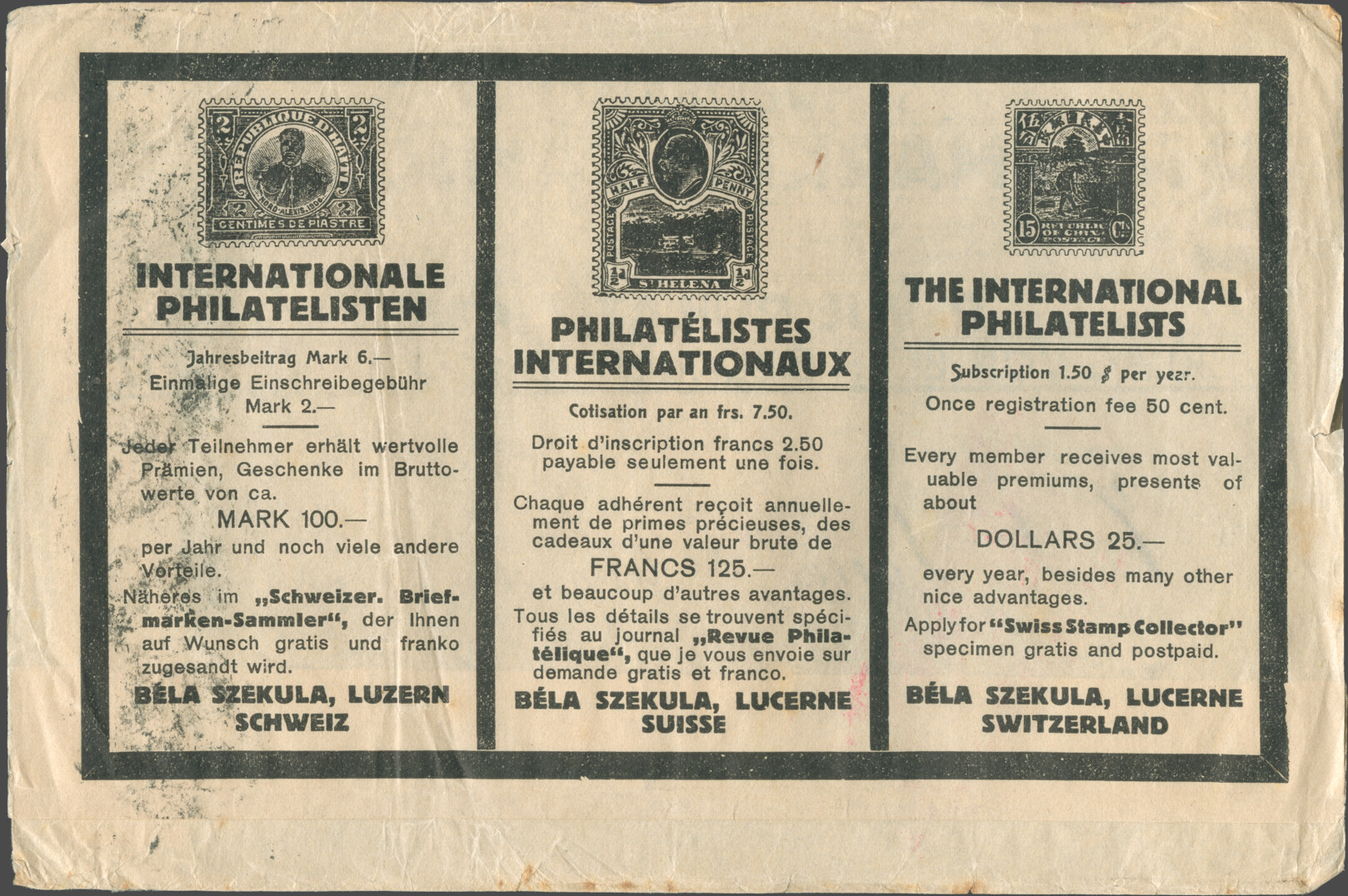
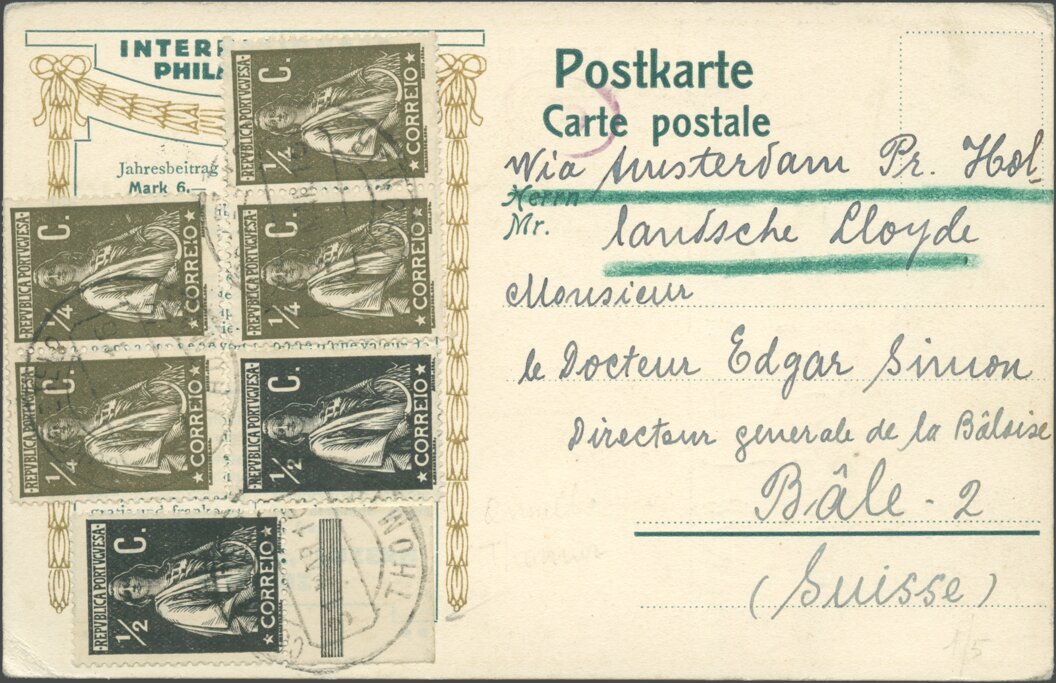
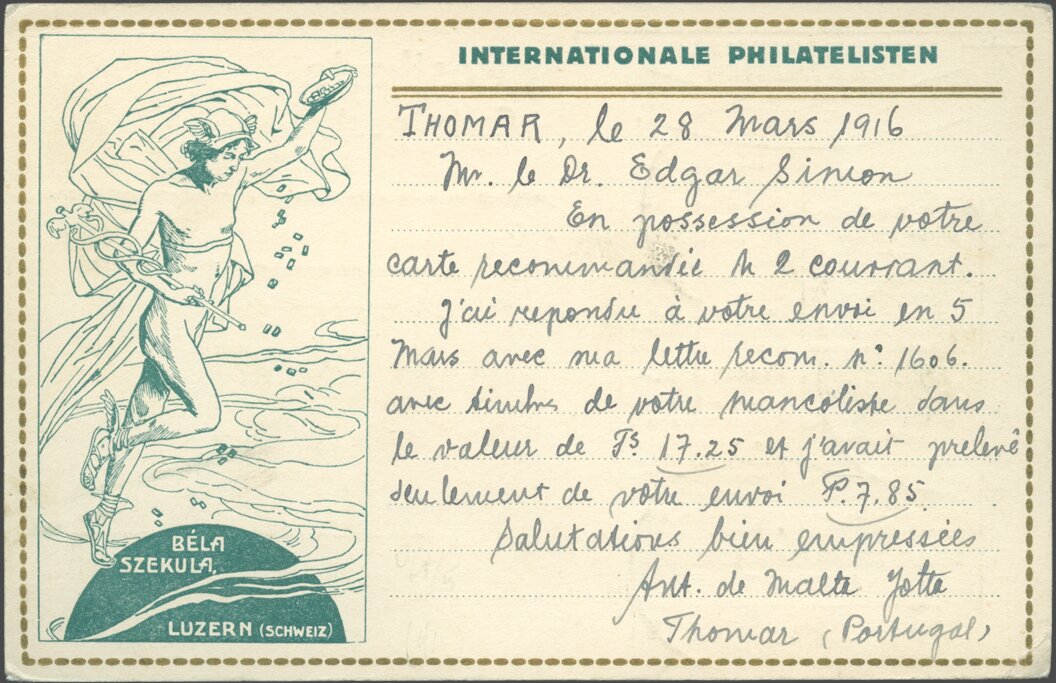
During the following months, the Internationale Philatelisten-Verband
(= Association of International Philatelists) with him as director quickly grew to exceed 100 members.
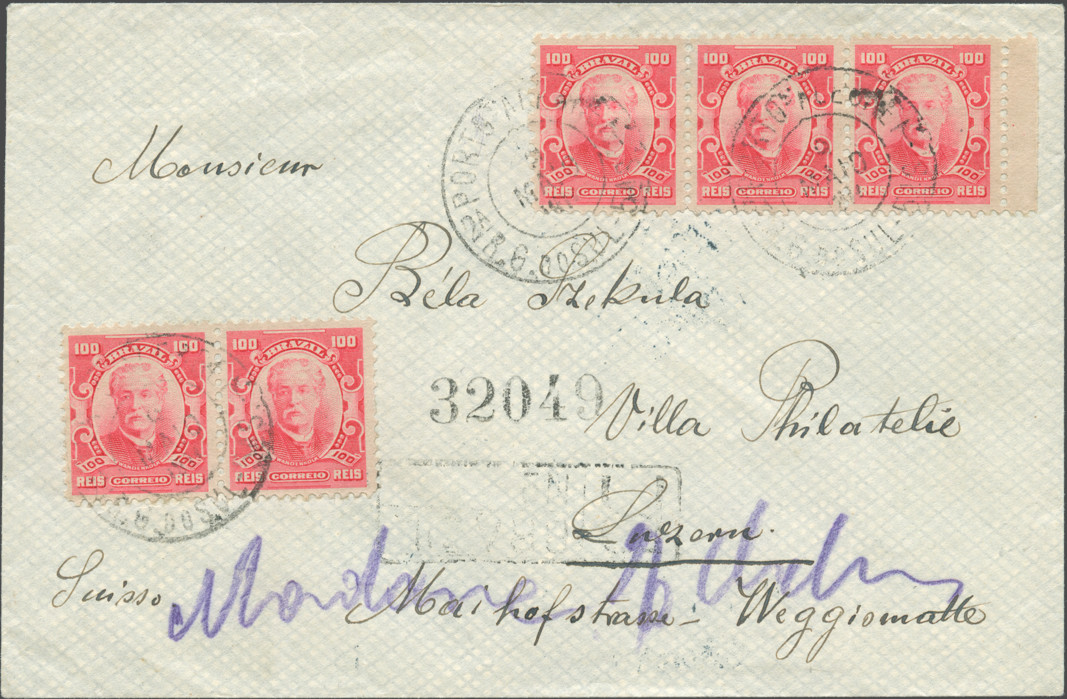
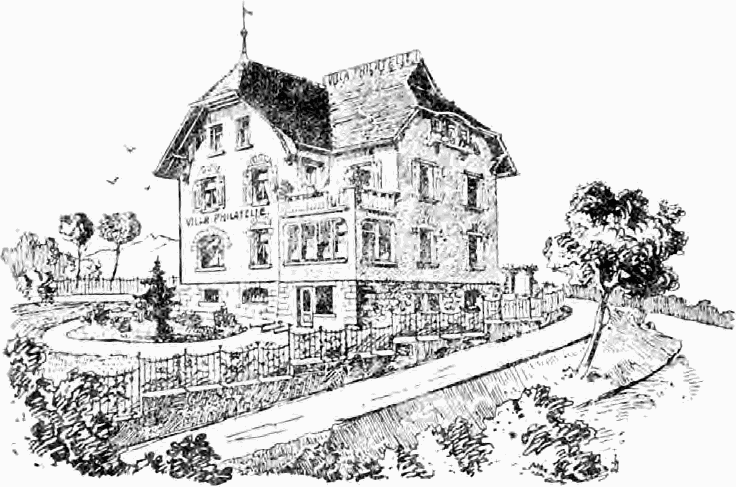
In July 1902, Béla and his wife moved to their new residence, the Villa Philatélie
in nearby Chênes-Bougeries, and in late 1902 they were joined by Béla’s younger brother Géza.
During Béla’s first stay in Switzerland, he continued to provoke warnings against him in philatelic journals because of his business conduct.
In 1902, he had the questionable honor of being featured twice in Mekeel’s Stamp Collector, namely as a notorious dealer [...] who solicits consignments of stamps in large quantities.
Readers were warned that he does not fill his engagements, is not reliable and is given to indicting postcards and letters with blackmailing intent.
In 1903 he received a negative echo for extensively advertising certain stamps of Puerto Rico that had been locally surcharged HABILITADO 17 OCTUBRE 1898
and were regarded as fraudulent (needless to say that today, these issues are expensive collectibles for specialists).
Favor-Cancellations
In autumn of the same year, the Deutsche Briefmarken-Zeitung sounded a warning against Béla for dealing in fraudulent covers bearing sets of the Dominican issue of February 25, 1902, commemorating the 400th anniversary of Santo Domingo.
Earlier that year, Béla had acquired the remainders of this issue from the Dominican government.
Since late February, he was offering them for sale, not only mint, but also – at the same price – in the much more difficult to find used condition on and off cover.
The remainders were all unused, so he decided to produce used copies himself, allegedly with official Dominican handstamps in his possession.
The covers he offered were also fabrications of his own – something he failed to mention in his ads and only told his customers when he was asked.
It should be noted that the covers contained so many wrong details that it seems inconceivable that they could or were even intended to deceive anyone:
The CDS used on all the stamps and covers reading (SANTO DOMINGO (20 / ENE / 02) R. D.) predated the date of first issue by five weeks;
according to the printed addresses on the envelopes they had been sent by one João Frederico Herrmann, Sto. Domingo (R.D.)
to a certain Edward J. Bothwell Esq. / Agent of Maritime Assurances / Trujillo / (Peru),
i.e. from Santo Domingo to a foreign destination although this commemorative issue had only been available for domestic postage (as per UPU rules at that time);
finally, the arrival postmark showed the name of the destination wrongly spelt as Truillo.
Most likely he had created the covers in the spirit of souvenir items to boost the sales.
In spite of their obvious shortcomings, they were treated as genuine items by some.
An inquiry in Peru revealed that a company with the name Maritime Assurances did not exist.
Further details about the envelopes were then published showing that – except for the stamps themselves – they were an all-Swiss product.
Béla stunned the trade press by simply confirming everything, and explaining that such favor-cancellations
by stamp dealers were not at all uncommon.
He probably had a point there, but the stamp trade likely preferred to keep quiet about this practice.
When reporting on Béla’s response to the accusations the Stanley Gibbons Monthly Journal was reminded of the old joke Are you quite sure, Mr, that this eau de Cologne is genuine? — Certainly, Madam, we make it ourselves!,
and suggested to also produce the postage stamps in Geneva in the future, to make the originals
quite homogeneous.
Since Béla’s creative venture was apparently not well received by the public, he refrained from such experiments in the future.
In the July issue of the Szekula Briefmarken-Verkehr, he announced that he had sold the whole stock of this issue for 80,000 francs to the stamp dealer Victor Robert in Paris, and in October he offered compensation to anyone not happy with their purchase of his canceled Dominicans either by reimbursement or by exchange of stamps.
All the while, Béla’s Internationale Philatelisten
continued to grow to a philatelic association of notable size even by international standards.
In October 1903, they welcomed their 300th member, and in December, after the formation of a local sub-organization in Pozsony (back then Hungarian, today Bratislava, capital of Slovakia), the total membership exceeded 400.
Back in Budapest
On February 10, 1904, the Szekulas left Switzerland and returned to Hungary.
Béla’s move was picked up by the philatelic press, and it was suggested that he had fled
back to Budapest after the scandal around the Dominican issue had forced him out of Geneva, and also that he had left many unpaid bills.
These speculations may have given his detractors a certain feeling of satisfaction, but they were unsubstantiated.
The – outside of philatelic circles – rather unimportant Dominican affair
had no legal consequences and would certainly not have prompted Béla to leave Geneva, just like there was nothing on record about outstanding debts.
His relocation to Budapest was no secret, nor was his new postal address, both of which he had announced a few days in advance in a major local newspaper.
In all likelihood, the sudden return to Budapest had an entirely different reason: Lujza had realized that she was pregnant again.
In November 1902, the young couple had suffered the loss of their first child, a baby girl they had named Lilla Vera, so this time the parents-to-be wanted their offspring to be born in their home country.
Seven months later, on September 16, 1904, Lujza gave birth to the twin sisters Ágnes and Mária in Budapest.
But before that, having just returned from Switzerland, Béla once again caused outrage in philatelic circles.
Indian Woman
The 1878 Indian Woman issue of Guatemala consists of four values ranging from ½ real to 1 peso.
While the three lower values were readily available at that time, there was a shortage of the high value.
In April 1904, Béla sent out sample sheets of the 1-peso stamp to various stamp dealers.
In a letter accompanying the samples he stated that these sheets had been examined by experts and found to be genuine, but actually it may be told in confidence that they are reprints
prepared from the original government clichés.
One of the dealers approached this way was W. Sellschopp, Hamburg.
He knew that other values of this issue had been printed in sheets of 100, with the unusual setup of 12 horizontal rows and 8 vertical ones, plus a shorter and centered horizontal top row of 4.
Believing this was true for all four values, he concluded that Béla’s sheet of 50 (5 x 10) could not possibly have been printed with original plates and therefore must be forgeries.
He also noted that the sample sheet deviated from the original printing in terms of paper and perforation.
He was so outraged about this offer, not only did he return the sheet to Béla accompanied by a strongly-worded letter, but he also submitted his notes and the whole correspondence to the Deutsche Briefmarken-Zeitung where everything appeared in the May issue.
At the same time, Arthur Maury in Paris published a note in his magazine Le Collectionneur de timbres-poste describing this stamp that some merchants present as a reprint
as a dangerous counterfeit requiring a trained eye to find some small differences in the design,
thereby reinforcing its classification as a forgery.
However, Sellschopp’s original assumption about the sheet size was wrong.
As the DBZ pointed out in their June issue, the genuine 1-peso stamps, unlike the rest of the issue, had indeed been printed in sheets of 50.
And the following November, Maury presented a letter from one M. G.,
Brussels, who explained that the reprints had been produced on his behalf and that he had passed them on to Béla Szekula.
He assured that the stamps were not forgeries because the printer had used an authentic cliché, and that the differences in the drawings from the originals were due to retouching of said cliché.
As for the differences in paper and perforation, they were intended to make the reprints distinguishable from the original stamps.
Although Maury only quoted the author of the letter as Monsieur G. of Brussels, it is reasonable to assume that it was Gustave Gelli of Gelli & Tani; the DBZ had already named this quite reputable company as the original source of these stamps.
Whether one is willing to believe Monsieur Gelli’s representation or not – the renowned Kohl’s handbook, for instance, argues against it – Béla certainly offered the stamps as he had received them himself.
Moreover, he wasn’t the only one.
At least one more dealer, Victor Gisquière of Brussels, had offered them, too.
Nonetheless, the label Szekula forgery
stuck.
A more appropriate name would be Gelli & Tani reprint.
A Foreign Affair
For Béla, these were only minor bumps in the road to success.
His business continued to grow, as did his organization: On February 20, 1905, the Briefmarken-Verkehr published a list with the names and addresses of the now more than 1000 members of the Internationale Philatelisten.
Béla was 24 years old at that time.
His brother Géza had started working for him, and as soon as he was old enough, the third oldest brother, Eugen, joined the business as well.
By 1905 there was also at least one non-family member working for Béla, the merchant Hermann Wiederhold (1881–1967) – Béla’s closest comrade-in-arms for the next three decades.
Hermann was employed as an officer with Prokura,
i.e. with signatory rights;
in other words someone to run the day-to-day business on his own while Béla was traveling to acquire new material.
And Béla traveled a lot.
This, together with his talent for languages, clearly gave him a competitive advantage.
He negotiated many of his deals on the spot, often enough in the language of his business partners.
On his travels, he also must have visited Austria several times.
In 1908, he became godfather to one Hedwig Dorfstätter, born in Vienna on September 23, 1908.
He was presumably a friend of her parents, estate manager Mathias Dorfstätter and his wife Antonia.
However, as an entry in the Catholic Church register of Vienna shows, it subsequently transpired that Béla was a bit more than just little Hedwig’s godfather.
These revelations lead to Béla’s and Lujza’s divorce in 1909.
The twins remained with Lujza, and Antonia remained with Béla.
On March 30, 1910, Béla’s son Karl was born in Budapest.
It is not clear how and when exactly the relationship between Béla and Antonia ended, but eventually Antonia returned to Austria while Béla assumed full custody of both Hedwig and Karl.
The Bolivian Conspiracy
Several years had past since the name Szekula had last been associated with a scandal involving controversial stamps, but in 1910, it happened again – and just as with the 1-peso stamp of Guatemala’s Indian Woman issue, Béla had nothing to do with their creation.
This time it was about reprints of the 1894 issue of Bolivia.
All catalogs at that time listed two major varieties of this issue, a first edition perforated 14 to 14½ and printed on thin paper in London, and a second edition printed in Paris in slightly different shades and on thick paper perforated 13 to 13½.
From January to October 1910, Béla offered sets of varying thickness, including a rare 10c color error in blue instead of brown on medium-thick paper.
His source was the Office Central de timbres-poste coloniaux
in Paris, whose owner A. Saatdjian himself had acquired the stamps from E. Gainsborg, also Paris, around March 1909.
According to Gainsborg, who had been involved in the production of the second edition back in 1894, this lot consisted of remainders of both the London and the Paris printings.
However, a third Paris-based stamp dealer, Victor Perron, after corresponding with authorities in Bolivia and talking to the printer of the French edition, came to his own conclusions:
Only the first printing in London issued in April 1894 should be considered as genuine; the second printing in Paris had indeed been delivered to Bolivia in July 1894 and had also seen postal use until 1897, but was not authorized by the Bolivian government but rather the result of a scheme carried out by the former secretary of the Bolivian embassy in Paris, José Manuel Paz, stamp dealer E. Gainsborg, and the Bolivian consul in New York, J. Emilio Lassús; finally, the recently emerged stamps didn’t belong to either edition, but were reprints made with electrotypes from the original plates after 1896. i.e. after the latter had been destroyed.
The Parisian thick paper variety had been listed for the last 15 years, but the editors of the influential German Senf catalog found Perron’s arguments so convincing that they declared the Paris printing as fraudulent and removed it from the 1911 edition of their catalog.
As a result, Béla’s stamps – reprints or not – also went overboard, and prices of whole sets plummeted to a tenth of their previous value.
Disappointed customers of the color error wanted their money back and even threatened to sue for compensation.
Stamps of the same type had also been sold by other dealers, but as so often, Béla had secured the largest stock, including most of the up to then desirable error stamps.
Consequently, it was he who suffered the greatest blow from the price drop.
As already mentioned, Béla conducted many of his transactions on the spot.
With his constant need to travel across Europe, he began thinking about moving his business to a more central location.
But before he left Budapest for good, Béla was able to cause a stir again, this time in a positive sense, though.
In December 1911 he landed his biggest deal so far, the acquisition of the prize-winning Robert Holitscher collection at the price of 840,000 K., roughly $4.8 million in today’s (2020) US currency.
The liquidation of a collection of this magnitude was usually reserved for auction houses.
Béla sold it country by country at a profit of 10%.
Lucerne Invasion
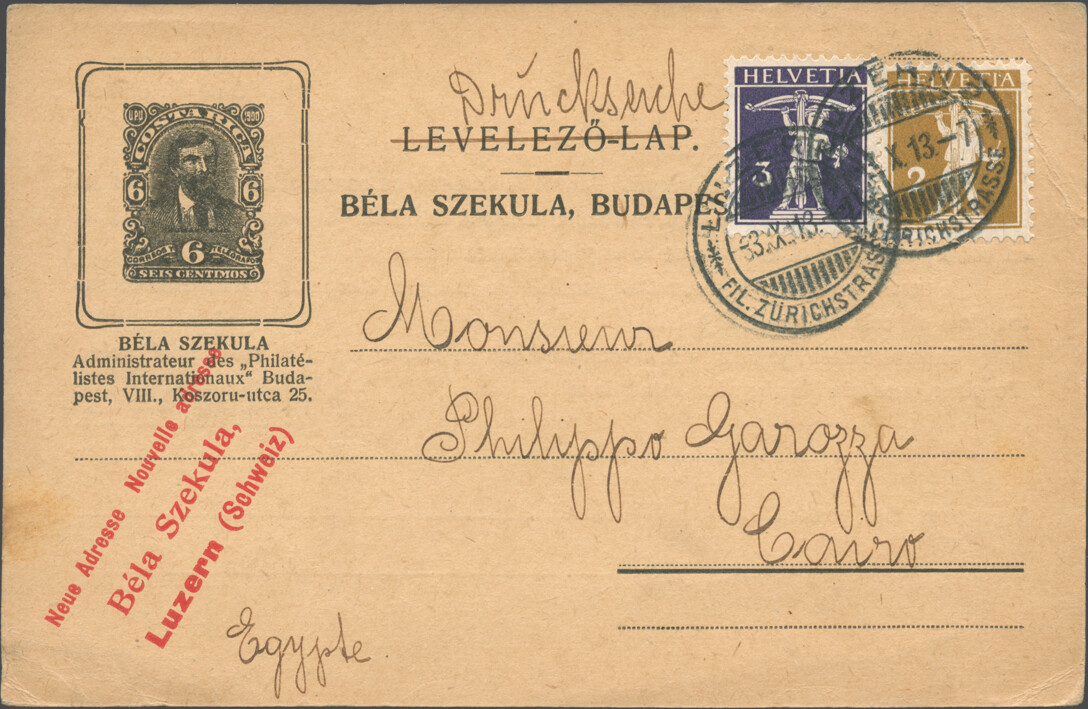
In January 1913, Béla relocated to Switzerland again, taking the whole family with him, including his youngest brother Franz and his father (the mother had already died in 1908).
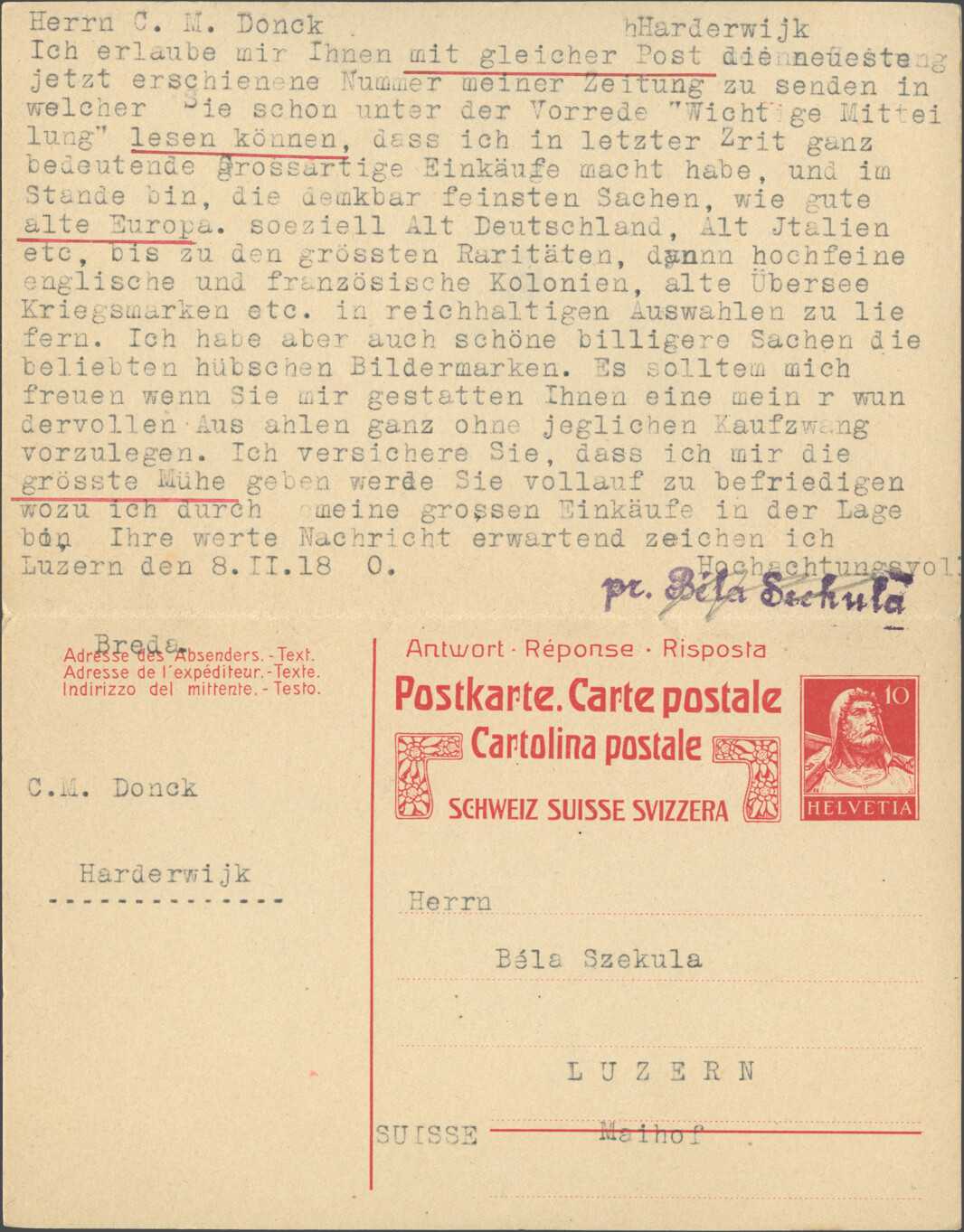
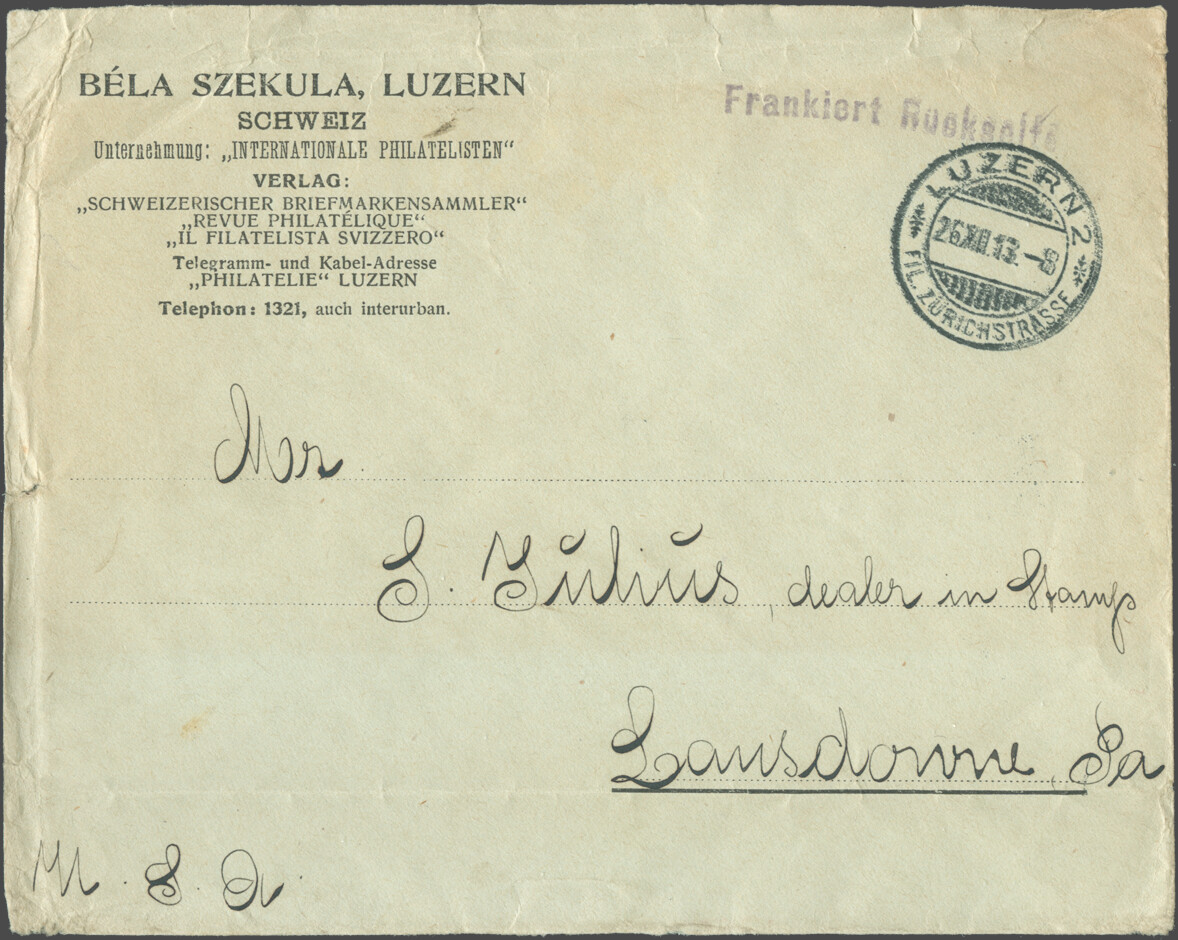
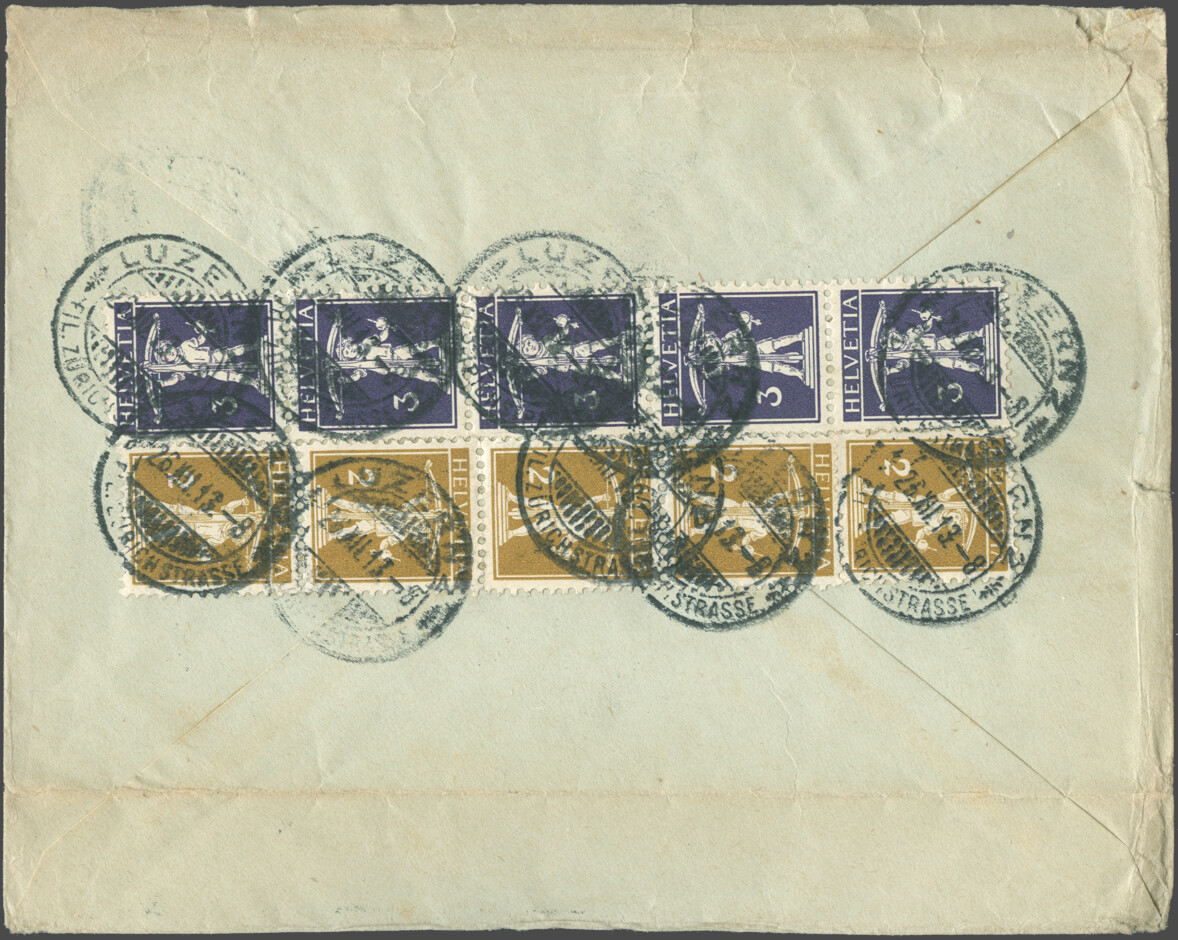
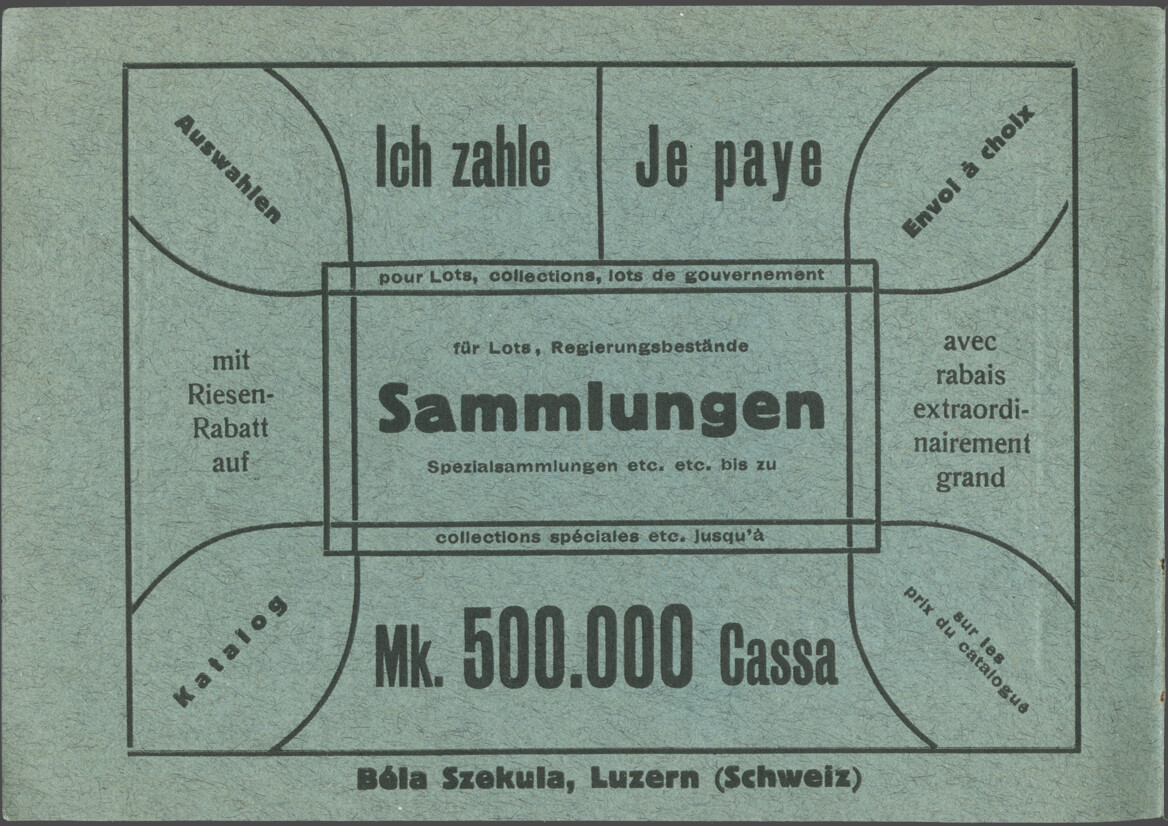
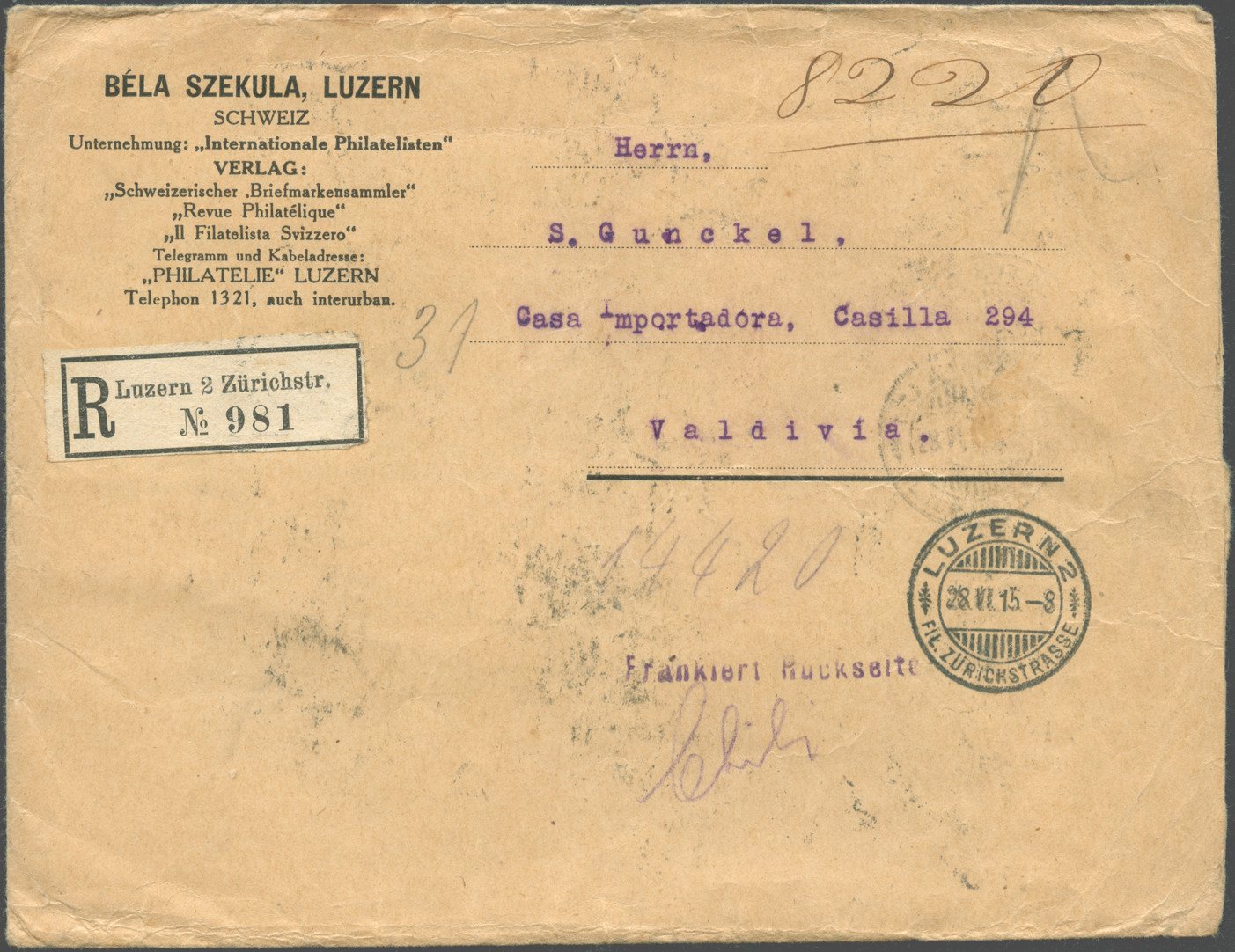
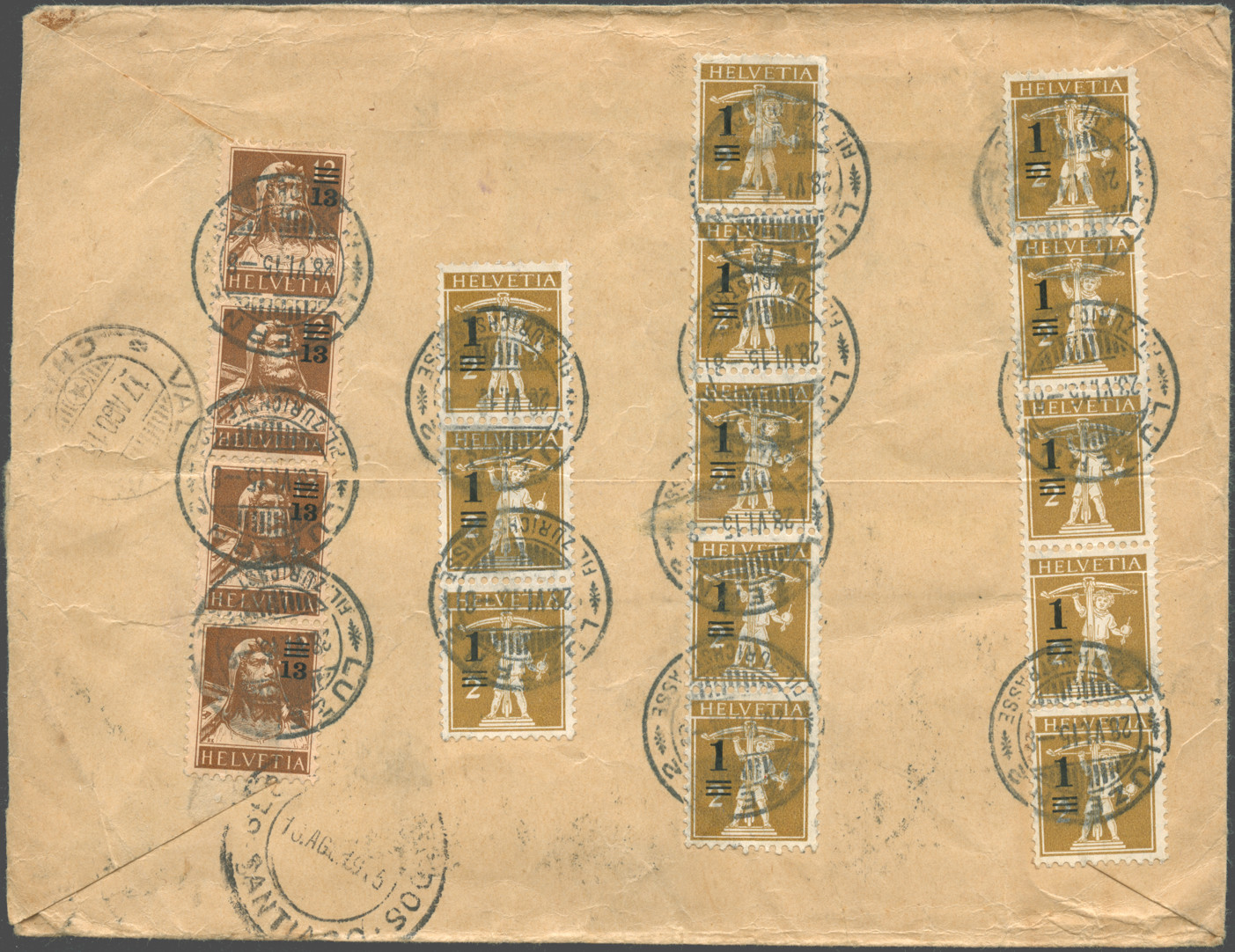
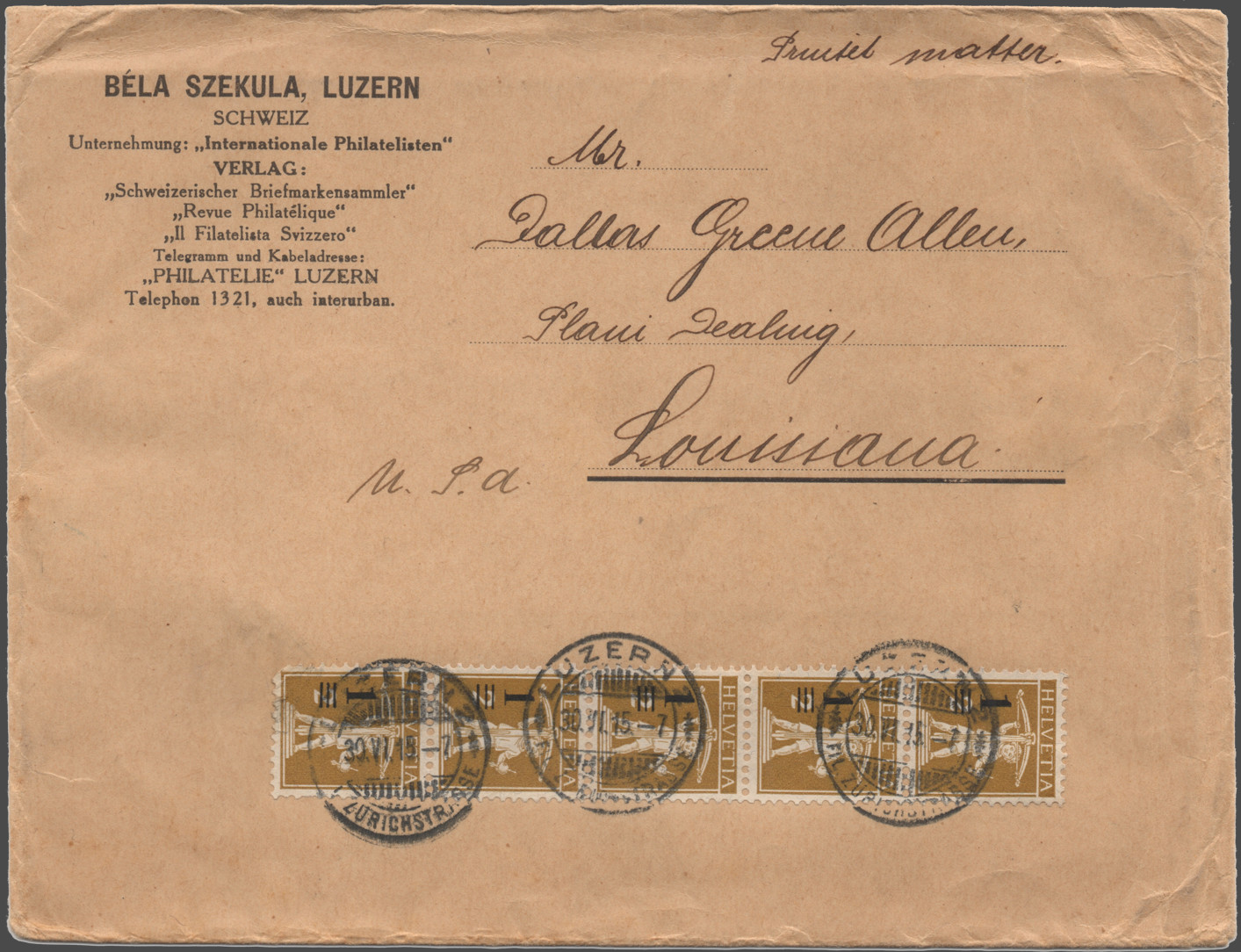
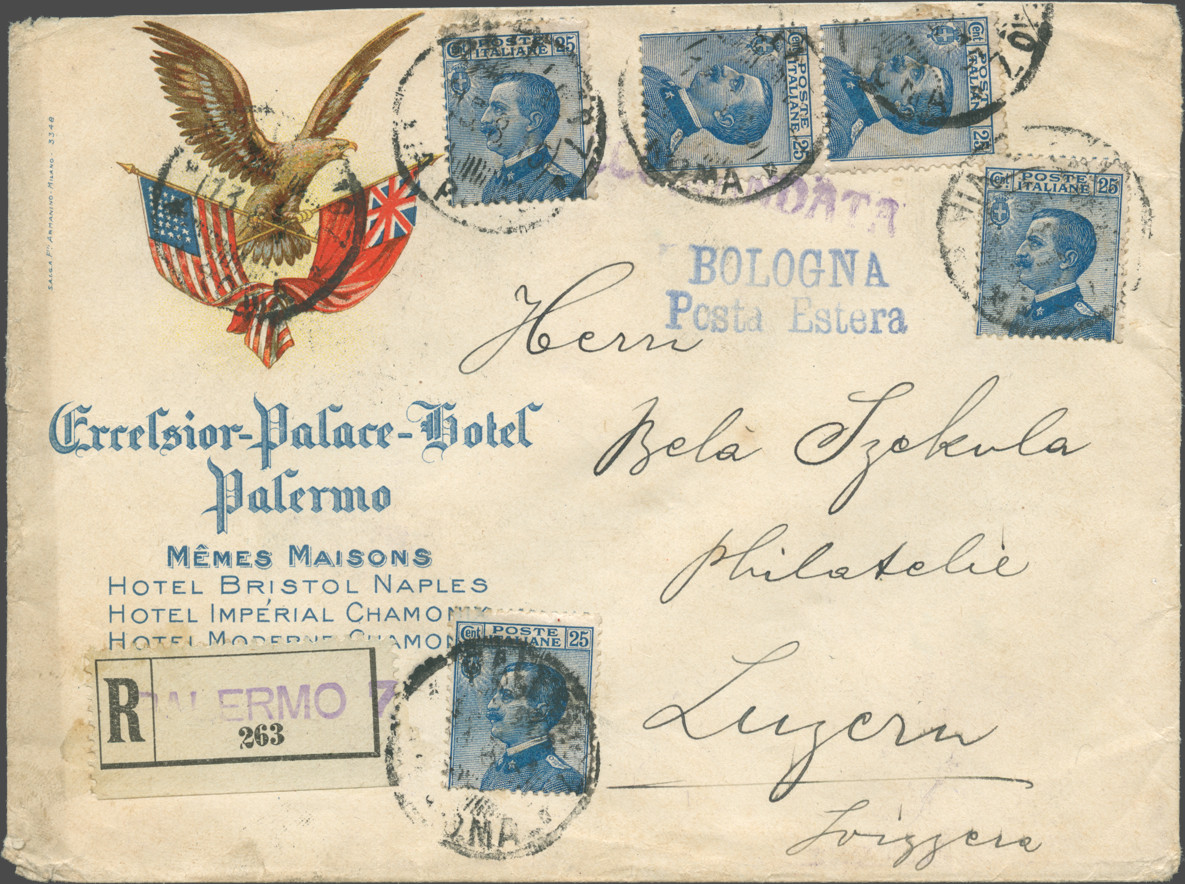
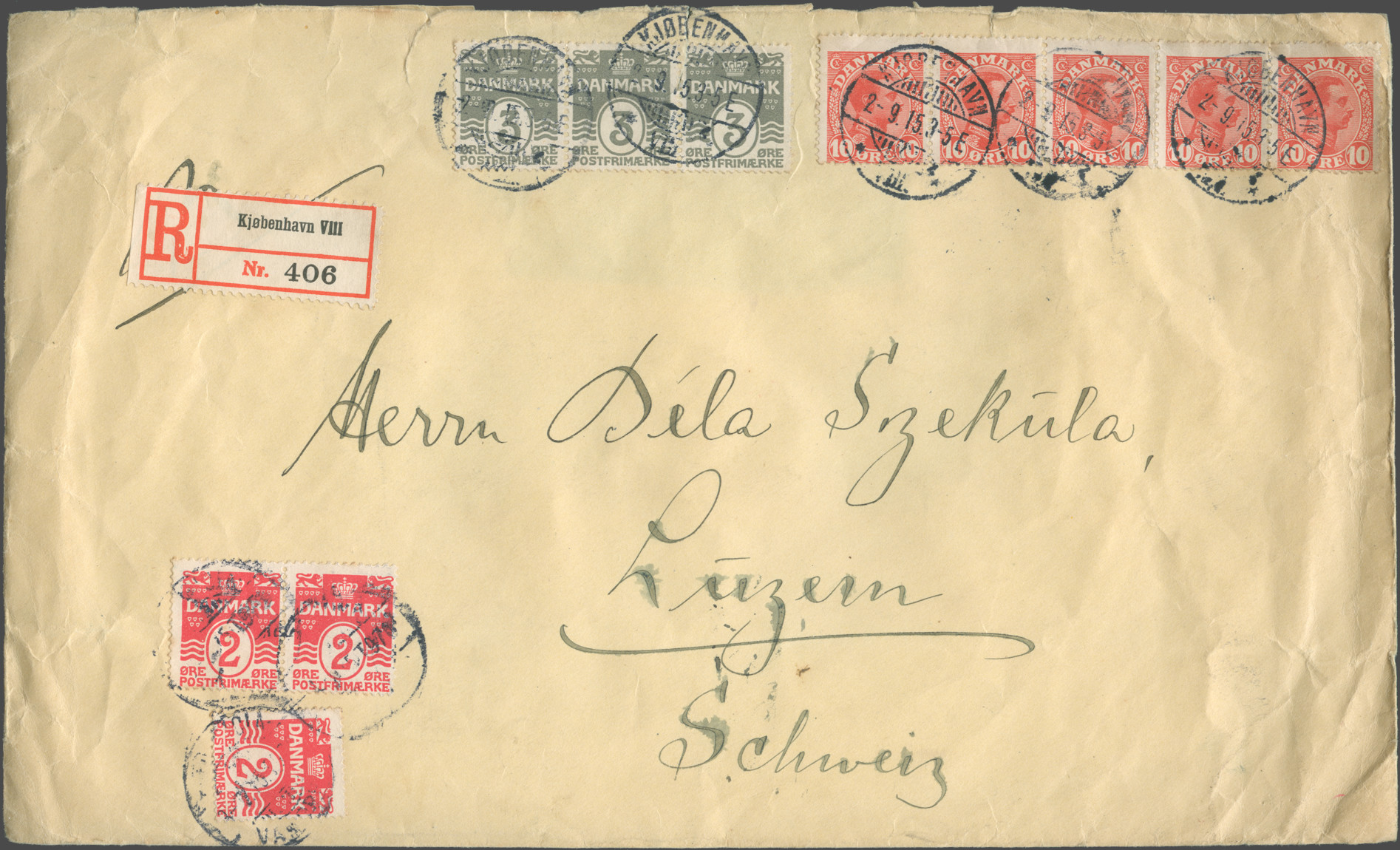
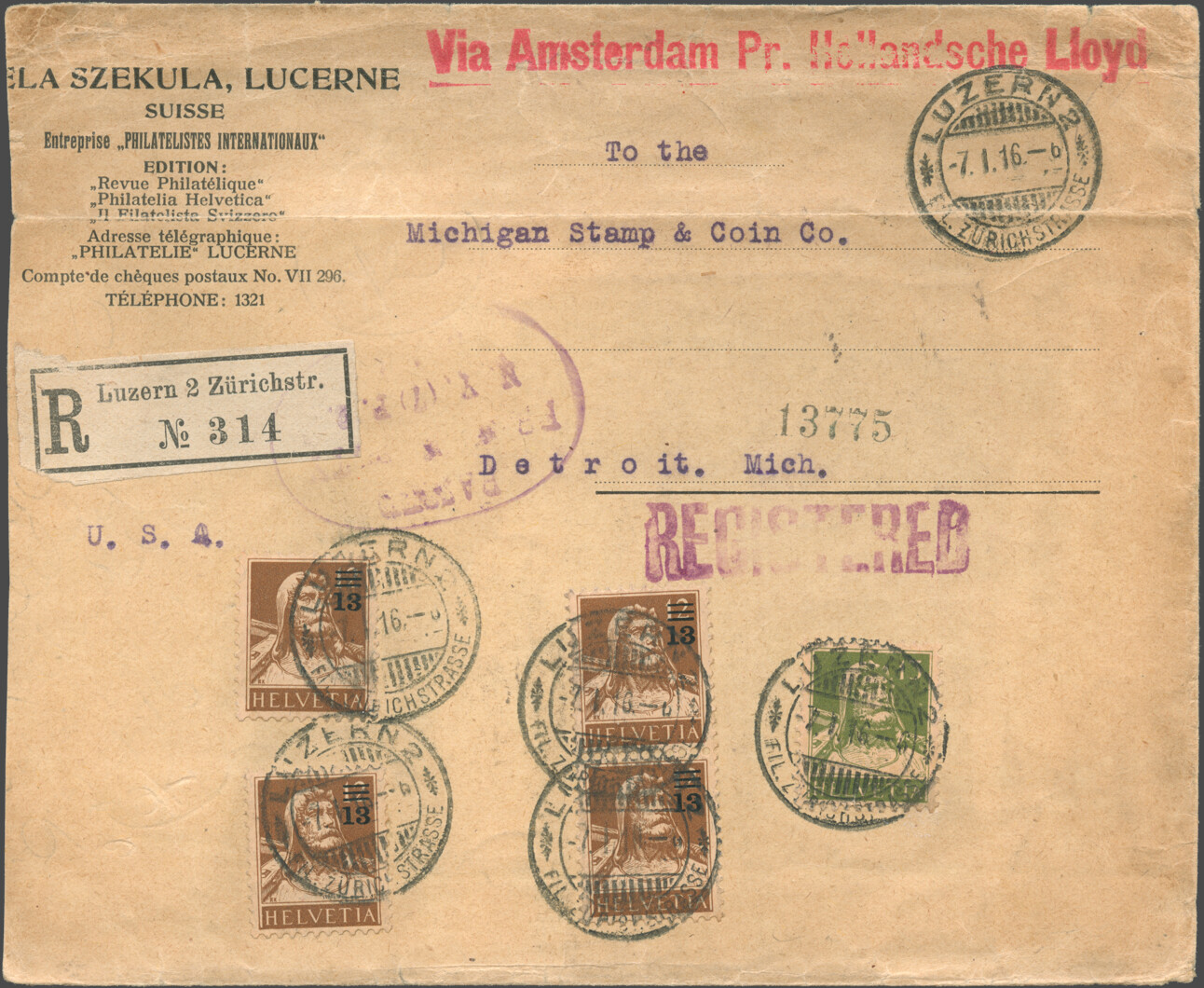
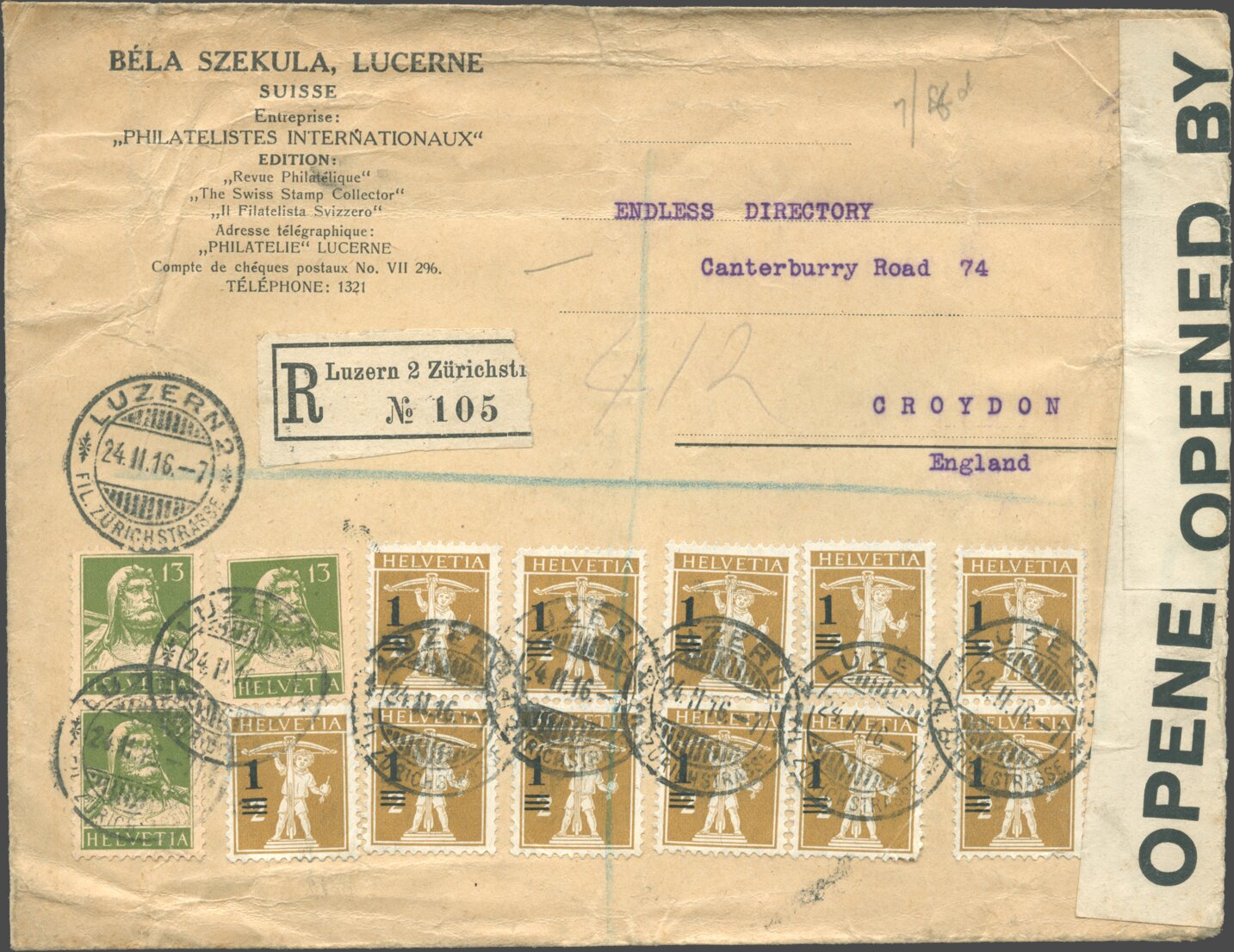
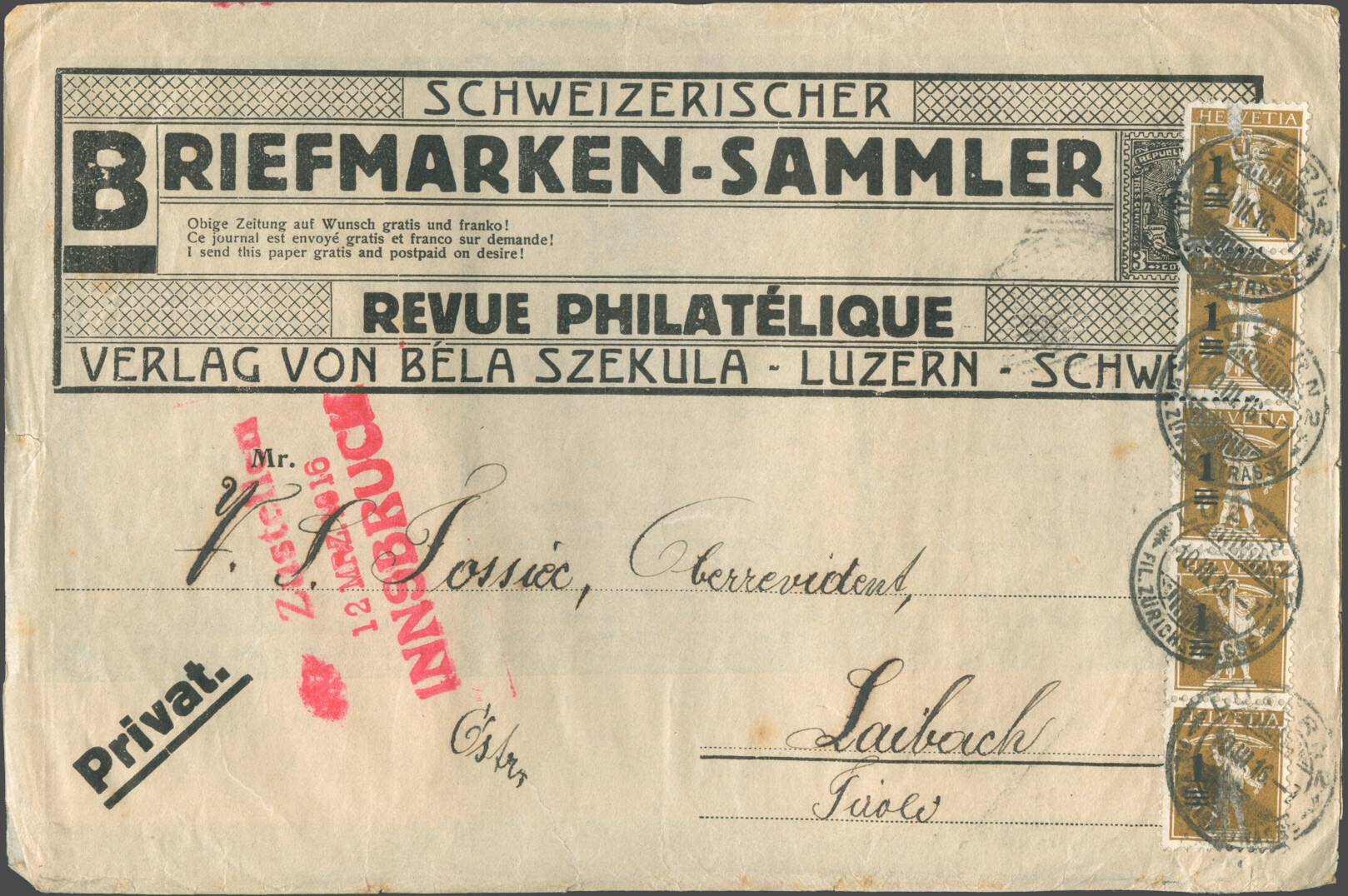
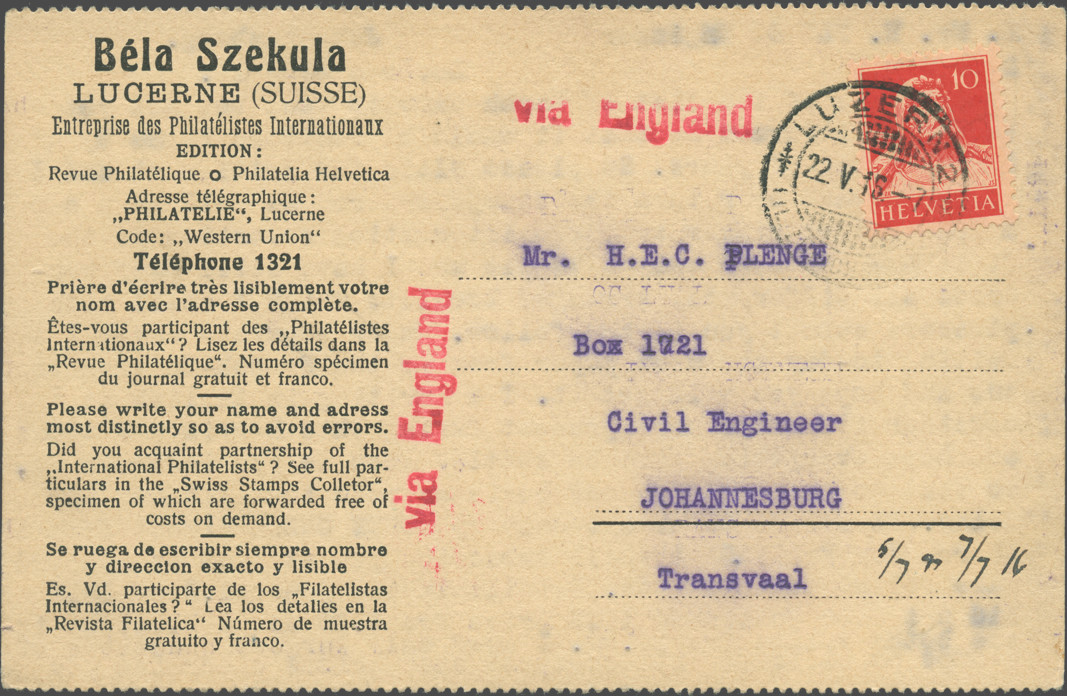
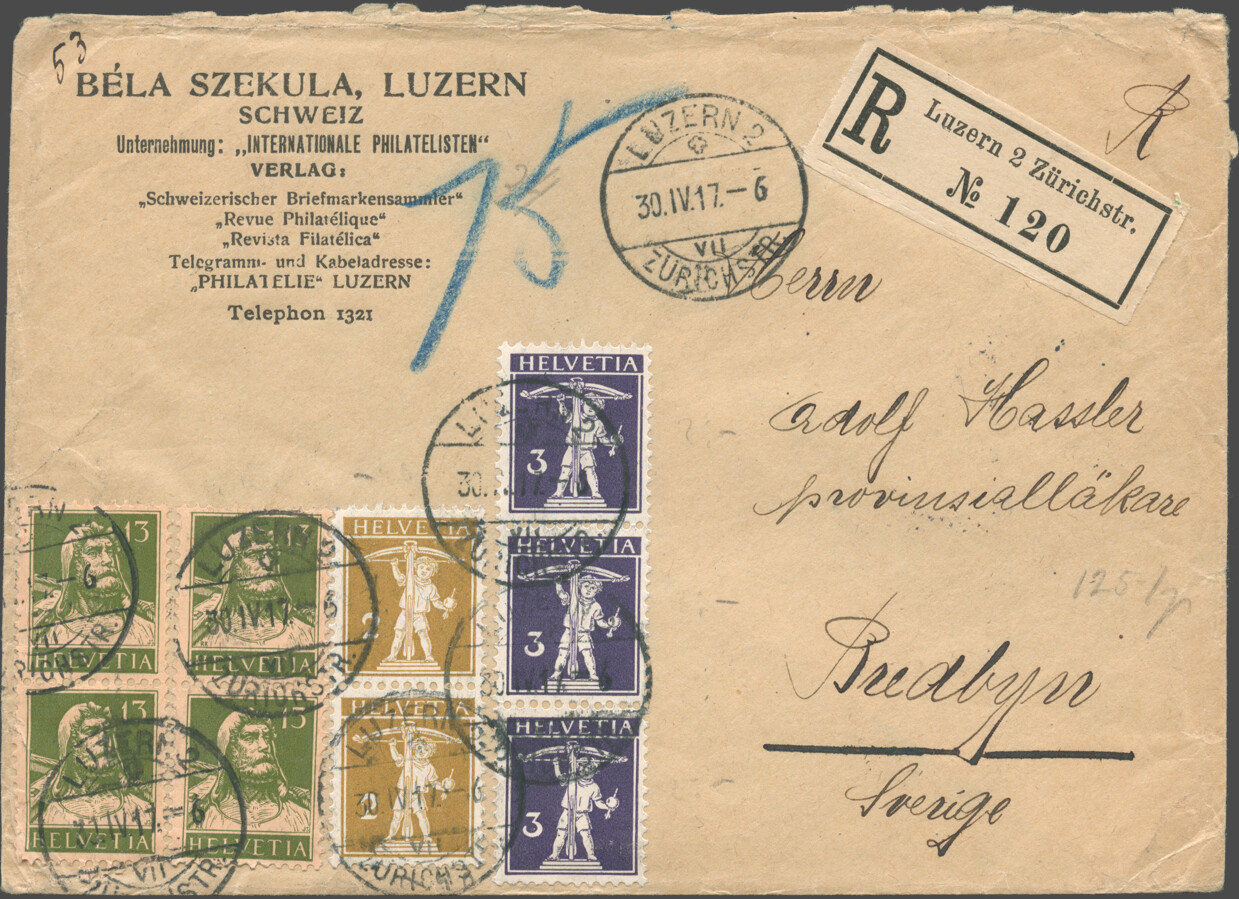
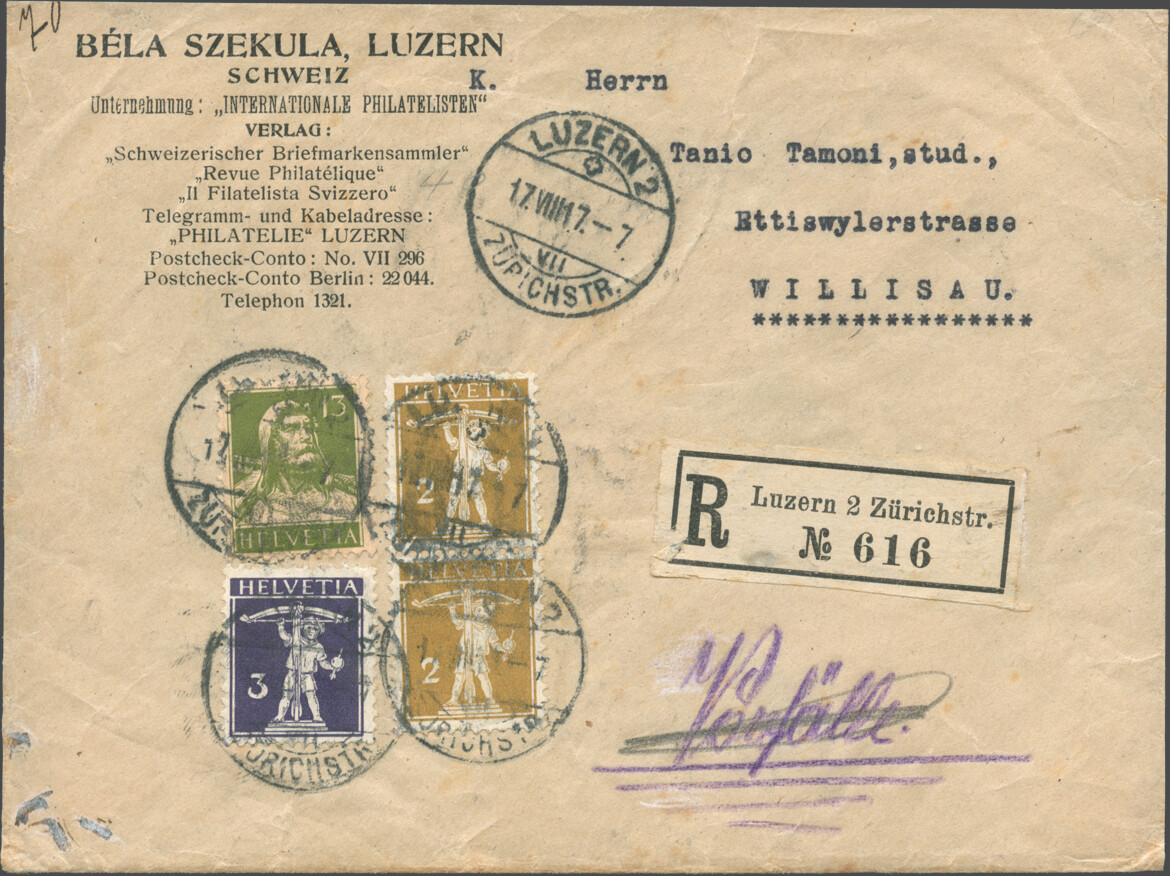
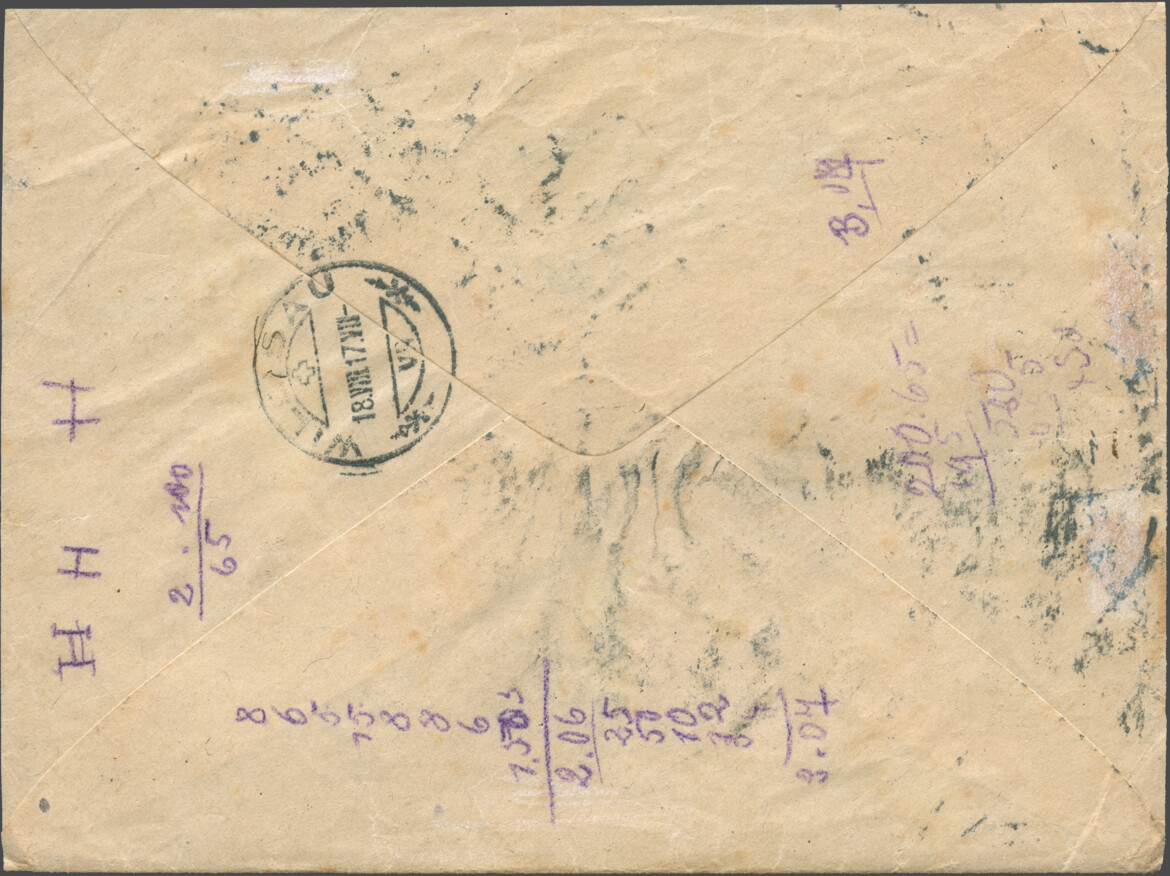
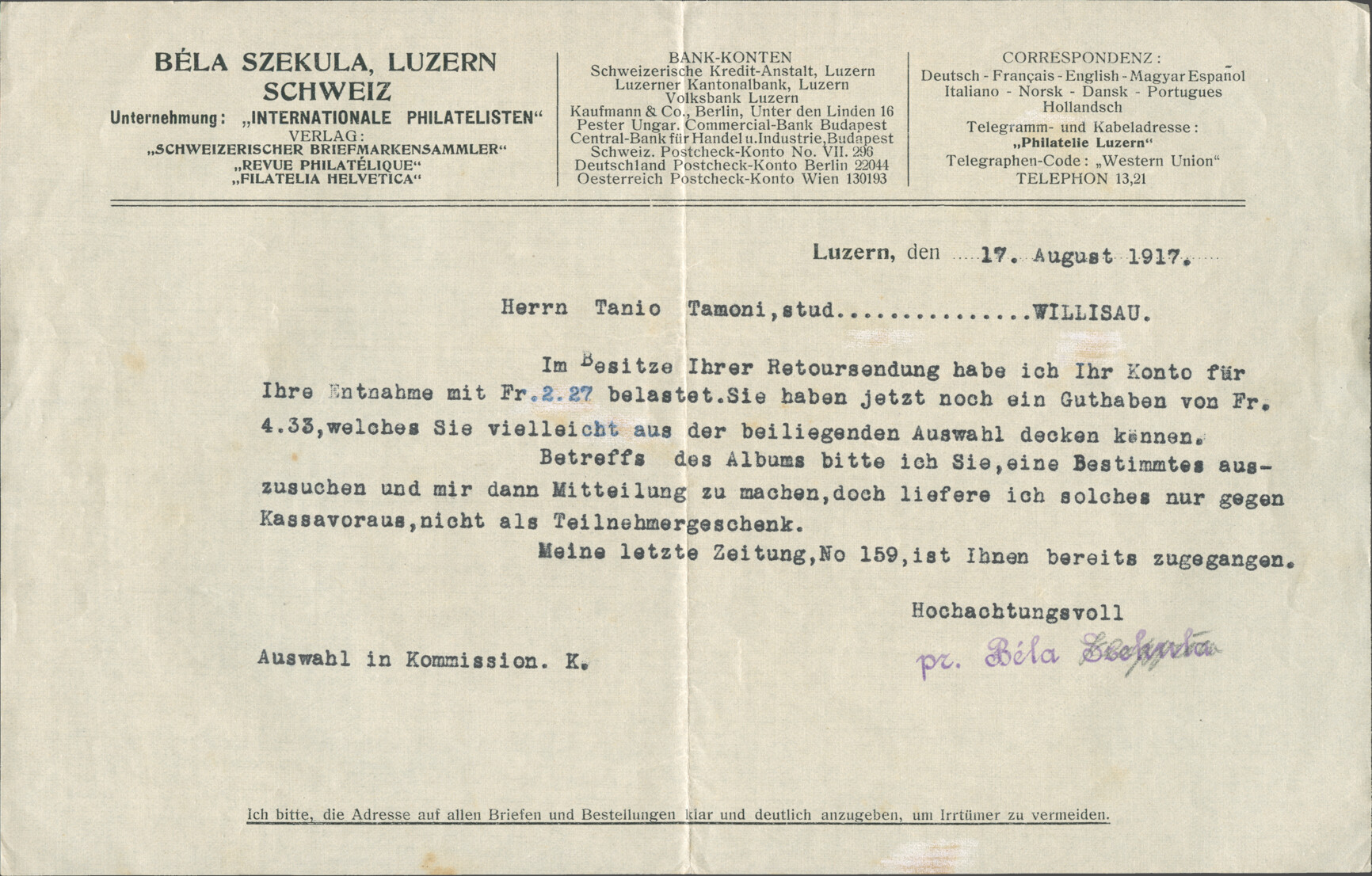
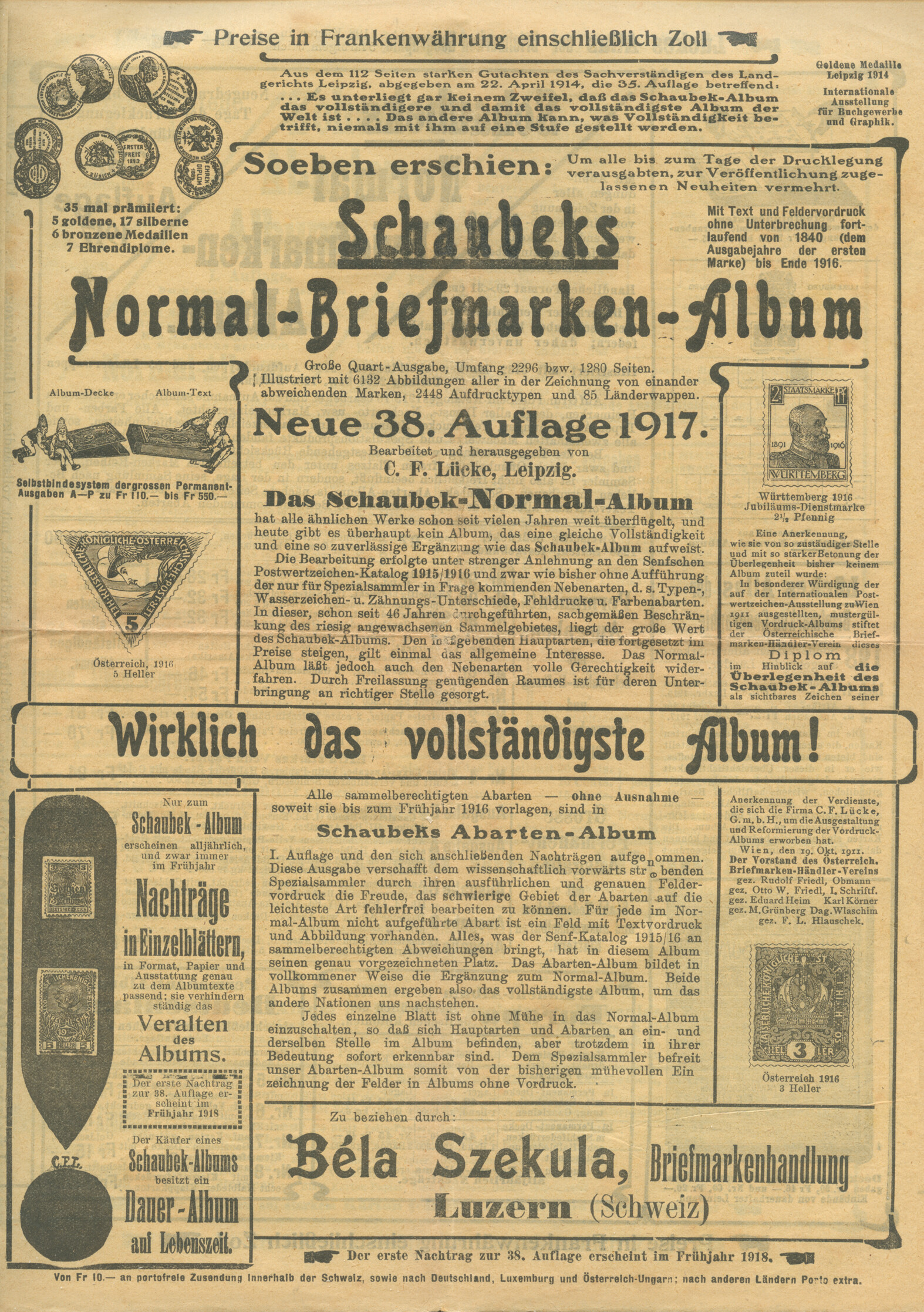
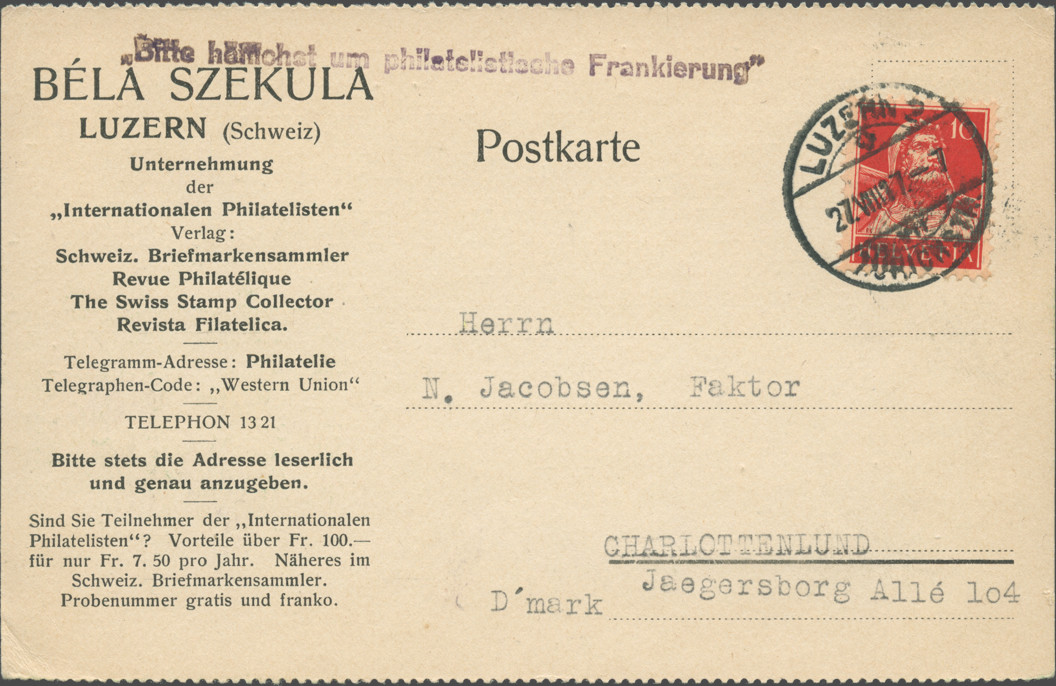
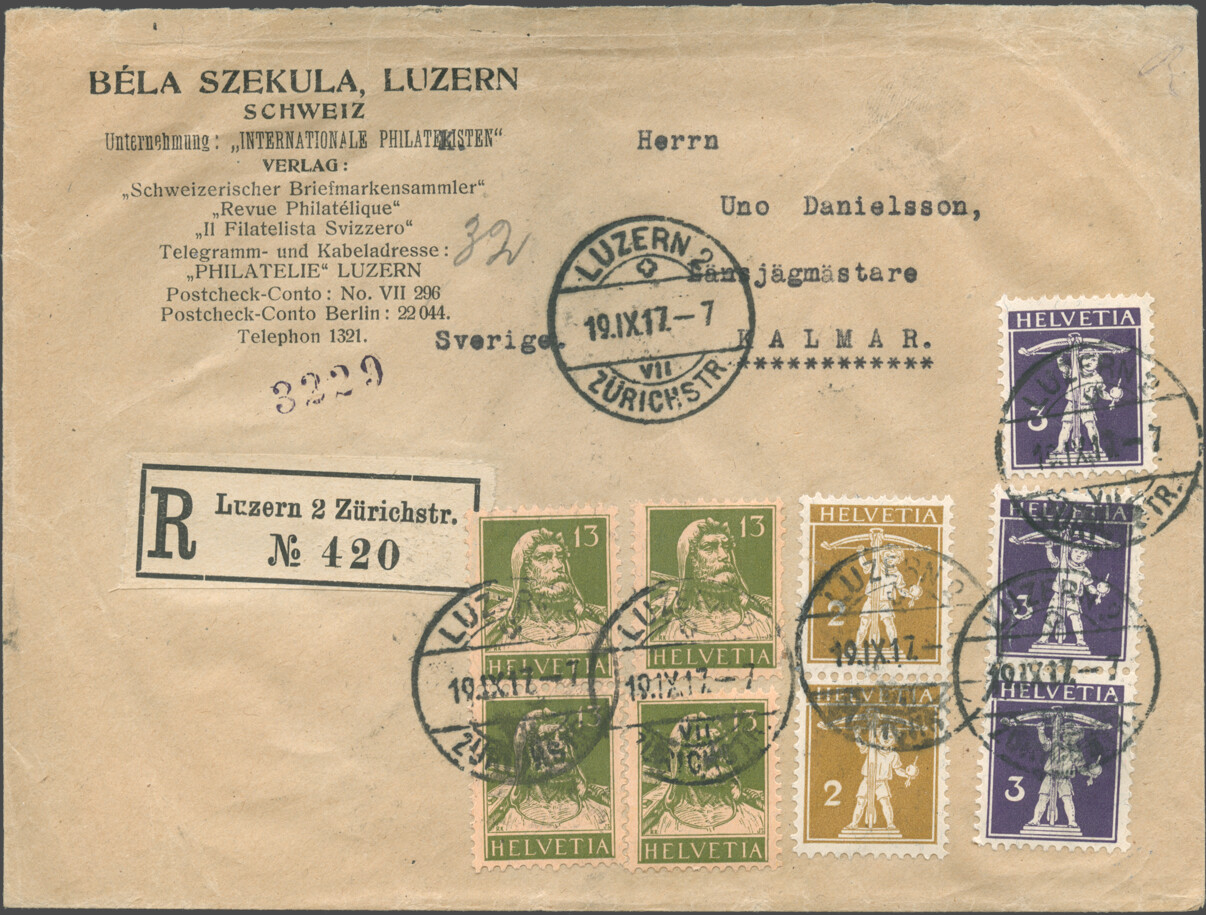
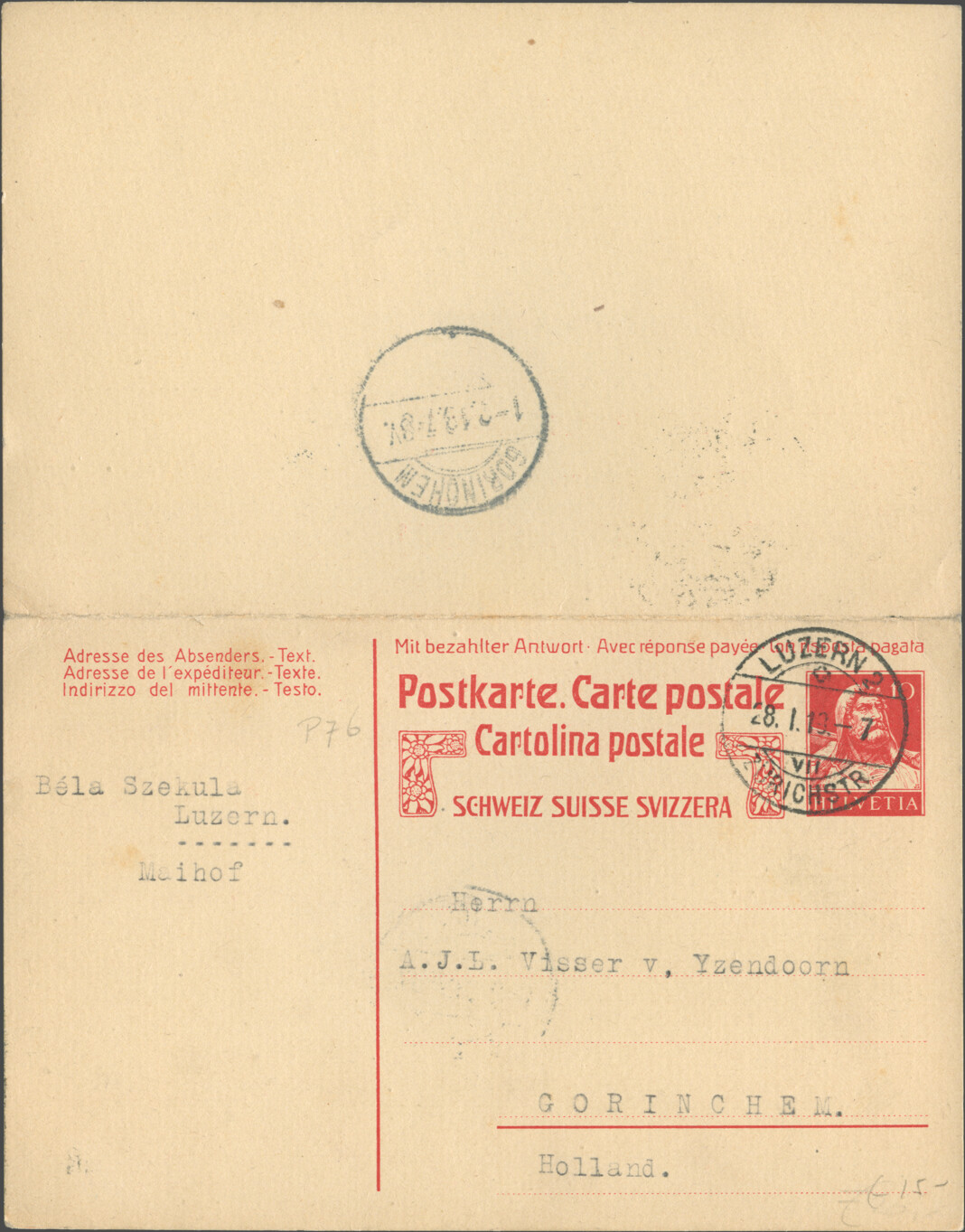
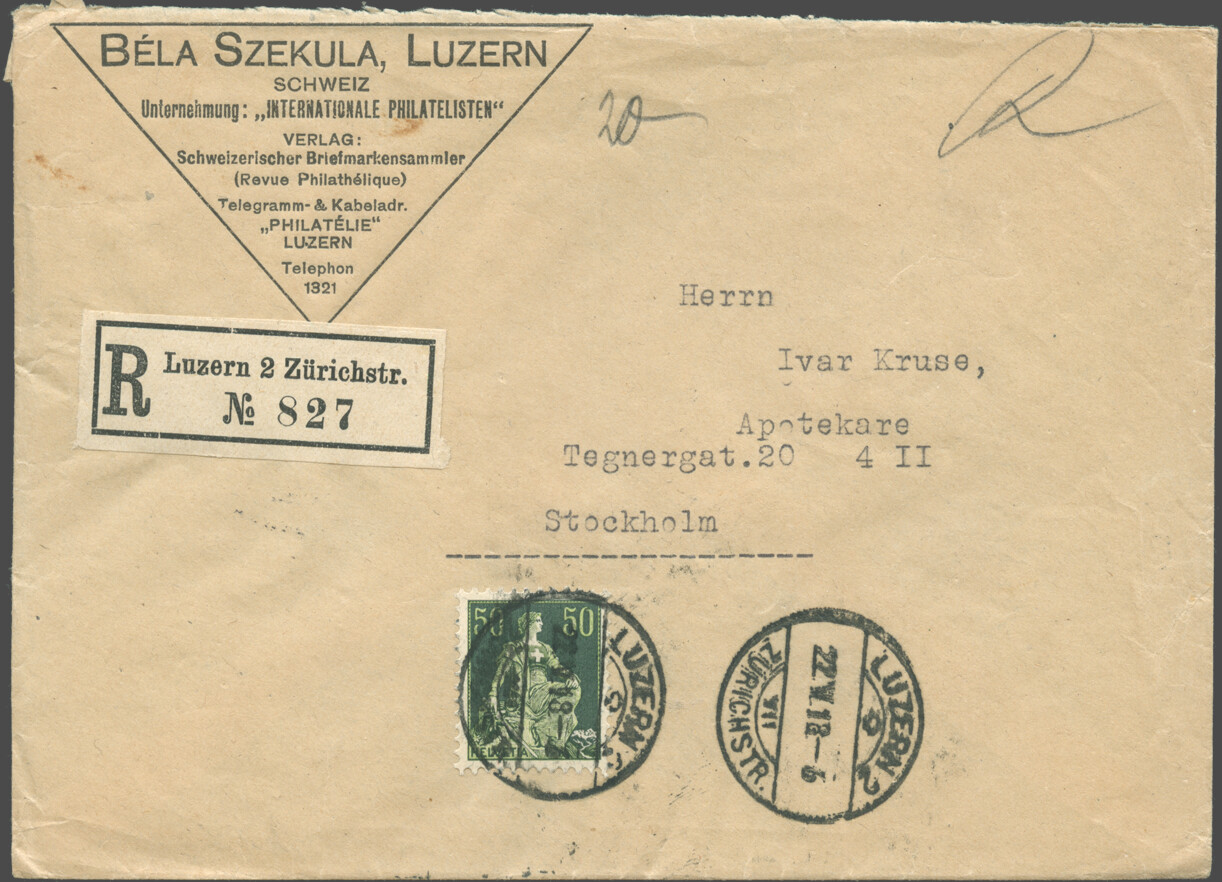
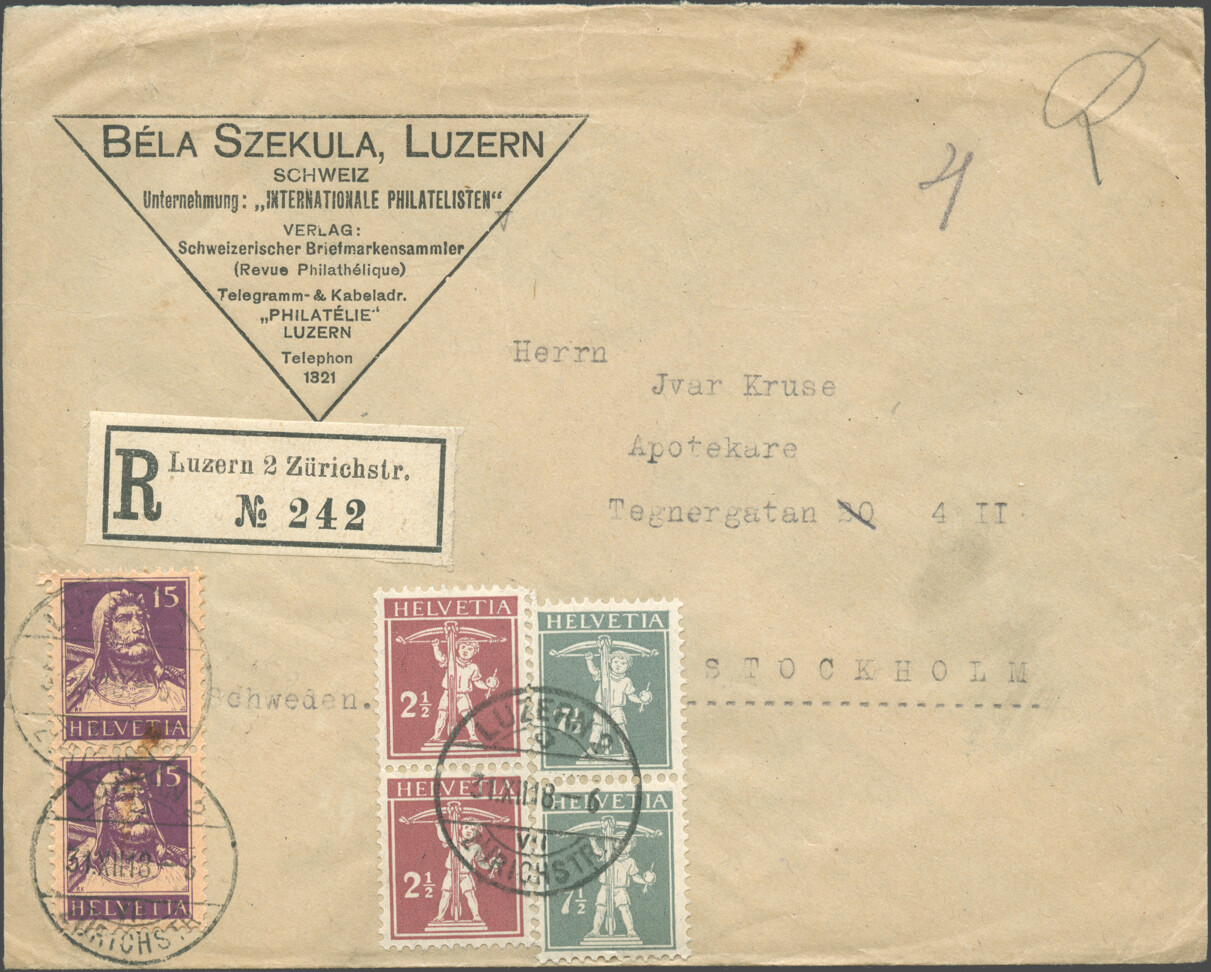
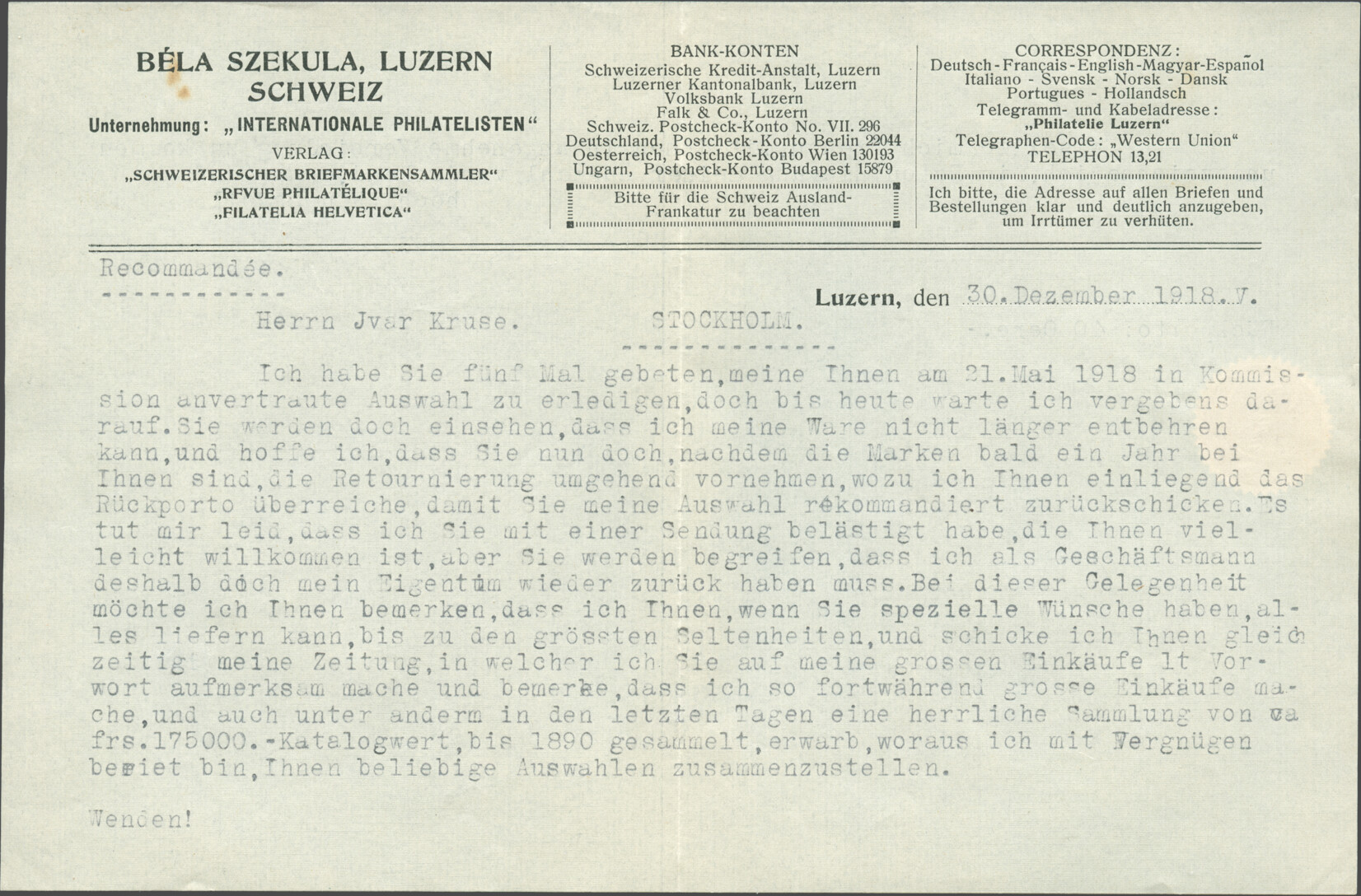
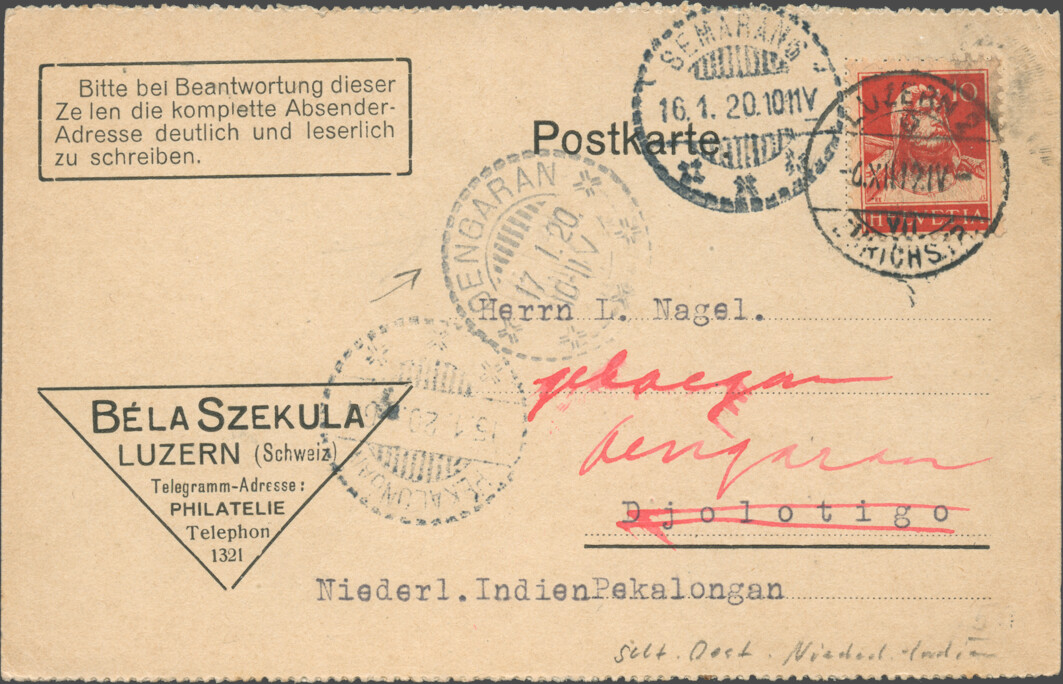
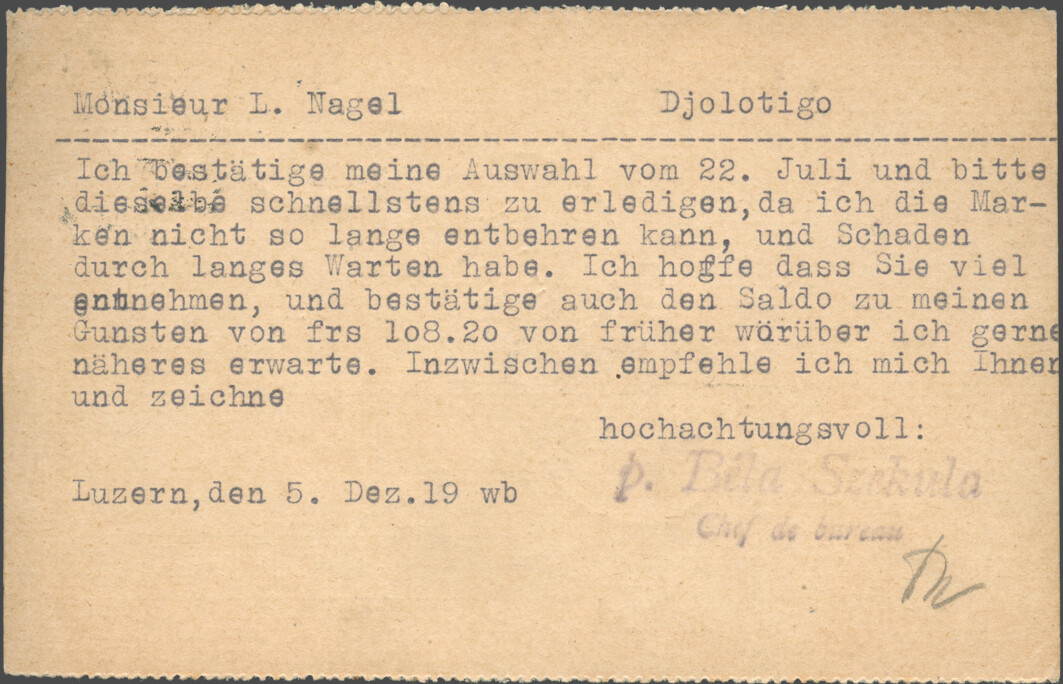
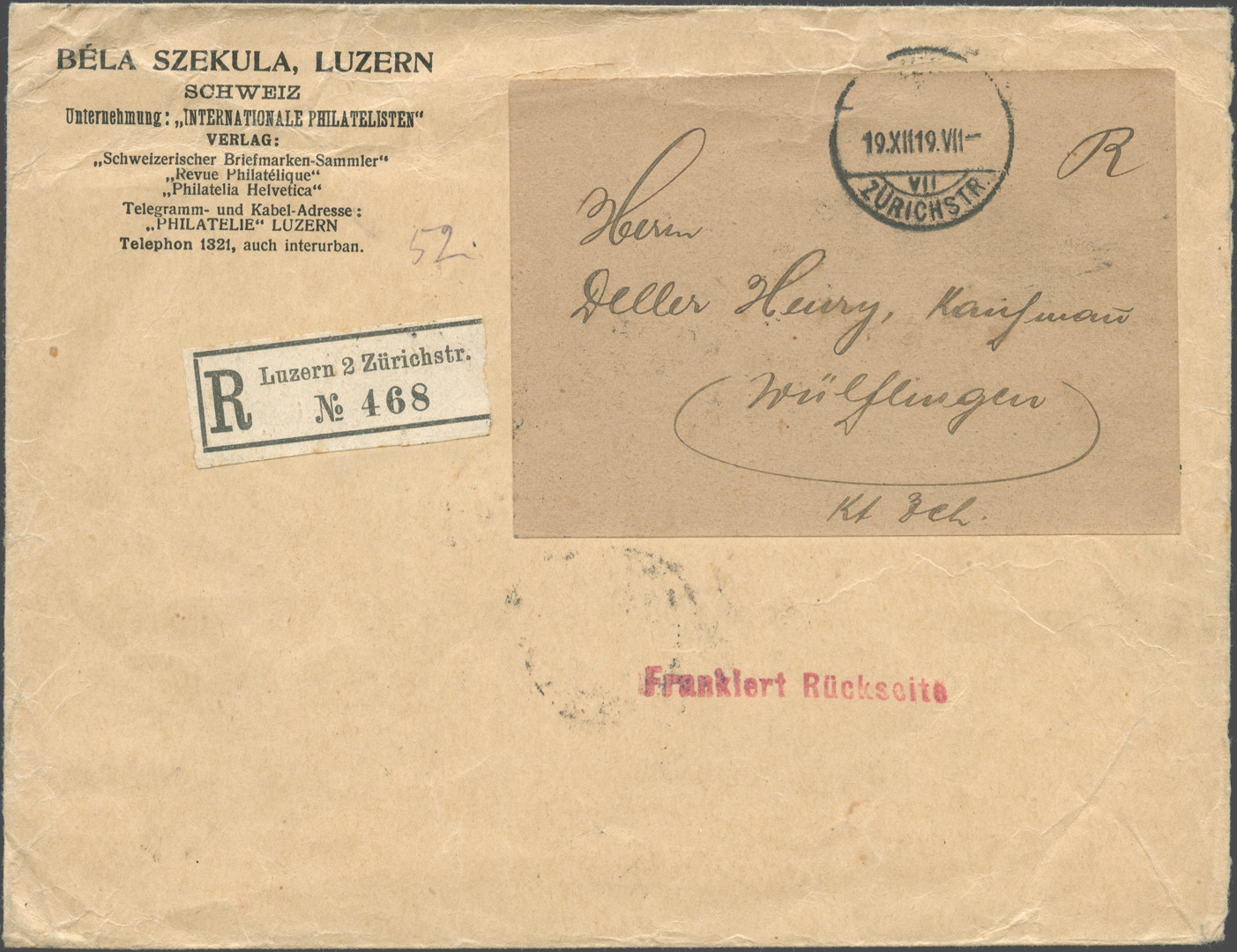
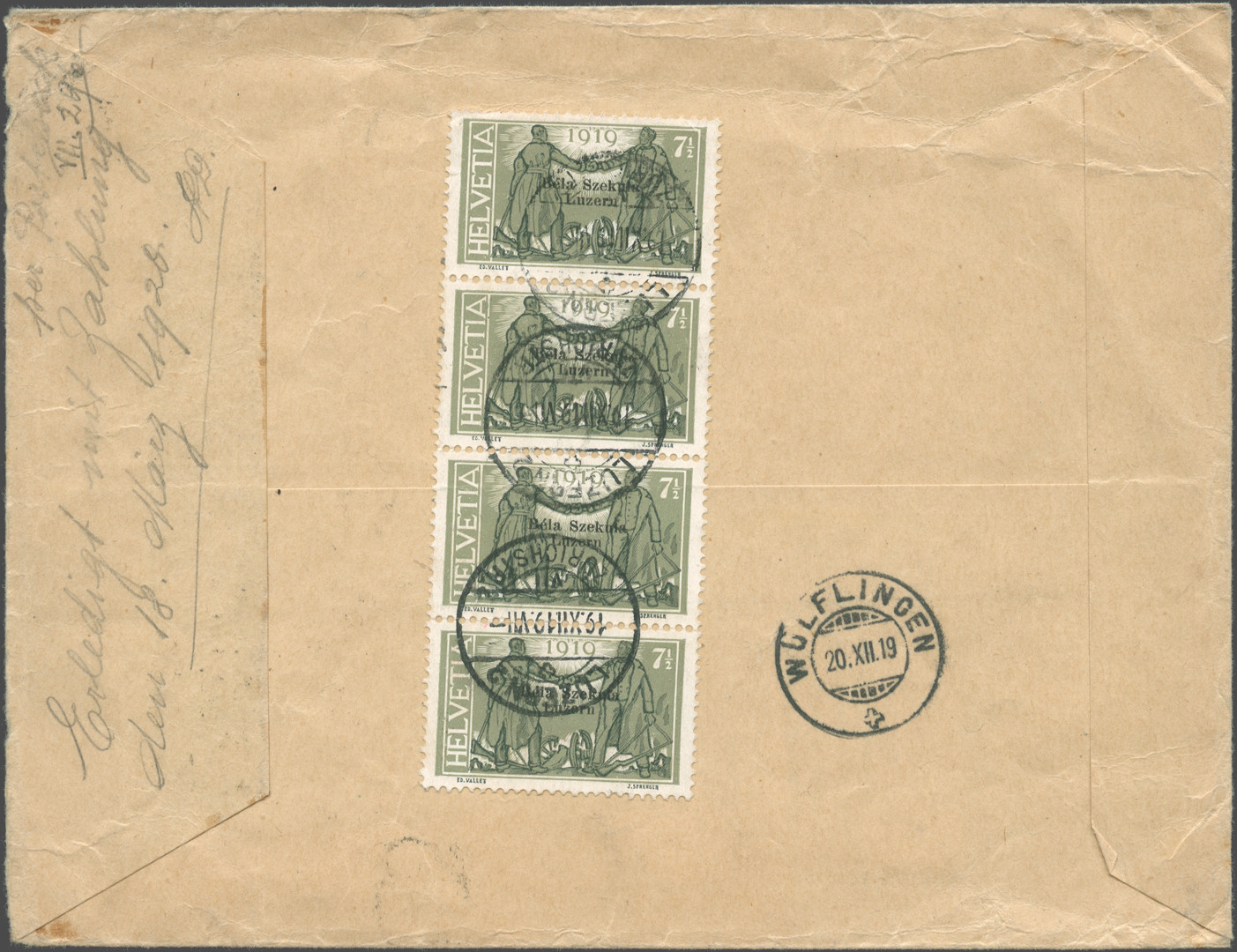
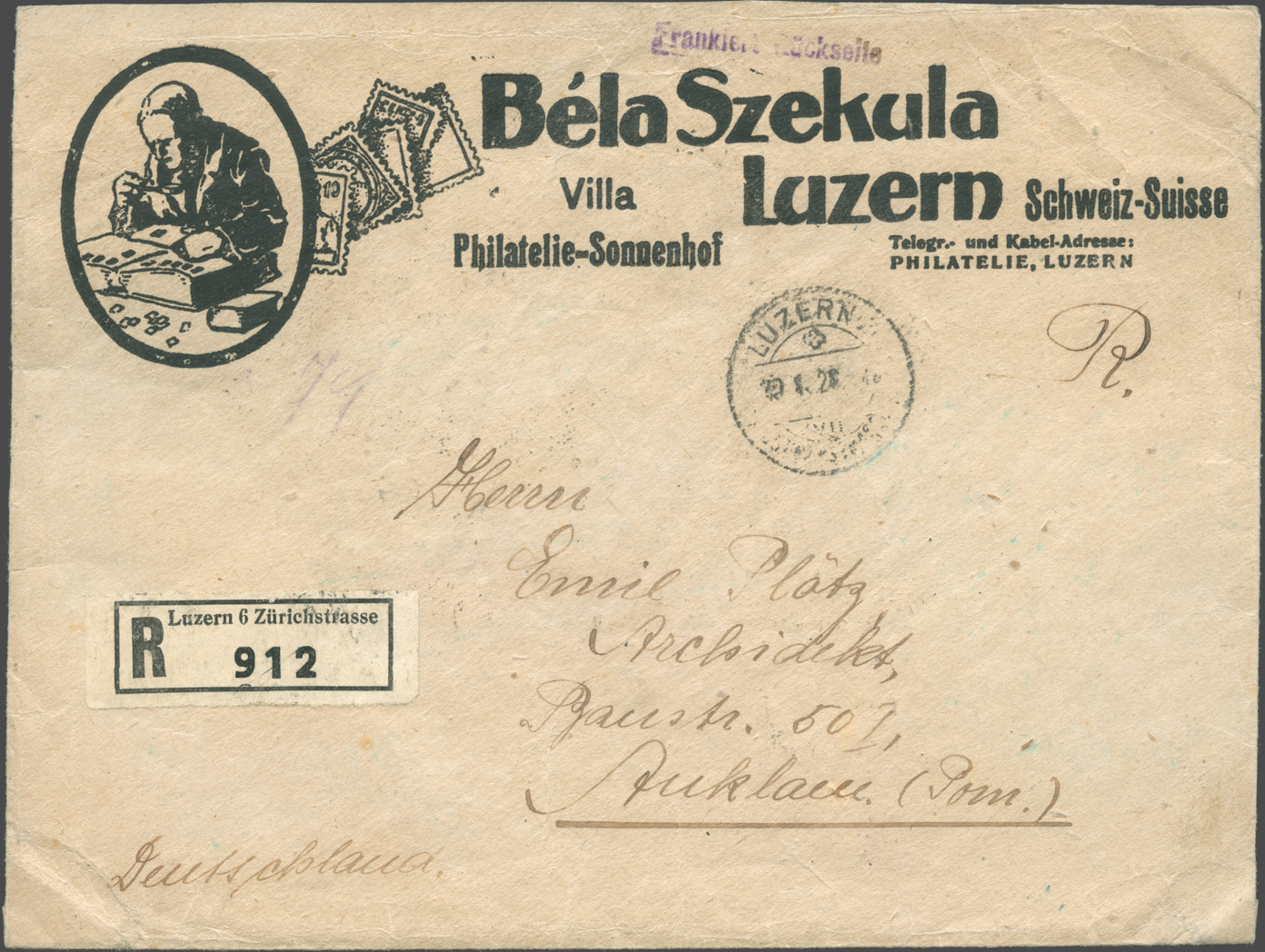
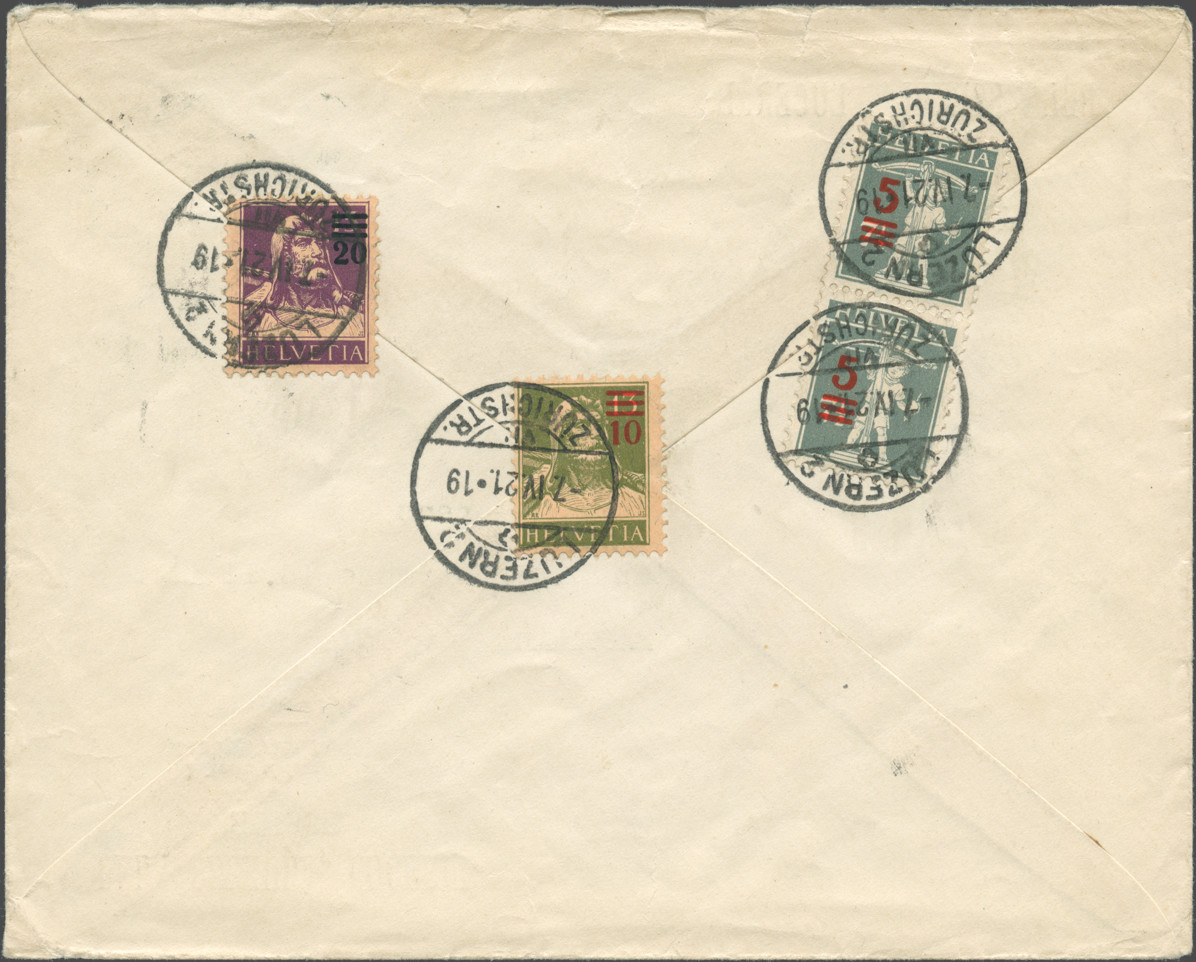
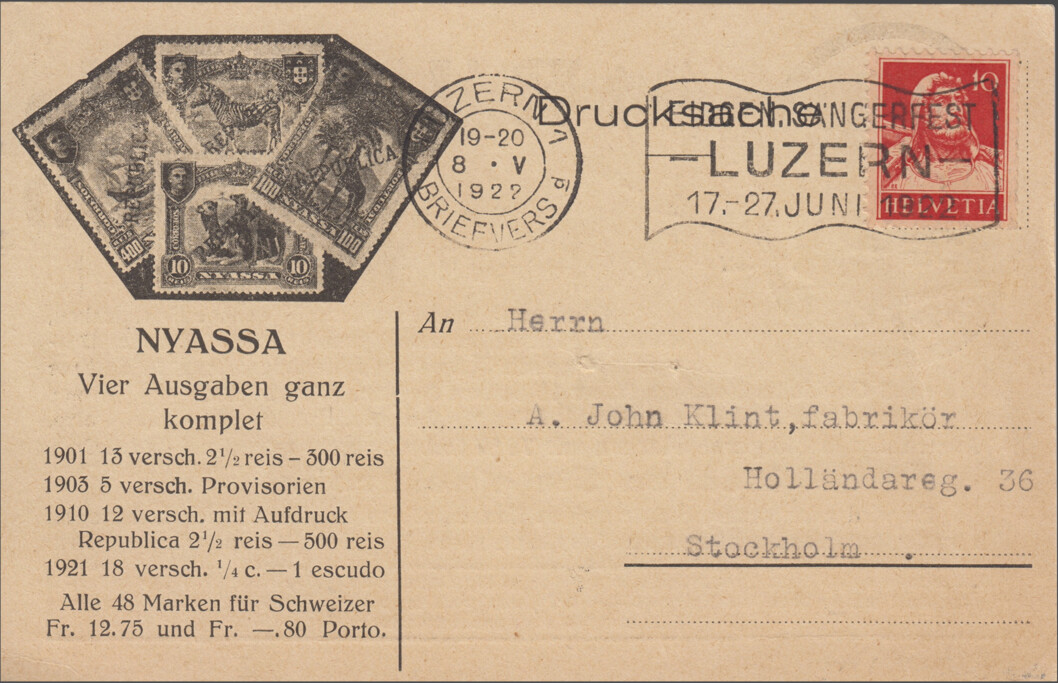
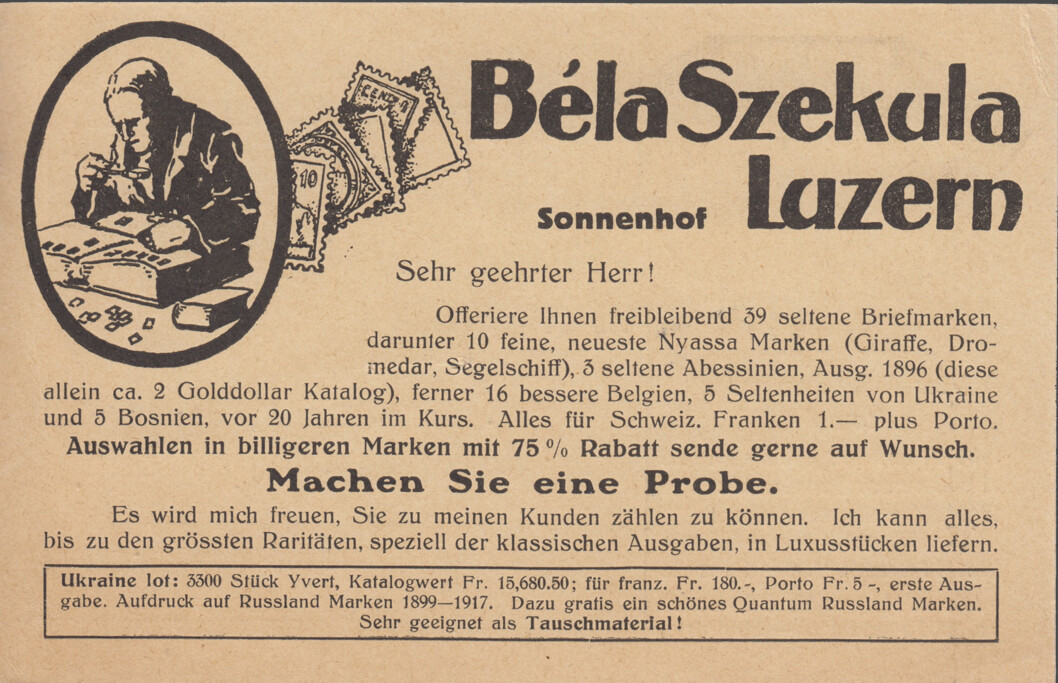
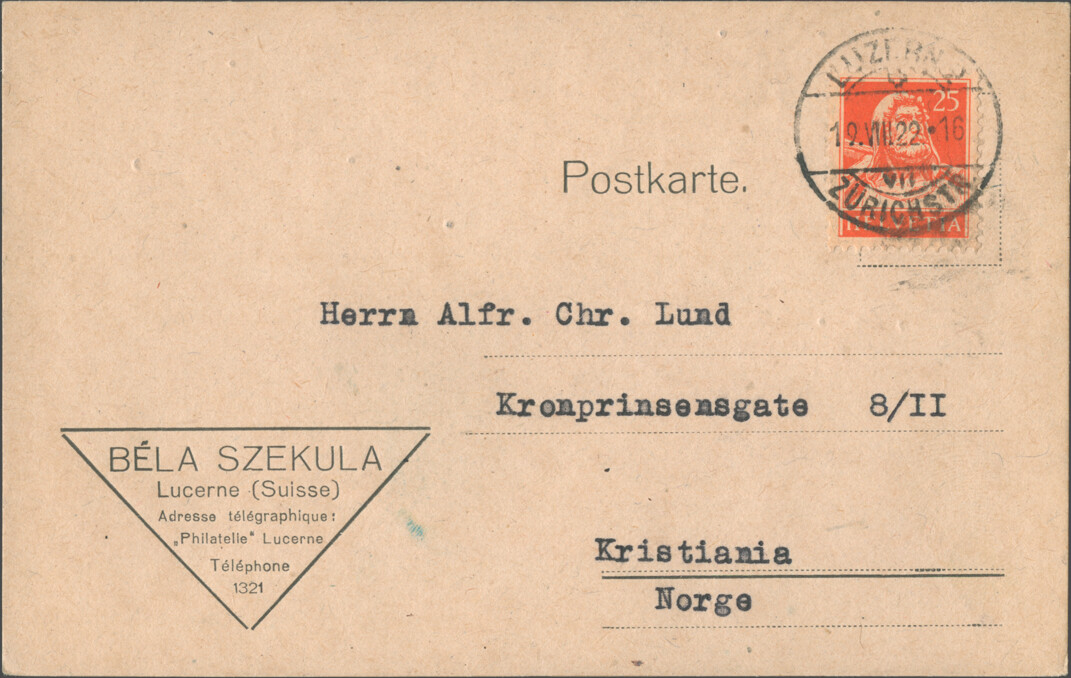
They settled in Lucerne, where he opened the Briefmarken-Grosshandlung
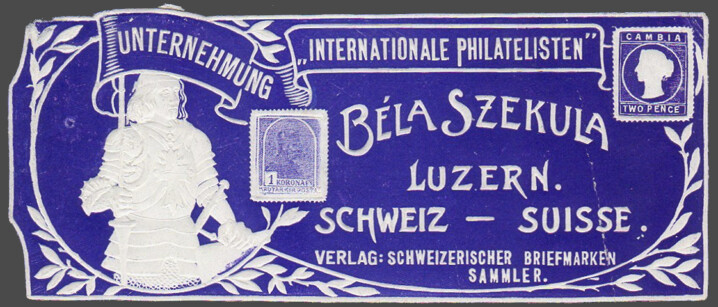
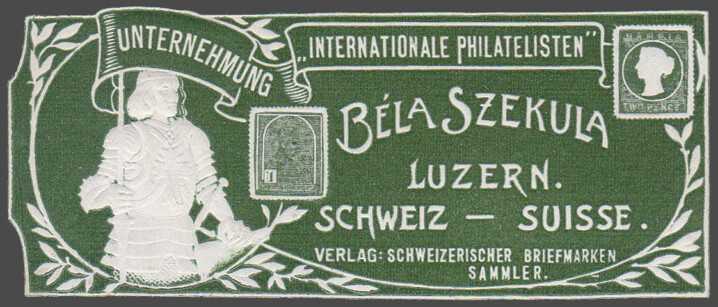
(= stamp wholesale business) Béla Szekula
in his second Villa Philatelie
at Maihof 678c.
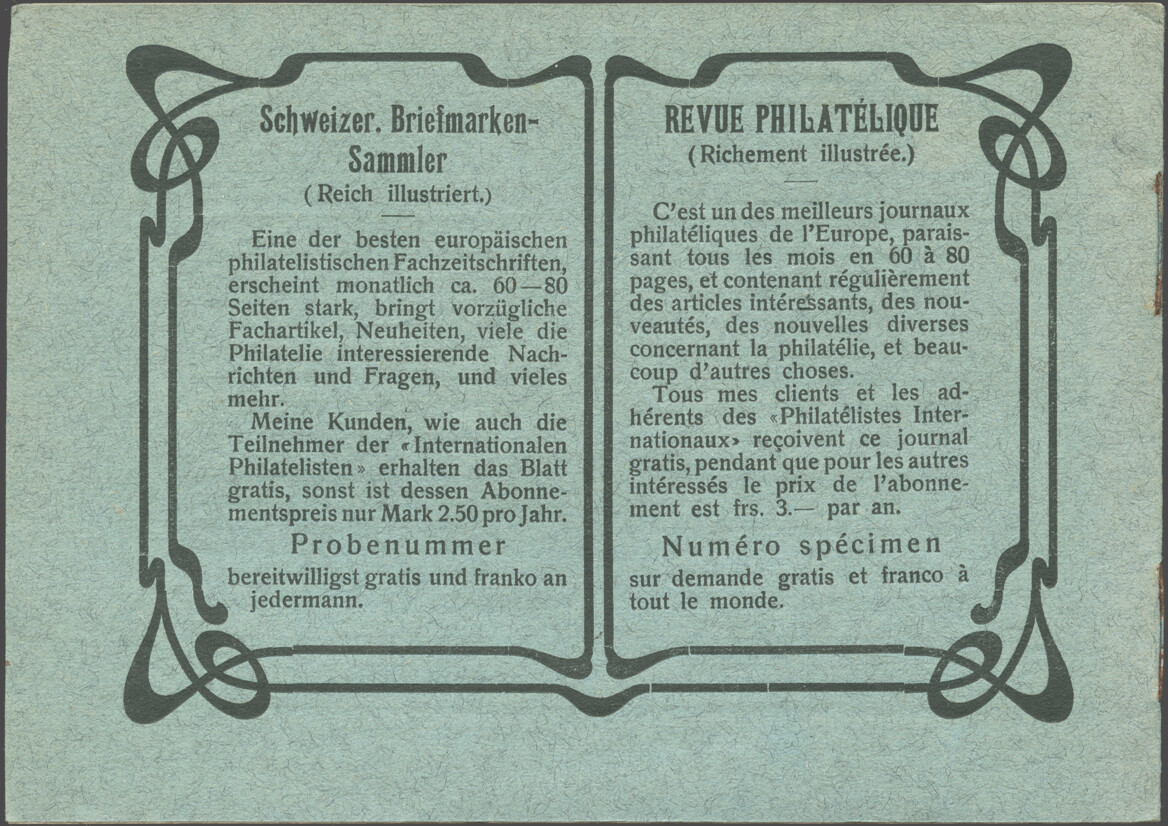
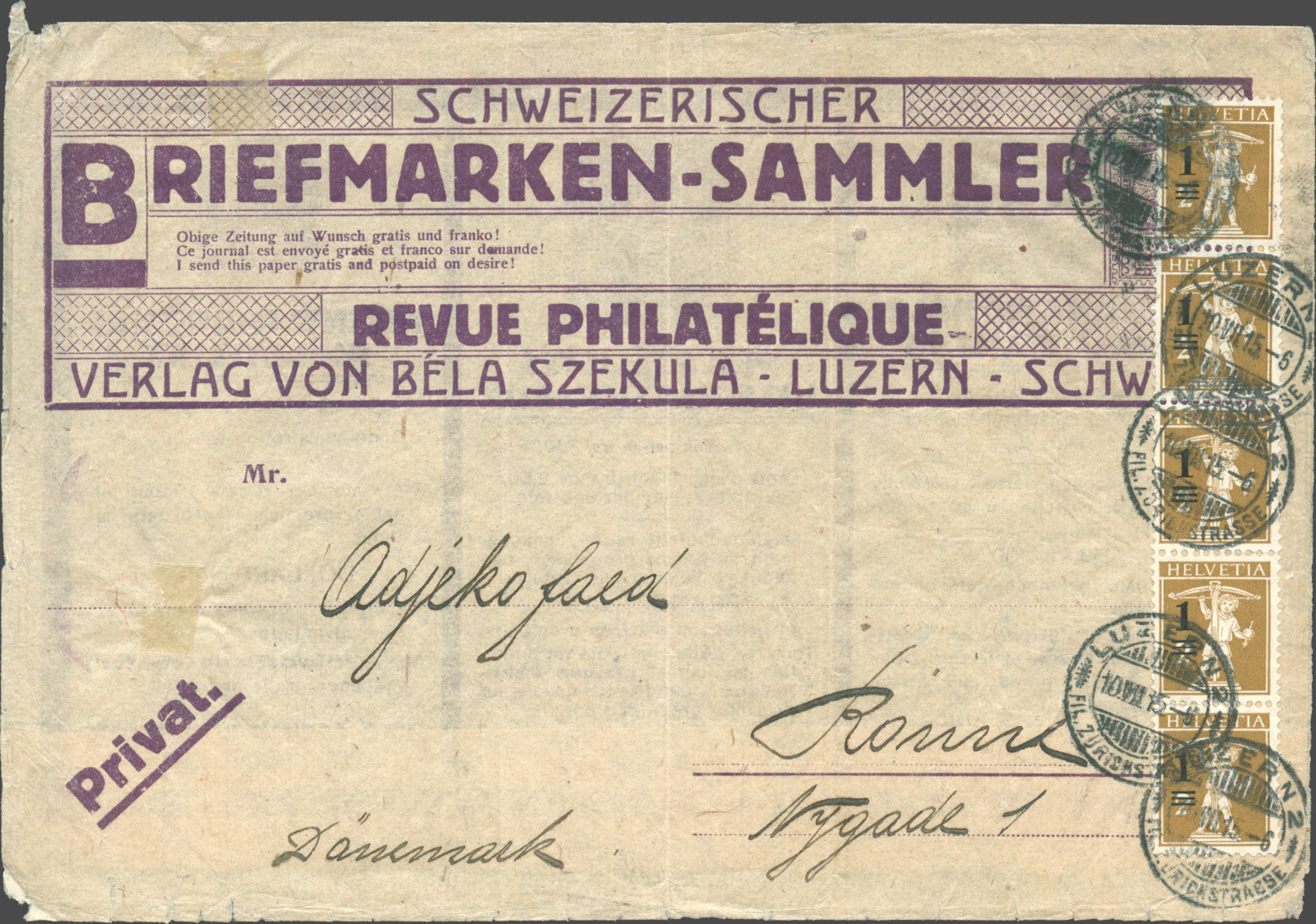
In accordance with his new place of residence, he renamed his magazine to Schweizerischer Briefmarken-Sammler (Swiss Stamp Collector).
By now, Béla was in his early thirties and a successful businessman, and his travels and experience must have given him a sophisticated appearance.
It probably didn’t take him long to mingle with the Establishment in Lucerne.
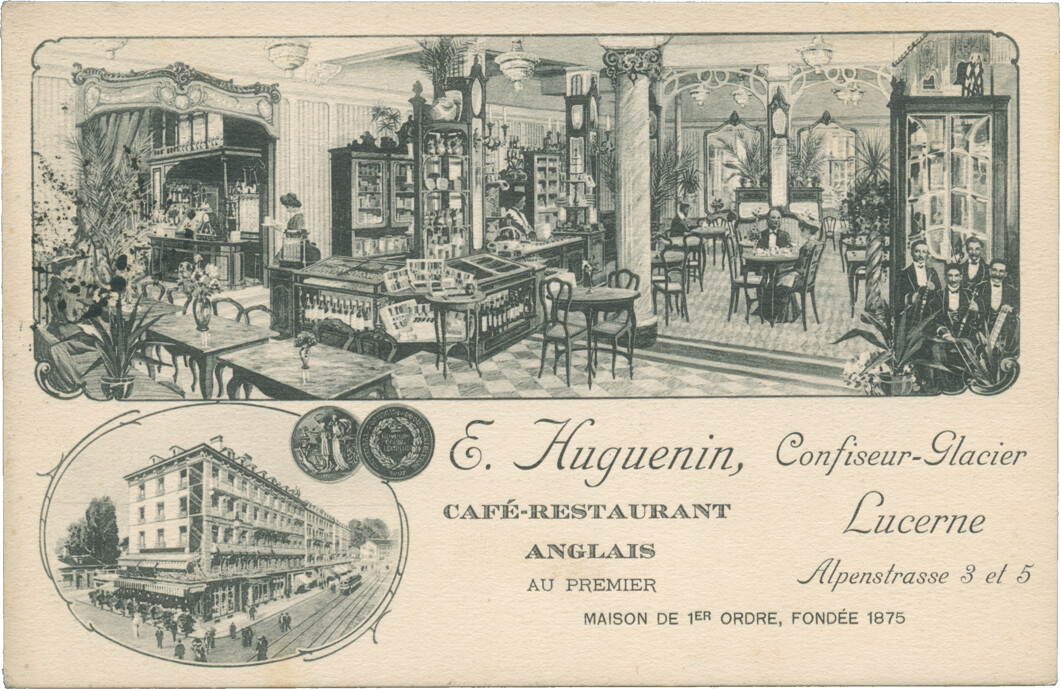
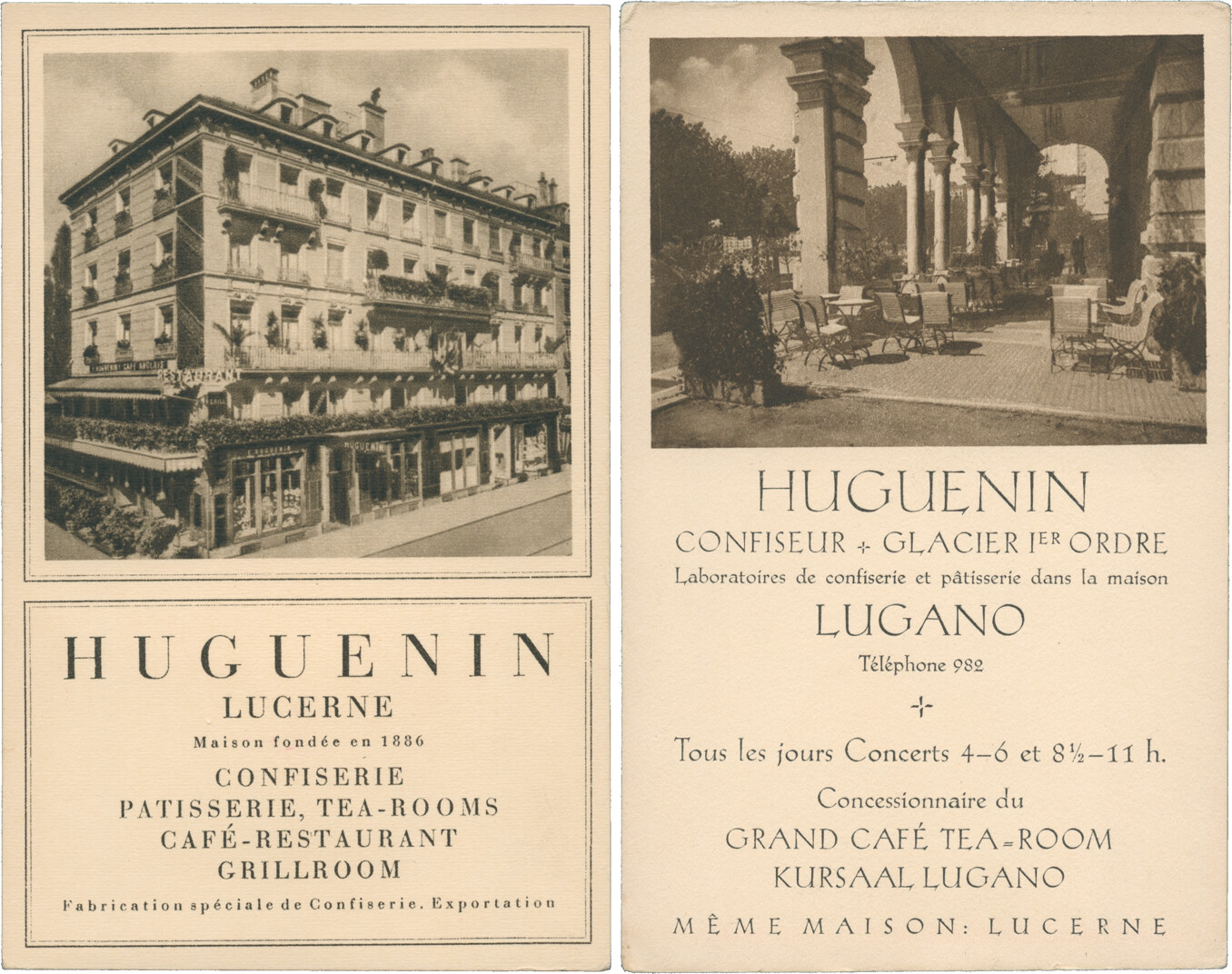
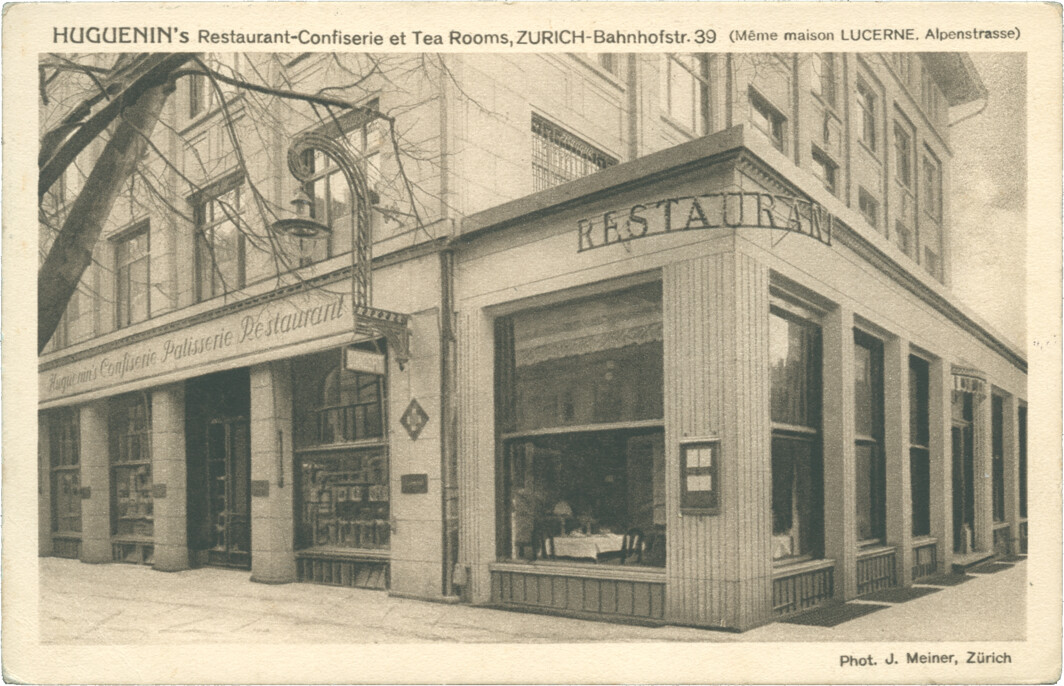
On October 9, 1916, he married Bertha Albertina Berty
Huguenin (1896–1980), a member of the well-known café and confectionery dynasty of the same name, and on November 4, 1916, Béla became a naturalized Swiss citizen of Kriens.
The Blacklist
Although Switzerland was neutral, the outbreak of World War I in 1914 naturally had consequences for Swiss merchants trading internationally.
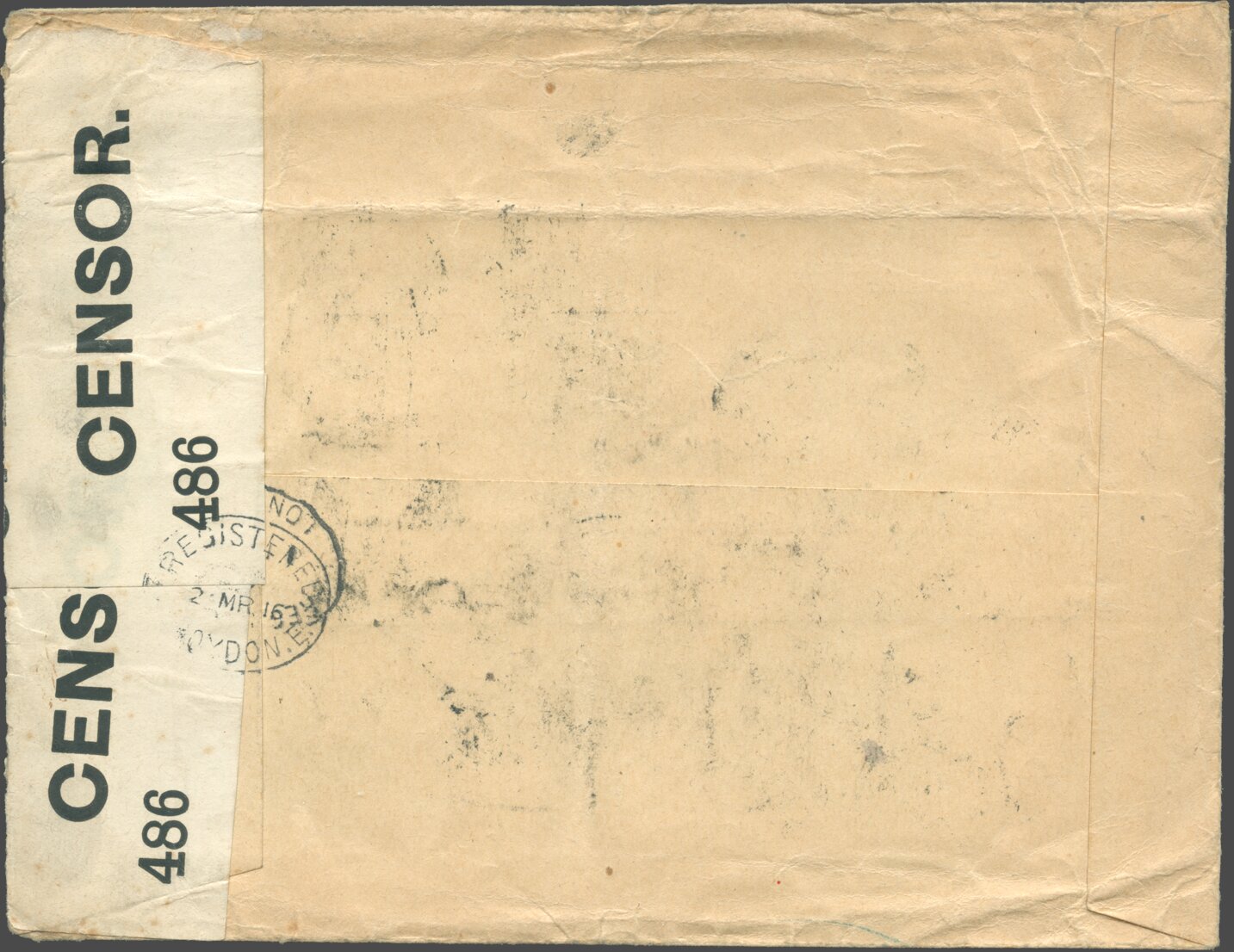
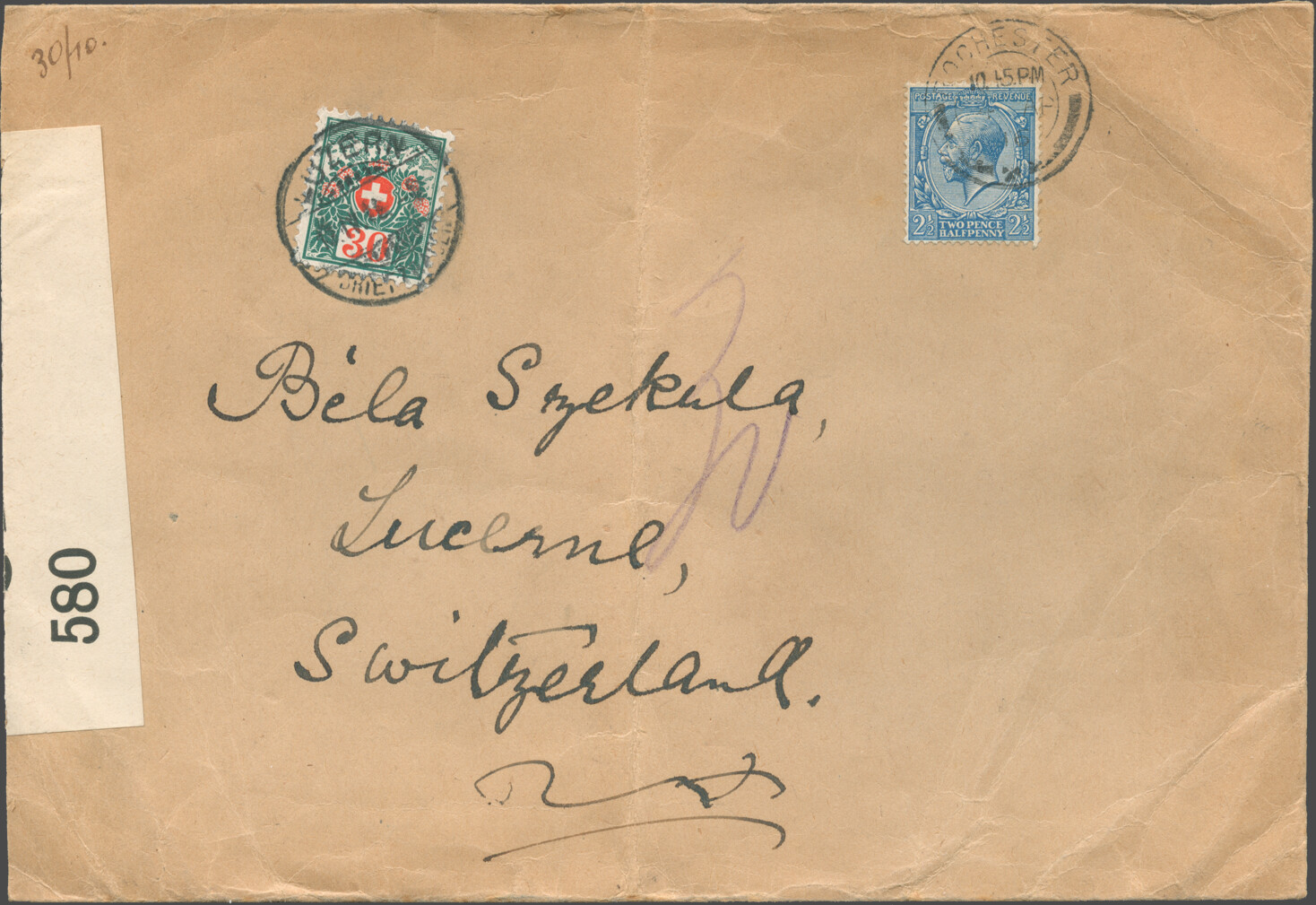
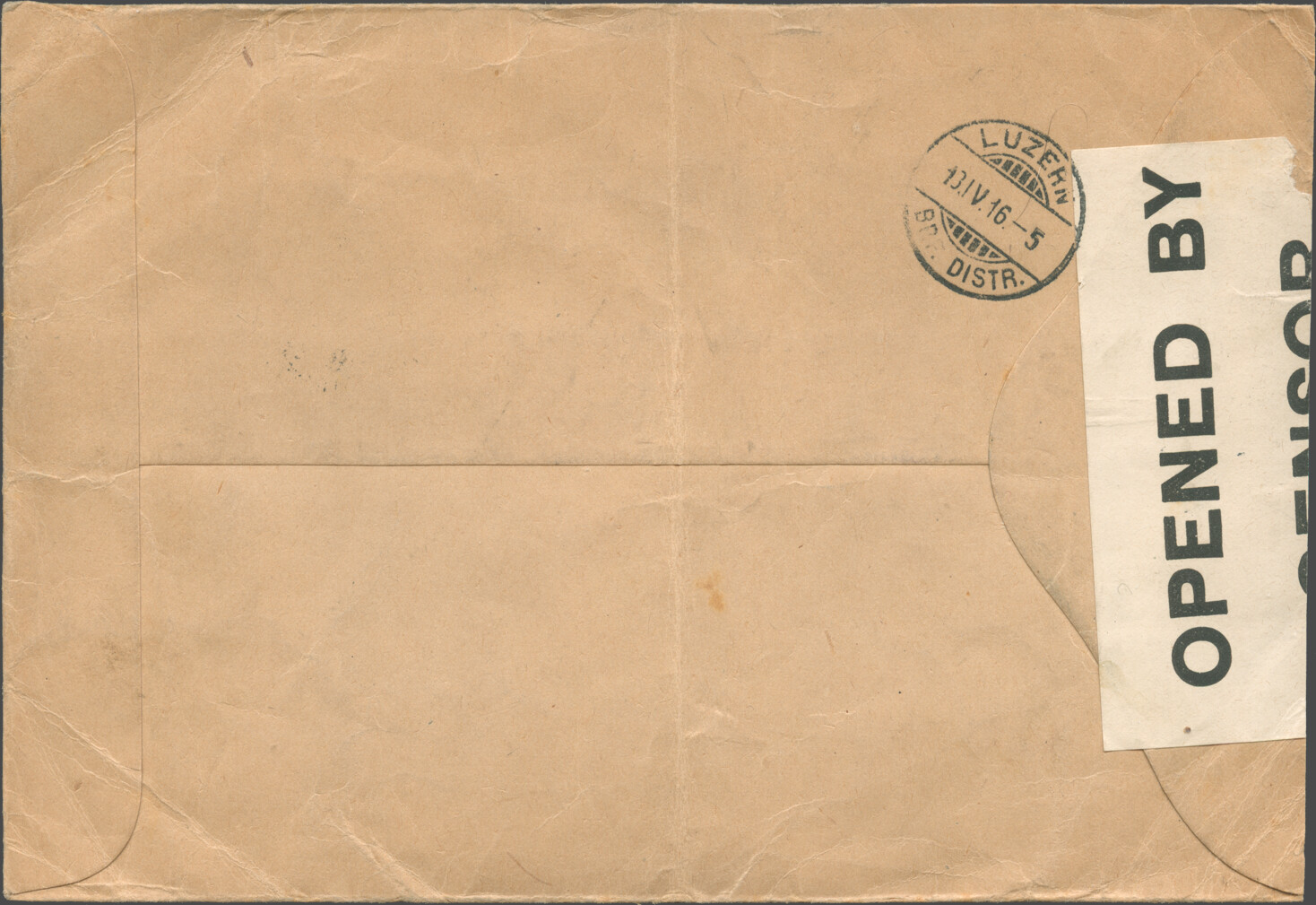
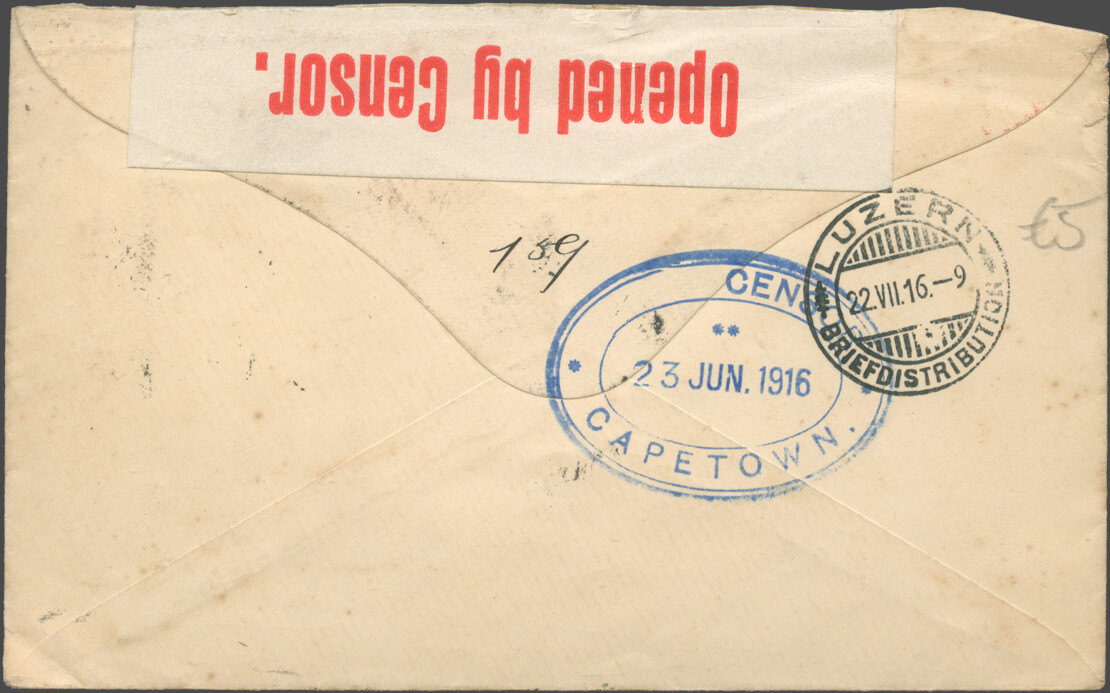
Based on an Order in Council of December 23, 1915, the British government introduced a blacklist,
prohibiting British subjects from trade with specified firms and individuals in neutral countries who were doing business with counterparts in enemy countries.
An even more specific embargo in France was directly aimed at the stamp trade and banned the import of any stamps of the enemy into the country.
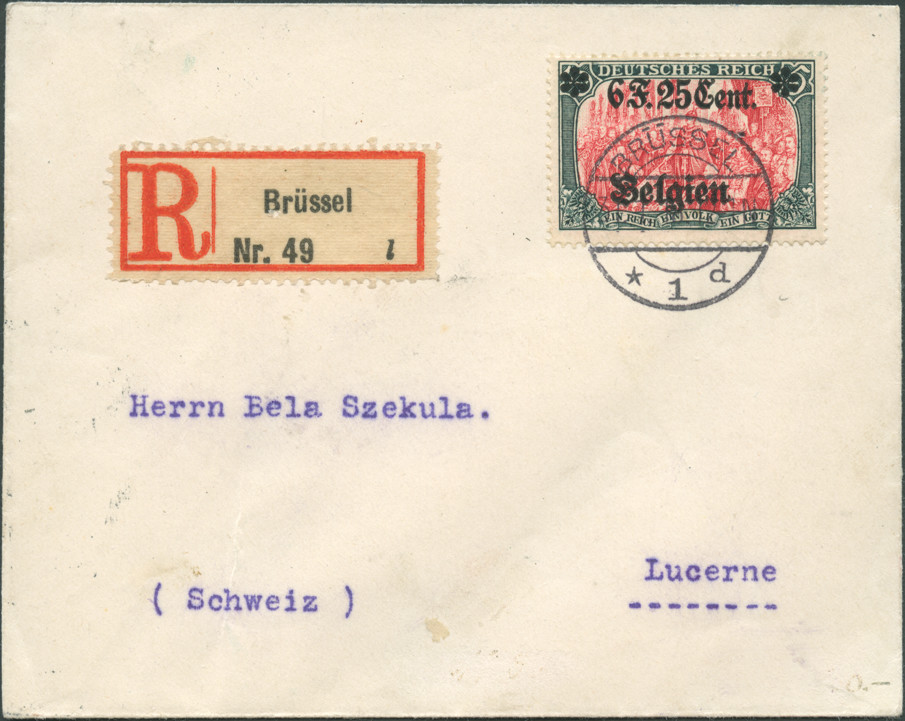
Béla being Béla, of course, was not willing to bow to such pettiness and continued doing business with Germany and also selling German stamps to French stamp dealers.
It was only a matter of time until someone blew the whistle on him.
The November 1916 issue of the British magazine Stamp Collecting contained the following note boasting Thanks to representations made to the authorities by Stamp Collecting, Béla Szekula (alias Ed. Bieri) is at last placed on the ‘black list’.
On the 15th of the same month, the Foreign Trade Department declared Béla Szekula an undesirable person for firms and persons in the British Empire to deal with,
accusing him of trading with the enemy.
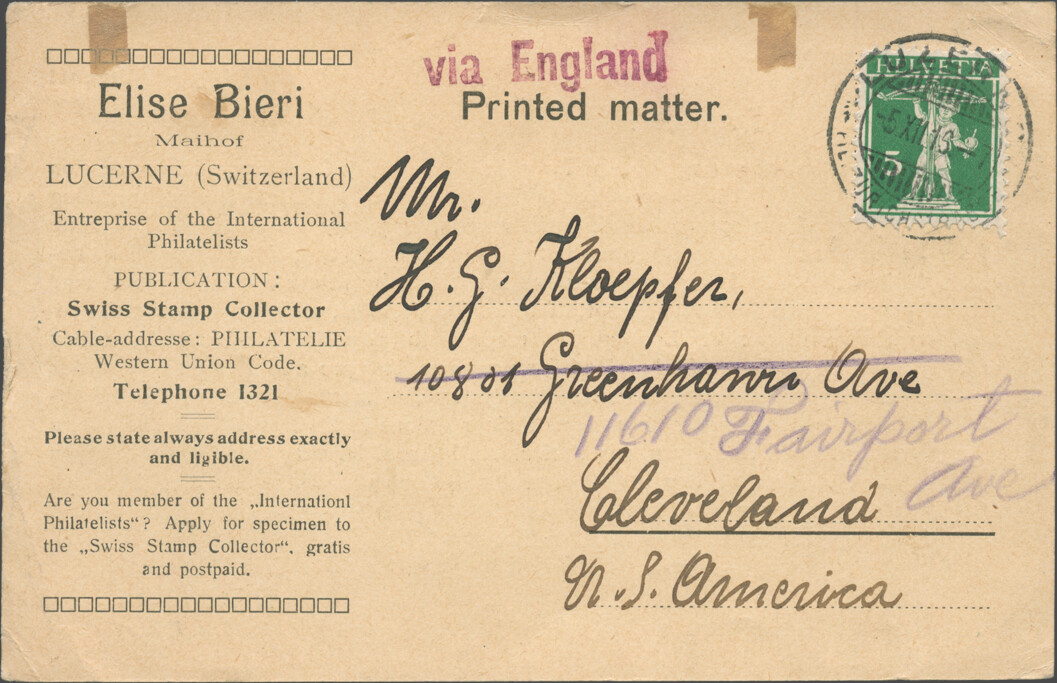
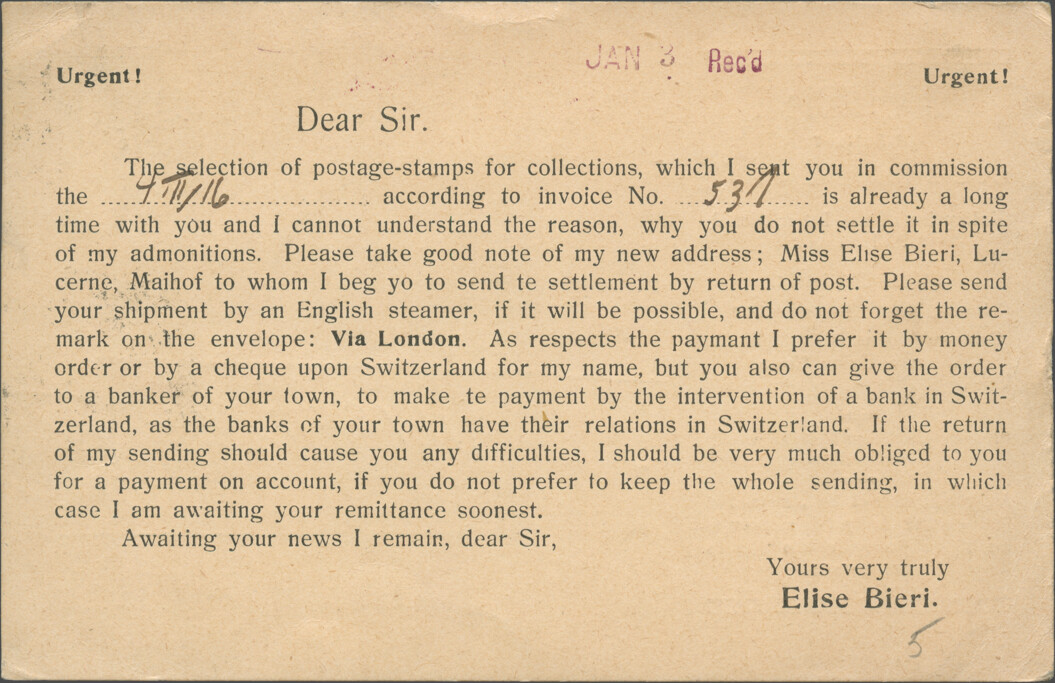
The same was true for Elise Bieri, probably the name of an employee Béla was using to circumvent an already-existing French trade ban he was facing after a shipment of stamps of the enemy
to dealers in Paris had been intercepted by the French censors.
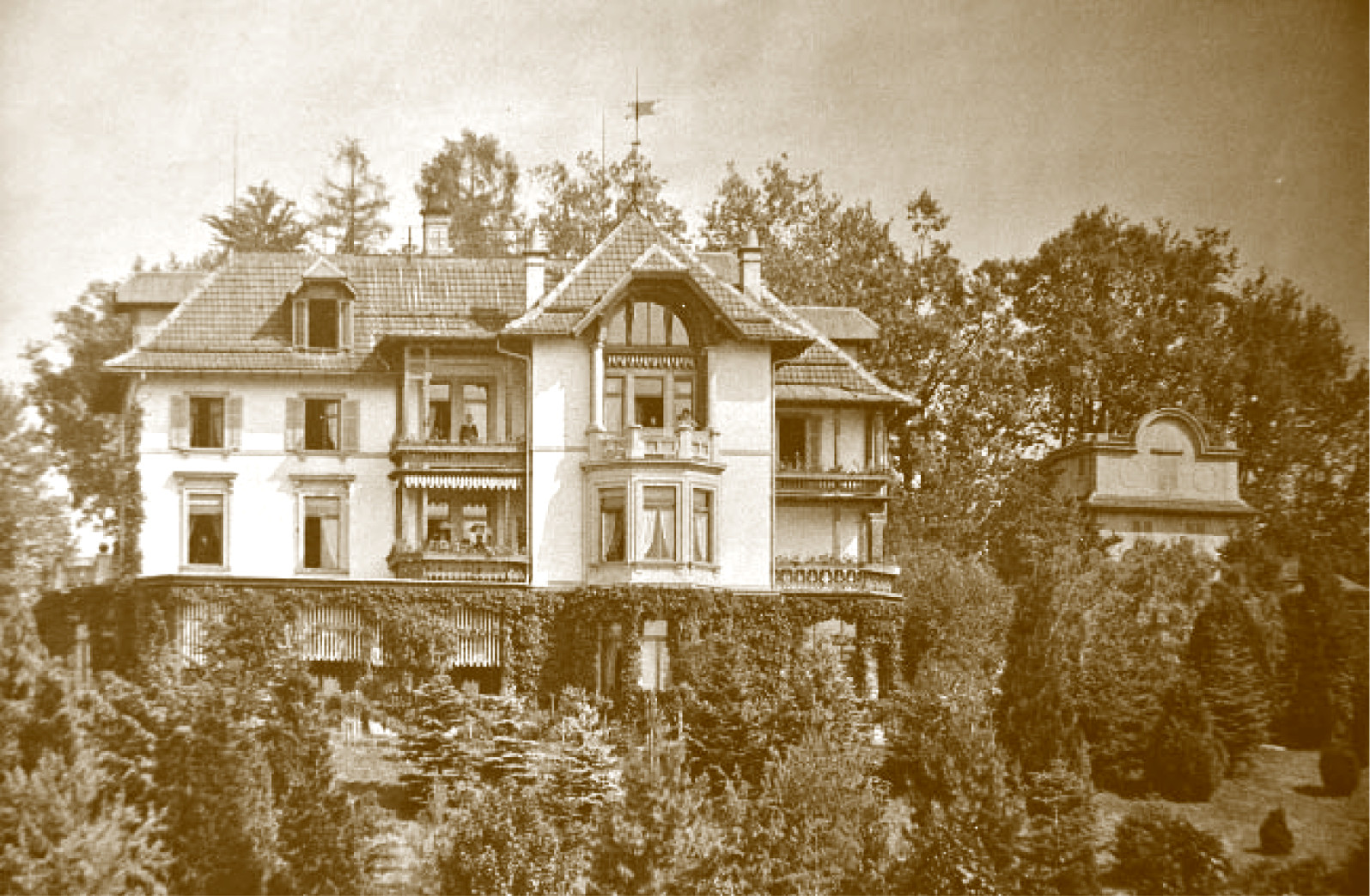
In 1918, in order to provide his now pregnant wife with the lifestyle he had promised her, Béla rented the luxurious Villa Sonnenhof at Brambergstr. 12a.
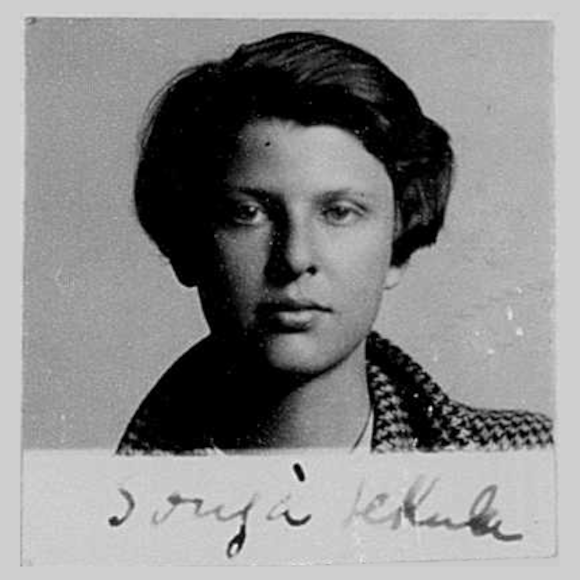
On April 8, 1918, his fourth daughter, the future artist Sonja Yvette Sekula, was born.
In the same year, Béla discontinued his stamp magazine with issue No. 160.
Spelling Matters
Géza Szekula had already left his brother’s business when the family still lived in Budapest.
After relocating to Lucerne, he immediately opened one of his own, the stamp wholesale business Géza Szekula.
A few years later Eugen did the same by starting the Eugen Szekula Stamp Import and Export
company.
It is important to note that, although all three brothers were based in the same city, they had separate businesses and were financially independent of each other.
Franz, by far the youngest of the four, was of course the last one to leave Béla, but at the same time he was also the one to make the biggest step.
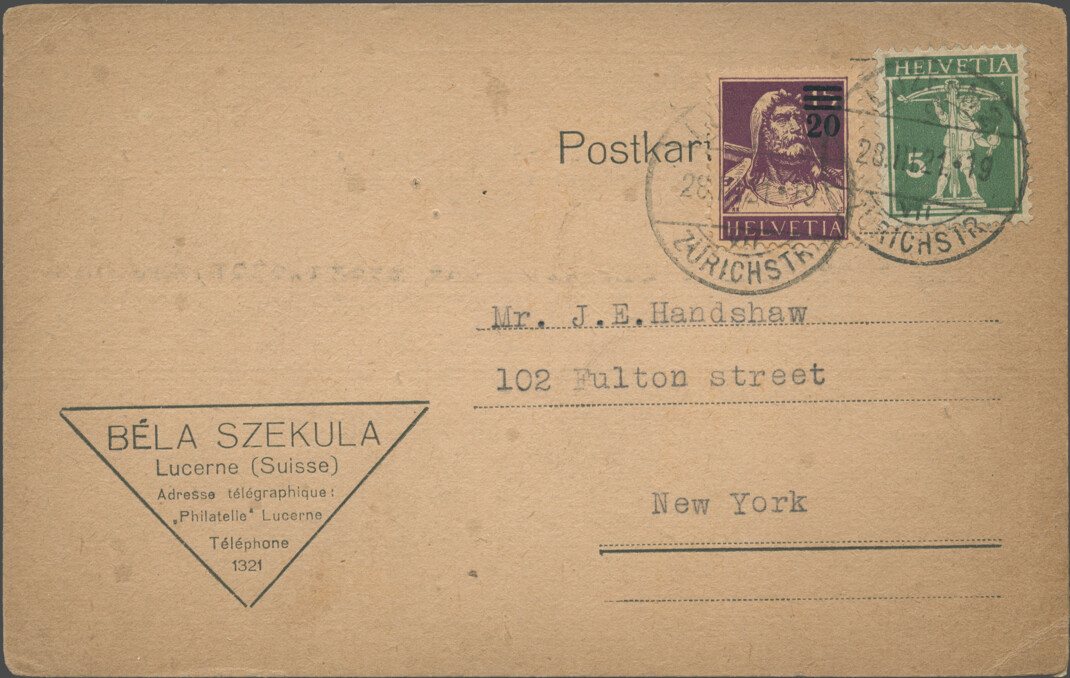
On February 2, 1921, the then 19-year-old took a steamer to New York, and by the end of 1922 he was selling stamps at 97 Nassau Street, right in New York’s epicenter of the stamp trade.
Living now in the United States, the idea to simplify the spelling of his name probably came naturally, and Franz Szekula
became Frank Sekula.
The rest of the family in Lucerne followed suit: In March 1923, Béla and his relatives were officially granted permission to change the spelling of their last name to Sekula.
The Roaring Twenties
Béla’s focus shifted more and more towards wholesale, and in the stamp trade he was perceived as a reliable, straightforward and fast distributor.
While other stamps dealers began to struggle in the years following the end of the inflation, his business in Lucerne increasingly developed into the central hub of the international stamp market.
A notable deal from this time period was the acquisition of the remainder of the Seebeck stock of South American stamps in 1924, about 55 million copies.
In 1926, with Swiss banking interests, he founded the International Stamp Bank.
It offered stamp dealers worldwide Swiss cash if they bought stamps from him at a fixed price that was at least equal to the amount of the loan – on credit!
His stamps were shipped around the world by the wagonload, and the interest rates, including disbursement fees, reached 16 to 18 percent of the loans.
Béla’s transactions during the 1920s were mostly scandal-free.
Despite the occasional negative press and complaints from end customers Béla’s firm and the number of employees continued to grow steadily, not least through his preferred use of low-wage workers from abroad, especially Austria, which earned him many a visit from the immigration police.
Every once in a while, however, he would be called out on bad merchandise, like in 1925, when his complete sets of 1919 overprints of the Hungarian National Government in Szeged turned out to be forgeries, causing a huge clash among dealers and driving up the prices of genuine specimens.
Or in 1927, when Béla’s nephew László Goldberger was en route as a salesman with an interesting assortment in his luggage: reprints of Belgian welfare stamps from 1914/15, Cretan revolution stamps, Montenegro stamps with fake cancels, fantasy issues of the fleeing Montenegrin government and those of the Soviet government.
Béla rejected the allegation of forgery, insisting that he had acquired all the material in good faith himself.
Trouble of a different kind brewing behind the scenes affected all three brothers in Lucerne together and arose from the fact that most of their stamp trade took place abroad.
Separated from their customers by national borders and often oceans, any dispute naturally became a complex, time-consuming and expensive matter.
However, instead of taking the usual precautions like advance payment or at least obtaining references for larger sums and unknown customers, they sent their goods on account or on commission to anyone and anywhere, even to post office boxes.
There was no need to be cautious, as they had found a practical solution for any problems that might arise afterwards.
During the 1920s, they increasingly made a habit of contacting Swiss diplomatic missions abroad in order to have them work for them as cheap debt collectors – in the mistaken belief that, being Swiss citizens, they were entitled to this kind of support.
And while Béla himself later at least refrained from chasing payments for unanswered mailings that he had sent unsolicited, Eugen and especially Géza, who was never doing as well in business as his brothers, were less willing to accept a loss.
By 1930, their cumulative requests to Swiss legations and consulates to help with the collection of outstanding debts had reached such levels that the Federal Political Department in Bern (renamed to Federal Department for Foreign Affairs in 1979) felt compelled to intervene.
A circular dated June 11, 1930, went out to all Swiss diplomatic missions instructing them to refer direct inquiries of this kind to the FPD in the future, which was noted with general satisfaction by the recipients.
Likewise, the brothers were informed that from now on every dispute would have to go through the FPD, where it would be checked in advance and only forwarded if the facts were clear and promising.
However, it must be noted at this point that this extraordinary measure was primarily triggered by the behavior of Géza and Eugen, whose debt collection requests had increased in recent years, while at the same time their own payment practices towards the authorities and the lawyers they had hired left much to be desired, causing annoyances which of course were reported back to Bern.
There were actually no complaints from foreign missions about Béla himself, but the mere fact that he had already appeared several times in their annual reports was enough to lump all the Sekulas together.
Of course, it was also of little help that the Federal Department of Justice and Police, when asked by the FPD, suggested that Béla had a bad reputation due to previous incidents such as the aforementioned visits by the immigration police and also because of some unconfirmed rumors.
In any case, he had managed to end up on a black list again, albeit a very exclusive one, as this measure only affected stamp dealers with the name Sekula and no one else.
Unlike the two main culprits, Béla took this warning seriously, apologized profusely in a letter and from then on dutifully sent every inquiry concerning matters abroad to the FPD.
In the end, given his overall sales, none of this appears to have had a lasting impact on Béla’s mail order business.
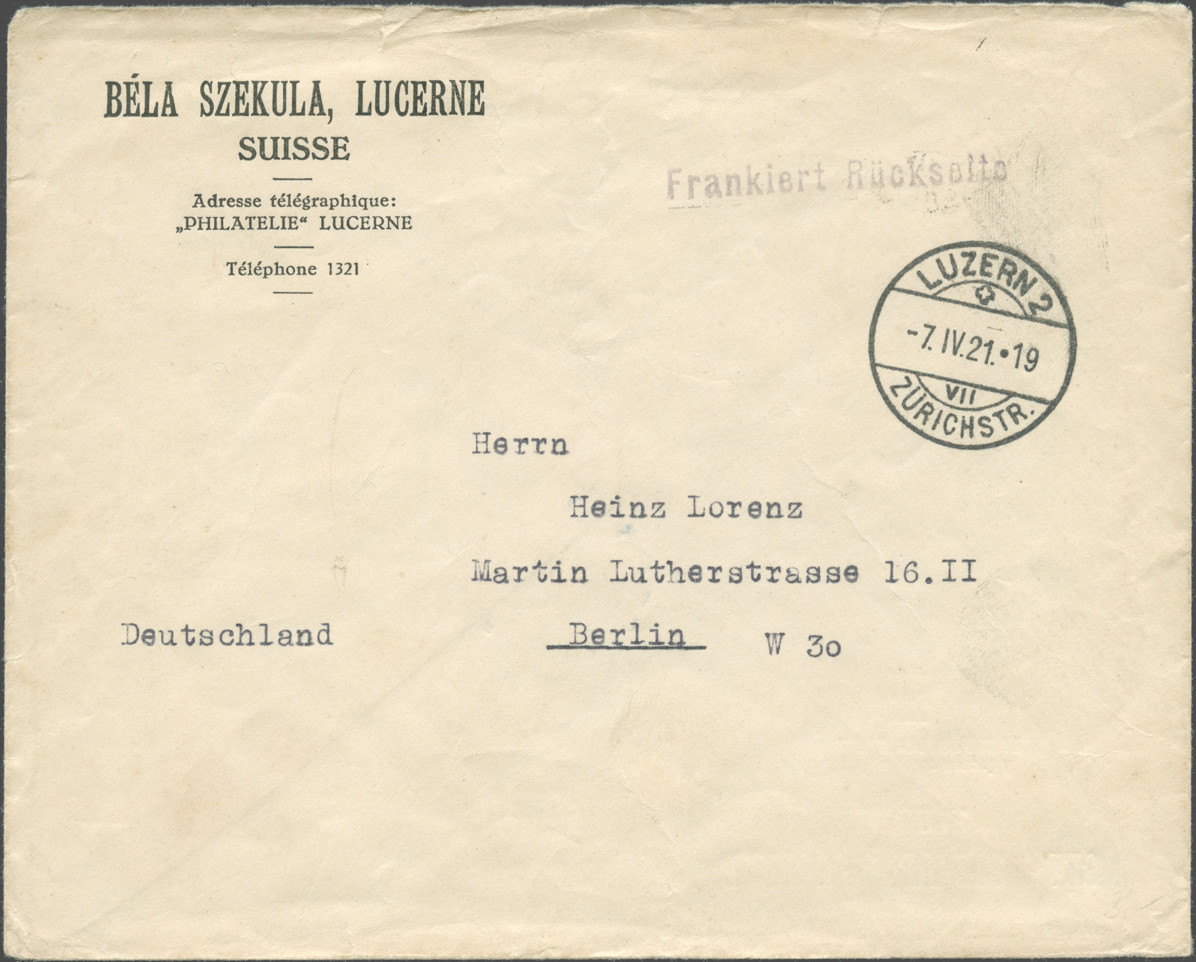
In early 1928 (probably before March) Béla had moved into his new business premises in the Genferhaus (= Geneva House
) at St. Leodegarstr. 2, where his firm would eventually occupy two stories of the building, housing a staff of up to one hundred people.
In January 1929, the management was reinforced with Frank, who had returned to Switzerland and was now employed as an authorized representative in his brother’s company.
In December 1930, Béla’s son Karl, or Charles as he called himself now, also began working for his father as an officer.
Newspapers reporting on the IPOSTA (Internationale Postwertzeichen-Ausstellung = international postage stamp exhibition) held in Berlin in September 1930 referred to Béla as the world’s biggest stamp dealer.
In August 1931, Béla founded his first incorporated company, the Cosmophilatelist Ltd. Lucerne, with business office in the Geneva House, and himself as sole board member.
He had already started a new magazine of the same name, but the Cosmophilatelist wasn’t nearly as successful as his Briefmarken-Verkehr and only saw six issues.
World Stamp Auctions
During these years, Béla Sekula also gained reputation as an auctioneer with his Welt-Briefmarkenauktionen
(= World Stamp Auctions
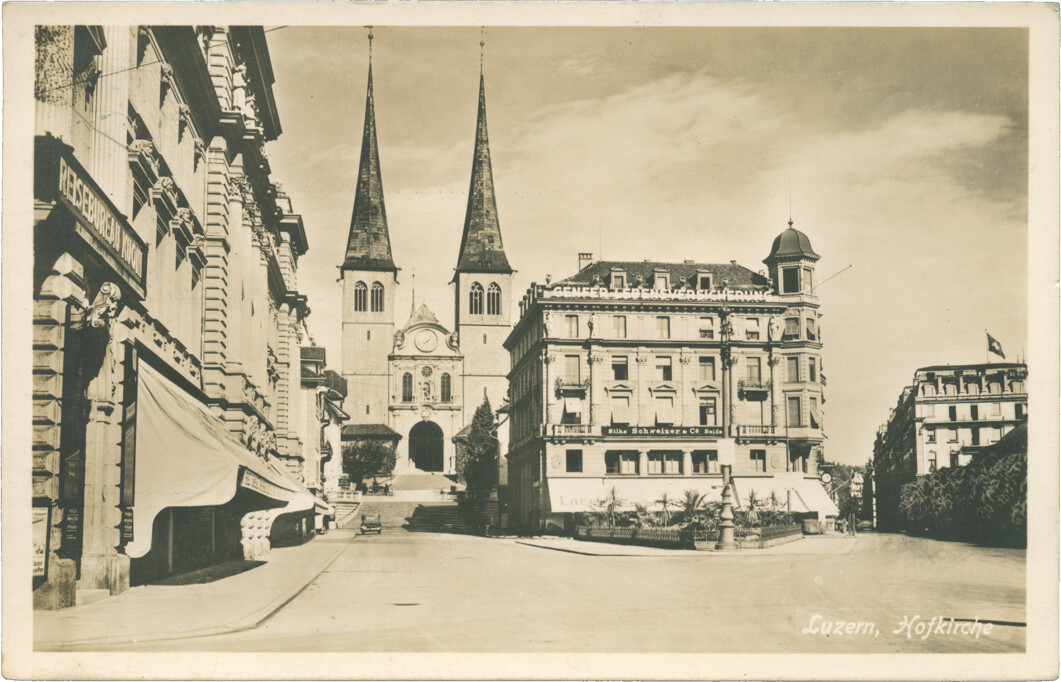
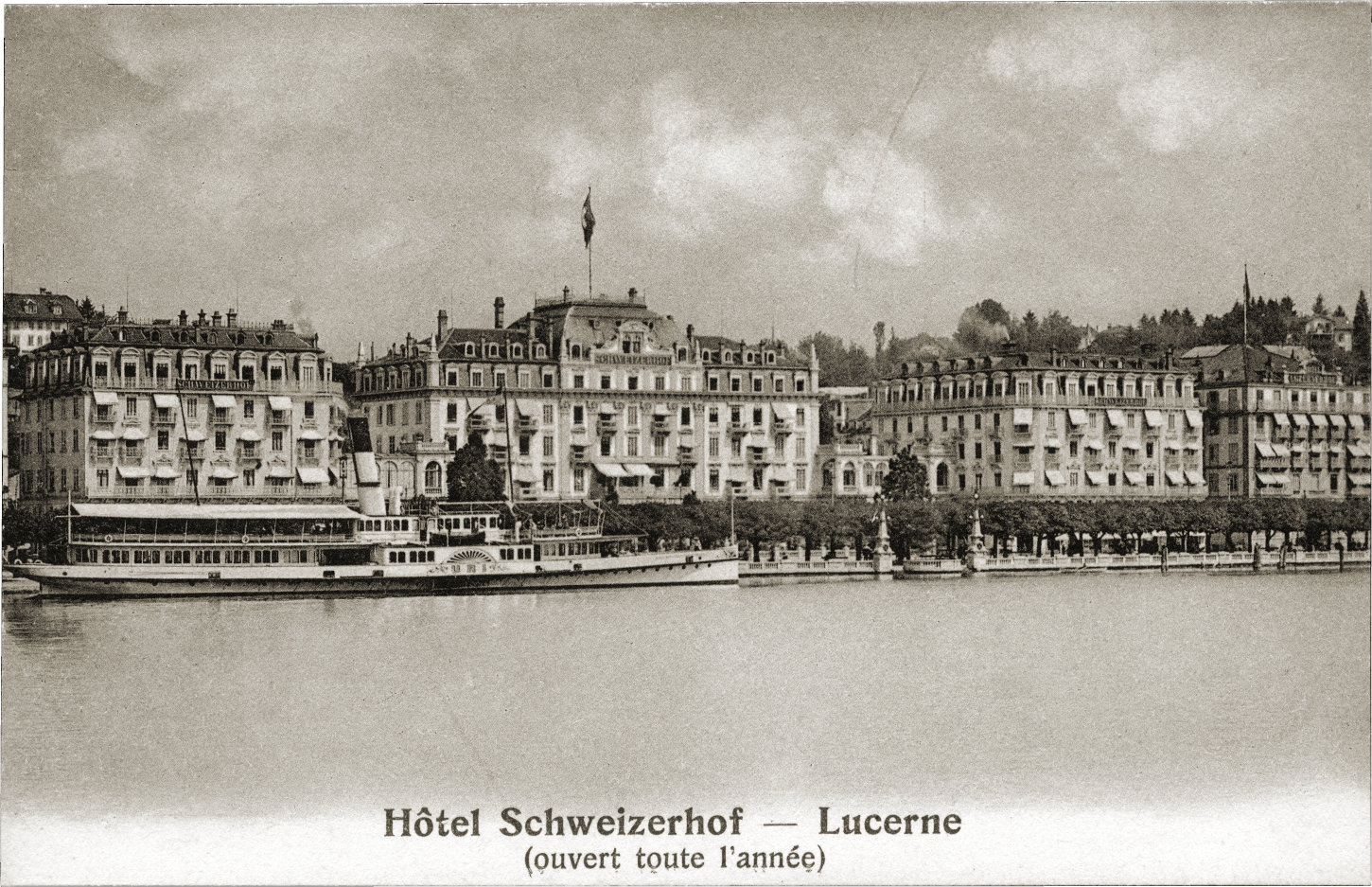
) held between May 1927 and December 1932 in Lucerne; initially in the noble Schweizerhof hotel, from the fourth auction in March 1928 onwards in the nearby Geneva House.
Schweizerhof and Sonnenhof had the same owners, the hotelier brothers Hauser, so perhaps he received a discount when renting the venue for his first three auctions, especially since many a bidder may have taken their accommodation directly in the hotel.
However, as a report of the French stamp magazine Philatelia on the second World Stamp Auction held in October 1927 shows, Béla and his wife spared no expense or effort in turning these auctions into social events to ensure that the customers would come back next time:
Mr. Béla Sekula, who does not know how to do things by halves, outdid himself in organizing the last auction. The sales took place in a beautiful airy room, the buyers were comfortably seated with small tables in front of them; they could smoke while following the auction and each session was interrupted by a break, during which one could go and eat at a buffet. [...] It should also be added that Mr. and Mrs. Sekula, in their desire to make the stay in Lucerne pleasant for the buyers, invited them to a magnificent banquet which was most successful.
The auction lots themselves also left nothing to be desired.
Over the years, several collections from well-known philatelists and dealers fell under the hammer.
Special mention should be made of material from the world-renowned philatelist Lars Amundsen (June 11–19, 1928), Ludvig Lindberg’s first-class Finland collection (Dec. 7–15, 1928, and Mar. 11–19, 1929), the collection of the Belgian liqueur producer (Elixir d’Anvers
) Louis-Xavier de Beukelaer (Sep. 16–Oct. 5, 1929) and that of Paris-based stamp dealer Joseph Thumin (June 16–19, 1931).
Animals and Rulers
As for the later image of Béla in philatelic circles, it is largely determined by two events that took place in the first half of the 1930s.
The first one was the affair that developed around Jean Adolphe Michel, the former postmaster in Ethiopia (or Abyssinia, as it was called back then).
Michel was sponsor of the Ethiopian 1919 Animals and Rulers issue and owner of the original dies and plates.
In accordance with his original contract with the Ethiopian government, which allowed him to get compensation for his investment by reprinting and selling these stamps ten years after the first edition of 1919, he commissioned Béla Sekula to arrange for the production of a second printing in 1930/1931.
This second edition was printed under Frank’s supervision by the printing firm Aberegg-Steiner & Cie, founded 1923 in Bern, and with respect to the Ethiopian stamps legitimate successor to the liquidated Balmer & Schwitter AG (BUSAG) which had been responsible for the first printing.
Of the total number of 120 original plates – 15 stamps × 2 colors (per stamp) × 4 plates (à 25 stamps) per printer’s sheet (of 100) – a small number had oxidized over the years and had to be replaced with galvanos (electrotypes).
However, the person in charge of both printings, William Ernst Aberegg, made every effort to make the second printing look the same as the first one.
As a result, colors, paper and perforation are so similar that the only reliable distinguishing feature of mint stamps is the gum: completely smooth for the original versus cracked for the reprint (to prevent the stamps from coiling up).
When Béla began advertising the reprints as originals, he and Michel were furiously attacked by a group of stamp dealers and philatelists in Bern led by Arthur Hertsch, owner of Zumstein & Cie, and Hans Roth, president of the Union of Swiss Philatelic Societies, who initially regarded the stamps as forgeries and somewhat later as unauthorized reprints.
When confronted with the facts, they finally accepted the stamps as authorized.
However, they insisted Béla should use the term reprint
instead of original
in his ads because the stamps had been printed at a time when they were already obsolete.
The attacks culminated in criminal charges brought against Béla in Bern in 1933, which were dropped after three years of investigation, and a lawsuit against Michel in 1935, which ended in 1936 in favor of the defendant.
By that time Béla was already preparing to leave Switzerland for the USA, albeit for a different reason.
Tannu Tuva
Béla Sekula is generally believed to be the driving force behind the stamps of Tannu Tuva issued between 1934 and 1936: the Registered Post and the Air Mail series 1934, the Landscape and the Zoological series 1935, and the Jubilee and the Jubilee Air Mail series 1936.
Although there is no definite proof for this theory, he was definitely their main promoter and seller.
These issues were generally viewed critically by the philatelic press, who (wrongly) assumed that they had never actually seen a Tuvan post office from the inside.
When Béla and other dealers arranged for letters franked with these stamps to be sent from Tannu Tuva as proof, it was (in part correctly) suggested that the covers had been fed into the mail in Moscow by the Soviet Philatelic Association, whose rubber-stamp was often emblazoned on the back.
However, there could be no ambiguity concerning their main purpose, namely to generate revenue through their sale to stamp collectors.
Some of the stamps offered very imaginative insights into Tuvan life, with depictions that took quite some liberties with reality, and were obviously targeting topical collectors.
As a wholesaler, Béla had always specialized in stamps with motifs from exotic countries, so the Tuva pictorials fit perfectly into his portfolio.
Climate Change
In autumn 1934, the German stamp dealers association used Béla’s ads offering magnificent picture stamps
as specious grounds to ban his advertisements from all their publications, and he was given to understand that he was no longer welcome at any of their public events.
The ban extended to the other members of the Sekula family including their brother-in-law Max Goldberger in Berlin, who were now all regarded as Béla’s accessories and vermin of philately.
Articles appeared in German philatelic magazines lamenting the great damage which the Sekulas allegedly had caused to the philatelic community over the years.
In one of these articles, the readers were reminded that Béla had been blacklisted by Great Britain in 1916, and the author of this article expressed his regret that such a law didn’t exist in Germany right now – completely ignoring the fact that Béla hadn’t been blacklisted for dubious business practices but for trading with the enemy.
In 1916, of course, the enemy was Germany.
However, the rhetoric and timing of these attacks during the Nazi rise in Germany suggest they had little to do with Béla’s business conduct – the World Stamp Auctions
had always been well attended by German stamp dealers – but rather with the fact that the Sekula brothers were Jews on their mother’s side.
In retrospect, the developments in Germany also shed a different light on the fierce attacks from Bern, which, as even some observers noted back then, seemed to be completely out of proportion in view of the cheap stamps involved.
The hostilities towards the Sekulas also had financial repercussions, especially against the background of the global economic crisis whose impact had become increasingly noticeable in Switzerland since 1930.
In April 1933, bankruptcy proceedings were instituted against Béla’s Briefmarken-Grosshandlung und Welt-Briefmarkenauktionen,
but he was able to fend them off with the help of a bank loan.
He then founded two more companies as stock corporations: the short-lived Briefmarkenhandels AG Globus
(Globe
Stamp Trading Corp.),
in January 1934, and one month later the Briefmarken-Import und Export AG (Stamp Import and Export Corp.),
a name he would eventually adopt for his business in the USA.
In March 1935 Béla left the Globus
AG, and in April he also resigned from the board of Cosmophilatelist AG Lucerne.
The latter was taken over shortly thereafter by Béla’s long-time colleague and friend Hermann Wiederhold, who renamed it to Ocean
Stamp Ltd. and successfully continued business until 1948.
The Globus
AG, however, already went bankrupt in June 1939.
Exodus
For more than two decades, Béla Sekula had been building a stamp empire in Lucerne.
The businesses of Eugen and especially Géza were distinctly smaller, but like Béla both looked back on a long career in the stamp trade with worldwide connections.
Frank had more than ten years of experience with selling stamps and had previously regained his financial independence after founding the Frasek AG
in Lucerne in April 1933.
Charles’ career as a stamp dealer had only just started, but he also had gained a lot of experience when working for his father.
In normal times, all of them should have been able to enjoy a relatively secure existence in Lucerne.
But the times were not normal.
In 1935, two years after Hitler had seized power in Germany, the writing on the wall was too big to ignore.
And so began the exodus of the Sekulas.
Between 1935 and 1938 one after another left Lucerne: Béla and Charles for New York, Eugen and Frank (initially) for Lugano, and Géza – after a compulsory break – for Lausanne.
Béla in New York
Béla, his wife Berty and daughter Sonja moved to New York City on September 23, 1936, where he continued business with the Stamp Import & Export Corp.,
initially from Hotel White on the corner of Lexington Avenue and 37th Street.
In February or March 1937, he leased a detached house in Scarsdale (near White Plains) for his family, while the company address changed to Woodstock Tower, 320 East 42nd Street, Manhattan.
In June 1938, he finally closed his stamp wholesale in Lucerne, and in July he left the Swiss Briefmarken-Import und Export AG (liquidated in April 1941).
In June 1940, the Sekulas moved from Scarsdale to Westport in Connecticut, where Béla applied for naturalization on December 9, 1941.
By 1942 the family had moved again, back to New York City, now living at 399 Park Avenue, and in 1943 he relocated his business to the Bush Terminal Building at 130 West 42 Street.
On March 14, 1944, at age 63, Béla Sekula became a citizen of the United States of America.
Unlike his earlier activities in Europe, his time in North America seems to have produced no notable scandal.
His approval days
were over for now, and he concentrated on wholesale and big deals with only a handful of customers.
As for his private life, it was crucially influenced by his daughter Sonja and her decision to become an artist.
Because of her connections to the art scene, she came into contact with prominent personalities such as the writer Klaus Mann, the painter Jackson Pollock and the composer John Cage, and these acquaintances extended to the whole family.
By 1939, the Sekulas were already part of New York’s upper class whose activities were recorded by the society columns of the New York Times.
Inviting and being invited was the name of the game.
At the same time, the family’s life was overshadowed by Sonja’s recurrent mental health issues forcing her repeatedly to undergo treatment.
In 1949 Béla sold his stock of 50 million stamps through J. & H. Stolow in New York (with estimated proceeds of $250,000–$300,000).
However, he had no intention to retire.
He continued business from
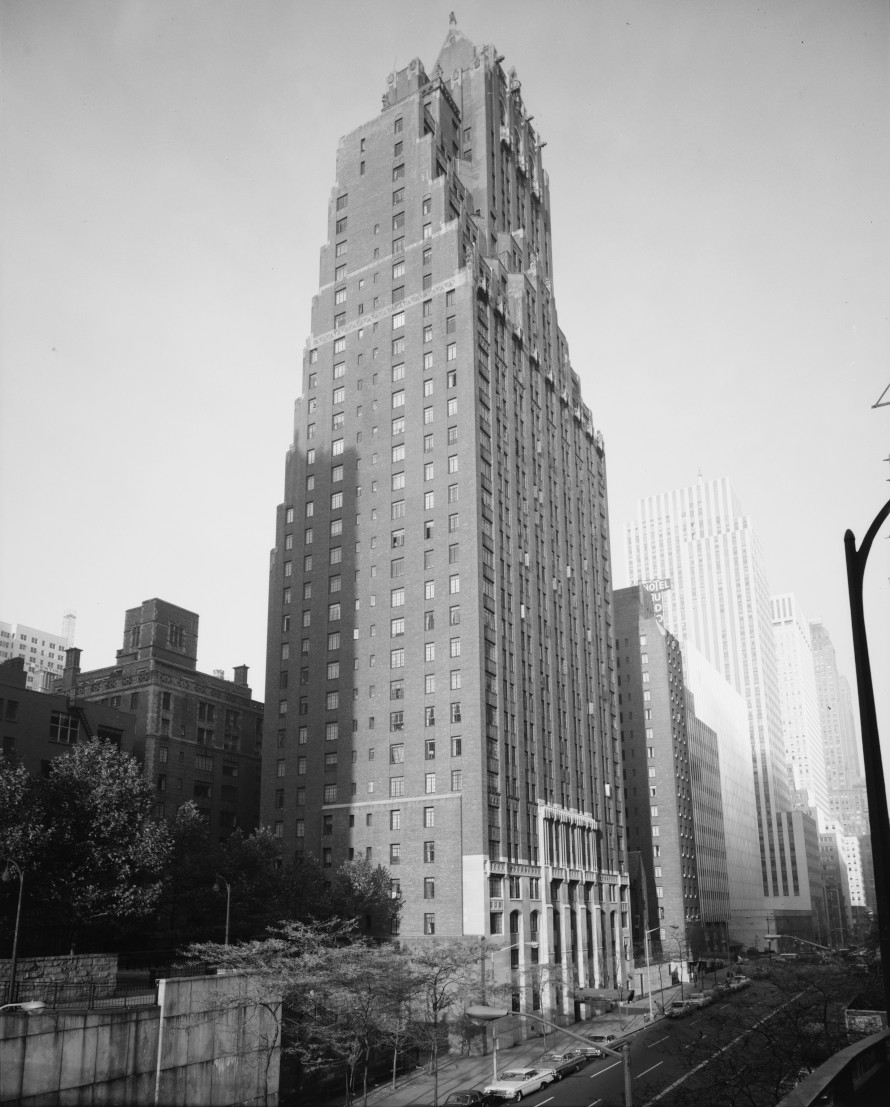
Hotel Seville
on the corner of 22 East 29th St. and Madison Avenue.
Eventually, after almost twenty years in the US, the expenses – particularly those for treating Sonja’s manic episodes – became too much, and in 1955 the family returned to Switzerland, first to Zurich and a short time later to St. Moritz.
His Last Bow
After a short leave from the stamp trade, Béla resumed business with the foundation of the Philatelie AG, St. Moritz
in September 1957, again with himself as sole board member, starting with stamps worth Fr. 19200 acquired from Berty (Béla and his wife had separate property).
In April 1958, Béla moved back to Zurich managing the business from his new home address at Steinwiesstr. 18 whereas the registered business address remained in St. Moritz.
While returning to Switzerland had been a financial necessity for Béla, it was a disaster for Sonja.
Used to a life immersed in New York’s cosmopolitan art scene, the cultural activities in prudish Zurich of the 1950s appeared to her now as bourgeois and provincial.
Her art was perceived as too American
and was no longer in demand.
On April 25, 1963, after a series of artistic failures and personal disappointments, Sonja Sekula hanged herself in her studio.
Béla himself also only had a few years left.
In the end almost deaf and suffering from cerebral arteriosclerosis and cirrhosis of the liver, he died in a hospital in Zurich on July 20, 1966, at the age of 85 – after having spent about 67 years of his life as a stamp dealer.
His ashes are buried in a family grave in St. Moritz next to his daughter Sonja and his wife Berty (✝︎ September 19, 1980).
However, Béla’s death did not mean the end of his company.
In April 1967, Philatelie AG moved from St. Moritz to Zug where it continued to be active in the stamp trade until February 2001.
Today, Béla Sekula’s legacy seems to be nothing more than a bad reputation.
In his native country of Hungary, however, he definitely played an important role in the birth of organized philately.
On December 30, 1991, celebrating 120 years of Hungarian stamps, the Hungarian post issued a Pro Philatelia souvenir sheet featuring Béla Szekula along with three other early philatelists (Mihály Gervay, József Zichy, and Gábor Baross).
Béla Sekula was certainly no angel.
In private life he was a charming and generous person, but in business he was always ready to fight with no holds barred which earned him many enemies.
However, reducing him to the philatelic scandals he has been blamed for, unfairly most of the time, and ignoring his accomplishments really doesn’t do justice to the colorful character he was.

_p731.png)




_1930.webp)
.jpg)
.jpg)
.webp)
.jpg)
.webp)